

Skip to content
  • Facebook
  • X
  • Linkedin
  • WhatsApp
  • YouTube
  • Associate Journalism
  • About Us
  • Privacy Policy
  • 033-46046046
  • editor@artifex.news
Artifex.News

Artifex.News

Stay Connected. Stay Informed.

  • Breaking News
  • World
  • Nation
  • Sports
  • Business
  • Science
  • Entertainment
  • Lifestyle
  • Toggle search form
  • Access Denied Sports
  • Cubans put Asian silkworms to work for artisans in experimental project
    Cubans put Asian silkworms to work for artisans in experimental project Science
  • T20 World Cup 2024: What went wrong for Pakistan, Sri Lanka and New Zealand?
    T20 World Cup 2024: What went wrong for Pakistan, Sri Lanka and New Zealand? Sports
  • Alliance Francaise To Open New Branches In These Cities
    Alliance Francaise To Open New Branches In These Cities Nation
  • Check BEL Board Meeting Date And Other Key Details Business
  • Arsenal agree £75 million deal to sign Newcastle’s Guimaraes: reports
    Arsenal agree £75 million deal to sign Newcastle’s Guimaraes: reports Sports
  • Access Denied Sports
  • Austria and Argentina coaches heap praise on game-changer Messi
    Austria and Argentina coaches heap praise on game-changer Messi Sports
When does the brain first respond to music?

When does the brain first respond to music?

Posted on July 16, 2026 By admin


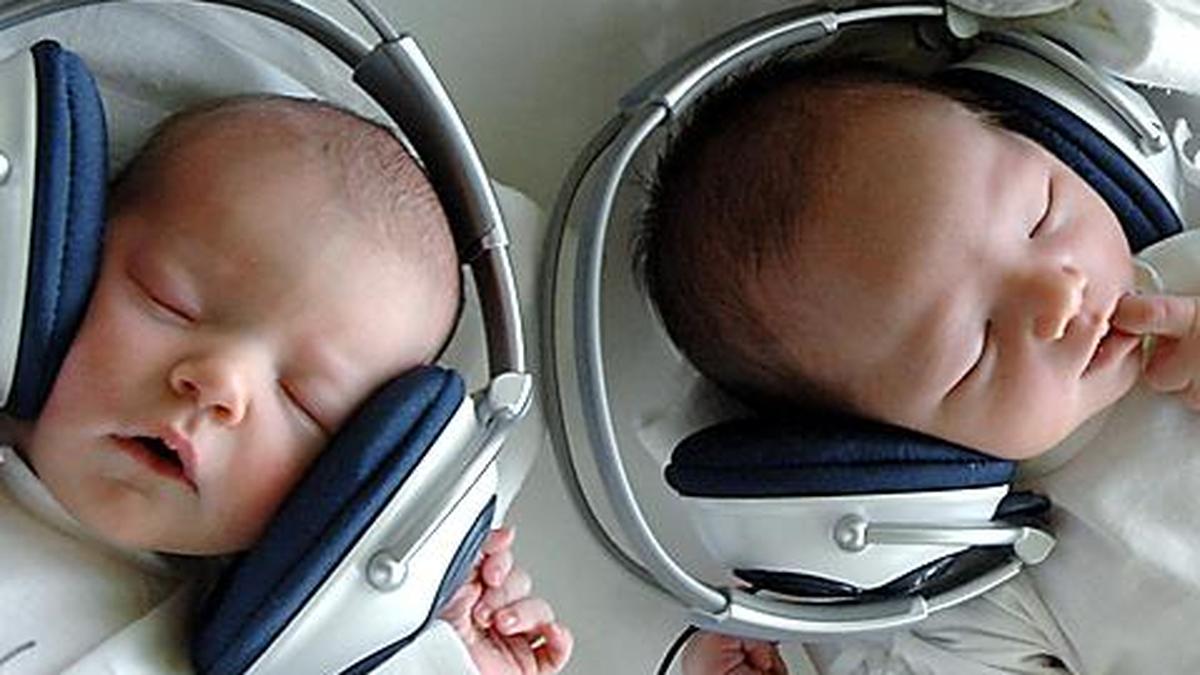
The intriguing evolution of musicality in humans, that primal form of artistic expression across cultures – that elevates in celebration, is an empath in grief, a rally cry in protests, a companion in solitude – remains enigmatic to scientists. This phenomenon has now become the subject of study of a group of psychologists, who have discovered that even a three-month old infant can recognise melody, and then by their first birthday, begin to spontaneously dance to it.

The study, published in eLife, dives into our instinctive engagement of music – perceiving it, appreciating, and producing it. It looks at both the sensory component (that gives us the ability to recognise music) and the motor component (that makes us move to rhythm).

Born to dance

In fact, human babies are born to dance, according to an older 2010 paper in Proceedings of the National Academy of Sciences. When scientists played classical music, nursery rhymes, drumbeats, baby talk and regular speech, they found that 120 children between five to 24 months universally got moving with clear rhythm to music, unlike their response to just speech.

“Humans across cultures not only share the ability to recognise music but also respond to it through movement,” says the new paper. While the sensory encoding of music is well-studied, when and how infants “naturally start moving to music is largely unexplored,” the recent paper noted. This study simultaneously investigates infants’ neural (auditory) responses and spontaneous movements to music during the first postnatal year. 

How it begins

The brain encodes musical structure very early in life but, only one-year-old children spontaneously moved more to music… “specifically exhibiting rocking, swaying, and clapping-like movements.” Only six-month-olds showed stronger brain responses to high-pitched compared to low-pitched music, while high-pitched music predicted movements at all ages, the paper adds.

“Studying both the sensory and motor components of musicality in infants would give us a better understanding of how we learn to transform the perception of music into movement,” lead author Trinh Nguyen, affiliated researcher in the Neuroscience of Perception and Action Lab at the Istituto Italiano di Tecnologia (Italian Institute of Technology; IIT), Rome, Italy, and senior research fellow at the University of Vienna, Austria, said in a release.

What the study did

The researchers studied 79 children aged three, six and 12 months old, and with the help of electroencephalogram recording (or EEG, a non-invasive, painless test that records the electrical activity of the brain) analysed their neural (auditory) responses and movement measurements.

From the recordings the team could pin the infants’ neural responses to changing tones in music. The study sheds light on how the developing brain gradually transforms music into spontaneous movements.

What the study found

All age groups showed an enhanced auditory response to the predictability of musical structure. As for movement, the research used automated video-based motion-tracking to compare the infants’ spontaneous movements in response to the music types. They looked at front-back rocking, side sway, proto-clapping, leg-kicking, up-down rocking, arm-pedalling, feet-kicking, whole-body wiggling, feet-shuffling, and feet-pedalling.

“Across the first year of life, infants seem to consistently move their lower body while slowly increasing their capacity for more complex upper-body and whole-body movements while seated, as we saw in the 12-month-olds,” Dr. Nguyen explained. “We believe this increasing complexity is linked to the gradual maturation of the dorsal auditory stream [a neural pathway] in the brain, a pathway that has previously been suggested to play a crucial role in rhythmic entrainment and beat perception.”

While robust auditory processing of music is present as early as three months, the translation of these sensory processes into organised motor behaviours unfolds gradually throughout and beyond the first year of life, the paper concludes.

Published – July 16, 2026 02:30 pm IST



Source link

Science Tags:babies music brain stimulation, brain melody, infants and music

Post navigation

Previous Post: Centre floats another draft of CAFE-III; gives special recognition to ethanol and bio fuel cars
Next Post: Algeria orphanage fire kills 11, injures 19, Civil Defence report says

Related Posts

  • Why India urgently needs a legal framework for genomics
    Why India urgently needs a legal framework for genomics Science
  • Patent applications for HIV prevention drug opposed in India
    Patent applications for HIV prevention drug opposed in India Science
  • What’s the magic of a spinning top: Science in motion
    What’s the magic of a spinning top: Science in motion Science
  • Psychedelics are revealing how the brain builds the sense of self
    Psychedelics are revealing how the brain builds the sense of self Science
  • 10,000 human genomes database launched
    10,000 human genomes database launched Science
  • Traditional medicine provides health care to many around the globe – the WHO is trying to make it safer and more standardised
    Traditional medicine provides health care to many around the globe – the WHO is trying to make it safer and more standardised Science

More Related Articles

A strange intermittent radio signal from space has astronomers puzzled A strange intermittent radio signal from space has astronomers puzzled Science
How quantum computing can make large language models even better How quantum computing can make large language models even better Science
Gender agenda teaching consent – The Hindu Gender agenda teaching consent – The Hindu Science
On amplifiers: how do they work and what are the different kinds? On amplifiers: how do they work and what are the different kinds? Science
Bird species exploded after dinos’ doom, largest yet bird genetics study says Bird species exploded after dinos’ doom, largest yet bird genetics study says Science
GSLV mission planned in January would be 100th launch from Sriharikota: ISRO chief GSLV mission planned in January would be 100th launch from Sriharikota: ISRO chief Science
SiteLock

Archives

  • September 2026
  • August 2026
  • July 2026
  • June 2026
  • May 2026
  • April 2026
  • March 2026
  • February 2026
  • January 2026
  • December 2025
  • November 2025
  • October 2025
  • September 2025
  • August 2025
  • July 2025
  • June 2025
  • May 2025
  • April 2025
  • March 2025
  • February 2025
  • January 2025
  • December 2024
  • November 2024
  • October 2024
  • September 2024
  • August 2024
  • July 2024
  • June 2024
  • May 2024
  • April 2024
  • March 2024
  • February 2024
  • January 2024
  • December 2023
  • November 2023
  • October 2023
  • September 2023
  • August 2023
  • July 2023
  • June 2023
  • May 2023
  • April 2023
  • March 2023
  • February 2023
  • January 2023
  • December 2022
  • November 2022
  • October 2022
  • September 2022
  • August 2022
  • July 2022
  • June 2022
  • May 2022

Categories

  • Business
  • Nation
  • Science
  • Sports
  • World

Recent Posts

  • Road sweeping machine restored to service in Erode
  • Undercover and Trail Blazer impress
  • Not in favour of FIRs against farmers over stubble burning: Punjab CM Mann
  • Early warning system Nepal’s top priority: PM Shah
  • Top U.S., China negotiators to hold final preparatory talks ahead of Trump-Xi summit

Recent Comments

  1. AlvinNet on UP Teacher Who Asked Students To Slap Muslim Classmate
  2. AlvinNet on UP Teacher Who Asked Students To Slap Muslim Classmate
  3. Jamesslits on UP Teacher Who Asked Students To Slap Muslim Classmate
  4. MichaelClear on UP Teacher Who Asked Students To Slap Muslim Classmate
  5. Jamesslits on UP Teacher Who Asked Students To Slap Muslim Classmate
  • Ukraine strike kills one, wounds 10 in Russian-occupied region: local official
    Ukraine strike kills one, wounds 10 in Russian-occupied region: local official World
  • Vijay Hazare Trophy | Clinical Karnataka crushes Rajasthan to book a spot in the knockouts
    Vijay Hazare Trophy | Clinical Karnataka crushes Rajasthan to book a spot in the knockouts Sports
  • Access Denied
    Access Denied Nation
  • Access Denied
    Access Denied Nation
  • Access Denied Business
  • Curbs Come Into Force In Delhi, Cops Urge People To Use Metro
    Curbs Come Into Force In Delhi, Cops Urge People To Use Metro Nation
  • “To Those Sent Back From Pakistan To Afghanistan”: Afghan Star Ibrahim Zadran On Winning Player Of The Match
    “To Those Sent Back From Pakistan To Afghanistan”: Afghan Star Ibrahim Zadran On Winning Player Of The Match Sports
  • China and the Philippines reach deal in effort to stop clashes at fiercely disputed shoal
    China and the Philippines reach deal in effort to stop clashes at fiercely disputed shoal World

Editor-in-Chief:
Mohammad Ariff,
MSW, MAJMC, BSW, DTL, CTS, CNM, CCR, CAL, RSL, ASOC.
editor@artifex.news

Associate Editors:
1. Zenellis R. Tuba,
zenelis@artifex.news
2. Haris Daniyel
daniyel@artifex.news

Photograher:
Rohan Das
rohan@artifex.news

Artifex.News offers Online Paid Internships to college students from India and Abroad. Interns will get a PRESS CARD and other online offers.
Send your CV (Subjectline: Paid Internship) to internship@artifex.news

Links:
Associate Journalism
About Us
Privacy Policy

News Links:
Breaking News
World
Nation
Sports
Business
Entertainment
Lifestyle

Registered Office:
72/A, Elliot Road, Kolkata - 700016
Tel: 033-22277777, 033-22172217
Email: office@artifex.news

Editorial Office / News Desk:
No. 13, Mezzanine Floor, Esplanade Metro Rail Station,
12 J. L. Nehru Road, Kolkata - 700069.
(Entry from Gate No. 5)
Tel: 033-46011099, 033-46046046
Email: editor@artifex.news

Copyright © 2023 Artifex.News Newsportal designed by Artifex Infotech.