


Skip to content
  • Facebook
  • X
  • Linkedin
  • WhatsApp
  • YouTube
  • Associate Journalism
  • About Us
  • Privacy Policy
  • 033-46046046
  • editor@artifex.news
Artifex.News

Artifex.News

Stay Connected. Stay Informed.

  • Breaking News
  • World
  • Nation
  • Sports
  • Business
  • Science
  • Entertainment
  • Lifestyle
  • Toggle search form
  • Access Denied Sports
  • Uddhav Thackeray Slams Eknath Shinde Over Nanded Maharashtra Hospital Deaths
    Uddhav Thackeray Slams Eknath Shinde Over Nanded Maharashtra Hospital Deaths Nation
  • Access Denied
    Access Denied Nation
  • Access Denied
    Access Denied Nation
  • Pope says Trump’s planned deportations would be ‘calamity’
    Pope says Trump’s planned deportations would be ‘calamity’ World
  • UN chief speaks to Maduro about ‘rights violations’ in Venezuela
    UN chief speaks to Maduro about ‘rights violations’ in Venezuela World
  • Mizoram Doesn’t Want BJP, Says Rahul Gandhi On Day 2 Of Campaign In State
    Mizoram Doesn’t Want BJP, Says Rahul Gandhi On Day 2 Of Campaign In State Nation
  • ACC Q3 Results: Profit Jumps Over Fourfold Business
Philippines pioneers coral larvae cryobank to protect threatened reefs

Philippines pioneers coral larvae cryobank to protect threatened reefs

Posted on October 6, 2025 By admin


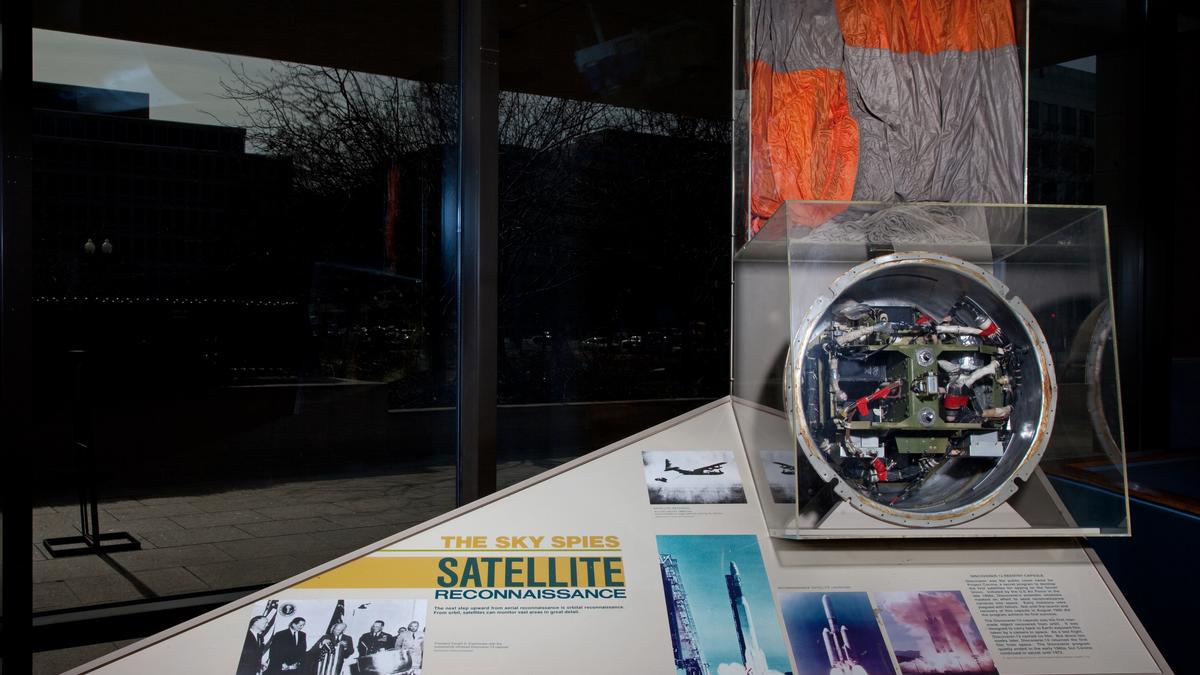
Known as the “Amazon of the seas”, the Coral Triangle is a 5.7 million sq. km expanse across the tropical waters of Indonesia, Malaysia, Papua New Guinea, the Philippines, Solomon Islands, and Timor-Leste — and the richest marine ecosystem on the earth. The Triangle is home to more than three-quarters of the world’s coral species, a third of all reef fish, the vast mangrove forests, and six of the seven marine turtle species. It also sustains the food security and livelihoods of more than 120 million people.

The Coral Triangle is also facing mounting dangers. Growing carbon emissions, destructive fishing, air, water, and soil pollution, and the accelerating effects of climate change are all driving coral bleaching, habitat loss, and species decline, placing both biodiversity and coastal communities at grave risk.

Dangerously exposed

According to the Status of Coral Reefs of the World 2020 report, the planet lost 14% of its corals between 2009 and 2018. Scientists have warned that without drastic action to keep global warming to 1.5º C, 70-90% of live coral cover could be lost by 2050. According to the UN Environment Programme, ocean temperatures may take decades to stabilise even under the most ambitious climate targets, leaving coral ecosystems dangerously exposed in the interim.

In one form of resistance against these threats, the Philippines is preparing to host Southeast Asia’s first coral larvae cryobank to help restore and protect reefs. Set up by the University of the Philippines Marine Science Institute, the facility will freeze and preserve coral larvae — the small, free swimming “seeds” of corals — at very low temperatures. These larvae can later be used to revive damaged reefs or for research, thus protecting genetic diversity that might otherwise be lost.

The project is part of a wider regional initiative that links research institutions in the Philippines, Taiwan, Indonesia, Malaysia, and Thailand to create a network of cryobanks across the Coral Triangle.

Led by Chiahsin Lin of Taiwan’s National Museum of Marine Biology and Aquarium and the National Dong Hwa University, the cryobank is supported by the Coral Research & Development Accelerator Platform through the Marine Environment and Resources Foundation, Inc.

Delicate process

Experts have said the programme is a significant step in building long-term resilience for one of the world’s most threatened marine ecosystems.

“The Philippines is showing other nations how to take a direct, proactive role in fighting the climate crisis and protecting their natural resources. It’s an act of hope and a vital investment in our oceans’ future,” said Preeyanuch Thongpoo, who is working on cryopreservation in Thailand at the Phuket Rajabhat University.

Dr. Lin is guiding the scientists from participating countries to establish the required facilities. At the heart of the effort is the delicate process that preserves coral larvae without damaging their fragile cells.

A study published in Frontiers in 2023 described a technique called vitrification, where the larvae are exposed to special protective solutions before being plunged into liquid nitrogen at –196º C. The rapid freezing that ensues turns the larvae into a glass-like state, preventing the formation of ice crystals that would otherwise destroy them.

To revive the samples, scientists use an equally swift method using lasers, which thaw the larvae in a fraction of a second to avoid re-crystallisation. Once warmed, the larvae are gradually rehydrated in seawater and checked for signs of life, such as swimming and settling, before being transferred to tanks for further growth.

This breakthrough method ensures genetic material from corals can be safely stored for years and later used to help restore damaged reefs.

‘No endangered species’

Cryobanks of coral symbionts — microscopic algae living inside corals — are crucial to reef survival. One is being set up at Phuket Rajabhat University under Dr. Thongpoo’s leadership. Her team is working with cauliflower corals (Pocillopora sp.), chosen for their abundance and ability to recolonise heat-damaged reefs.

“Unfortunately, due to technical challenges with our coral husbandry system, the corals did not survive in captivity, which has prevented us from collecting the larvae required for our experiments,” Dr. Thongpoo said. “We are now working on refining our husbandry protocols and adapting our approach to ensure we can successfully collect and cryopreserve larvae in the near future.”

Cryopreserving many coral species is challenging: their larvae and reproductive cells are large, lipid-rich, sensitive to cold, and often contain algae that block cryoprotectants.

Dr. Lin also stressed that preservation isn’t confined to endangered species. “For me, there’s no endangered species. All coral species are endangered,” he said, warning that most could collapse by 2050. His team began with ‘model’ species such as Pocillopora, which directly releases larvae, and spawning corals like Acropora and Galaxsia.

“You need to set up the model coral species and then use those optimal freezing protocols on the endangered species,” he explained. This approach, he added, differs from projects that prioritise only the most threatened species.

‘Genetic insurance policy’

For now, the scale of reef loss is sobering. Dr. Lin warned that “in the near future, cryobanks may become museums for extinct coral species.”

For Dr. Thongpoo, on the other hand, the effort represents hope: “Cryopreservation is a genetic insurance policy for the future. We are essentially building a living seed bank of coral larvae and Symbiodiniaceae.”

Dr. Lin and Dr. Thongpoo also said local communities that depend on the reefs for their livelihoods are often unaware of their value. In Southeast Asia, tourism, waste discharge, and destructive fishing have worsened reef decline. Without active community participation, they warned, conservation efforts alone won’t save corals.

With regional collaboration between scientists, governments, universities, and local communities, the project aims to strengthen resilience and secure the Coral Triangle’s reefs for generations to come.

Neelanjana Rai is a freelance journalist who writes about indigenous community, environment, science and health.

Published – October 06, 2025 05:30 am IST


Source link

Science

Post navigation

Previous Post: Experts call for early screening, healthier lifestyle to curb sudden cardiac deaths among youths
Next Post: Two persons killed in accidents on Chennai – Bengaluru Highway

Related Posts

  • Artemis II lunar mission draws flood of conspiracy theories
    Artemis II lunar mission draws flood of conspiracy theories Science
  • Names proposed by Kerala-based researchers approved for Martian landforms
    Names proposed by Kerala-based researchers approved for Martian landforms Science
  • Primates often gave birth to twins 60M years ago: new research
    Primates often gave birth to twins 60M years ago: new research Science
  • Humans have fingers because fish needed cloaca
    Humans have fingers because fish needed cloaca Science
  • New mpox clade Ib disproportionately affects children
    New mpox clade Ib disproportionately affects children Science
  • Why did macroscopic quantum tunnelling win the 2025 physics Nobel?
    Why did macroscopic quantum tunnelling win the 2025 physics Nobel? Science

More Related Articles

Science for all Scientists find bacteria living on fish brains Science for all Scientists find bacteria living on fish brains Science
How neuroscience reshapes marketing strategies in India How neuroscience reshapes marketing strategies in India Science
Newfound ‘obelisks’ join viruses, viroids as third unusual life form Newfound ‘obelisks’ join viruses, viroids as third unusual life form Science
How do bacteria resist antibiotics? How do bacteria resist antibiotics? Science
Ancient viral genomes preserved in glaciers reveal the history of the earth’s climate Ancient viral genomes preserved in glaciers reveal the history of the earth’s climate Science
Why does the ‘brain-eating amoeba’ eat the brain? Why does the ‘brain-eating amoeba’ eat the brain? Science
SiteLock

Archives

  • May 2026
  • April 2026
  • March 2026
  • February 2026
  • January 2026
  • December 2025
  • November 2025
  • October 2025
  • September 2025
  • August 2025
  • July 2025
  • June 2025
  • May 2025
  • April 2025
  • March 2025
  • February 2025
  • January 2025
  • December 2024
  • November 2024
  • October 2024
  • September 2024
  • August 2024
  • July 2024
  • June 2024
  • May 2024
  • April 2024
  • March 2024
  • February 2024
  • January 2024
  • December 2023
  • November 2023
  • October 2023
  • September 2023
  • August 2023
  • July 2023
  • June 2023
  • May 2023
  • April 2023
  • March 2023
  • February 2023
  • January 2023
  • December 2022
  • November 2022
  • October 2022
  • September 2022
  • August 2022
  • July 2022
  • June 2022
  • May 2022

Categories

  • Business
  • Nation
  • Science
  • Sports
  • World

Recent Posts

  • Ukraine reports Russian attacks and battlefield clashes despite ceasefire
  • Husband held for alleged dowry harassment in Visakhapatnam; wife dies 45 days after marriage
  • Scientists trigger ‘controlled’ earthquakes under Swiss Alps
  • Bandi Bhagirath’s case takes serious turn with Telangana CM ordering special team for comprehensive probe
  • Asian shares mixed, oil jumps 4% after Donald Trump rejects Iran’s response to ceasefire proposal

Recent Comments

  1. JamesTruff on UP Teacher Who Asked Students To Slap Muslim Classmate
  2. CliftonInese on UP Teacher Who Asked Students To Slap Muslim Classmate
  3. DonaldStype on UP Teacher Who Asked Students To Slap Muslim Classmate
  4. EnriqueExins on UP Teacher Who Asked Students To Slap Muslim Classmate
  5. EnriqueExins on UP Teacher Who Asked Students To Slap Muslim Classmate
  • Poll Body Notice To Judge-Turned-BJP Candidate For Mamata Banerjee Remarks
    Poll Body Notice To Judge-Turned-BJP Candidate For Mamata Banerjee Remarks Nation
  • Air India’s Delhi-Visakhapatnam Flight Receives Hoax Bomb Threat
    Air India’s Delhi-Visakhapatnam Flight Receives Hoax Bomb Threat Nation
  • B. Sairam takes over as new chief of Coal India
    B. Sairam takes over as new chief of Coal India Business
  • Access Denied World
  • Access Denied Sports
  • Access Denied World
  • U.S. presidential election 2024 | What matters to the Indian American voter?
    U.S. presidential election 2024 | What matters to the Indian American voter? World
  • On Sam Pitroda’s US Remark, Shivraj Chouhan’s Lesson On ‘Indian Culture And Tradition’
    On Sam Pitroda’s US Remark, Shivraj Chouhan’s Lesson On ‘Indian Culture And Tradition’ Nation

Editor-in-Chief:
Mohammad Ariff,
MSW, MAJMC, BSW, DTL, CTS, CNM, CCR, CAL, RSL, ASOC.
editor@artifex.news

Associate Editors:
1. Zenellis R. Tuba,
zenelis@artifex.news
2. Haris Daniyel
daniyel@artifex.news

Photograher:
Rohan Das
rohan@artifex.news

Artifex.News offers Online Paid Internships to college students from India and Abroad. Interns will get a PRESS CARD and other online offers.
Send your CV (Subjectline: Paid Internship) to internship@artifex.news

Links:
Associate Journalism
About Us
Privacy Policy

News Links:
Breaking News
World
Nation
Sports
Business
Entertainment
Lifestyle

Registered Office:
72/A, Elliot Road, Kolkata - 700016
Tel: 033-22277777, 033-22172217
Email: office@artifex.news

Editorial Office / News Desk:
No. 13, Mezzanine Floor, Esplanade Metro Rail Station,
12 J. L. Nehru Road, Kolkata - 700069.
(Entry from Gate No. 5)
Tel: 033-46011099, 033-46046046
Email: editor@artifex.news

Copyright © 2023 Artifex.News Newsportal designed by Artifex Infotech.