




Skip to content
  • Facebook
  • X
  • Linkedin
  • WhatsApp
  • YouTube
  • Associate Journalism
  • About Us
  • Privacy Policy
  • 033-46046046
  • editor@artifex.news
Artifex.News

Artifex.News

Stay Connected. Stay Informed.

  • Breaking News
  • World
  • Nation
  • Sports
  • Business
  • Science
  • Entertainment
  • Lifestyle
  • Toggle search form
  • Are enough formal jobs being created?
    Are enough formal jobs being created? Business
  • Access Denied Sports
  • India’s biotech surge builds momentum but faces scale bottlenecks
    India’s biotech surge builds momentum but faces scale bottlenecks Science
  • U.S. imposes sanctions on Iran over crackdown on protesters
    U.S. imposes sanctions on Iran over crackdown on protesters World
  • ISRO conducts first Earth-bound manoeuvre of Aditya-L1 
    ISRO conducts first Earth-bound manoeuvre of Aditya-L1  Science
  • Parvathaneni Harish appointed as India’s Permanent Representative to U.N.
    Parvathaneni Harish appointed as India’s Permanent Representative to U.N. World
  • Joe Biden Administration Deports More Migrants Than Donald Trump’s, Hits 10-Year High
    Joe Biden Administration Deports More Migrants Than Donald Trump’s, Hits 10-Year High World
  • Minority Groups Have Equal Stake In Democracy: US Envoy To India
    Minority Groups Have Equal Stake In Democracy: US Envoy To India Nation
Ancient viral genomes preserved in glaciers reveal the history of the earth’s climate

Ancient viral genomes preserved in glaciers reveal the history of the earth’s climate

Posted on August 29, 2024 By admin


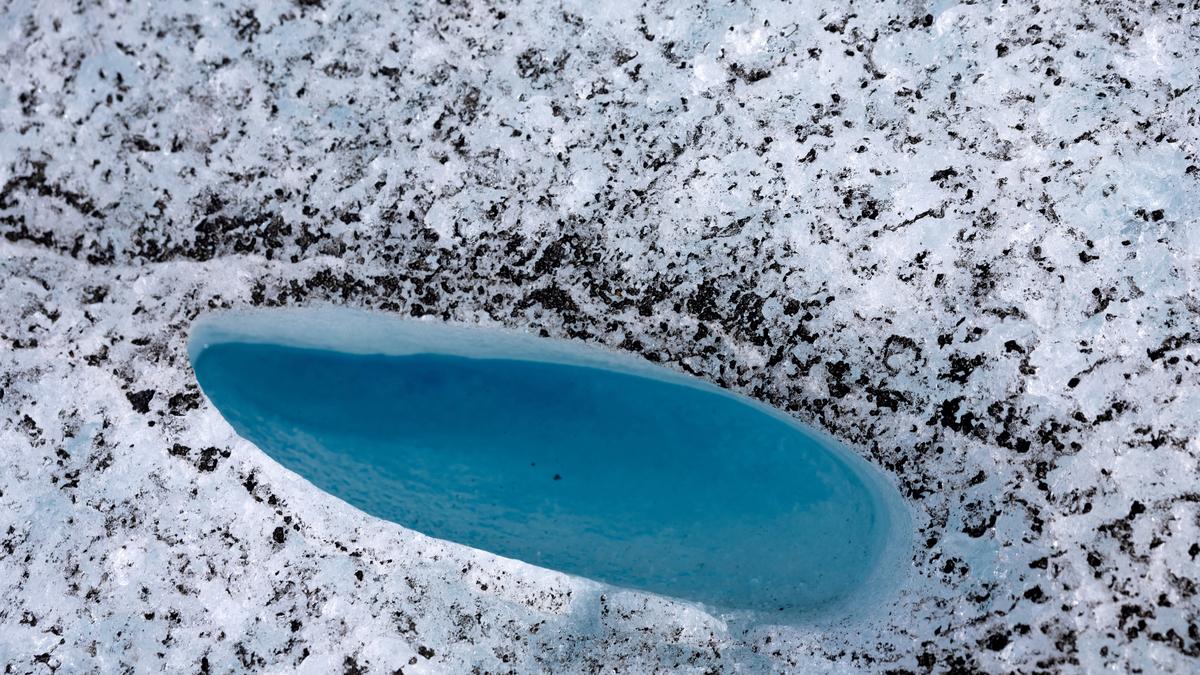
A hole filled with water from melted ice is seen among black rock and ice on the Rhone glacier amid climate change in Obergoms, Switzerland, August 27, 2024.
| Photo Credit: Reuters

As humans alter the planet’s climate and ecosystems, scientists are looking to Earth’s history to help predict what may unfold from climate change. To this end, massive ice structures like glaciers serve as nature’s freezers, archiving detailed records of past climates and ecosystems – including viruses.

We are a team of microbiologists and palaeoclimatologists that studies ancient microorganisms, including viruses preserved within glacier ice. Along with our colleagues Lonnie Thompson, Virginia Rich and other researchers at the Ice Core Paleoclimatology group at The Ohio State University, we investigate interactions between viruses and their environment archived in ice cores from the Guliya Glacier on the Tibetan Plateau.

By linking the genomes of ancient viral communities to specific climate conditions preserved in glacier ice, our newly published research offers insights into how these viruses have adapted to Earth’s shifting climate over the past 41,000 years.

Reading history in viral genes

We primarily used metagenomes – collections of genomes that capture the total genetic content of all microorganisms present in environmental samples – to reconstruct viral genomes from nine distinct time intervals within the Guliya ice core. These time horizons span three major cold-to-warm cycles, providing a unique opportunity to observe how viral communities have changed in response to different climatic conditions.

Through our analyses, we recovered the genomes of the equivalent of 1,705 virus species, expanding known glacier-preserved ancient viruses more than fiftyfold.

Only about one-fourth of the viral species we found shared species-level similarities with any of the viruses identified in nearly 1,000 metagenomes previously captured in global datasets. Most of these overlapping species were also from the Tibetan Plateau. This suggests that at least some viruses preserved in the Guliya Glacier originated locally in the region, but it also spoke to the relative lack of glacial viruses in available databases.

Using these new reference genomes, we attempted to “read” their stories.

One key finding was that viral communities varied significantly between cold and warm climatic periods. The most distinct community of viral species on the glacier appeared about 11,500 years ago, coinciding with the major transition from the Last Glacial Stage to the Holocene. This suggests that the unique climate conditions during cold and warm periods profoundly influenced the composition of viral communities. We hypothesize that these influences were likely due to viruses from other places being blown in by changing wind patterns and subject to selection pressures from changing temperatures on the glacier.

Digging deeper, we next determined how viruses interacted with their hosts. To do this, we used computer models to compare viral genomes with the genomes of other microbes also found in this environment. We found that viruses consistently infected Flavobacterium, a lineage of bacteria commonly found in glacier environments.

We also learned that viruses on the Guliya Glacier must “steal” genes from their hosts to manipulate their metabolisms. Encoded within the viral genomes were 50 auxiliary metabolic genes related to metabolism, including the synthesis and breakdown of vitamins, amino acids and carbohydrates. Some of these genes were abundant across all nine time intervals studied, suggesting that they help microbial hosts cope with the harsh conditions on glacier surfaces and thereby improve viral fitness.

Thus, viruses not only infect and kill cells, but they likely also alter the fitness of their hosts during infection, in turn influencing their capacity to survive in the extreme conditions of glacier environments.

Climate change over time

Our findings offer a novel perspective on how life, in the form of viruses, has responded to climatic changes over tens of thousands of years.

Understanding these ancient interactions provides a unique opportunity for future research in both virology and climate science. By studying how ancient viruses responded to past climate changes, researchers can gain valuable insights into how viruses adapt to ongoing global climate change.

We believe that glacier ice, by capturing information on microorganisms and their ecosystems over time in each layer, remains a critical resource for unraveling the history of Earth’s climate and the life it has supported – especially as glacier ice reserves rapidly diminish.

This article is republished from The Conversation under a Creative Commons license. Read the original article.


Source link

Science Tags:Climate change, climate news, Earth’s climate, science news, viral genomes, viral genomes in glaciers

Post navigation

Previous Post: Gautam Adani surpasses Mukesh Ambani to become richest Indian according to 2024 Hurun India Rich List
Next Post: Root stands firm for England as Sri Lanka strike at Lord’s

Related Posts

  • Kufos succeeds in captive breeding of threatened Indian ornamental fish
    Kufos succeeds in captive breeding of threatened Indian ornamental fish Science
  • Most pink diamonds were birthed by a disintegrating supercontinent. Where can we find more?
    Most pink diamonds were birthed by a disintegrating supercontinent. Where can we find more? Science
  • What are cosmic filaments? – The Hindu
    What are cosmic filaments? – The Hindu Science
  • How oil companies put the responsibility for climate change on consumers
    How oil companies put the responsibility for climate change on consumers Science
  • Has any particular gene responsible for longer lifespan been identified?
    Has any particular gene responsible for longer lifespan been identified? Science
  • Indonesia’s low-cost watch on antimicrobial resistance
    Indonesia’s low-cost watch on antimicrobial resistance Science

More Related Articles

2025 to be International Year of Quantum Science and Tech, UN says 2025 to be International Year of Quantum Science and Tech, UN says Science
What remote-sensing reveals about plants, forests, and minerals from space What remote-sensing reveals about plants, forests, and minerals from space Science
Chandrayaan-3 live updates | Vikram lander successfully lands on Moon; India becomes 4th country to make soft landing on lunar surface Chandrayaan-3 live updates | Vikram lander successfully lands on Moon; India becomes 4th country to make soft landing on lunar surface Science
ISRO to hold more tests for Gaganyaan in coming months ISRO to hold more tests for Gaganyaan in coming months Science
How are passengers able to access the Internet on aeroplanes? How are passengers able to access the Internet on aeroplanes? Science
Sunita and Barry will be on the ISS longer than expected. What next? Sunita and Barry will be on the ISS longer than expected. What next? Science
SiteLock

Archives

  • May 2026
  • April 2026
  • March 2026
  • February 2026
  • January 2026
  • December 2025
  • November 2025
  • October 2025
  • September 2025
  • August 2025
  • July 2025
  • June 2025
  • May 2025
  • April 2025
  • March 2025
  • February 2025
  • January 2025
  • December 2024
  • November 2024
  • October 2024
  • September 2024
  • August 2024
  • July 2024
  • June 2024
  • May 2024
  • April 2024
  • March 2024
  • February 2024
  • January 2024
  • December 2023
  • November 2023
  • October 2023
  • September 2023
  • August 2023
  • July 2023
  • June 2023
  • May 2023
  • April 2023
  • March 2023
  • February 2023
  • January 2023
  • December 2022
  • November 2022
  • October 2022
  • September 2022
  • August 2022
  • July 2022
  • June 2022
  • May 2022

Categories

  • Business
  • Nation
  • Science
  • Sports
  • World

Recent Posts

  • Iran working on Hormuz ‘protocol’ to cover ‘costs’, says Deputy Foreign Minister Gharibabadi
  • Zydus Lifesciences arm to acquire U.S. oncology firm Assertio for $166 million
  • Israel-Iran war LIVE: Iran working on Hormuz ‘protocol’ to cover ‘costs’, says Dy FM Gharibabadi
  • Russia to fulfil all agreements on energy supply to India: FM Lavrov
  • Russia to fulfil all agreements on energy supply to India: FM Lavrov

Recent Comments

  1. Jeffreyroure on UP Teacher Who Asked Students To Slap Muslim Classmate
  2. Stevemonge on UP Teacher Who Asked Students To Slap Muslim Classmate
  3. RichardClage on UP Teacher Who Asked Students To Slap Muslim Classmate
  4. StevenLek on UP Teacher Who Asked Students To Slap Muslim Classmate
  5. Leonardren on UP Teacher Who Asked Students To Slap Muslim Classmate
  • Access Denied
    Access Denied Nation
  • Access Denied Sports
  • Access Denied World
  • China and U.S. partners are moving closer as Trump returns to the White House
    China and U.S. partners are moving closer as Trump returns to the White House World
  • SFA Championship 2024 To Kick Off On October 4
    SFA Championship 2024 To Kick Off On October 4 Sports
  • Smriti Irani’s “Saturday Vibes” With Bill Gates At A Wedding
    Smriti Irani’s “Saturday Vibes” With Bill Gates At A Wedding Nation
  • Erik Ten Hag Faces Manchester United Judgement Day As Manchester City Eye History In FA Cup Final
    Erik Ten Hag Faces Manchester United Judgement Day As Manchester City Eye History In FA Cup Final Sports
  • Meloni, Le Pen rift disrupts far-Right’s prospects of wielding power in the EU
    Meloni, Le Pen rift disrupts far-Right’s prospects of wielding power in the EU World

Editor-in-Chief:
Mohammad Ariff,
MSW, MAJMC, BSW, DTL, CTS, CNM, CCR, CAL, RSL, ASOC.
editor@artifex.news

Associate Editors:
1. Zenellis R. Tuba,
zenelis@artifex.news
2. Haris Daniyel
daniyel@artifex.news

Photograher:
Rohan Das
rohan@artifex.news

Artifex.News offers Online Paid Internships to college students from India and Abroad. Interns will get a PRESS CARD and other online offers.
Send your CV (Subjectline: Paid Internship) to internship@artifex.news

Links:
Associate Journalism
About Us
Privacy Policy

News Links:
Breaking News
World
Nation
Sports
Business
Entertainment
Lifestyle

Registered Office:
72/A, Elliot Road, Kolkata - 700016
Tel: 033-22277777, 033-22172217
Email: office@artifex.news

Editorial Office / News Desk:
No. 13, Mezzanine Floor, Esplanade Metro Rail Station,
12 J. L. Nehru Road, Kolkata - 700069.
(Entry from Gate No. 5)
Tel: 033-46011099, 033-46046046
Email: editor@artifex.news

Copyright © 2023 Artifex.News Newsportal designed by Artifex Infotech.