Skip to content
  • Facebook
  • X
  • Linkedin
  • WhatsApp
  • YouTube
  • Associate Journalism
  • About Us
  • Privacy Policy
  • 033-46046046
  • editor@artifex.news
Artifex.News

Artifex.News

Stay Connected. Stay Informed.

  • Breaking News
  • World
  • Nation
  • Sports
  • Business
  • Science
  • Entertainment
  • Lifestyle
  • Toggle search form
  • Access Denied
    Access Denied Nation
  • Researchers call Australia carbon credit scheme a ‘catastrophe’
    Researchers call Australia carbon credit scheme a ‘catastrophe’ Science
  • Watch | ‘Least we could do for his love for peace’: Pak PM Sharif on nominating Prez Trump for Nobel Peace prize
    Watch | ‘Least we could do for his love for peace’: Pak PM Sharif on nominating Prez Trump for Nobel Peace prize World
  • Maldives gets IMF debt warning as more Chinese loans loom
    Maldives gets IMF debt warning as more Chinese loans loom World
  • MoS External Affairs to lead Indian delegation at UN Dialogue on AI governance
    MoS External Affairs to lead Indian delegation at UN Dialogue on AI governance World
  • Rupee falls 23 paise to cross 94 despite RBI intervention
    Rupee falls 23 paise to cross 94 despite RBI intervention Business
  • Iran-Israel war highlights: Israel strikes Tehran as Trump says U.S. negotiating to end war
    Iran-Israel war highlights: Israel strikes Tehran as Trump says U.S. negotiating to end war World
  • Tehran accuses U.S. of ‘calculated’ assault on school
    Tehran accuses U.S. of ‘calculated’ assault on school World
Education: Why India needs to radically think its doctoral education programmes

Education: Why India needs to radically think its doctoral education programmes

Posted on March 4, 2026 By admin


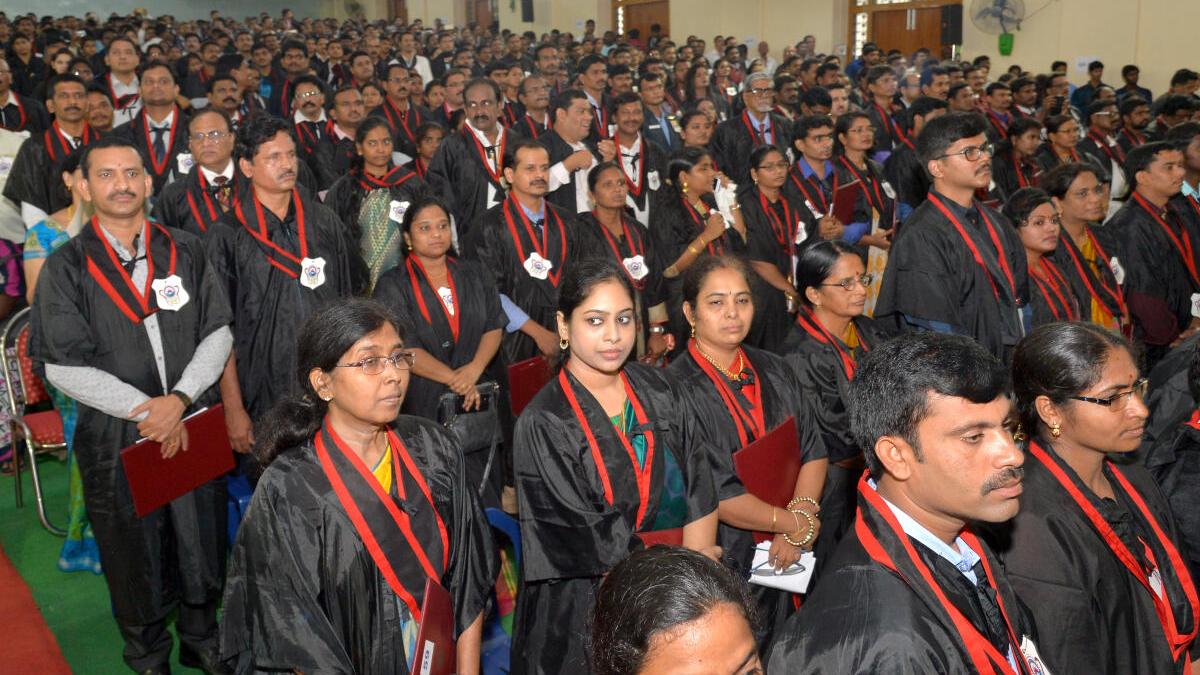
The recent announcement that China awarded its first “practical PhDs”, doctoral degrees conferred for tangible products rather than traditional research papers, is a timely catalyst for a long-overdue conversation on the relevance, design, and culture of PhD education in India.  In China’s new model, doctoral candidates are evaluated on working prototypes and real-world applications instead of lengthy theses and publication counts.

Also Read | Second-generation reforms required in higher education to make India a developed nation

This shift recognises applied innovation on par with scholarly writing and challenges the deeply rooted academic paradigm in which a PhD is almost synonymous with a long thesis and a suite of published papers. Our universities should ask themselves whether we need to evaluate a thesis based on the number of papers a scholar has produced or if we need to focus on the societal relevance of the work.

Academic malaise

One major difficulty students interested in research in India face is the prolongation of the PhD. In many universities, there are students who have spent more than three years; in some cases, students spend eight. Even though there are many issues with delays in PhD work, most instances are due to delays in publishing. In several departments, progress is judged less by the depth of original insight and more by the number of papers indexed in certain databases and the reputational clout of journals in which they appear. This culture undervalues the quality and relevance of research.

While publication is undeniably a pillar of academic excellence, the current fixation on having multiple indexed papers for a degree to be considered completed can encourage superficial research that may not push disciplinary boundaries or address pressing real-world problems.

It also intensifies the pressure on students to chase journals — any journals — that will accept their work, inadvertently fuelling unethical practices like engaging with predatory journals.

Scholars’ plight

In most labs, PhD scholars are treated as labour that supervisors can take for granted. Supervisors exploit the scholars in the name of publication, by prolonging their stay in the lab, so that supervisors don’t lose a good student trained in the domain. To maintain their labs, many supervisors also exploit their scholars by offering them the dream of publishing well, which, in reality, is mainly needed for the supervisors’ appraisals.

This culture is further aggravated by paid publications and dubious journals that promise quick indexing and impact metrics for a fee. Such outlets capitalise on the intense pressure on students to publish, thus creating a shortcut that erodes academic integrity. Though many Indian institutions now require papers to be published in indexed journals, the quality and relevance of these outlets vary widely, and the indexing status itself is frequently commodified by publishers. Ultimately, most doctoral research focuses solely on the university’s administrative needs, lacking scientific rigour or societal significance.

Hurdles with theses

In many universities, PhD theses are measured by the number of pages, often running beyond 200. There is a misconception that the quality of work is directly proportional to this number. History shows that even Nobel Prize-winning can span only a few pages. When one can concisely explain their research work, expanding it to occupy many pages just because that’s the norm is absurd.

The compulsion to write lengthy theses has led scholars to waste time and energy on introductions and inflated literature reviews. Many leading universities across the globe are moving towards compact dissertations that prioritise contributions over volume.

A major structural impediment in India’s PhD environment is the conventional thesis-defence model and long-lasting bureaucratic procedures. When they complete their studies, students have to deal with extended timelines to submit their theses, have them evaluated, and finally complete their oral defence. Administrative delays can further extend the final phases of a PhD by months, and in rare instances, even years, irrespective of the candidate’s productivity or the study’s significance.

For exceptional researchers who have produced significant ideas, potentially creating technologies or therapies with societal relevance, being constrained by prolonged review cycles diminishes the fundamental objective of doctoral studies.

Relevance of doctoral work

An important criticism of India’s existing PhD system is that a lot of doctoral research isn’t very useful to society. Many theses are still preserved in academic archives and don’t often help with public policy, new ideas in business or the health of communities. In many universities, copies of PhD theses are just dumped in a room or a backyard.

A PhD shouldn’t be a solitary intellectual pursuit but rather a conduit between profound investigation and significant influence. China’s practical PhD model seeks to bridge this gap by matching doctoral outputs with real-world applications and industrial scalability, including welding technology for firefighting systems, and is assessed by panels comprising both academics and industry professionals.

India faces many real-world problems that could benefit from high-quality PhD research. These issues span public health, agriculture, sustainability, digital inclusion, and education. The question is whether our current systems support and encourage studies grounded in what the people need.

Indian universities should brainstorm ways to reform the structure of PhD education to better suit the current world. The age-old practice of spending long years for a PhD doesn’t hold any merit in a digital world. Similarly, the structure and evaluation of the thesis should focus on the innovation it describes and its relevance rather than on the number of papers it produced. Just a mushrooming number of PhD holders does no good for the nation; India also needs good quality work that can support nation-building and humankind.

Biju Dharmapalan is  the dean, Academic Affairs, at Garden City University, Bengaluru,  and an adjunct faculty member at the National Institute of Advanced Studies, Bengaluru.

Published – March 04, 2026 07:30 am IST


Source link

Science Tags:education news, education updates, india doctoral programmes, India news, india PhD programmes

Post navigation

Previous Post: Tamil Nadu: Party is bigger than individuals, says Congress MP Manickam Tagore who advocated power sharing with DMK
Next Post: Access Denied

Related Posts

  • Honourable mention for bioeconomy in Interim Budget, with trillion-dollar potential in mind
    Honourable mention for bioeconomy in Interim Budget, with trillion-dollar potential in mind Science
  • SpaceX IPO is really Elon Musk’s gamble to save his empire
    SpaceX IPO is really Elon Musk’s gamble to save his empire Science
  • Mission Rhumi 2024: Chennai students cheer as India’s first reusable hybrid rocket takes off
    Mission Rhumi 2024: Chennai students cheer as India’s first reusable hybrid rocket takes off Science
  • What is a GPU? How does it work? | Explained
    What is a GPU? How does it work? | Explained Science
  • The Science Quiz: Famous women in space
    The Science Quiz: Famous women in space Science
  • ‘Datura’ lands e-commerce platforms in trouble in Karnataka: What is the plant?
    ‘Datura’ lands e-commerce platforms in trouble in Karnataka: What is the plant? Science

More Related Articles

Government clears 23 institutions to set up ‘quantum labs’ Government clears 23 institutions to set up ‘quantum labs’ Science
How are blood groups differentiated? How are blood groups differentiated? Science
Why do we sometimes wake up a few minutes before our alarm rings? Why do we sometimes wake up a few minutes before our alarm rings? Science
Russian space agency chief blames decades of inactivity for Luna-25 lander’s crash on the moon Russian space agency chief blames decades of inactivity for Luna-25 lander’s crash on the moon Science
Science Snapshots: May 10, 2026 Science Snapshots: May 10, 2026 Science
Why does water stay cool in a claypot even in peak summers? Why does water stay cool in a claypot even in peak summers? Science
SiteLock

Archives

  • September 2026
  • August 2026
  • July 2026
  • June 2026
  • May 2026
  • April 2026
  • March 2026
  • February 2026
  • January 2026
  • December 2025
  • November 2025
  • October 2025
  • September 2025
  • August 2025
  • July 2025
  • June 2025
  • May 2025
  • April 2025
  • March 2025
  • February 2025
  • January 2025
  • December 2024
  • November 2024
  • October 2024
  • September 2024
  • August 2024
  • July 2024
  • June 2024
  • May 2024
  • April 2024
  • March 2024
  • February 2024
  • January 2024
  • December 2023
  • November 2023
  • October 2023
  • September 2023
  • August 2023
  • July 2023
  • June 2023
  • May 2023
  • April 2023
  • March 2023
  • February 2023
  • January 2023
  • December 2022
  • November 2022
  • October 2022
  • September 2022
  • August 2022
  • July 2022
  • June 2022
  • May 2022

Categories

  • Business
  • Nation
  • Science
  • Sports
  • World

Recent Posts

  • Odisha government plans 870-Acre Silicon Valley hub in Cuttack’s Naraj for semiconductor, IT projects
  • Bihar announces OTS scheme for brick kilns, waives ₹90 crore interest on outstanding dues
  • North Korea says nuclear status ‘irreversible’ after UN atomic agency rebuke
  • Bombay High Court permits BMC to cut over 1,200 mangroves for Versova-Madh Island bridge
  • U.S. appeals court rejects Trump policy allowing swift deportations to third countries

Recent Comments

  1. AlvinNet on UP Teacher Who Asked Students To Slap Muslim Classmate
  2. Jamesslits on UP Teacher Who Asked Students To Slap Muslim Classmate
  3. MichaelClear on UP Teacher Who Asked Students To Slap Muslim Classmate
  4. Jamesslits on UP Teacher Who Asked Students To Slap Muslim Classmate
  5. Jamesslits on UP Teacher Who Asked Students To Slap Muslim Classmate
  • Lay’s Chips To Soon Have New Oil Blend? What It Means For Your Health
    Lay’s Chips To Soon Have New Oil Blend? What It Means For Your Health Nation
  • China issues drafts rules to regulate AI with human-like interaction
    China issues drafts rules to regulate AI with human-like interaction World
  • Oil Ministry confirms Iranian crude purchases, rejects claims of payment-led tanker diversion
    Oil Ministry confirms Iranian crude purchases, rejects claims of payment-led tanker diversion Business
  • Ajit Pawar Says Might Stay Out Of Assembly Polls, Son May Take Over
    Ajit Pawar Says Might Stay Out Of Assembly Polls, Son May Take Over Nation
  • Rupee plunges 36 paise to close at all-time low of 88.47 against U.S. dollar
    Rupee plunges 36 paise to close at all-time low of 88.47 against U.S. dollar Business
  • Access Denied Business
  • “Convincing World Pakistan Is Safe”: Ramiz Raja As Country Hosts First Major Event In 29 Years
    “Convincing World Pakistan Is Safe”: Ramiz Raja As Country Hosts First Major Event In 29 Years Sports
  • Access Denied
    Access Denied Nation

Editor-in-Chief:
Mohammad Ariff,
MSW, MAJMC, BSW, DTL, CTS, CNM, CCR, CAL, RSL, ASOC.
editor@artifex.news

Associate Editors:
1. Zenellis R. Tuba,
zenelis@artifex.news
2. Haris Daniyel
daniyel@artifex.news

Photograher:
Rohan Das
rohan@artifex.news

Artifex.News offers Online Paid Internships to college students from India and Abroad. Interns will get a PRESS CARD and other online offers.
Send your CV (Subjectline: Paid Internship) to internship@artifex.news

Links:
Associate Journalism
About Us
Privacy Policy

News Links:
Breaking News
World
Nation
Sports
Business
Entertainment
Lifestyle

Registered Office:
72/A, Elliot Road, Kolkata - 700016
Tel: 033-22277777, 033-22172217
Email: office@artifex.news

Editorial Office / News Desk:
No. 13, Mezzanine Floor, Esplanade Metro Rail Station,
12 J. L. Nehru Road, Kolkata - 700069.
(Entry from Gate No. 5)
Tel: 033-46011099, 033-46046046
Email: editor@artifex.news

Copyright © 2023 Artifex.News Newsportal designed by Artifex Infotech.