Skip to content
  • Facebook
  • X
  • Linkedin
  • WhatsApp
  • YouTube
  • Associate Journalism
  • About Us
  • Privacy Policy
  • 033-46046046
  • editor@artifex.news
Artifex.News

Artifex.News

Stay Connected. Stay Informed.

  • Breaking News
  • World
  • Nation
  • Sports
  • Business
  • Science
  • Entertainment
  • Lifestyle
  • Toggle search form
  • Access Denied Sports
  • President Murmu congratulates ISRO for successful deployment of Pragyan Rover
    President Murmu congratulates ISRO for successful deployment of Pragyan Rover Science
  • Access Denied
    Access Denied Nation
  • At least 45 people die in western Kenya as floodwaters sweep away houses and cars
    At least 45 people die in western Kenya as floodwaters sweep away houses and cars World
  • Access Denied
    Access Denied Nation
  • What Is Going On With Iran-US Talks? World
  • Access Denied World
  • Venezuela’s Opposition cornered as Gonzales flees and Maduro digs in
    Venezuela’s Opposition cornered as Gonzales flees and Maduro digs in World
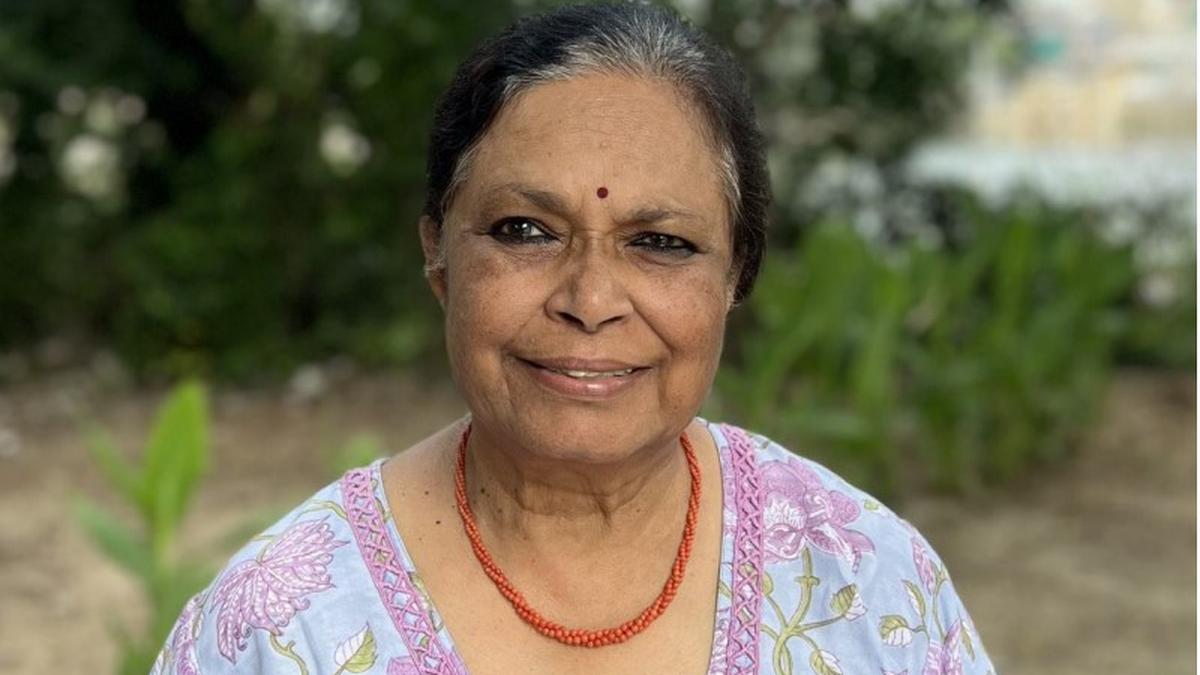
Commercialisation of health services can be a recipe for disaster, says Sujatha Rao

Commercialisation of health services can be a recipe for disaster, says Sujatha Rao

Posted on September 21, 2024 By admin


A few days ago, Sujatha Rao, former Union Secretary of the Health Ministry, quit the Lancet Citizens’ Commission on Reimagining India’s Health System. In 2020, the Union government intensified its efforts to privatise health care in India when NITI Aayog proposed and Finance Minister Nirmala Sitharaman announced in her budget speech that district hospitals will be attached with private medical colleges in a public-private partnership (PPP) mode. This came a year after the Health Ministry issued guidelines for setting up private medical colleges in a PPP mode.

In an email, Ms. Rao shares her views on the perils of increased privatisation of health care in the country.

In July 2024, Madhya Pradesh government issued a notification to privatise 10 district hospitals with 25% of beds reserved for paying patients. Can privatisation of district hospitals in PPP mode “improve health infrastructure” while making healthcare freely accessible to poor people? 


For Madhya Pradesh this is the fourth attempt to hand over public facilities to private parties. I am told that each hospital is proposed to be “leased” out for 30 years against a down payment of about Rs.260 crores. Apparently, this is being executed by the Finance department under the 2019 Central government scheme that consists of providing 60% of the total project cost as viability gap funding, land and other assets and allowing100% operational cost recovery in lieu of keeping 75% of the beds for free treatment. The private sector cannot provide free care unless it establishes a medical college charging hefty capitation to cross subsidise. Even then it is difficult. And with weak capacity to enforce conditions this too will go down as the old scheme of giving land and custom duty exemptions in lieu of 10% free beds and 50% free outpatient (OP).  

What challenges can arise when district hospitals are attached with private medical colleges in PPP mode? 


This hybrid model is unworkable as can be seen in Chittoor in Andhra Pradesh and elsewhere where the private party was allowed to establish a medical college by attaching the 300-bed district hospital. The private party has its own staff and uses the hospital for its own requirements, while the hospital is run by the government staff, creating dual control, confusion, and much bitterness. Instead, the private party could have had an MOU with the government and paid fees for using the hospital for training purposes. The government hospital would have earned revenues, and improved the infrastructure while being in command of the hospital’s functioning. Since it will be impossible for our weak/soft State to dislodge the private party that has access to prime property and assets worth several crores free, over time, the government will withdraw and the poor in that district will lose access to good care. If contract management is weak, PPPs can end up with public assets going into private hands, and the government abdicating its responsibility to provide cost effective affordable/free care to its citizens.

Will privatisation lead to a situation where relatively healthier patients who pay for services are selected, as seen in some developed countries?


It is not privatisation that selects, but insurance. Insurance can be viable only if there is a large basis of young, healthy males as opposed to old, sick, or women in the reproductive age group. Again, private for profit prefer those with ability to pay — for example, see the differential care provided to high-paying medical tourists and Indian patients.

Can the U.S. model of Managed Care be appropriate for India, considering the large population of poor people? 


While all health systems try to follow the principles of Managed Care — keeping people healthy, preventing illness, reducing hospital services and ensuring continuum of care in case of chronic disease — the U.S. model of managed care is based on an insurance model where a person becomes a member of the network based on his ability to pay the premium. Such systems are seen to have a selection bias, deny critical and timely care, and create several such barriers and do not help contain cost of care. Instead, they exacerbate inequality. Given that India’s primary care is chaotic with different systems of medicine, varied levels of competencies of providers and so on, a U.S. style of managed care model can not only further exacerbate the existing inequalities but also make health care costly, more so as we lack the regulatory capacity to manage contradictions and redress grievances.

In absence of any social security, will privatisation of health care in India be a recipe for disaster? 


India’s health system is the most privatised but it is unregulated and makes access to good quality care a privilege. In neglecting health by allocating measly budgets, refusing to put a strong regulatory system to reduce the adverse effects of market failures, allowing brazen profiteering as seen during the COVID-19 pandemic, and virtually abdicating the obligatory duty of providing universal access to comprehensive primary health care services free at point of service, by taking the easy and lazy route of expanding insurance or selling public hospitals to investors, the Indian State has become unfair and unjust as a fifth of its citizens are unable to avail medical care due to their inability to pay. Nearly 60 million people are driven to penury paying medical bills. So yes, an unregulated for-profit commercialisation of health services can be a recipe for disaster.

Published – September 21, 2024 09:09 pm IST


Source link

Science

Post navigation

Previous Post: “Great To See Both Of Them In Such Fine Rhythm”: Sachin Tendulkar Praises Shubman Gill, Rishabh Pant
Next Post: “It Gives Me A Lot Of Satisfaction”: Shubman Gill After Scoring Century Against Bangladesh In 1st Test

Related Posts

  • Why ISRO’s next big challenge is to succeed on an industrial scale
    Why ISRO’s next big challenge is to succeed on an industrial scale Science
  • Singapore to launch space agency in response to global investment surge
    Singapore to launch space agency in response to global investment surge Science
  • Can the newly discovered organelle help engineer plants to fix nitrogen?
    Can the newly discovered organelle help engineer plants to fix nitrogen? Science
  • Assam study sheds new light on sun’s surface tremors
    Assam study sheds new light on sun’s surface tremors Science
  • Aravalli question faces the brunt of India’s fondness for ‘strategic exemptions’
    Aravalli question faces the brunt of India’s fondness for ‘strategic exemptions’ Science
  • Eye care diagnosis from a distance
    Eye care diagnosis from a distance Science

More Related Articles

Portable ion chromatograph brings real-world practice to classrooms Portable ion chromatograph brings real-world practice to classrooms Science
Google celebrates India’s Chandrayaan-3 feat with special doodle Google celebrates India’s Chandrayaan-3 feat with special doodle Science
Vaccine equity is very important; only the Universal Immunisation Programme can achieve it: Gagandeep Kang  Vaccine equity is very important; only the Universal Immunisation Programme can achieve it: Gagandeep Kang  Science
Tamil Nadu uses inexpensive method to treat rodenticide poisoning Tamil Nadu uses inexpensive method to treat rodenticide poisoning Science
2025 Nobel Prize in Physics goes to three scientists for discovery of macroscopic quantum mechanical tunnelling 2025 Nobel Prize in Physics goes to three scientists for discovery of macroscopic quantum mechanical tunnelling Science
Solar can provide 20% of world electricity on northern summer solstice, thinktank says Solar can provide 20% of world electricity on northern summer solstice, thinktank says Science
SiteLock

Archives

  • May 2026
  • April 2026
  • March 2026
  • February 2026
  • January 2026
  • December 2025
  • November 2025
  • October 2025
  • September 2025
  • August 2025
  • July 2025
  • June 2025
  • May 2025
  • April 2025
  • March 2025
  • February 2025
  • January 2025
  • December 2024
  • November 2024
  • October 2024
  • September 2024
  • August 2024
  • July 2024
  • June 2024
  • May 2024
  • April 2024
  • March 2024
  • February 2024
  • January 2024
  • December 2023
  • November 2023
  • October 2023
  • September 2023
  • August 2023
  • July 2023
  • June 2023
  • May 2023
  • April 2023
  • March 2023
  • February 2023
  • January 2023
  • December 2022
  • November 2022
  • October 2022
  • September 2022
  • August 2022
  • July 2022
  • June 2022
  • May 2022

Categories

  • Business
  • Nation
  • Science
  • Sports
  • World

Recent Posts

  • Three killed in separate road accidents
  • Global fire outbreaks hit record high as ‘unprecedented’ heat extremes loom, scientists say
  • Government hikes paddy MSP by ₹72 to ₹2,441/qtl; sunflower seed sees steepest rise at ₹622
  • CCMB researchers find molecular ‘glue’ that blocks viral spread in plants
  • Hindustan Petroleum Q4 net profit accelerates 46% on improved refining margins before conflict impact

Recent Comments

  1. Bryandut on UP Teacher Who Asked Students To Slap Muslim Classmate
  2. NathanJobre on UP Teacher Who Asked Students To Slap Muslim Classmate
  3. DavidNup on UP Teacher Who Asked Students To Slap Muslim Classmate
  4. JeffryFok on UP Teacher Who Asked Students To Slap Muslim Classmate
  5. Jesusetexy on UP Teacher Who Asked Students To Slap Muslim Classmate
  • BCCI In A Fix Over Rohit Sharma-Virat Kohli Retirement Decision? Report Makes Huge Claim
    BCCI In A Fix Over Rohit Sharma-Virat Kohli Retirement Decision? Report Makes Huge Claim Sports
  • Access Denied Business
  • Access Denied Business
  • Access Denied Sports
  • Access Denied
    Access Denied Nation
  • Turkish President Recep Tayyip Erdogan raises Kashmir issue during UNGA address
    Turkish President Recep Tayyip Erdogan raises Kashmir issue during UNGA address World
  • Duleep Trophy | Centurion Khajuria keeps North afloat
    Duleep Trophy | Centurion Khajuria keeps North afloat Sports
  • China welcomes Cambodian and Zambian leaders as it forges deeper ties with Global South
    China welcomes Cambodian and Zambian leaders as it forges deeper ties with Global South World

Editor-in-Chief:
Mohammad Ariff,
MSW, MAJMC, BSW, DTL, CTS, CNM, CCR, CAL, RSL, ASOC.
editor@artifex.news

Associate Editors:
1. Zenellis R. Tuba,
zenelis@artifex.news
2. Haris Daniyel
daniyel@artifex.news

Photograher:
Rohan Das
rohan@artifex.news

Artifex.News offers Online Paid Internships to college students from India and Abroad. Interns will get a PRESS CARD and other online offers.
Send your CV (Subjectline: Paid Internship) to internship@artifex.news

Links:
Associate Journalism
About Us
Privacy Policy

News Links:
Breaking News
World
Nation
Sports
Business
Entertainment
Lifestyle

Registered Office:
72/A, Elliot Road, Kolkata - 700016
Tel: 033-22277777, 033-22172217
Email: office@artifex.news

Editorial Office / News Desk:
No. 13, Mezzanine Floor, Esplanade Metro Rail Station,
12 J. L. Nehru Road, Kolkata - 700069.
(Entry from Gate No. 5)
Tel: 033-46011099, 033-46046046
Email: editor@artifex.news

Copyright © 2023 Artifex.News Newsportal designed by Artifex Infotech.