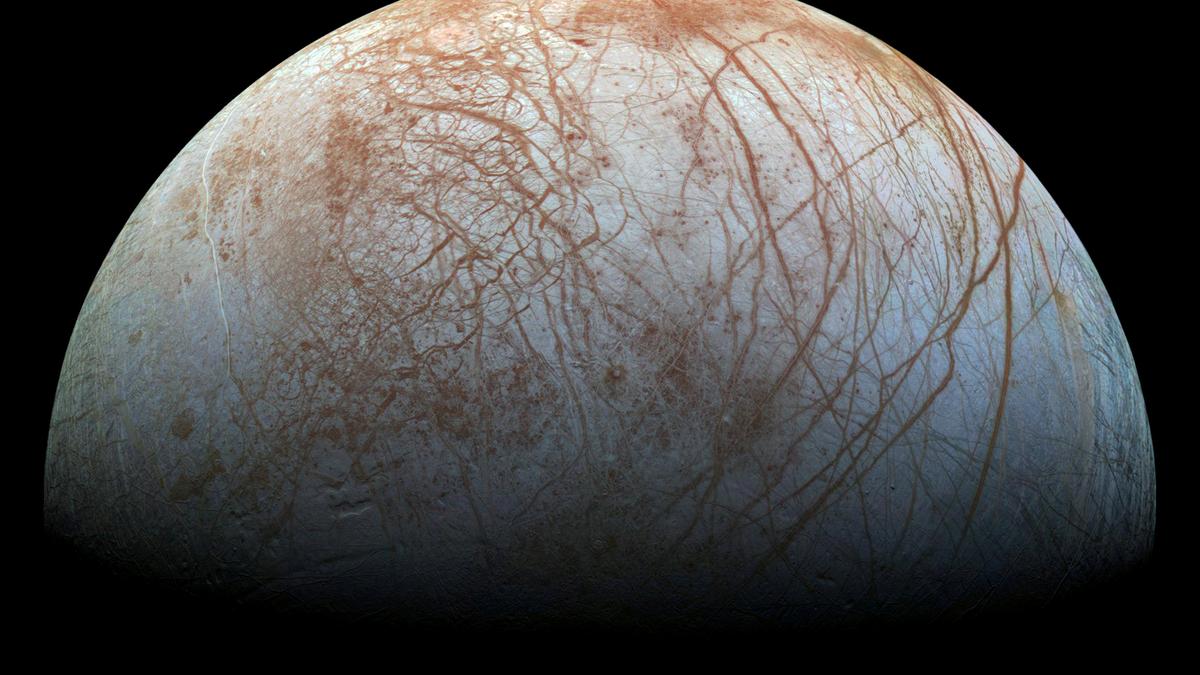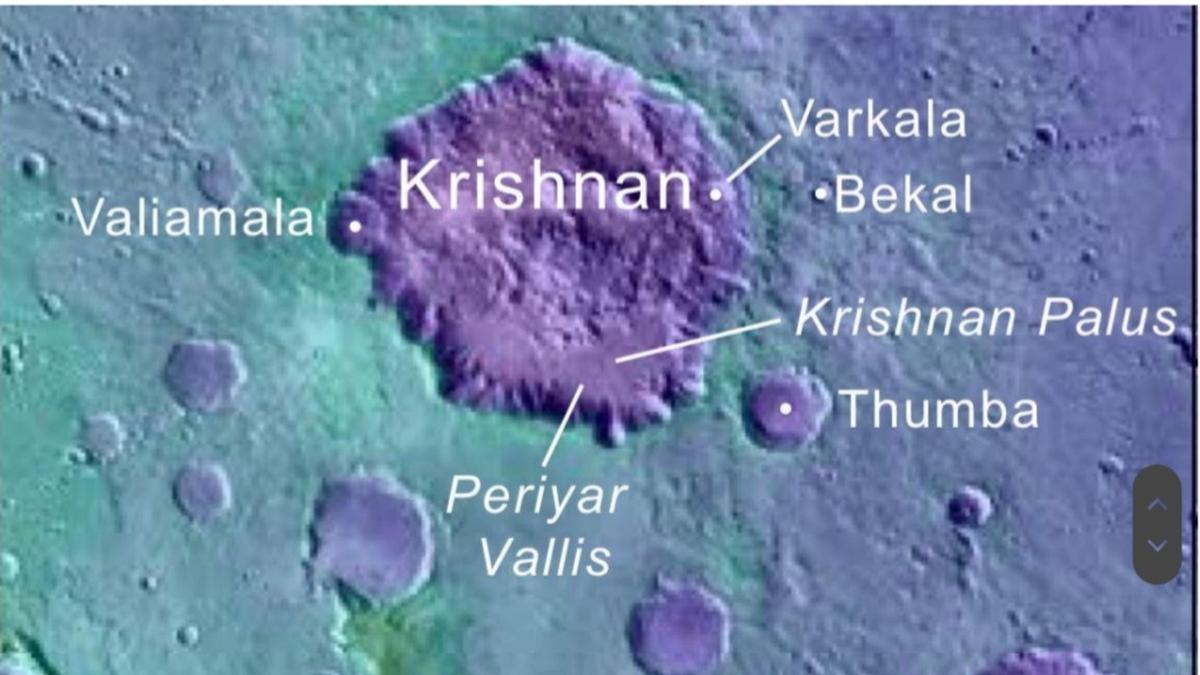





Not many people have the distinction of having a cosmic body named after them. Jayant Murthy, a senior professor at the Indian Institute of Astrophysics (IIA), Bengaluru, is one of them. Murthy just had an asteroid named after him by the International Astronomical Union (IAU) to mark his contributions to astronomy. The asteroid 2005 EX296, which was discovered at the Kitt Peak National Observatory in Arizona by M.W. Buie in 2005, will now be called (215884) Jayantmurthy, “in recognition of his work in the NASA New Horizons Science Team to observe the ultraviolet background radiation in the universe,” said the IIA.
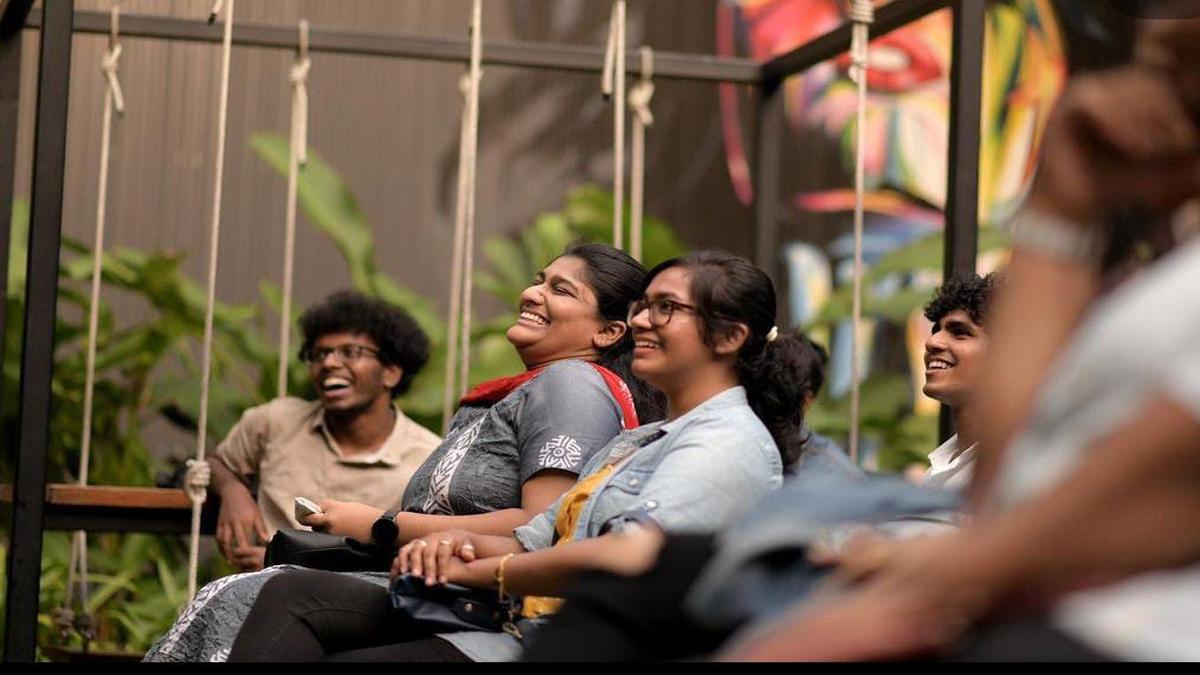
Murthy spoke to The Hindu after a talk he recently gave at the Indian Institute of Science (IISc) in Bengaluru. The talk, titled Nightfall: An Asimov Tribute or How I made it into Wikipedia focused on a research project he did with a student that examined the viability of the world that Isaac Asimov’s Nightfall is set in.
In the interview, Murthy talks about his own journey in astronomy, the importance of science outreach, and India’s space programme.
You spoke at this recent lecture at IISc about how science fiction often draws people towards science. Was that something that happened to you?

I read a lot of different things, including historical novels, Agatha Christie and P.G. Wodehouse. Science fiction was one of the things I read. Did it push me into science? I certainly found it exciting, but I can’t say that it was specifically what pushed me.
 In 1981, the Space Telescope went to Johns Hopkins University, where you completed an undergraduate and postgraduate degree in physics. Did that influence your decision to continue studying there for your PhD?
What you do with your PhD is really about what you are interested in at that time and the opportunities in the college. This was just about the time when Hopkins got the Space Telescope, and it seemed like a good opportunity. The reality is that the people involved are busy with their own work, and there was not as much interaction between the Physics Department and the Space Telescope as might have been.
After receiving your PhD in 1987, you went on to work at Goddard Space Flight Centre. Then you returned to Hopkins, where you spent the next decade or so as a research scientist before moving to India in 2000, where you joined IAA. Can you talk about what prompted the move?
There were a couple of reasons. One was because AstroSat (an ISRO astronomy mission) was trying to take off, again from the ground floor of a major observatory, and it seemed like a good opportunity. As it turned out, AstroSat took a lot longer than one would have anticipated. It was launched in 2015, but discussions had started in the 1980s, and we started working on it in 2000-2001. That was too much time for me to spend on any mission, and I did less with it than I could have done.
Also, the U.S. market is pretty saturated. While you do get to do good work, you’re not making much of a contribution; you are making an incremental contribution. In India, the community is much smaller, so you have more of an impact. That certainly has happened. Over the last twenty years, I have probably talked to at least 10,000 students. I have been teaching a fair bit, so you have this impact.
You do a considerable amount of science outreach, constantly talking to lay people. What, in your view, is the importance of science outreach?
One reason is that it is our mandate; our salaries come from the public exchequer. It is also in self-interest because science accounts for 0.7% of the GDP, whereas in China, it accounts for 2.5%. It is abysmally underfunded, as you can tell from the output. If you go out there and show that science is interesting—hopefully we do that—it will eventually feed back into politics.
Also, people don’t understand how integral science is to their daily lives. They don’t have an appreciation for how much their lives depend on science, whether it is the technology used in cell phones or computers or medicine; you can’t survive without basic science. Our world is built on basic science, and part of basic science is rationality. We must teach people to think. Clearly, we have not done a very good job.
What are the biggest challenges you face with doing science outreach in India, where science and rationality must often battle with the country’s collective culture, including its values and traditions?
It is very hard. We do have a lot of dedicated people trying to do it, including the Science Society that I am part of.
But faith is so built-in in our society. I tell the students that they should go ahead and do whatever religious stuff, but at least understand why you are doing it. Don’t just do it because your parents tell you to do it, understand the basis behind it.
What, in your opinion, is the biggest change that India needs to make when it comes to enhancing its scientific contribution?
If you look at the places that are advanced, they all have robust academic establishments. Silicon Valley came up where it did because of Stanford (University) and Berkley (University of California, Berkeley). Or look at how they how they pumped the health system around Hopkins. In Bangalore, it is because of IISc and because of all the engineering colleges that developed here in the 1980s. You can say what you like about engineering colleges—and the money-making stuff—but it has given Bangalore a strong technical base and made it the science capital of the country.
When you fund academics, you are investing in your future. You will have returns that far exceed what you put in. There was a study in Australia many years ago and they said that for every dollar you put in, you get five dollars out.
Money is one part of it, but it also requires a revamping of the educational system. The new education policy is not going to do anything. It is drawn up by a bunch of people in elite places without knowledge of ground conditions.
You can’t just pile money into the university system that we have now, this bureaucratic system that doesn’t measure outcomes. All the students want to do is have fun in college and get out and get a job afterwards. Their parents, too, want them to get a job and money. The administration wants to sell itself, while teachers know that it’s in their best interests to give students good grades. No one cares about education in the middle. It is just a transaction.
What do you think of India’s current space programme?
I think the space programme has done very well. There are many places where we can do better. For instance, the Chinese space programme used to be well behind us, but now, in 20 years, it is far ahead.
But the current revamp is good for ISRO. It was always supposed to be the Indian Space Research Organization, but they ended up getting into routine things. How is your 100th PSLV ( Polar Satellite Launch Vehicle) going to be different from your 99th?
It is good that they are getting into private industry, but the main problem, I see, with the revamp is that the government has still not realised that space is still driven by government money. They are expecting private investors to come in, and that is not realistic. They have projected a lot of money being put into the system, but I think it may be difficult. We shall see.