


Skip to content
  • Facebook
  • X
  • Linkedin
  • WhatsApp
  • YouTube
  • Associate Journalism
  • About Us
  • Privacy Policy
  • 033-46046046
  • editor@artifex.news
Artifex.News

Artifex.News

Stay Connected. Stay Informed.

  • Breaking News
  • World
  • Nation
  • Sports
  • Business
  • Science
  • Entertainment
  • Lifestyle
  • Toggle search form
  • First 100 Days Of Modi 3.0, Ministers Unveil Report Card
    First 100 Days Of Modi 3.0, Ministers Unveil Report Card Nation
  • India Hopeful Of Preferential Treatment For Its Steel Exports Under New EU Regulations Business
  • Man Shoots Lover’s Father For Sending Her Abroad To Break Their Relationship
    Man Shoots Lover’s Father For Sending Her Abroad To Break Their Relationship Nation
  • Publish or perish: making sense of India’s research fraud epidemic
    Publish or perish: making sense of India’s research fraud epidemic Science
  • Navy’s Warship INS Tushil Docks In London On Maiden Operational Deployment
    Navy’s Warship INS Tushil Docks In London On Maiden Operational Deployment Nation
  • Access Denied World
  • Russia says oil spill ‘critical’ as Crimea declares emergency
    Russia says oil spill ‘critical’ as Crimea declares emergency World
  • IPL 2025: Punjab Kings announce Shreyas Iyer as skipper
    IPL 2025: Punjab Kings announce Shreyas Iyer as skipper Sports
An unlikely mystery: studies shed new light on how genes are made

An unlikely mystery: studies shed new light on how genes are made

Posted on January 13, 2025 By admin


The alikeness of identical twins can be startling. They are alike because all their genes are alike. Genes are those segments of the genome where, if changes occur, the characteristics of an organism change. Non-identical twins vary in 50% of their genes and are much less alike. Thus, genes define our individuality in many ways.

In December 2024, two research groups addressed how new genes are created. The University of Nevada, Reno, group reported its findings in Molecular Biology and Evolution and the other, from the Max Planck Institute for Evolutionary Biology Plön, Germany, reported in Genome Biology and Evolution.

The 24 molecules

A group of 24 molecules of DNA gives identity to our 24 chromosomes. These are the chromosomes numbered 1 to 22 and the sex chromosomes X and Y.  Our cells contain two sets of the genome: one derived from the mother’s egg and the other from the father’s sperm. Eggs and sperm receive only one chromosome of each pair. When they fuse and form the zygote, the latter has two sets again. The zygote then multiplies to form a baby.

The cells in human bodies possess two copies of chromosomes 1-22. Biological females have two X chromosomes whereas biological males have an X chromosome and a Y chromosome.

Identical twins arise from a single zygote while non-identical twins from two zygotes produced simultaneously.

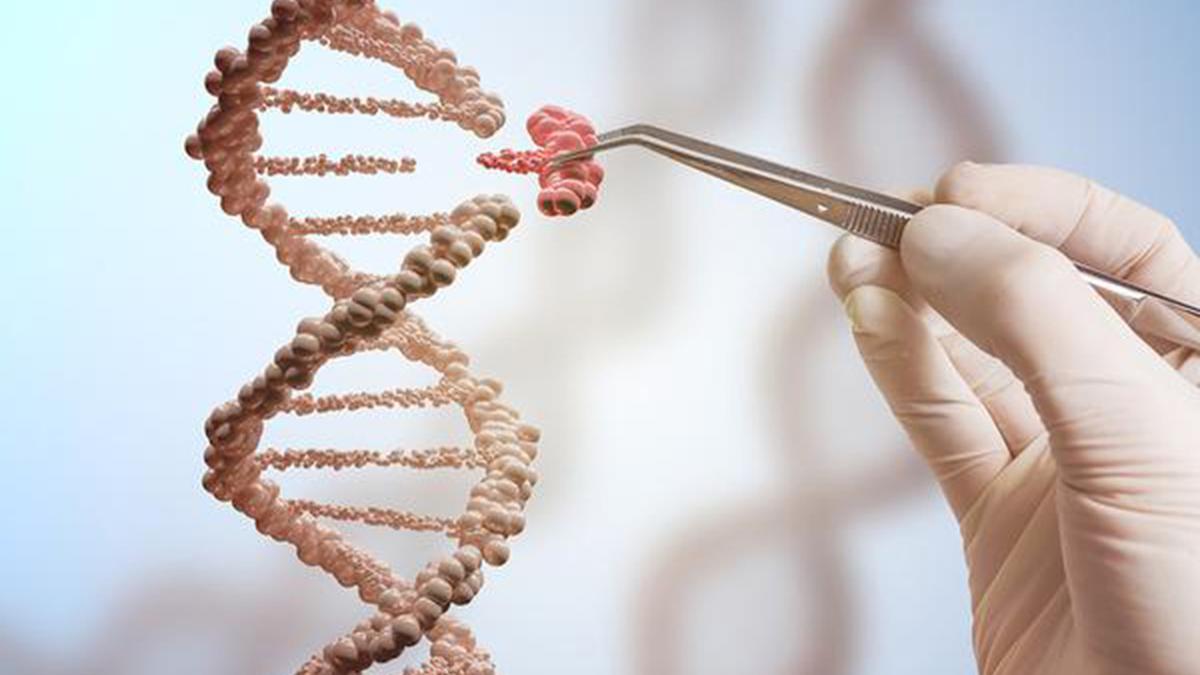
Each DNA molecule has two strands held together by bonds between compounds on the strands, called base pairs. Our genome contains 3.2 billion base-pairs. A gene is typically a few-thousand base-pair-long segment of a DNA.

When a gene is ‘expressed’, it means a cell will transcribe the underlying base pair sequence to a molecule called a messenger RNA (mRNA), and read the mRNA like a recipe to make a protein.

In the human genome, there are 20,000 protein-coding genes and 20,000 genes that cells use to create RNA that influences the expression of other genes. There are also some genes, called promoters and enhancers, which tell the cell when and where other genes are copied into mRNA.

Two compounds involved in forming the base pairs are cytosine and thymine. Sometimes the cytosine molecules bind to a methyl ion and are said to be methylated. A methylated cytosine molecule is likelier than an unmethylated one to mutate and become a thymine molecule.

Duplications create new genes

In 1970, Japanese-American biologist Susumu Ohno proposed that the main source of new genes is gene duplication. When the body’s genome has two copies of the same gene, one copy can continue to provide the original function while the other is free to mutate and acquire new functions.

Ohno’s proposal was simple but had one flaw: it didn’t explain how the organism’s cells would deal with producing twice the quantity of the same proteins as a result. Protein over-expression can lead to debilitating conditions. The University of Nevada, Reno, researchers addressed this problem.

Humans and mice last shared a common ancestor 75 million years ago. The researchers compared genes duplicated in human or mouse genomes, those duplicated in both, and those not duplicated in either.

They found the promoters of duplicated genes had more methylated DNA than the promoters of genes that hadn’t been duplicated. Increased methylation would have prevented the cells from manufacturing twice as many proteins, minimising the ill effects of duplication, and allowing the duplicate gene to survive long enough to acquire new functions.

The researchers reported that the higher rate of methylation also elevated the rate of mutation.

Random sequences to incipient genes

The Max Planck Institute group inserted exogenous DNA into a population of cells derived from a human. (Exogenous means the DNA came from sources separate from the cells.) The researchers were careful to insert the DNA at a specific site in the genome, and allowed the cells to make proteins with them.

The exogenous DNA had a chunk that consisted of a random sequence of base-pairs  — which means the proteins the cells made with it would be random as well.

The researchers put together a collection of cells of 3,708 types and nurtured them for 20 days. At regular intervals they checked the relative abundance of different cell types.

After 20 days, the team found that 53% of cell types had become less abundant, 8% more abundant, and 40% didn’t swing either way. That is, more often than not, random DNA sequences affected cell growth and thus became relevant for evolution to act upon.

In yet other words: the random DNA inserts behaved like incipient genes.

Keeping v. chucking a gene

For a genome to retain a gene, it must have some use or the genome allows it to mutate. But establishing a gene’s usefulness is challenging.

Consider blood groups. Individuals can have one of four groups — A, B, AB or O — depending on which variants of the ABO gene they’ve inherited. If a person receives A and A or A and O, they have the A blood type. If they have B and B or B and O, they have the B blood type. If they have A and B or O and O, then they have the AB or the O blood types, respectively.

In sum, every individual lacks either one or two of the variants, which means no variant is really essential. The O variant also encodes a protein with no known function and whose amino-acid sequence is markedly different from those encoded by A and B.

Primates and humans took different branches on the tree of evolution millions of years ago but share blood types — which is to say evolution both found a way and saw fit to retain all three variants in so many species for a very long amount of time.

Scientists don’t yet have a simple answer to why evolution has done this, but they aren’t complaining.

D.P. Kasbekar is a retired scientist.

Published – January 13, 2025 05:30 am IST


Source link

Science

Post navigation

Previous Post: Myanmar junta air strike kills 15 civilians: ethnic rebel group
Next Post: BC Association for 42% local body reservations 

Related Posts

  • Inactivated COVID-19 vaccine CoronaVac associated with TTP
    Inactivated COVID-19 vaccine CoronaVac associated with TTP Science
  • Exploring the ‘wonderful world’ of symplectic geometry to solve problems in mechanics
    Exploring the ‘wonderful world’ of symplectic geometry to solve problems in mechanics Science
  • A comprehensive immunisation schedule for adult women is now ready
    A comprehensive immunisation schedule for adult women is now ready Science
  • World’s smallest known snake makes big comeback
    World’s smallest known snake makes big comeback Science
  • Watch: Nobel prize science winners 2024 | All you need to know
    Watch: Nobel prize science winners 2024 | All you need to know Science
  • New genus of jumping spiders ‘Tenkana’ discovered in south India
    New genus of jumping spiders ‘Tenkana’ discovered in south India Science

More Related Articles

Science retracts NASA arsenic bacteria paper after years of controversy Science retracts NASA arsenic bacteria paper after years of controversy Science
Why do fish in schools have an easier time swimming in rough waters? Why do fish in schools have an easier time swimming in rough waters? Science
Why are school buses yellow Why are school buses yellow Science
Does the Sun rotate? Does the Sun rotate? Science
Smart Irrigation Plan can save 10-30% of irrigation water in drought-prone regions: IIT Bombay research Smart Irrigation Plan can save 10-30% of irrigation water in drought-prone regions: IIT Bombay research Science
Crocodiles yield to flower power, study finds  Crocodiles yield to flower power, study finds  Science
SiteLock

Archives

  • May 2026
  • April 2026
  • March 2026
  • February 2026
  • January 2026
  • December 2025
  • November 2025
  • October 2025
  • September 2025
  • August 2025
  • July 2025
  • June 2025
  • May 2025
  • April 2025
  • March 2025
  • February 2025
  • January 2025
  • December 2024
  • November 2024
  • October 2024
  • September 2024
  • August 2024
  • July 2024
  • June 2024
  • May 2024
  • April 2024
  • March 2024
  • February 2024
  • January 2024
  • December 2023
  • November 2023
  • October 2023
  • September 2023
  • August 2023
  • July 2023
  • June 2023
  • May 2023
  • April 2023
  • March 2023
  • February 2023
  • January 2023
  • December 2022
  • November 2022
  • October 2022
  • September 2022
  • August 2022
  • July 2022
  • June 2022
  • May 2022

Categories

  • Business
  • Nation
  • Science
  • Sports
  • World

Recent Posts

  • Vijay govt. says it needs time to ‘restructure’ Magalir Urimai Thogai programme; funds to be disbursed soon
  • Wholesale price inflation rises to 8.3% in April on sharp spike in fuel, power, crude
  • Ten new MLCs sworn in at Maharashtra Vidhan Bhavan
  • Frederic Soyez replaces Sreejesh as junior men’s hockey team coach
  • Mamata appears before Calcutta High Court to argue Bengal post-poll violence case

Recent Comments

  1. RafaelNar on UP Teacher Who Asked Students To Slap Muslim Classmate
  2. CarlosExorb on UP Teacher Who Asked Students To Slap Muslim Classmate
  3. Robertfloup on UP Teacher Who Asked Students To Slap Muslim Classmate
  4. Davidcag on UP Teacher Who Asked Students To Slap Muslim Classmate
  5. OrvalMaync on UP Teacher Who Asked Students To Slap Muslim Classmate
  • Access Denied
    Access Denied World
  • Kurdish fighters refuse to leave Syria’s Aleppo after truce
    Kurdish fighters refuse to leave Syria’s Aleppo after truce World
  • Access Denied Business
  • Access Denied Sports
  • Assembly Elections 2026 Updates: Shah says, Bengal people firm on throwing infiltrators out of State; Mamata says 19 States, Centre have come together to counter me
    Assembly Elections 2026 Updates: Shah says, Bengal people firm on throwing infiltrators out of State; Mamata says 19 States, Centre have come together to counter me Nation
  • Rupee plunges 15 paise to settle at 84.44 against U.S. dollar
    Rupee plunges 15 paise to settle at 84.44 against U.S. dollar Business
  • Access Denied Sports
  • IS-Khorasan’s attacks in Russia, Iran point to an Islamic State resurgence | Analysis
    IS-Khorasan’s attacks in Russia, Iran point to an Islamic State resurgence | Analysis World

Editor-in-Chief:
Mohammad Ariff,
MSW, MAJMC, BSW, DTL, CTS, CNM, CCR, CAL, RSL, ASOC.
editor@artifex.news

Associate Editors:
1. Zenellis R. Tuba,
zenelis@artifex.news
2. Haris Daniyel
daniyel@artifex.news

Photograher:
Rohan Das
rohan@artifex.news

Artifex.News offers Online Paid Internships to college students from India and Abroad. Interns will get a PRESS CARD and other online offers.
Send your CV (Subjectline: Paid Internship) to internship@artifex.news

Links:
Associate Journalism
About Us
Privacy Policy

News Links:
Breaking News
World
Nation
Sports
Business
Entertainment
Lifestyle

Registered Office:
72/A, Elliot Road, Kolkata - 700016
Tel: 033-22277777, 033-22172217
Email: office@artifex.news

Editorial Office / News Desk:
No. 13, Mezzanine Floor, Esplanade Metro Rail Station,
12 J. L. Nehru Road, Kolkata - 700069.
(Entry from Gate No. 5)
Tel: 033-46011099, 033-46046046
Email: editor@artifex.news

Copyright © 2023 Artifex.News Newsportal designed by Artifex Infotech.