


Skip to content
  • Facebook
  • X
  • Linkedin
  • WhatsApp
  • YouTube
  • Associate Journalism
  • About Us
  • Privacy Policy
  • 033-46046046
  • editor@artifex.news
Artifex.News

Artifex.News

Stay Connected. Stay Informed.

  • Breaking News
  • World
  • Nation
  • Sports
  • Business
  • Science
  • Entertainment
  • Lifestyle
  • Toggle search form
  • Access Denied Sports
  • Amid Sultan Palace row, tourism minister says such heritage structures will be beautified
    Amid Sultan Palace row, tourism minister says such heritage structures will be beautified Nation
  • Trinamool After CBI Raids Sandeshkhali
    Trinamool After CBI Raids Sandeshkhali Nation
  • New Zealand vs Uganda LIVE Score Updates, T20 World Cup 2024: New Zealand Strike Early As Uganda Go 3 Down
    New Zealand vs Uganda LIVE Score Updates, T20 World Cup 2024: New Zealand Strike Early As Uganda Go 3 Down Sports
  • Angry Andrey Rublev Crashes Out Of French Open
    Angry Andrey Rublev Crashes Out Of French Open Sports
  • America, Israel “Must Stand Together”: Netanyahu Addresses US Congress
    America, Israel “Must Stand Together”: Netanyahu Addresses US Congress World
  • Access Denied
    Access Denied Nation
  • Baloch militants attack Pakistan’s Gwadar Port; 7 terrorists killed
    Baloch militants attack Pakistan’s Gwadar Port; 7 terrorists killed World
HIV strains in India resist some top broadly neutralising antibodies

HIV strains in India resist some top broadly neutralising antibodies

Posted on September 14, 2025 By admin


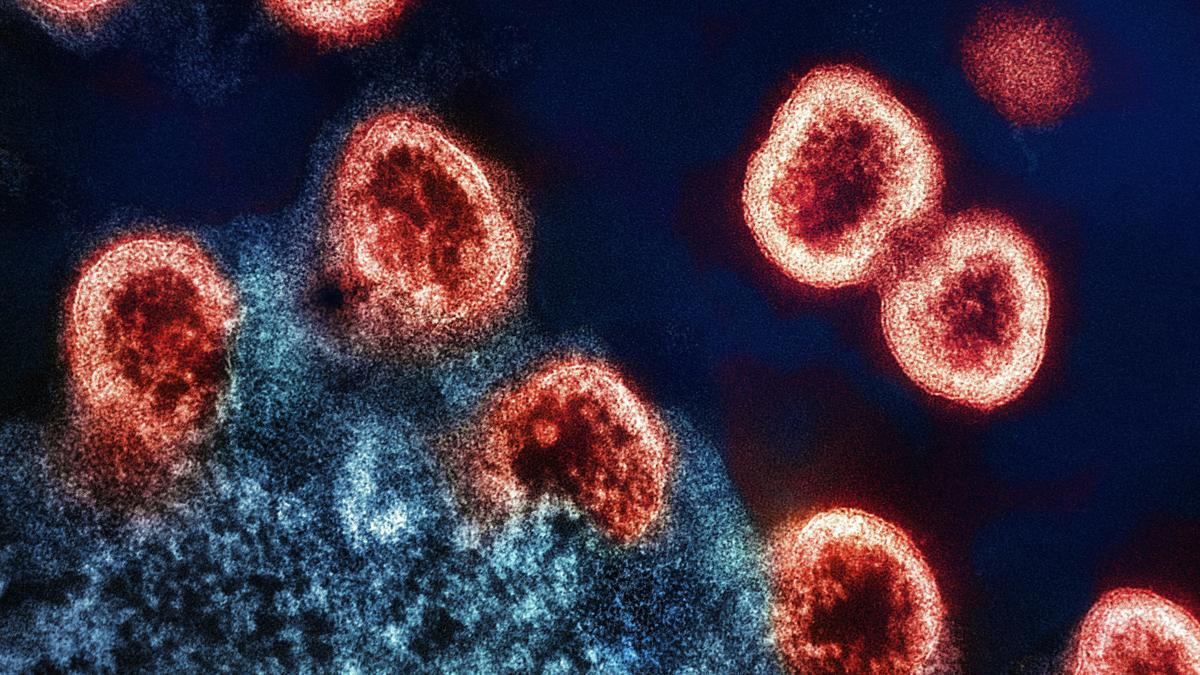
In 1994, a landmark paper in Science reported the isolation of an antibody called b12from an HIV-infected individual. The study showed that while pooled plasma containing billions of antibodies from HIV patients could neutralise viruses isolated from only 3 of 12 patients, b12 alone achieved similar neutralisation in 8 of the 12, and that, with one-fifth the amount of antibody present in the pooled plasma.

Soon, other antibodies with similar properties were identified that were capable of neutralising a wide range of HIV variants at remarkably low concentrations. This was an exciting development, as researchers were beginning to realise that conventional antibodies, which are normally among the immune system’s most powerful defences, are largely ineffective against HIV. These new antibodies, called broadly neutralising antibodies (bNAbs), raised hopes that they might one day help bring an end to the pandemic.

Since then, hundreds of bNAbs have been identified from different HIV-infected individuals. But despite early excitement, several challenges kept them from becoming the long-sought “magic bullet” that could end HIV. One major problem is the staggering genetic variation demonstrated by HIV. Even within a single patient, countless viral variants coexist, making it virtually impossible for any single bNAb to neutralise every virus. This means that even if someone naturally produces a bNAb, escape variants will persist and keep the infection alive.

Combinations of bNabs

One could potentially counter this by administering combinations of bNAbs, thus reducing the chances of viral escape. However, HIV has another trick up its sleeve. Once inside a cell, it can remain silent without producing new virus particles and thus evade immune detection. At any given moment, millions of cells may be in this silent state, while others actively produce viruses. Because bNAbs can only neutralise virus particles released from infected cells, the silent reservoir remains untouched. Clearing it would require maintaining the bNAb antibody cocktail treatment until every silent cell eventually reactivates — a process that has been predicted to take several decades.

One possible workaround is to train the body to make multiple bNAbs on its own. However, only a small fraction of people with HIV ever develop them. This limitation notwithstanding, vaccine researchers are working to induce the production of bNAbs by vaccination. Conventional antibodies, by definition, target specific regions on a pathogen; they usually fail against HIV because of the virus’s extreme variability. bNAbs are special because they recognise conserved regions of the viral envelope. These are sites that the virus cannot afford to change without compromising its survival. For example, one such location is the site that the virus uses to bind to CD4 receptors on the T-cells for infection. Mutations in this CD4 binding site would render the virus incapable of infecting hosts.

For several years, scientists have been testing combinations of bNAbs to see which ones can best neutralise the many strains of HIV found around the world. HIV can be classified into ‘subtypes’, which are similar but not identical variants of the virus. Each subtype has innumerable strains that circulate. No single bNAb can block all of them. Even within the same subtype, strains can differ in how sensitive they are. 

A recent paper published in the Journal of Virology by a team of researchers led by Jayanta Bhattacharya of the Translational Health Science & Technology Institute, Faridabad, has now shown that bNAb effectiveness can also differ between viruses of the same subtype circulating in different geographical regions.

The study, funded by the Team Science Grant of the DBT/Wellcome Trust India Alliance, compared the ability of 14 of the best bNAbs in the world to neutralise contemporary HIV variants circulating in India and South Africa.

The researchers found that Indian strains of HIV were most effectively neutralised by broadly neutralizing antibodies (bNAbs) that target a region on the viral surface known as the V3 glycan. Antibodies directed against the CD4 binding site also showed good activity, though somewhat less so. In contrast, antibodies aimed at the V1/V2 apex of the viral spike protein were far less effective, with most Indian strains showing strong resistance to this class. An intriguing pattern also emerged: viruses that resisted neutralisation by V1/V2-apex antibodies were often well controlled by CD4-binding-site antibodies.

Building on these observations, the team proposed a novel cocktail of three bNAbs called BG18, N6, and PGDM1400, that they predict to be able to neutralise a large proportion of circulating Indian HIV-1 strains with high efficiency. Such rational combinations could help overcome the virus’s ability to evade individual antibodies.

Important lesson

The study also uncovered striking regional differences. When viruses from India were compared with those from South Africa, the researchers found that Indian strains were more sensitive to antibodies such as N6, 10-1074, and BG18, but slightly more resistant to CAP256-VRC26.25. According to Prof. Bhattacharya, these differences likely arise from subtle changes in the viral spike protein, particularly in the structural motifs that form the antibody binding sites. These altered motifs can determine whether a particular antibody will be effective.

He also emphasised that the results of the study open up important opportunities for region-specific HIV prevention strategies, such as passive immunisation of high-risk individuals with carefully chosen antibody cocktails, or the design of vaccines that elicit similarly broad and potent antibody responses. He also highlighted the need for ongoing surveillance of both viral diversity and antibody effectiveness to ensure the most promising antibody combinations are prioritized for clinical development.

Overall, the study highlights an important lesson for HIV researchers worldwide. Because HIV’s remarkable genetic diversity allows it to evolve differently in different parts of the world, novel treatments and vaccines may not work everywhere in the same way. As Prof. Bhattacharya pointed out, regional studies like this one are essential to design therapies that are truly effective on a global scale.

Arun Panchapakesan is an assistant professor at the Y.R. Gaitonde Centre for AIDS Research and Education, Chennai.

Published – September 14, 2025 05:30 am IST


Source link

Science

Post navigation

Previous Post: How has Gen Z uprising forced changes in Nepal? | Explainer
Next Post: Court bars Birla Corporation from putting resolution to vote

Related Posts

  • Dwarka Basin: an ancient haven
    Dwarka Basin: an ancient haven Science
  • Solar Eclipse February 2026: Where, when and how to watch it in India?
    Solar Eclipse February 2026: Where, when and how to watch it in India? Science
  • The story of how the deadliest virus to humans was revived
    The story of how the deadliest virus to humans was revived Science
  • Panic in the time of cholera: addressing issues critical to managing a resurgence 
    Panic in the time of cholera: addressing issues critical to managing a resurgence  Science
  • IIT Guwahati researchers turn tea factory waste to pharma products
    IIT Guwahati researchers turn tea factory waste to pharma products Science
  • Sci-Five | The Hindu Science Quiz: On Indian Scientists
    Sci-Five | The Hindu Science Quiz: On Indian Scientists Science

More Related Articles

Dutch airport Schiphol capped at 478,000 flights per year to reduce noise Dutch airport Schiphol capped at 478,000 flights per year to reduce noise Science
Artemis II astronauts preparing for historic lunar flyby Artemis II astronauts preparing for historic lunar flyby Science
Common diabetes drug may lower dementia risk, study in Korea shows Common diabetes drug may lower dementia risk, study in Korea shows Science
Microplastics finally found in human brains, but that’s not the full picture Microplastics finally found in human brains, but that’s not the full picture Science
IIT Bombay’s space start-up tests its green propulsion system in space  IIT Bombay’s space start-up tests its green propulsion system in space  Science
Ancient viral genomes preserved in glaciers reveal the history of the earth’s climate Ancient viral genomes preserved in glaciers reveal the history of the earth’s climate Science
SiteLock

Archives

  • May 2026
  • April 2026
  • March 2026
  • February 2026
  • January 2026
  • December 2025
  • November 2025
  • October 2025
  • September 2025
  • August 2025
  • July 2025
  • June 2025
  • May 2025
  • April 2025
  • March 2025
  • February 2025
  • January 2025
  • December 2024
  • November 2024
  • October 2024
  • September 2024
  • August 2024
  • July 2024
  • June 2024
  • May 2024
  • April 2024
  • March 2024
  • February 2024
  • January 2024
  • December 2023
  • November 2023
  • October 2023
  • September 2023
  • August 2023
  • July 2023
  • June 2023
  • May 2023
  • April 2023
  • March 2023
  • February 2023
  • January 2023
  • December 2022
  • November 2022
  • October 2022
  • September 2022
  • August 2022
  • July 2022
  • June 2022
  • May 2022

Categories

  • Business
  • Nation
  • Science
  • Sports
  • World

Recent Posts

  • Traffic diversions in Darussalam for 45 days for construction work
  • Watch: ‘We’re going to have a fantastic future together’: Trump to Xi Jinping
  • Thoothukudi will see highest Tasmac closures of liquor shops near schools, places of worship
  • Sensex climbs 450 points on positive Asian peers
  • India bans sugar exports till September 30

Recent Comments

  1. CarlosExorb on UP Teacher Who Asked Students To Slap Muslim Classmate
  2. Robertfloup on UP Teacher Who Asked Students To Slap Muslim Classmate
  3. Davidcag on UP Teacher Who Asked Students To Slap Muslim Classmate
  4. OrvalMaync on UP Teacher Who Asked Students To Slap Muslim Classmate
  5. Jeffreyroure on UP Teacher Who Asked Students To Slap Muslim Classmate
  • PCB’s Big Threat If Team India Refuses To Travel To Pakistan For Champions Trophy 2025: Report
    PCB’s Big Threat If Team India Refuses To Travel To Pakistan For Champions Trophy 2025: Report Sports
  • Mukesh Ambani Gets Death Threat
    Mukesh Ambani Gets Death Threat Nation
  • Israel Says 3 Senior Hamas Leaders Killed In Gaza Attack
    Israel Says 3 Senior Hamas Leaders Killed In Gaza Attack World
  • Five Years On, WHO Urges China To Share Data On Covid Origins
    Five Years On, WHO Urges China To Share Data On Covid Origins World
  • G20 Summit LIVE updates: PM Modi discusses investments in India’s digital ecosystem with South Africa-based Naspers; talks set to open today
    G20 Summit LIVE updates: PM Modi discusses investments in India’s digital ecosystem with South Africa-based Naspers; talks set to open today World
  • Access Denied World
  • Access Denied Sports
  • Access Denied
    Access Denied Nation

Editor-in-Chief:
Mohammad Ariff,
MSW, MAJMC, BSW, DTL, CTS, CNM, CCR, CAL, RSL, ASOC.
editor@artifex.news

Associate Editors:
1. Zenellis R. Tuba,
zenelis@artifex.news
2. Haris Daniyel
daniyel@artifex.news

Photograher:
Rohan Das
rohan@artifex.news

Artifex.News offers Online Paid Internships to college students from India and Abroad. Interns will get a PRESS CARD and other online offers.
Send your CV (Subjectline: Paid Internship) to internship@artifex.news

Links:
Associate Journalism
About Us
Privacy Policy

News Links:
Breaking News
World
Nation
Sports
Business
Entertainment
Lifestyle

Registered Office:
72/A, Elliot Road, Kolkata - 700016
Tel: 033-22277777, 033-22172217
Email: office@artifex.news

Editorial Office / News Desk:
No. 13, Mezzanine Floor, Esplanade Metro Rail Station,
12 J. L. Nehru Road, Kolkata - 700069.
(Entry from Gate No. 5)
Tel: 033-46011099, 033-46046046
Email: editor@artifex.news

Copyright © 2023 Artifex.News Newsportal designed by Artifex Infotech.