




Skip to content
  • Facebook
  • X
  • Linkedin
  • WhatsApp
  • YouTube
  • Associate Journalism
  • About Us
  • Privacy Policy
  • 033-46046046
  • editor@artifex.news
Artifex.News

Artifex.News

Stay Connected. Stay Informed.

  • Breaking News
  • World
  • Nation
  • Sports
  • Business
  • Science
  • Entertainment
  • Lifestyle
  • Toggle search form
  • Renewed Russian offensive on Kharkiv in northeast Ukraine forces 1,700 civilians to flee
    Renewed Russian offensive on Kharkiv in northeast Ukraine forces 1,700 civilians to flee World
  • Gig workers suffer from lack of social security, regulations: study
    Gig workers suffer from lack of social security, regulations: study Business
  • Wheels India Q3 net profit surges 79% to ₹22.57 crore, revenue down 6%
    Wheels India Q3 net profit surges 79% to ₹22.57 crore, revenue down 6% Business
  • Smashed window of St. George Park’s press box awaits Rinku Singh’s autograph
    Smashed window of St. George Park’s press box awaits Rinku Singh’s autograph Sports
  • Federation Cup Live: Neeraj Chopra, Kishore Jena In Focus
    Federation Cup Live: Neeraj Chopra, Kishore Jena In Focus Sports
  • Karnataka, Maharashtra Issue Guidelines As Cases Rise
    Karnataka, Maharashtra Issue Guidelines As Cases Rise Nation
  • Access Denied World
  • Access Denied World
Game-changer virus developed by Kerala Forest Research Institute can help save teak plantations

Game-changer virus developed by Kerala Forest Research Institute can help save teak plantations

Posted on August 6, 2025 By admin


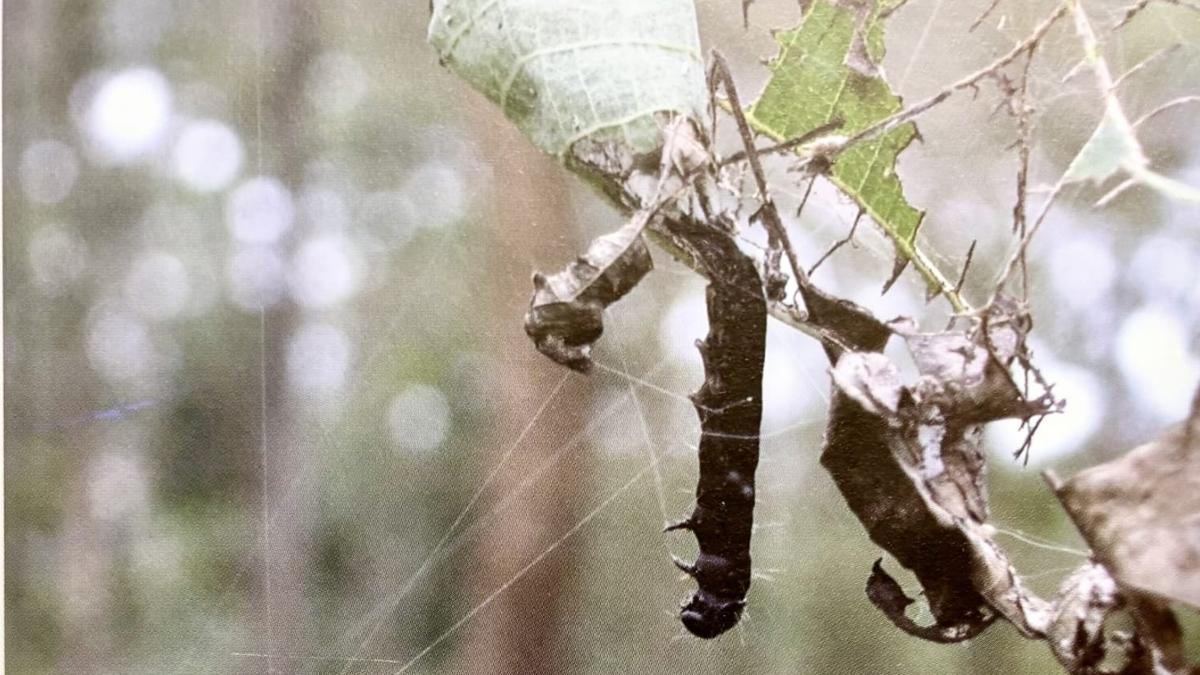
Teak defoliator larva (Hyblaea puera) killed using HpNPV
| Photo Credit: special arrangement

A revolutionary technology developed by the Kerala Forest Research Institute (KFRI) can transform the way teak plantations are protected from their most notorious pest – the teak defoliator moth (Hyblaea puera). The institute has successfully identified, mass-produced and patented a naturally occurring virus, Hyblaea puera Nucleopolyhedrosis Virus (HpNPV), which causes lethal infection in the pest larvae and prevents widespread defoliation of teak trees.

For decades, the teak defoliator has wreaked havoc in plantations, stripping entire forests of their foliage up to six times a year, weakening trees and causing significant loss in timber yield. “When the larvae attack, the tree spends its energy regenerating leaves instead of growing. It’s a huge invisible loss,” explains T.V. Sajeev, Principal Scientist at KFRI.

Conventional control methods such as aerial spraying of chemical pesticides were tried — at Konni in Kerala and Barnavappara in Madhya Pradesh — inviting protests due to environmental concerns. The KFRI even presented a paper at the 1980 Forestry Conference at Dehradun titled ‘The problem of teak defoliator: to spray or not to spray?’

Economic loss

KFRI’s sustained research showed that the economic loss due to teak defoliators is staggering: an estimated 3 cubic metres of wood per hectare annually, translating to ₹562.5 crore loss in Kerala and ₹12,525 crore in India. The institute screened the pest’s natural enemies and zeroed in on HpNPV, a virus that is entirely host-specific, targeting only the teak defoliator larvae, and thus completely safe for the forest ecosystem.

“The beauty of the virus is in how it works,” said Dr. Sajeev. “It multiplies at least a trillion times inside a single larva. When the body breaks open, it releases huge quantities of inoculum. Even if the infection is sub-lethal, the virus stays in the insect, gets passed on to the next generation, and proves lethal then.”

With a clear understanding of the pest’s life cycle, HpNPV can be applied during early-stage outbreaks to prevent larger infestations.

Field trials at Nilambur in Malappuram, seen as India’s cradle of teak, were a success. KFRI has already transferred the know-how for outbreak monitoring and virus application to the Forest department. “Now it’s up to the department to formally adopt the technology,” said Dr. Sajeev.

Export potential

What makes this innovation more significant is that many of the 64 countries now cultivating teak — from its native range of just four (India, Myanmar, Laos, Thailand) — have banned chemical pesticide use. This opens up a massive export potential for the eco-friendly HpNPV technology.

KFRI will showcase the HpNPV solution at the Kerala State Council for Science, Technology and Environment (KSCSTE) R&D Summit 2025, to be held on August 7 in Thiruvananthapuram, positioning it as a scalable, sustainable model for forestry management across the globe.

Published – August 06, 2025 01:20 pm IST



Source link

Science Tags:game-changer virus from kerala, Kerala Forest Research Institute, kfri, teak plantation diseases, virus to save teaks

Post navigation

Previous Post: Access Denied
Next Post: Sensex falls by 160 points on sell-off in IT, healthcare shares

Related Posts

  • Experts clash over HALEU-Th fuel for Indian nuclear reactors
    Experts clash over HALEU-Th fuel for Indian nuclear reactors Science
  • New sedimentary rock made from slag is a carbon-trapping champ
    New sedimentary rock made from slag is a carbon-trapping champ Science
  • Diabetes drug may lower death rate in obese people: study
    Diabetes drug may lower death rate in obese people: study Science
  • Loggerhead turtles use geomagnetic field to navigate large distances
    Loggerhead turtles use geomagnetic field to navigate large distances Science
  • AI’s Cassandra moment
    AI’s Cassandra moment Science
  • Infosys Science Foundation announces prize winners for 2024
    Infosys Science Foundation announces prize winners for 2024 Science

More Related Articles

The dopamine overdose: how modern lifestyles are rewiring our brains The dopamine overdose: how modern lifestyles are rewiring our brains Science
The Science Quiz | On Attosecond physics The Science Quiz | On Attosecond physics Science
Hand-held ‘electric labs’ can rapidly identify pathogens Hand-held ‘electric labs’ can rapidly identify pathogens Science
Massive experiments could soon reveal more about nature of ‘ghostly’ particles Massive experiments could soon reveal more about nature of ‘ghostly’ particles Science
‘Sholay’, Shubman Gill, and the non-random randomness of coin tosses ‘Sholay’, Shubman Gill, and the non-random randomness of coin tosses Science
Cyclone Fengal was unusually hard to predict and track | Analysis Cyclone Fengal was unusually hard to predict and track | Analysis Science
SiteLock

Archives

  • May 2026
  • April 2026
  • March 2026
  • February 2026
  • January 2026
  • December 2025
  • November 2025
  • October 2025
  • September 2025
  • August 2025
  • July 2025
  • June 2025
  • May 2025
  • April 2025
  • March 2025
  • February 2025
  • January 2025
  • December 2024
  • November 2024
  • October 2024
  • September 2024
  • August 2024
  • July 2024
  • June 2024
  • May 2024
  • April 2024
  • March 2024
  • February 2024
  • January 2024
  • December 2023
  • November 2023
  • October 2023
  • September 2023
  • August 2023
  • July 2023
  • June 2023
  • May 2023
  • April 2023
  • March 2023
  • February 2023
  • January 2023
  • December 2022
  • November 2022
  • October 2022
  • September 2022
  • August 2022
  • July 2022
  • June 2022
  • May 2022

Categories

  • Business
  • Nation
  • Science
  • Sports
  • World

Recent Posts

  • Learn from Sri Lanka’s experience on impact of fertilizer supply chains: experts
  • Sewage pollution of Cooum, groundwater depletion raise alarm
  • Device with low-grade explosives found inside private hospital in Pune; ATS joins probe
  • Punjab Kings seeks turnaround against Mumbai Indians
  • Around 83% of candidates lost their deposit in Tamil Nadu polls, says ECI

Recent Comments

  1. RichardClage on UP Teacher Who Asked Students To Slap Muslim Classmate
  2. JeffryFok on UP Teacher Who Asked Students To Slap Muslim Classmate
  3. DerrickSef on UP Teacher Who Asked Students To Slap Muslim Classmate
  4. Leonardren on UP Teacher Who Asked Students To Slap Muslim Classmate
  5. NathanQuins on UP Teacher Who Asked Students To Slap Muslim Classmate
  • ASEAN Ministers to hold meetings to address West Asia crisis
    ASEAN Ministers to hold meetings to address West Asia crisis World
  • Access Denied
    Access Denied Nation
  • Full list of Hezbollah, Hamas leaders killed by Israel since October 7, 2023
    Full list of Hezbollah, Hamas leaders killed by Israel since October 7, 2023 World
  • India’s 8 Core Industries Post 6.3% Growth In May
    India’s 8 Core Industries Post 6.3% Growth In May Nation
  • Access Denied
    Access Denied Nation
  • Access Denied Sports
  • “Whenever He Gets Out, His Dismissal Looks Very Ugly”: Ex-India Star On Rishabh Pant
    “Whenever He Gets Out, His Dismissal Looks Very Ugly”: Ex-India Star On Rishabh Pant Sports
  • 3 Kashmiri Scientists Discover New Species Of Hoverfly
    3 Kashmiri Scientists Discover New Species Of Hoverfly Nation

Editor-in-Chief:
Mohammad Ariff,
MSW, MAJMC, BSW, DTL, CTS, CNM, CCR, CAL, RSL, ASOC.
editor@artifex.news

Associate Editors:
1. Zenellis R. Tuba,
zenelis@artifex.news
2. Haris Daniyel
daniyel@artifex.news

Photograher:
Rohan Das
rohan@artifex.news

Artifex.News offers Online Paid Internships to college students from India and Abroad. Interns will get a PRESS CARD and other online offers.
Send your CV (Subjectline: Paid Internship) to internship@artifex.news

Links:
Associate Journalism
About Us
Privacy Policy

News Links:
Breaking News
World
Nation
Sports
Business
Entertainment
Lifestyle

Registered Office:
72/A, Elliot Road, Kolkata - 700016
Tel: 033-22277777, 033-22172217
Email: office@artifex.news

Editorial Office / News Desk:
No. 13, Mezzanine Floor, Esplanade Metro Rail Station,
12 J. L. Nehru Road, Kolkata - 700069.
(Entry from Gate No. 5)
Tel: 033-46011099, 033-46046046
Email: editor@artifex.news

Copyright © 2023 Artifex.News Newsportal designed by Artifex Infotech.