

Skip to content
  • Facebook
  • X
  • Linkedin
  • WhatsApp
  • YouTube
  • Associate Journalism
  • About Us
  • Privacy Policy
  • 033-46046046
  • editor@artifex.news
Artifex.News

Artifex.News

Stay Connected. Stay Informed.

  • Breaking News
  • World
  • Nation
  • Sports
  • Business
  • Science
  • Entertainment
  • Lifestyle
  • Toggle search form
  • Team India Arrival Live: Plane Landed, Hundreds Of Fans Gather At Airport
    Team India Arrival Live: Plane Landed, Hundreds Of Fans Gather At Airport Sports
  • A Month After Quitting AAP, Ex Delhi Minister Raaj Anand Joins Mayawati’s Party
    A Month After Quitting AAP, Ex Delhi Minister Raaj Anand Joins Mayawati’s Party Nation
  • When less is not always less
    When less is not always less Business
  • Access Denied Sports
  • Fibre-optic drones | The phantom that flies
    Fibre-optic drones | The phantom that flies World
  • India name 15-member squad for ICC Under-19 Women’s T20 WC
    India name 15-member squad for ICC Under-19 Women’s T20 WC Sports
  • Access Denied Sports
  • Rupee rises 6 paise to close at 84.44 against U.S. dollar
    Rupee rises 6 paise to close at 84.44 against U.S. dollar Business
Hand-held ‘electric labs’ can rapidly identify pathogens

Hand-held ‘electric labs’ can rapidly identify pathogens

Posted on December 5, 2024 By admin


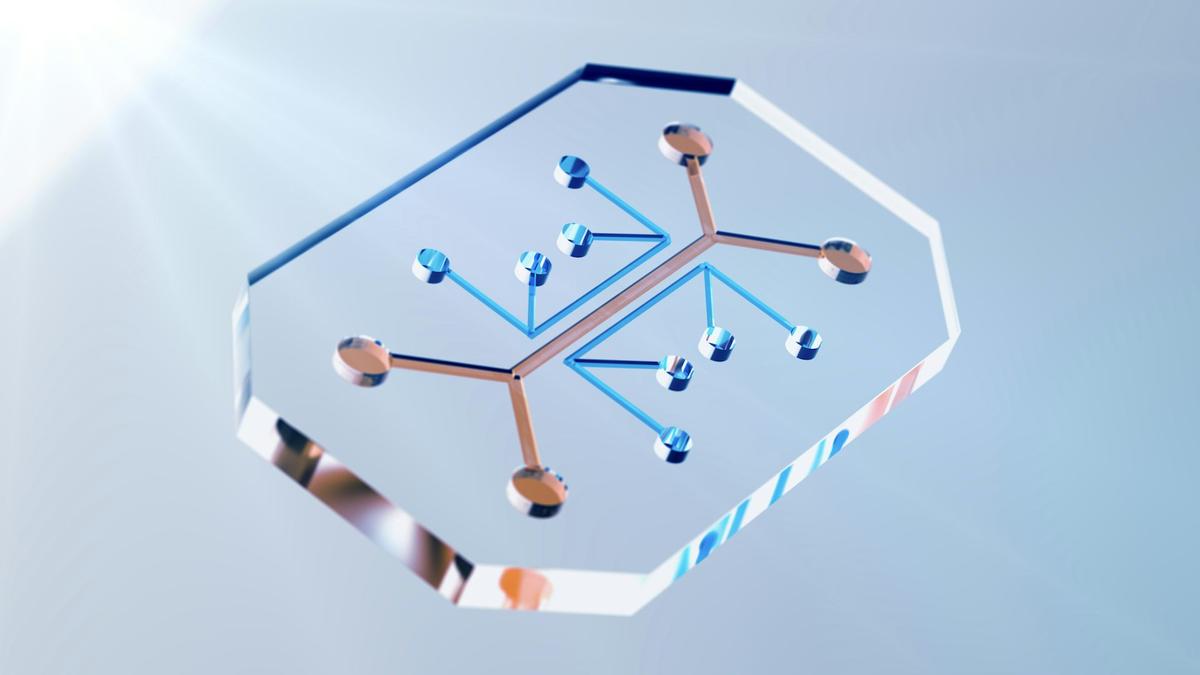
Microfluidics makes use of tiny channels to speed up analyses of biomolecules such as DNA and proteins. 
| Photo Credit: Thom Leach/Getty Images

When you think of electric fields, you likely think of electricity – the stuff that makes modern life possible by powering everything from household appliances to cellphones. Researchers have been studying the principles of electricity since the 1600s. Benjamin Franklin, famous for his kite experiment, demonstrated that lightning was indeed electrical.

Electricity has also enabled major advances in biology. A technique called electrophoresis allows scientists to analyse the molecules of life – DNA and proteins – by separating them by their electrical charge. Electrophoresis is not only commonly taught in high school biology, but it’s also a workhorse of many clinical and research laboratories, including mine.

I am a biomedical engineering professor who works with miniaturised electrophoretic systems. Together, my students and I develop portable versions of these devices that rapidly detect pathogens and help researchers fight against them.

What is electrophoresis?

Researchers discovered electrophoresis in the 19th century by applying an electric voltage to clay particles and observing how they migrated through a layer of sand. After further advances during the 20th century, electrophoresis became standard in laboratories.

To understand how electrophoresis works, we first need to explain electric fields. These are invisible forces that electrically charged particles, such as protons and electrons, exert on each other. A particle with a positive electrical charge, for example, would be attracted toward a particle with a negative charge. The law of “opposites attract” applies here. Molecules can also have a charge; whether it’s more positive or negative depends on the types of atoms that make it up.

In electrophoresis, an electric field is generated between two electrodes connected to a power supply. One electrode has a positive charge and the other has a negative charge. They are positioned on opposite sides of a container filled with water and a little bit of salt, which can conduct electricity.

When charged molecules such as DNA and proteins are present in the water, the electrodes create a force field between them that pushes the charged particles toward the oppositely charged electrode. This process is called electrophoretic migration.

Researchers like electrophoresis because it is fast and flexible. Electrophoresis can help analyse distinct types of particles, from molecules to microbes. Further, electrophoresis can be carried out with materials such as paper, gels and thin tubes.

In 1972, physicist Stanislav Dukhin and his colleagues observed another type of electrophoretic migration called nonlinear electrophoresis that could separate particles not only by their electrical charge but also by their size and shape.

Electric fields and pathogens

Further advancements in electrophoresis have made it a useful tool to fight pathogens. In particular, the microfluidics revolution made possible the tiny laboratories that allow researchers to rapidly detect pathogens.

In 1999, researchers found that these tiny electrophoresis systems could also separate intact pathogens by differences in their electrical charge. They placed a mixture of several types of bacteria in a very thin glass capillary that was then exposed to an electric field. Some bacteria exited the device faster than others due to their distinct electrical charges, making it possible to separate the microbes by type. Measuring their migration speeds allowed scientists to identify each species of bacteria present in the sample through a process that took less than 20 minutes.

Microfluidics improved this process even further. Microfluidic devices are small enough to fit in the palm of your hand. Their miniature size allows them to perform analyses much faster than conventional laboratory equipment because particles don’t need to travel that far through the device to be analysed. This means the molecules or pathogens researchers are looking for are more easily detected and less likely to be lost during analysis.

For example, samples analysed using conventional electrophoresis systems would need to travel through capillary tubes that are about 11 to 31 inches (30 to 80 centimeters) long. These can take 40 to 50 minutes to process and are not portable. In comparison, samples analysed with tiny electrophoresis systems migrate through microchannels that are only 0.4 to 2 inches (1 to 5 centimeters) long. This translates to small, portable devices with analysis times of about two to three minutes.

Nonlinear electrophoresis has enabled more powerful devices by allowing researchers to separate and detect pathogens by their size and shape. My lab colleagues and I showed that combining nonlinear electrophoresis with microfluidics can not only separate distinct types of bacterial cells but also live and dead bacterial cells.

Tiny electrophoresis systems in medicine

Microfluidic electrophoresis has the potential to be useful across industries. Primarily, these small systems can replace conventional analysis methods with faster results, greater convenience and lower cost.

For example, when testing the efficacy of antibiotics, these tiny devices could help researchers quickly tell whether pathogens are dead after treatment. It could also help doctors decide which drug is most appropriate for a patient by quickly distinguishing between normal bacteria and antibiotic-resistant bacteria.

My lab is also working on developing microelectrophoresis systems for purifying bacteriophage viruses that can be used to treat bacterial infections.

With further development, the power of electric fields and microfluidics can speed up how researchers detect and fight pathogens.

This article is republished from The Conversation under a Creative Commons license. Read the original article here.

Published – December 05, 2024 03:18 pm IST



Source link

Science Tags:Electric-labs, electrophoresis, Hand-held electric-labs, physics news, science news

Post navigation

Previous Post: BJP Targets Rahul Gandhi Alleging George Soros Link, Congress Cries Foul
Next Post: India vs Australia 2nd Test: Don’t think Adelaide debacle of 2020 will haunt India in upcoming pink-ball Test, says Shastri

Related Posts

  • Researchers develop performance metrics to test traffic control algorithms
    Researchers develop performance metrics to test traffic control algorithms Science
  • Katalin Kariko, scientific maverick who paved way for mRNA vaccines
    Katalin Kariko, scientific maverick who paved way for mRNA vaccines Science
  • Fetus in fetu – The Hindu
    Fetus in fetu – The Hindu Science
  • The Science Quiz: Scientific terms beginning with ‘X’
    The Science Quiz: Scientific terms beginning with ‘X’ Science
  • Narrating stories of the world’s women mathematicians, in portraits
    Narrating stories of the world’s women mathematicians, in portraits Science
  • As COP30 opens, report warns climate finance is failing global health systems
    As COP30 opens, report warns climate finance is failing global health systems Science

More Related Articles

The Science Quiz | The psychology of colours The Science Quiz | The psychology of colours Science
No immediate need to collaborate with China on space, says ISRO No immediate need to collaborate with China on space, says ISRO Science
ISRO dispatches crew module for first uncrewed mission of Gaganyaan ISRO dispatches crew module for first uncrewed mission of Gaganyaan Science
Pragyan rover finds an unexpected surprise on the moon: sulphur | Explained Pragyan rover finds an unexpected surprise on the moon: sulphur | Explained Science
The trouble with a Nobel for mRNA COVID vaccines The trouble with a Nobel for mRNA COVID vaccines Science
What are carbon credits? – The Hindu What are carbon credits? – The Hindu Science
SiteLock

Archives

  • May 2026
  • April 2026
  • March 2026
  • February 2026
  • January 2026
  • December 2025
  • November 2025
  • October 2025
  • September 2025
  • August 2025
  • July 2025
  • June 2025
  • May 2025
  • April 2025
  • March 2025
  • February 2025
  • January 2025
  • December 2024
  • November 2024
  • October 2024
  • September 2024
  • August 2024
  • July 2024
  • June 2024
  • May 2024
  • April 2024
  • March 2024
  • February 2024
  • January 2024
  • December 2023
  • November 2023
  • October 2023
  • September 2023
  • August 2023
  • July 2023
  • June 2023
  • May 2023
  • April 2023
  • March 2023
  • February 2023
  • January 2023
  • December 2022
  • November 2022
  • October 2022
  • September 2022
  • August 2022
  • July 2022
  • June 2022
  • May 2022

Categories

  • Business
  • Nation
  • Science
  • Sports
  • World

Recent Posts

  • China, U.S. should be ‘partners not rivals’, says Xi Jinping after meeting Donald Trump
  • Iran working on Hormuz ‘protocol’ to cover ‘costs’, says Deputy Foreign Minister Gharibabadi
  • Zydus Lifesciences arm to acquire U.S. oncology firm Assertio for $166 million
  • Israel-Iran war LIVE: Iran working on Hormuz ‘protocol’ to cover ‘costs’, says Dy FM Gharibabadi
  • Russia to fulfil all agreements on energy supply to India: FM Lavrov

Recent Comments

  1. Jeffreyroure on UP Teacher Who Asked Students To Slap Muslim Classmate
  2. Stevemonge on UP Teacher Who Asked Students To Slap Muslim Classmate
  3. RichardClage on UP Teacher Who Asked Students To Slap Muslim Classmate
  4. StevenLek on UP Teacher Who Asked Students To Slap Muslim Classmate
  5. Leonardren on UP Teacher Who Asked Students To Slap Muslim Classmate
  • Access Denied
    Access Denied Nation
  • Access Denied
    Access Denied Nation
  • Access Denied Sports
  • Bangladesh omit Shakib Al Hasan, Litton Das from Champions Trophy squad
    Bangladesh omit Shakib Al Hasan, Litton Das from Champions Trophy squad Sports
  • Access Denied Business
  • India confirms person accused of directing plot to kill Pannun no longer works for government: U.S. State Department
    India confirms person accused of directing plot to kill Pannun no longer works for government: U.S. State Department World
  • Spirited South Africa steals hearts, India wins Test
    Spirited South Africa steals hearts, India wins Test Sports
  • Seven feared dead in deadly attack on security check post in Pakistan
    Seven feared dead in deadly attack on security check post in Pakistan World

Editor-in-Chief:
Mohammad Ariff,
MSW, MAJMC, BSW, DTL, CTS, CNM, CCR, CAL, RSL, ASOC.
editor@artifex.news

Associate Editors:
1. Zenellis R. Tuba,
zenelis@artifex.news
2. Haris Daniyel
daniyel@artifex.news

Photograher:
Rohan Das
rohan@artifex.news

Artifex.News offers Online Paid Internships to college students from India and Abroad. Interns will get a PRESS CARD and other online offers.
Send your CV (Subjectline: Paid Internship) to internship@artifex.news

Links:
Associate Journalism
About Us
Privacy Policy

News Links:
Breaking News
World
Nation
Sports
Business
Entertainment
Lifestyle

Registered Office:
72/A, Elliot Road, Kolkata - 700016
Tel: 033-22277777, 033-22172217
Email: office@artifex.news

Editorial Office / News Desk:
No. 13, Mezzanine Floor, Esplanade Metro Rail Station,
12 J. L. Nehru Road, Kolkata - 700069.
(Entry from Gate No. 5)
Tel: 033-46011099, 033-46046046
Email: editor@artifex.news

Copyright © 2023 Artifex.News Newsportal designed by Artifex Infotech.