
Skip to content
  • Facebook
  • X
  • Linkedin
  • WhatsApp
  • YouTube
  • Associate Journalism
  • About Us
  • Privacy Policy
  • 033-46046046
  • editor@artifex.news
Artifex.News

Artifex.News

Stay Connected. Stay Informed.

  • Breaking News
  • World
  • Nation
  • Sports
  • Business
  • Science
  • Entertainment
  • Lifestyle
  • Toggle search form
  • Jalaj Saxena — a journeyman in pursuit of a long-cherished dream
    Jalaj Saxena — a journeyman in pursuit of a long-cherished dream Sports
  • RBI approves ₹2.11 lakh crore dividend payout to govt for 2023-24
    RBI approves ₹2.11 lakh crore dividend payout to govt for 2023-24 Business
  • Adani Group to invest ₹7.5 lakh crore in Rajasthan across sectors
    Adani Group to invest ₹7.5 lakh crore in Rajasthan across sectors Business
  • 7 Bombs Defused In Manipur’s Imphal East District By Joint Army, Police Team
    7 Bombs Defused In Manipur’s Imphal East District By Joint Army, Police Team Nation
  • Access Denied Sports
  • Access Denied
    Access Denied Nation
  • British author Jilly Cooper dies at 88
    British author Jilly Cooper dies at 88 World
  • Access Denied Sports
Researchers develop performance metrics to test traffic control algorithms

Researchers develop performance metrics to test traffic control algorithms

Posted on September 4, 2025 By admin


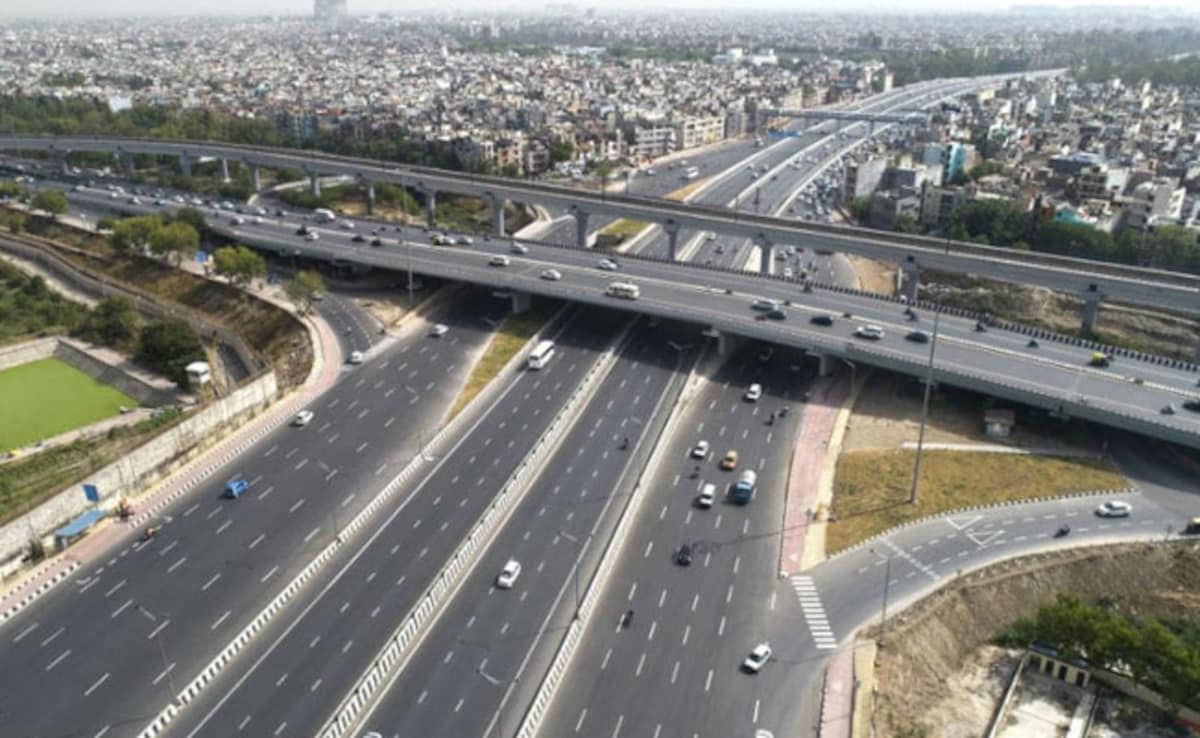
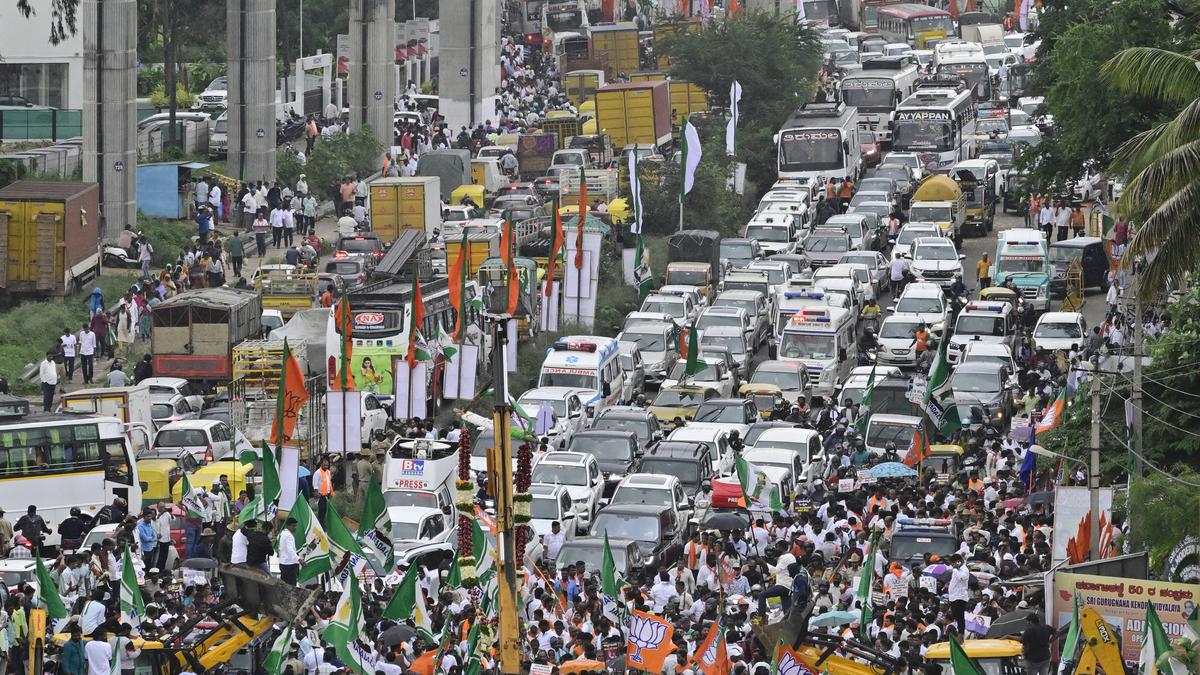
Managing traffic in rapidly growing cities remains one of the biggest challenges for urban planners worldwide. Traffic signal lights and other network control systems are crucial for preventing urban chaos, yet testing the effectiveness of new traffic management algorithms has remained a time-consuming and resource-intensive task. In a step towards smarter urban mobility, researchers at the Indian Institute of Technology (IIT)-Bombay, in collaboration with Monash University, Australia, have developed a computationally efficient mathematical framework to evaluate decentralised traffic control policies using fewer computing resources — a move they believe could accelerate the design of next-generation intelligent traffic systems.  

The study, led by Namrata Gupta, currently a postdoctoral researcher at University Gustave Eiffel, Lyon, France, and formerly a joint Ph.D. student under an IIT Bombay-Monash University programme, when the research was conducted, along with Professor Gopal R. Patil from IIT Bombay and Professor Hai L. Vu from Monash University, proposes a network-theory-based framework to overcome the limitations of existing evaluation platforms.  

Traditionally, traffic signal control (TSC) algorithms are tested through detailed microscopic simulations. These platforms capture vehicle-to-vehicle interactions in rich detail but are computationally expensive, forcing researchers to restrict their experiments to only a handful of scenarios. In contrast, the new framework uses simplified mathematical abstractions to analyse multiple traffic policies quickly, helping researchers evaluate how they might perform under varied conditions.  

Speaking to The Hindu, Ms. Gupta explained that the lack of standardised benchmarks in the field was one of the main motivations behind the work. “The development of traffic signal controllers is an active research area, and several new algorithms have emerged in recent years. But there are still no universal benchmarks to evaluate and compare these algorithms,” she said. “We believe that simple abstractions, such as the two-bin model proposed by Dr. Carlos F. Daganzo’s group at UC Berkeley, can provide a low-cost, mathematically tractable platform for testing algorithms systematically. Our vision is that multiple standardised platforms and metrics will eventually exist, allowing researchers to evaluate their algorithms rapidly before conducting richer simulations in tools like PTV VISSIM or SUMO.”  

At the heart of the framework is the two-bin model, which groups roads into two broad categories — north–south, and east-west — and mathematically represents vehicle movements between them. This approach uses ordinary differential equations to capture the dynamics of traffic flow and derive the macroscopic fundamental diagram, a tool that relates key variables like vehicle density, speed, and throughput across a road network. By using this abstraction, the researchers can evaluate traffic performance without modelling every single vehicle on the road.  

The study introduces two key performance metrics that form the foundation of this framework. The first measures how effectively a traffic policy prevents gridlocks and ensures smooth traffic distribution between directions. The second evaluates the overall flow of vehicles within the network, allowing researchers to determine whether a policy supports efficient mobility. Importantly, these metrics are not tied to a specific control method — they can be applied to traditional algorithms, AI-based controllers, or machine learning-driven strategies, provided they can be adapted to the two-bin framework.  

For now, the framework has been validated in simulation environments rather than real-world deployments. “So far, we have tested our proposed metrics using the two-bin abstraction and validated them through PTV VISSIM, which provides a more realistic representation of traffic dynamics,” Ms. Gupta said. While the results have been promising, she cautioned that the model works best in rectangular, grid-like road layouts, such as those found in planned cities, including Chandigarh. Applying it directly to chaotic, irregular urban networks like Mumbai or Delhi is not feasible at this stage. “The two-bin model is not designed to simulate full-scale city networks,” she explained. “Its real value lies in providing researchers with a clean mathematical lens to understand network behaviour under simplified conditions. For more complex, unplanned layouts, the model acts as a benchmarking tool before we move to richer, computationally heavy simulations.”  

The team believes the framework could also complement AI-driven and adaptive traffic control systems. Ms. Gupta said one promising area of exploration involves using the two-bin model to design computationally efficient training environments for intelligent controllers. “AI-based traffic signal controllers can certainly be tested within this framework,” she noted. “By providing a simplified environment, we can train these systems more quickly and evaluate their performance before deploying them in real-world or high-fidelity simulation scenarios.”  

While the immediate focus of the research is on improving algorithm design, its long-term implications could extend beyond traffic management. Efficient signal control is closely tied to environmental outcomes, since congestion, frequent stopping, and idling contribute significantly to fuel consumption, emissions, and pollution. “Traffic signal control is deeply linked to ecological factors,” Ms. Gupta said. “By providing a structured way to test and improve algorithms, we are contributing to smoother traffic flows, which indirectly reduce fuel wastage and lower urban air pollution.”  

Looking ahead, the researchers aim to expand the framework further. Work is underway to develop three-bin and four-bin models to handle more complex layouts, and eventually integrate mixed-traffic systems that include pedestrians, cyclists, and public transport dynamics. “Integrating pedestrian movements and other transport modes is an important step for the future,” Ms. Gupta acknowledged. “At this stage, our work is focused on vehicle traffic, but we plan to explore multi-modal systems as the framework evolves.”  

Although the framework is not yet ready for direct deployment by municipal authorities, the researchers believe it lays the groundwork for smarter, more adaptive urban traffic solutions. By providing a faster, lower-cost way to test algorithms and identify promising strategies, the study offers a pathway toward efficient, sustainable, and resilient traffic management systems. As Indian cities grapple with increasing congestion, frameworks like these could help traffic engineers, city planners, and policymakers design better systems for growing urban populations. 

Published – September 05, 2025 04:31 am IST



Source link

Science Tags:traffic control algorithms, traffic control algorithms iit bombay, traffic in urban cities, traffic management algorithms

Post navigation

Previous Post: UAE include Matiullah Khan, Simranjeet Singh in 17-member Asia Cup squad
Next Post: Access Denied

Related Posts

  • Turning a death sentence into a long-lasting health condition
    Turning a death sentence into a long-lasting health condition Science
  • Researchers, families confront Huntington’s with rhythm and resolve
    Researchers, families confront Huntington’s with rhythm and resolve Science
  • Science Snapshots: April 5, 2026
    Science Snapshots: April 5, 2026 Science
  • IISc announces distinguished alumni awards for 2023
    IISc announces distinguished alumni awards for 2023 Science
  • Two new malaria vaccines are being rolled out across Africa — how they work and what they promise
    Two new malaria vaccines are being rolled out across Africa — how they work and what they promise Science
  • New study unravels why chronic pain, depression go hand in hand
    New study unravels why chronic pain, depression go hand in hand Science

More Related Articles

The Science Quiz | Want to be tickled pink out of the blue? The Science Quiz | Want to be tickled pink out of the blue? Science
SpaceX’s Falcon-9 deploys India’s GSAT-N2 satellite into orbit SpaceX’s Falcon-9 deploys India’s GSAT-N2 satellite into orbit Science
Gamma-ray bursts from black hole ‘morsels’ could expose quantum gravity Gamma-ray bursts from black hole ‘morsels’ could expose quantum gravity Science
University of Liverpool marks start of Bengaluru campus project University of Liverpool marks start of Bengaluru campus project Science
Exploring the ‘wonderful world’ of symplectic geometry to solve problems in mechanics Exploring the ‘wonderful world’ of symplectic geometry to solve problems in mechanics Science
Elon Musk says that SpaceX has shifted focus from Mars to Moon Elon Musk says that SpaceX has shifted focus from Mars to Moon Science
SiteLock

Archives

  • May 2026
  • April 2026
  • March 2026
  • February 2026
  • January 2026
  • December 2025
  • November 2025
  • October 2025
  • September 2025
  • August 2025
  • July 2025
  • June 2025
  • May 2025
  • April 2025
  • March 2025
  • February 2025
  • January 2025
  • December 2024
  • November 2024
  • October 2024
  • September 2024
  • August 2024
  • July 2024
  • June 2024
  • May 2024
  • April 2024
  • March 2024
  • February 2024
  • January 2024
  • December 2023
  • November 2023
  • October 2023
  • September 2023
  • August 2023
  • July 2023
  • June 2023
  • May 2023
  • April 2023
  • March 2023
  • February 2023
  • January 2023
  • December 2022
  • November 2022
  • October 2022
  • September 2022
  • August 2022
  • July 2022
  • June 2022
  • May 2022

Categories

  • Business
  • Nation
  • Science
  • Sports
  • World

Recent Posts

  • Delhi High Court seeks Centre’s stand on plea to broadcast FIFA World Cup
  • BJP MLA Tapas Roy sworn in as Pro-tem Speaker of West Bengal Assembly
  • IMD unveils weather model to provide ‘block level’ forecast of monsoon journey
  • AI cannot replace human touch in nursing: Vizag MP
  • Notice served on Union Minister Bandi Sanjay’s son in POCSO case

Recent Comments

  1. AaronPrido on UP Teacher Who Asked Students To Slap Muslim Classmate
  2. AaronThymn on UP Teacher Who Asked Students To Slap Muslim Classmate
  3. Matthewerano on UP Teacher Who Asked Students To Slap Muslim Classmate
  4. JorgeBousa on UP Teacher Who Asked Students To Slap Muslim Classmate
  5. Jamesemifs on UP Teacher Who Asked Students To Slap Muslim Classmate
  • BCCI Awards: Jasprit Bumrah Is Best Men’s Cricketer, Smriti Mandhana Bags Women’s Honour
    BCCI Awards: Jasprit Bumrah Is Best Men’s Cricketer, Smriti Mandhana Bags Women’s Honour Sports
  • Team India Arrival Live: Plane Landed, Hundreds Of Fans Gather At Airport
    Team India Arrival Live: Plane Landed, Hundreds Of Fans Gather At Airport Sports
  • Pink ball Test: Nathan Lyon, a quintessential Australian hero at Adelaide
    Pink ball Test: Nathan Lyon, a quintessential Australian hero at Adelaide Sports
  • Double health budget, lower out-of-pocket spends
    Double health budget, lower out-of-pocket spends Business
  • Real Madrid vs Brest LIVE Streaming UEFA Champions League LIVE Telecast: When And Where To Watch
    Real Madrid vs Brest LIVE Streaming UEFA Champions League LIVE Telecast: When And Where To Watch Sports
  • Paper-based platform for rapid detection of antibiotic-resistant bacteria
    Paper-based platform for rapid detection of antibiotic-resistant bacteria Science
  • Huge underground reservoir of liquid water on Mars, seismic data indicates
    Huge underground reservoir of liquid water on Mars, seismic data indicates Science
  • Access Denied Sports

Editor-in-Chief:
Mohammad Ariff,
MSW, MAJMC, BSW, DTL, CTS, CNM, CCR, CAL, RSL, ASOC.
editor@artifex.news

Associate Editors:
1. Zenellis R. Tuba,
zenelis@artifex.news
2. Haris Daniyel
daniyel@artifex.news

Photograher:
Rohan Das
rohan@artifex.news

Artifex.News offers Online Paid Internships to college students from India and Abroad. Interns will get a PRESS CARD and other online offers.
Send your CV (Subjectline: Paid Internship) to internship@artifex.news

Links:
Associate Journalism
About Us
Privacy Policy

News Links:
Breaking News
World
Nation
Sports
Business
Entertainment
Lifestyle

Registered Office:
72/A, Elliot Road, Kolkata - 700016
Tel: 033-22277777, 033-22172217
Email: office@artifex.news

Editorial Office / News Desk:
No. 13, Mezzanine Floor, Esplanade Metro Rail Station,
12 J. L. Nehru Road, Kolkata - 700069.
(Entry from Gate No. 5)
Tel: 033-46011099, 033-46046046
Email: editor@artifex.news

Copyright © 2023 Artifex.News Newsportal designed by Artifex Infotech.