





What is diabetes?
Ask around in your circle, and chances are that there is someone you know who has diabetes. A chronic disease, diabetes is closely related to insulin, a hormone that regulates blood glucose. Diabetes occurs either when enough insulin is not produced by the pancreas, or when the insulin produced cannot be effectively used by the body.
If we were to count out gestational diabetes, which is a type of diabetes that occurs in women during pregnancy, then there are two other main types of diabetes — type 1 diabetes and type 2 diabetes.
Type 1 diabetes is when the body’s immune system destroys insulin-producing cells in the pancreas, thereby resulting in little to no insulin production. A disease that usually develops among children or young adults, lifelong insulin is required to treat it.
Type 2 diabetes is the more common type, wherein the body either doesn’t produce enough insulin or faces insulin resistance as cells don’t respond properly to insulin. More than 95% of people with diabetes have type 2 and even though symptoms can be mild and take several years to be noticed, it can cause serious damage to the body.
A discovery to defy death
Diabetes has been around for a very long time. While it might not always been known by this name or these types, the symptoms associated with it have been documented nearly 3,500 years ago.
Despite its long history, there was little to show for in terms of treatment, even as recently as the beginning of the 20th Century. Type 1 diabetes was almost always fatal, with the only way to treat the disease being a strict diet regimen that was low in carbohydrates and sugar, and high in fat and protein. Even when this diet was followed meticulously, the people at best gained another year or so.
By this time, however, it was evident to anyone who had put their mind to the task that diabetes was caused owing to a malfunction related to the pancreas, thereby affecting the digestive system. The start of that century saw many attempts being made to prepare pancreatic extracts that could control carbohydrate metabolism.
It was a young Canadian surgeon named Frederick Banting who finally came up with the idea that led to the discovery of insulin. Waking up in the middle of the night on October 31, 1920, Banting quickly jotted down his hypothesis, paving the way for his diabetes research.
Reaching out to John Macleod, professor of physiology and department head at the University of Toronto, Banting got to work. He found an able ally in research assistant Charles Best, and the duo intensified their efforts in Macleod’s laboratory in 1921.
Dogs had a role to play in the efforts led by Banting (right) and Best.
| Photo Credit:
Wikimedia Commons
They successfully isolated insulin from dogs on July 27 and their breakthrough was formally presented to the medical community on November 14. Incidentally, November 14, now celebrated as World Diabetes Day, was also Banting’s birthday.
Biochemist James Collip next joined the group as they turned their attention to purifying the extracted insulin. This was an important step necessary for refining the substance and making it ready for human testing.
The first patient
Leonard Thompson became the first person to receive an insulin injection to treat his diabetes. Born in 1908, Thompson grew up with his parents, brother, and two sisters in a working-class street in Toronto.
Thompson loved sports and grew up as a happy child, just like many other boys of his age. That was until he was diagnosed with diabetes at the age of 11. Incurable at the time, Thompson was put on a strict diet to manage his symptoms.
By the time he turned 14, Thompson was unlike any other boy of his age. Weighing only about 30 kg, he was small, weak, and drifting in and out of consciousness on his hospital bed. Desperate to save his life, Thompson’s parents agreed for him to test a new treatment.
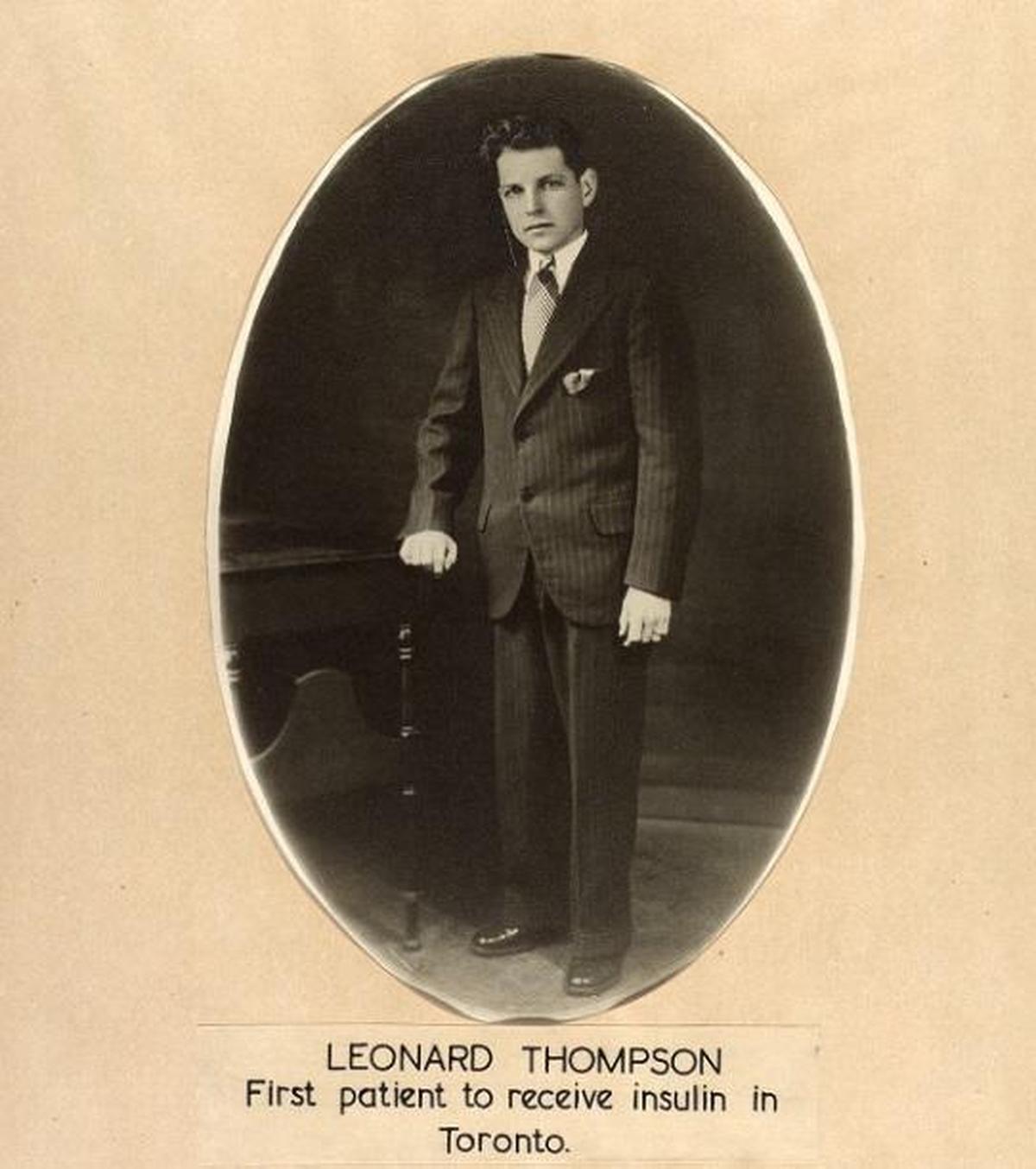
Leonard Thompson (17 July 1908 – 20 April 1935) was the first person to have received an injection of insulin as a treatment for type 1 diabetes.
| Photo Credit:
Wikimedia Commons
On January 11, 1922, Thompson received his first insulin injection. An apparent impurity in this dose, however, resulted in an allergic reaction, proving to be a further setback. The process of deriving insulin was further refined quickly and a second dose was injected 12 days later, on January 23.
With later injections, Thompson showed a marked improvement. “The boy became brighter, more active, looked better and said he felt stronger,” said the hospital medical record. In the months that followed, Thompson recovered enough to return home.
Complications from his diabetes and broncho-pneumonia eventually cost him his life on April 20, 1935 — more than 13 years after his initial life-saving treatment had begun. The treatment enabled Thompson to nearly double his life time, and further developments have added countless years to the lives of innumerable people.
The Nobel row
A 2023 article in Nature titled “Nobel Prizes Are Taking Longer to Award Groundbreaking Research” speaks about how Nobel laureates on average wait 20 years or longer now to receive the prize after making their award-worthy discovery. This is in sharp contrast with what happened in the case of insulin discovery, though it wasn’t without its share of controversies.
Banting, Best, and Collip received patents on insulin and the method to make it, but they sold it to the University of Toronto for just $1 each. As word about Thompson’s recovery spread around the world, the university gave the license to produce insulin to pharmaceutical companies, without seeking any royalties. This meant that insulin was commercially available as early as 1923.
In October 1923, Banting and Macleod were awarded the Nobel Prize in Physiology or Medicine, making it one of the quickest ever from discovery to being awarded. Despite that, they weren’t entirely happy.
Banting believed it had to be Best, and not Macleod, who got the recognition and that the professor was getting more credit than he deserved. Macleod, meanwhile, believed that Collip’s essential biochemical work in purifying the insulin extract wasn’t getting its due.
While it was Banting and Macleod who had received the award, both men decided to split their prize money as a gesture of fairness and recognition. No prizes for guessing that Banting split it with Best, while Macleod shared his with Collip.
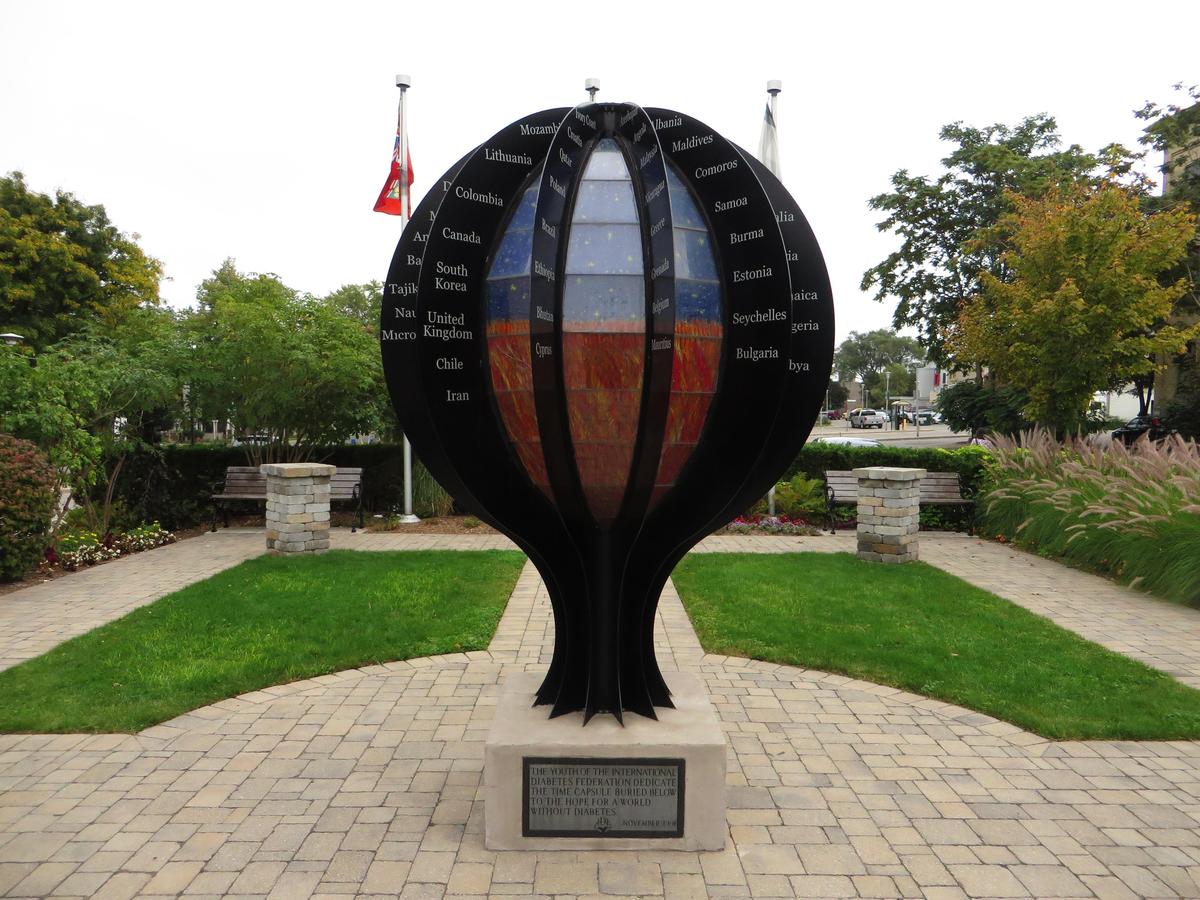
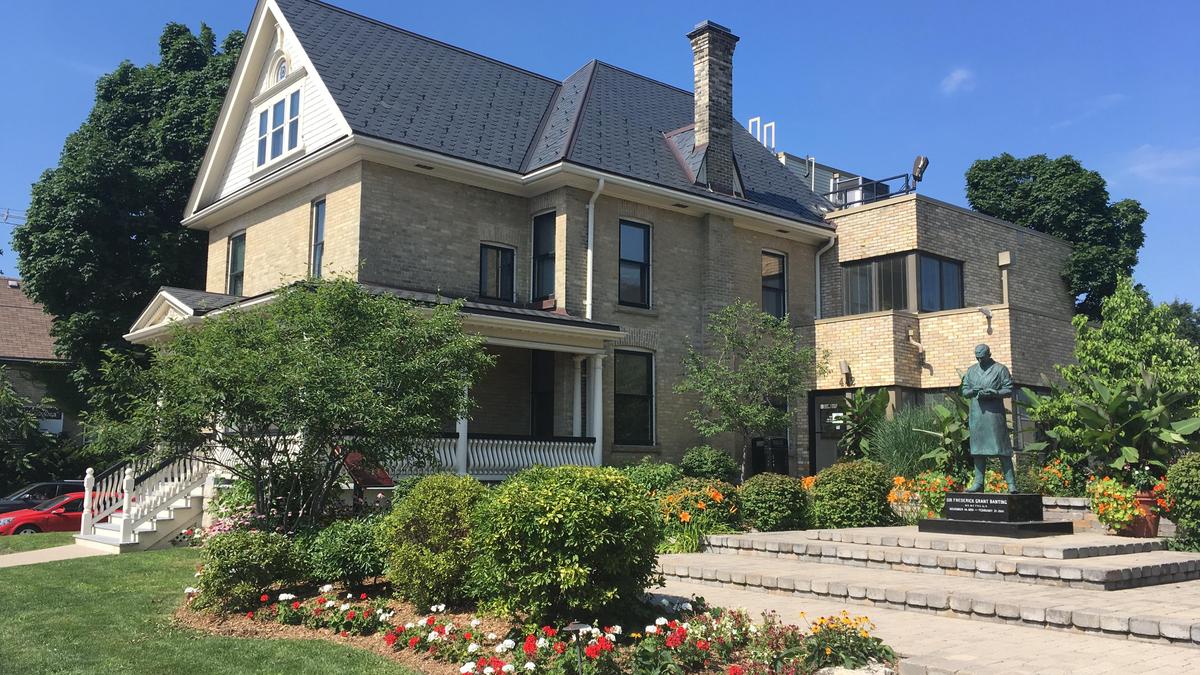
In addition to a full-sized sculpture of Banting writing his life-altering idea down, and the Flame of Hope, symbolising the hope for a final cure for diabetes, there is a globe sculpture in the garden in Banting House. This represents Canada’s gift to the world, and embraces Banting House’s visitors from abroad, with the names of every country listed on it.
| Photo Credit:
Ken Lund from Reno, Nevada, USA / Wikimedia Commons
Where do we stand now?
Diagnosis of diabetes remains more crucial than ever as more and more people are being affected by it, owing to diet and lifestyle changes. These changes have been central to the rise in obesity across the globe. As obesity is related to diabetes, type 2 diabetes continues to be on the rise, turning into a major threat to both the lifespan and healthy living of human beings.
It is for this reason that many experts are seeing diabetes as an epidemic — a disease that occurs widely at a particular time. The number of people living with diabetes has risen more than four-fold in a little over 30 years — from 200 million in 1990 to 830 million in 2022. As the world’s population hit 8 billion in 2022, it means that one out of every 10 people have diabetes.
The science around diabetes has grown manifold since the discovery of insulin. We’ve produced human-made insulin in the lab and there are newer treatments for all types of diabetes. Solutions for the diabetic epidemic will continuously be developed, but it is paramount that it goes hand-in-hand with lifestyle changes to prevent or delay the onset of type 2 diabetes.