



Skip to content
  • Facebook
  • X
  • Linkedin
  • WhatsApp
  • YouTube
  • Associate Journalism
  • About Us
  • Privacy Policy
  • 033-46046046
  • editor@artifex.news
Artifex.News

Artifex.News

Stay Connected. Stay Informed.

  • Breaking News
  • World
  • Nation
  • Sports
  • Business
  • Science
  • Entertainment
  • Lifestyle
  • Toggle search form
  • Access Denied Sports
  • China’s President calls for political loyalty among military as anti-graft purge widens
    China’s President calls for political loyalty among military as anti-graft purge widens World
  • U.S., Iran clash over Tehran’s nuclear programme as review of atomic treaty begins at UN
    U.S., Iran clash over Tehran’s nuclear programme as review of atomic treaty begins at UN World
  • 6 Wides, 1 No-Ball, 2 Fours And A Wicket: Naveen-Ul-Haq Bowls Marathon 13-Ball Over vs Zimbabwe
    6 Wides, 1 No-Ball, 2 Fours And A Wicket: Naveen-Ul-Haq Bowls Marathon 13-Ball Over vs Zimbabwe Sports
  • Ranji Trophy | Nischal, Lemtur’s efforts in vain; TN gets the lead
    Ranji Trophy | Nischal, Lemtur’s efforts in vain; TN gets the lead Sports
  • Gurnoor Brar — a choice driven by instinct and beyond the numbers
    Gurnoor Brar — a choice driven by instinct and beyond the numbers Sports
  • IPL 2025: List Of Marquee Players In Mega Auctions At Jeddah, Saudi Arabia
    IPL 2025: List Of Marquee Players In Mega Auctions At Jeddah, Saudi Arabia Sports
  • What do forensic experts do after blasts? | Explained
    What do forensic experts do after blasts? | Explained Science
If their ancestors help, weak cancer cells can form tough tumours

If their ancestors help, weak cancer cells can form tough tumours

Posted on September 11, 2024 By admin


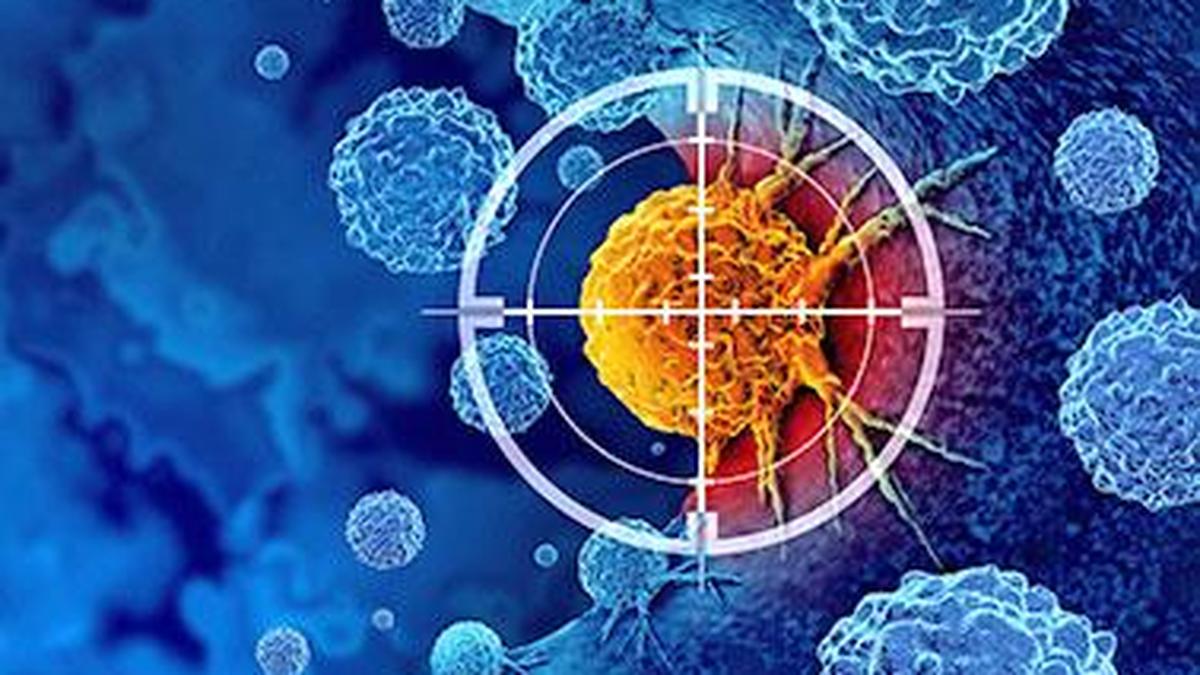
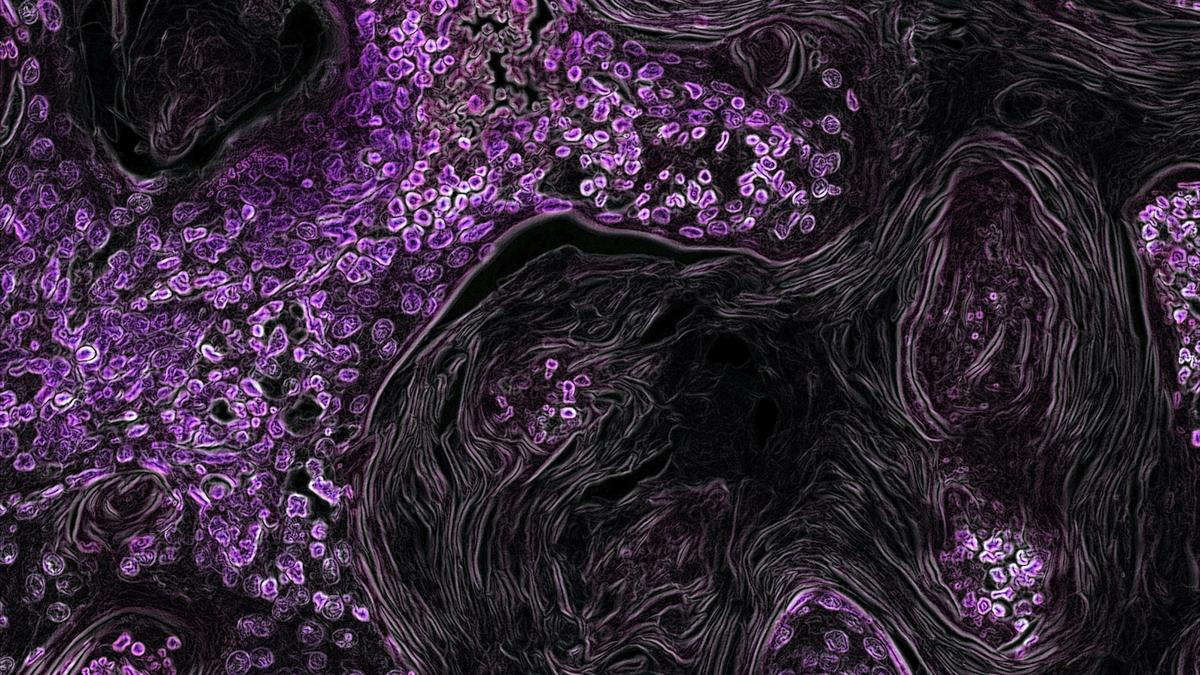
Scientists have cracked the mystery of how some cancer cells that ought not to survive could actually take help from their ‘neighbours’ to succeed and form drug-resistant tumours instead.

Drug resistance is one of the world’s major crises of the 21st century. When a pathogen that causes an infection or disease becomes drug-resistant, drugs that could cure these conditions become less effective. Pathogens acquire this ability in the form of certain genetic mutations although some non-genetic factors are also in play.

When a cancer takes root in a person’s body, the cancer cells can also become drug-resistant in the same way. Simple logic dictates that when the person takes a drug to destroy these cells, the drug-resistant cells will proliferate while the non-resistant cells won’t. However, the genetic changes that conferred drug-resistance to the cells will also have undermined their overall ‘fitness’. When the person isn’t taking a drug to treat the cancer, the drug-resistant cells should thus have a harder time surviving than their non-resistant peers. They are said to suffer a ‘growth penalty’.

How the evolutionarily less-fit cells survive such conditions is a puzzle scientists have been trying to solve for years.

A complex ecosystem

In past studies, scientists have tried to understand drug resistance by separating the corresponding cells from a larger population, making copies of them in the lab, and investigating them further. The researchers behind the new study realised this approach removes an important bit of context that could affect the cells’ prospects: the influence of other cells in their surroundings, especially the ancestors from which they ‘deviated’ by accumulating genetic changes.

Jeff Maltas, a postdoctoral research fellow at Cleveland Clinic and the lead author of the study, said scientists have appreciated the idea of tumours as a complex ecological system. He said his team’s idea came from multiple disciplines plus previous reports of high mutation rates within a tumour that had changes in pH and oxygen levels, among other conditions.

In a study published in 2022, for example, some members of the same team of researchers and others showed that even in the absence of a drug, drug-resistant mutant cells undergo large changes in growth rate. The authors attributed this to the environment in which the cells existed.

A surprise in a model

Conventionally, mutated cells have a certain growth rate in the presence of a drug and a lower one in its absence. In the new study, the researchers built a mathematical model based on the idea that these growth rates depend on the presence of a drug and on the cells’ environment. When cultured alone, drug-resistant cells grew more slowly than the cells from which they were ‘descended’. But when these cells and their ancestors were cultured together, the former grew much faster.

The model also revealed that the more ancestral cells there are in the same culture, the drug-resistant daughter cells also proliferated faster — so much so that the growth penalty vanished. The resulting tumour would be resistant to the drugs to come.

The researchers also found that even when there is no drug, the interactions between the evolving drug-resistant cells in the tumour’s environment still promoted drug resistance. The implication is that drug-resistant cells could be present in larger numbers, perhaps more than a clinician or medical researcher might expect, even before treatment begins.

The authors wrote in their paper that their work “both complements and builds off of recent studies from a wide range of disciplines, ranging from theoretical population genetics and ecology to clinical trials across several biological kingdoms.”

The ancestral advantage

The researchers also proposed a mathematical framework to explain why drug resistance is common and validated it with experiments using lung cancer cells.

First, they engineered three drug-resistant mutations in lung cancer cells in the lab and grew them together with different amounts of drug-sensitive ancestor cells. Then they observed how the different abundances of mutations in the cells affected their growth rate.
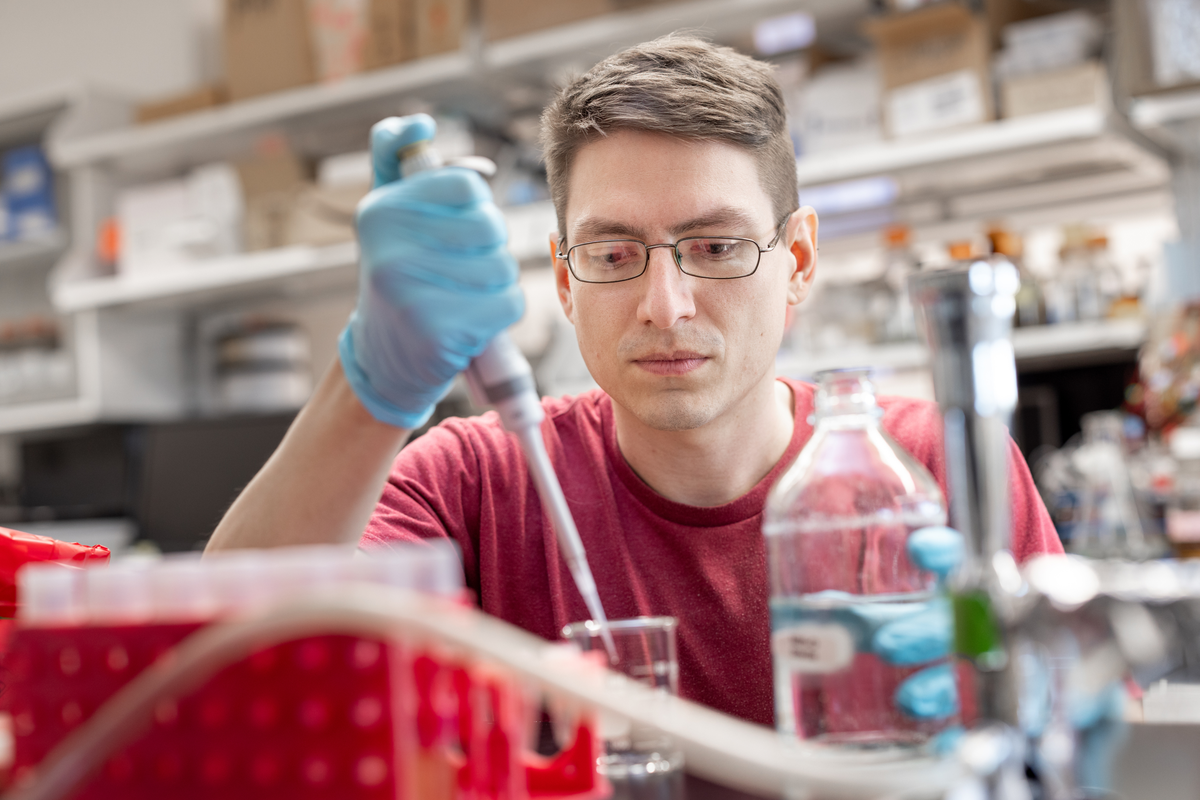
Jeff Maltas, a postdoctoral research fellow at Cleveland Clinic and the lead author of the study, at work in the lab.

Jeff Maltas, a postdoctoral research fellow at Cleveland Clinic and the lead author of the study, at work in the lab.
| Photo Credit:
Cleveland Clinic/Annie O’Neill

The mutations they picked to engineer are commonly seen in lung cancer patients. They found that all the drug-resistant cells grew slower than their ancestors when grown in isolation. But when grown with their ancestors, they built up faster. The researchers also grew two types of drug-resistant cells together without the ancestor, and their growth rate didn’t increase. That is, interactions between evolutionarily different cells didn’t provide any growth advantage. Only interactions with ancestral cells did.

The idea that a mutation’s frequency or relative abundance dictates how fit the cells that have it are is not new, but experts said the current study emphasises this idea in the context of cancer cells accumulating drug-resistant mutations.

Clue to a new treatment

“A key conclusion … is that the ecological environment can greatly impact the phenotype of the mutant being studied. Removing that mutant from the ecology leads to an incomplete scientific picture,” Maltas said.

Mohit Kumar Jolly, an associate professor of bioengineering at the Indian Institute of Science, Bengaluru, said, “Most, if not all, current therapies in the clinic do not consider the impact of these interactions, and this study reveals how considering this important dimension can help potentially design more effective therapies.”

The researchers also said their findings could be extendable to any evolving system, including viruses that mutate and bacteria that acquire resistance to antibiotics.

The study also indicated a potential new target for developing drugs to fight cancer and infectious diseases. “If this phenomenon is as general as we think,” Maltas said, “future treatments may be developed to disrupt the ecological interactions themselves, leading to higher cure rates.”

The study was conducted by scientists from Cleveland Clinic and Case Western Reserve University, Cleveland. The findings were published in the journal PRX Life in June 2024.

Joel P. Joseph is a freelance science journalist and researcher.

Published – September 11, 2024 05:30 am IST



Source link

Science

Post navigation

Previous Post: Protesters Invade Mexican Senate, Forcing Halt To Reform Debate
Next Post: With an eye on Indo-Pacific, Germany seeks greater defence ties with India

Related Posts

  • How jumping genes and RNA bridges promise to shake up biomedicine
    How jumping genes and RNA bridges promise to shake up biomedicine Science
  • Delhi HC issues notice to Centre on PIL challenging ban on adopting frozen embryos
    Delhi HC issues notice to Centre on PIL challenging ban on adopting frozen embryos Science
  • What happened to ISRO’s PSLV-C62 mission? | Explained
    What happened to ISRO’s PSLV-C62 mission? | Explained Science
  • Watch: Union Budget 2025: What’s in it for energy sector?
    Watch: Union Budget 2025: What’s in it for energy sector? Science
  • Why do rain clouds appear grey?
    Why do rain clouds appear grey? Science
  • A machine has verified the maths that won a Fields Medal: why it matters
    A machine has verified the maths that won a Fields Medal: why it matters Science

More Related Articles

Aditya-L1 in a global effort reveals why the 2024 solar storm behaved unusually Aditya-L1 in a global effort reveals why the 2024 solar storm behaved unusually Science
Why STEM isn’t just for Science students anymore Why STEM isn’t just for Science students anymore Science
Aditya-L1 launch live updates | India’s first solar observatory mission set to launch today Aditya-L1 launch live updates | India’s first solar observatory mission set to launch today Science
Why does India want fast breeder nuclear reactors? | Explained Why does India want fast breeder nuclear reactors? | Explained Science
Why Union Minister Suresh Gopi met ISRO team in Bengaluru, and who else was with him  Why Union Minister Suresh Gopi met ISRO team in Bengaluru, and who else was with him  Science
Scientists solve mystery of prehistoric ‘Burtele Foot’ Scientists solve mystery of prehistoric ‘Burtele Foot’ Science
SiteLock

Archives

  • September 2026
  • August 2026
  • July 2026
  • June 2026
  • May 2026
  • April 2026
  • March 2026
  • February 2026
  • January 2026
  • December 2025
  • November 2025
  • October 2025
  • September 2025
  • August 2025
  • July 2025
  • June 2025
  • May 2025
  • April 2025
  • March 2025
  • February 2025
  • January 2025
  • December 2024
  • November 2024
  • October 2024
  • September 2024
  • August 2024
  • July 2024
  • June 2024
  • May 2024
  • April 2024
  • March 2024
  • February 2024
  • January 2024
  • December 2023
  • November 2023
  • October 2023
  • September 2023
  • August 2023
  • July 2023
  • June 2023
  • May 2023
  • April 2023
  • March 2023
  • February 2023
  • January 2023
  • December 2022
  • November 2022
  • October 2022
  • September 2022
  • August 2022
  • July 2022
  • June 2022
  • May 2022

Categories

  • Business
  • Nation
  • Science
  • Sports
  • World

Recent Posts

  • Higher education council holds talks with Indo-German centre official
  • 172 candidates receive appointment letters at Visakhapatnam Rozgar Mela
  • Flawed AI-linked intel almost led U.S. to board China ship: report
  • IIT Bombay faculty member booked for caste abuse, suicide abetment
  • Arjun finds form as India beats Spain; Savitha stars for women

Recent Comments

  1. AlvinNet on UP Teacher Who Asked Students To Slap Muslim Classmate
  2. AlvinNet on UP Teacher Who Asked Students To Slap Muslim Classmate
  3. Jamesslits on UP Teacher Who Asked Students To Slap Muslim Classmate
  4. MichaelClear on UP Teacher Who Asked Students To Slap Muslim Classmate
  5. Jamesslits on UP Teacher Who Asked Students To Slap Muslim Classmate
  • Indian-Origin UK MP Shivani Raja Takes Oath On Bhagavad Gita
    Indian-Origin UK MP Shivani Raja Takes Oath On Bhagavad Gita World
  • Passionate fans flock to hail Rohit and his men
    Passionate fans flock to hail Rohit and his men Sports
  • Over 1 Lakh People Evacuated From Coastal Areas In Bengal
    Over 1 Lakh People Evacuated From Coastal Areas In Bengal Nation
  • Radical Preacher Amritpal Singh To Launch Party On January 14
    Radical Preacher Amritpal Singh To Launch Party On January 14 Nation
  • Israel’s Smotrich approves settlement in bid to ‘bury’ idea of Palestinian state
    Israel’s Smotrich approves settlement in bid to ‘bury’ idea of Palestinian state World
  • Noida International Airport begins passenger flights; first IndiGo flight from Lucknow
    Noida International Airport begins passenger flights; first IndiGo flight from Lucknow Nation
  • FIFA World Cup 2026 | When the going got tough, our players showed up, says England coach Tuchel on comeback win over DR Congo
    FIFA World Cup 2026 | When the going got tough, our players showed up, says England coach Tuchel on comeback win over DR Congo Sports
  • Israel shows video of Hamas chief Sinwar in Gaza tunnel on eve of October 7 attack
    Israel shows video of Hamas chief Sinwar in Gaza tunnel on eve of October 7 attack World

Editor-in-Chief:
Mohammad Ariff,
MSW, MAJMC, BSW, DTL, CTS, CNM, CCR, CAL, RSL, ASOC.
editor@artifex.news

Associate Editors:
1. Zenellis R. Tuba,
zenelis@artifex.news
2. Haris Daniyel
daniyel@artifex.news

Photograher:
Rohan Das
rohan@artifex.news

Artifex.News offers Online Paid Internships to college students from India and Abroad. Interns will get a PRESS CARD and other online offers.
Send your CV (Subjectline: Paid Internship) to internship@artifex.news

Links:
Associate Journalism
About Us
Privacy Policy

News Links:
Breaking News
World
Nation
Sports
Business
Entertainment
Lifestyle

Registered Office:
72/A, Elliot Road, Kolkata - 700016
Tel: 033-22277777, 033-22172217
Email: office@artifex.news

Editorial Office / News Desk:
No. 13, Mezzanine Floor, Esplanade Metro Rail Station,
12 J. L. Nehru Road, Kolkata - 700069.
(Entry from Gate No. 5)
Tel: 033-46011099, 033-46046046
Email: editor@artifex.news

Copyright © 2023 Artifex.News Newsportal designed by Artifex Infotech.