





Human activity has significantly altered the earth’s landscape — so much so that many scientists have said the planet began a new geological chapter called the Anthropocene era.
Many of these changes have been wrought by deposits of materials like industrial waste and construction debris. These materials weather over time and mix with natural sediment, and affect the environment by changing the acidity of soil and water, the composition of soil, and the distribution of minerals.
Slag become rock
In 2015, artificial ground contributed more than 316 million tonnes of sedimentary material to the oceans, far exceeding the natural supply.
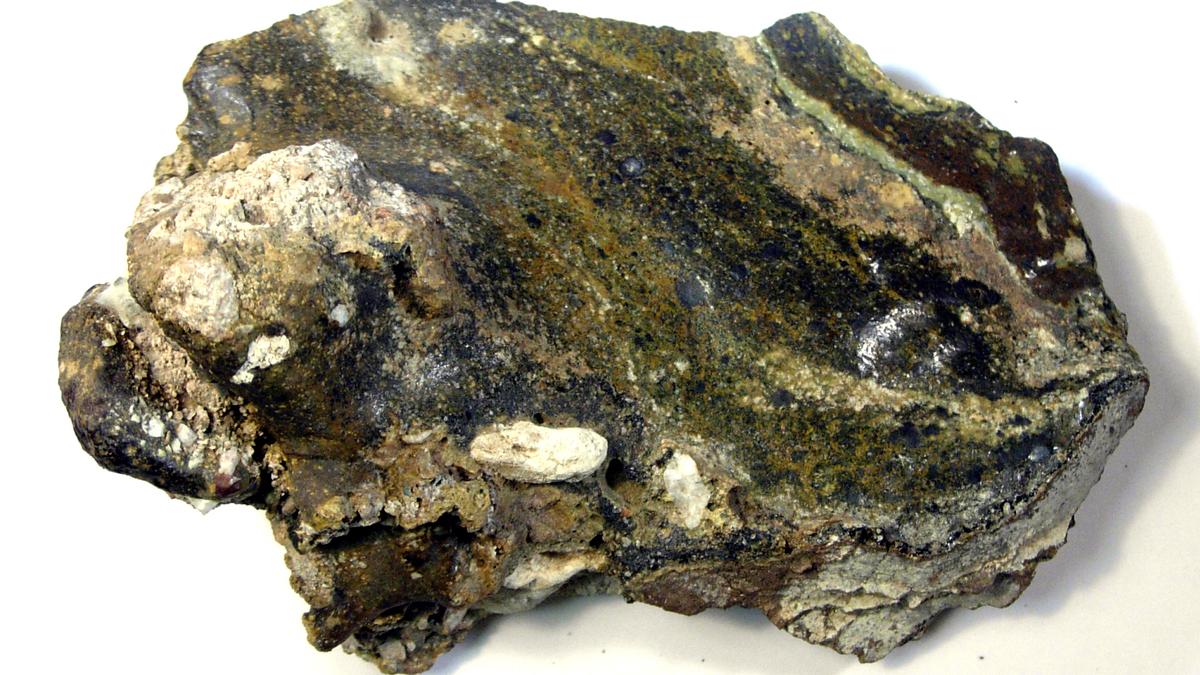
But going beyond simply being abundant in the natural environment, scientists have been documenting some unusual formations that wouldn’t have taken shape if not for the trash humans are throwing out. In a recent study in the journal Sedimentologika, for example, researchers documented a new kind of sedimentary rock made from coastal slag deposits in the U.K.
This rock follows other formations like molten glass and steel in the refuse of nuclear weapon tests and pieces of plastic pieces floating in oceans that disease-causing bacteria have grabbed hold of.
Slag is a major component of artificial ground. It is a composite material containing metal oxides and silicon dioxide, and is a by-product of the steelmaking process in the iron and steel industries.
Synthetic slag, natural weathering
At Warton, England, old industrial waste sites are the focus of a unique study examining slag hardening, or lithification.
The lithification process hardens industrial waste, including slag, into sedimentary rocks, creating artificial ground. When these sedimentary rocks weather over time, they release sediments into the environment.
Because the rocks are infused with industrial waste, their sediments often contain toxic metals that contaminate soil, water, and air.
Sedimentary rocks with slag are relatively more abundant in the U.K. due to historical industrial activities.
Slag is chemically stable and has the ability to neutralise acidity. When lithified slag breaks down, it stores greenhouse gases like carbon dioxide through a process called mineral carbonation. This process mimics natural weathering.
Understanding how slag undergoes lithification is crucial to understanding how the deposits will behave over time, so that we may eventually also maximise its carbon capture potential.
This opportunity gains significance in light of projections suggesting a 10.5% rise worldwide in slag production by 2031. While the steelmaking industry is under pressure to lower its emissions — including with processes that mitigate slag production — reusing slag to sequester carbon could reduce the industry’s carbon footprint.
Elements of rock
The carbon capture process is well understood for inland slag deposits in the U.K. and less so for coastal regions.
The researchers behind the new study collected slag samples from the Warton slag heap in South Lancashire, England, where iron and steel works were active from 1864 to 1929.
They prepared the samples for analysis with a cool-water diamond saw, which cut them into smaller pieces, then turned them into a powder using a mortar and pestle, and finally filtered the particles through a sieve.
In particular, the team collected samples along a straight line across the slag heap, from below the highest average water level to the top of the deposit, to capture variations in exposure to seawater and rainwater.
The researchers used four different analytical techniques to understand the slag samples’ composition, starting with X-ray diffraction. This method uses X-rays to identify the various types of minerals in the sample by studying how the minerals scatter the radiation.
Previous studies have shown that carbonates can form during the lithification process. These minerals contain carbonate ions (CO32-) and contribute to the hardening process. In the context of slag, the researchers found a carbonate form called calcite, a form of calcium carbonate (CaCO3) that is also present in chalk.
To identify the quantity of calcite in the slag samples, the researchers used thermogravimetric analysis (TGA). In this method, the sample is heated to see how much weight it loses, revealing the quantity of carbonate present.
The researchers also used stable isotope analysis to identify the isotopes of carbon and oxygen present in the samples. (An isotope of an element is an atom that contains the same number of protons and electrons but a different number of neutrons.) The relative abundance of these isotopes can be a signature that points to specific sources of the calcite in the sample.
Finally, they observed the samples under a scanning electron microscope to reveal the sample’s surface and identify the elements present.
The history, through science
X-ray diffraction identified various minerals in the slag sample, including a form of calcium silicate called larnite. The microscopic analysis revealed variable texture and elemental distributions in the slag, with silicon dominating weathered areas and calcium more prevalent in the wave-exposed parts.
These features suggested the slag in the deposit had undergone a combination of lithification processes in different conditions.
TGA also indicated a higher carbonate level at the top of the slag bank and lower levels in the seaward direction, echoing the influence of environmental factors like seawater and rainwater on the lithification process.
Finally, the isotope analysis revealed significant variations in the levels of the carbon-13 isotope, which is crucial to understand carbonate reactions and carbon dioxide dynamics in the environment.
Based on all these details, the researchers determined two lithification mechanisms in the slag deposit.
The first mechanism — calcite cement precipitation — dominated on the top surface of slag and on the sea-facing side above the average water level. In this process, the minerals in slag dissolve to release calcium, which reacts with atmospheric carbon dioxide to form calcite.
In the intertidal zone, which is the part of the shoreline exposed to air at low tide and is submerged at high tide, the calcium-silicate-hydrate (CSH) cement precipitation process dominated. Here, saltwater prevents slag minerals from dissolving; instead, they form CSH minerals that exhibit varying texture and elemental distributions.

Repurposing slag deposits
According to the researchers, understanding these processes can inform strategies with which to repurpose slag deposits to capture carbon dioxide. This is especially the case for the calcite cement mechanism, which can capture carbon dioxide from the atmosphere while eliminating the need to transport carbon and for additional processing facilities.
The researchers also said the precipitation of CSH minerals in the slag could limit the release of potentially toxic metals, such as vanadium and chromium, into the environment.
Knowing the precise way in which a particular slag deposit became a rock could also help recover valuable resources from slag deposits and increase the amount of recycled material in steelmaking.
Finally, the authors suggested hardened slag could be used to keep waves and tides from washing away shores and prevent coastal erosion — an approach that would combine environmental protection with waste management.
Tejasri Gururaj is a freelance science writer and journalist with a master’s degree in physics.
Published – October 10, 2024 05:30 am IST