





Skip to content
  • Facebook
  • X
  • Linkedin
  • WhatsApp
  • YouTube
  • Associate Journalism
  • About Us
  • Privacy Policy
  • 033-46046046
  • editor@artifex.news
Artifex.News

Artifex.News

Stay Connected. Stay Informed.

  • Breaking News
  • World
  • Nation
  • Sports
  • Business
  • Science
  • Entertainment
  • Lifestyle
  • Toggle search form
  • Mamata Banerjee Suffered “Major Injury”: Trinamool Congress
    Mamata Banerjee Suffered “Major Injury”: Trinamool Congress Nation
  • Amazon Unveils AI Tool To Help Drivers Find Packages Faster
    Amazon Unveils AI Tool To Help Drivers Find Packages Faster World
  • Access Denied Sports
  • No practice games for Australia before next year’s India Tests: head coach McDonald
    No practice games for Australia before next year’s India Tests: head coach McDonald Sports
  • Everything Was Planned So That I Cannot Take Any Action, Alleges Yogesh Kathuniya Over Khel Ratna Snub
    Everything Was Planned So That I Cannot Take Any Action, Alleges Yogesh Kathuniya Over Khel Ratna Snub Sports
  • Russian, Chinese bombers stage joint patrol near Alaska
    Russian, Chinese bombers stage joint patrol near Alaska World
  • Musheer Khan, Brother Of Sarfaraz Khan, Hits Double Ton For Mumbai In Ranji Trophy
    Musheer Khan, Brother Of Sarfaraz Khan, Hits Double Ton For Mumbai In Ranji Trophy Sports
  • Eight IPL players named in Afghanistan T20 World Cup squad
    Eight IPL players named in Afghanistan T20 World Cup squad Sports
Why we need to change the way we talk about antibiotic resistance

Why we need to change the way we talk about antibiotic resistance

Posted on October 10, 2025 By admin


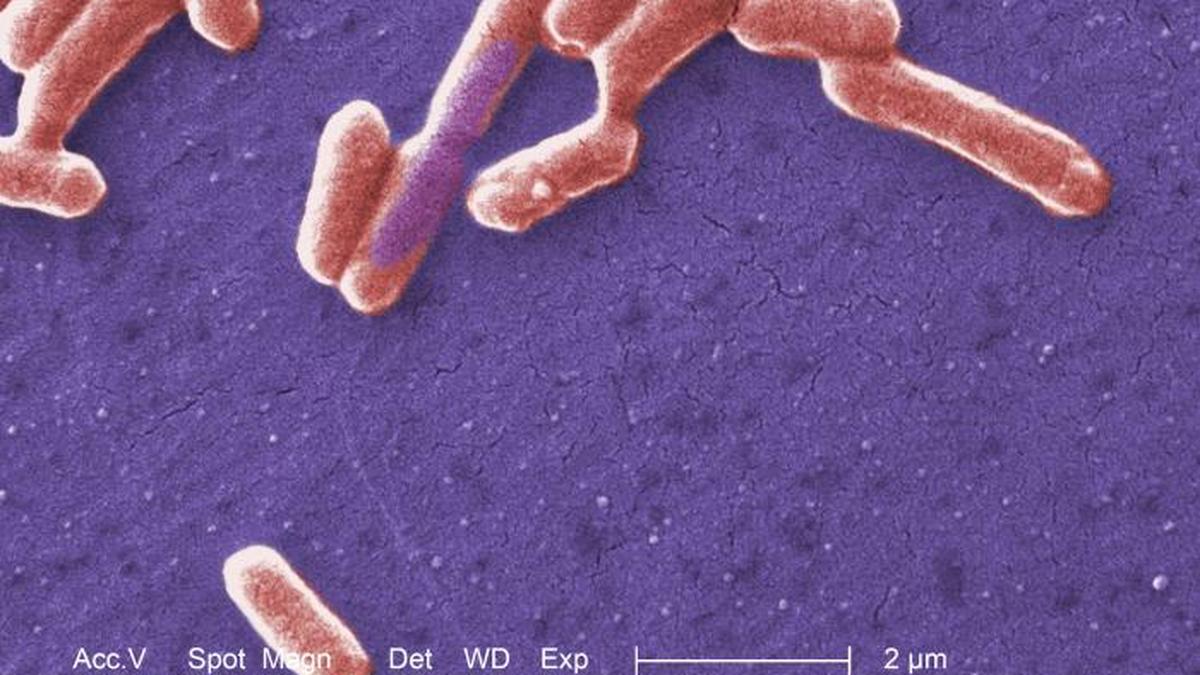
In 2010, India woke up to a scientific storm. A research paper published in The Lancet Infectious Diseases described a new enzyme that could make bacteria resistant to nearly all antibiotics, including our last-resort drugs. This enzyme was named New Delhi Metallo-beta-lactamase, or NDM. Overnight, the gene’s name became a political issue. The Indian government argued it unfairly tarnished the nation’s reputation, while the British researchers defended it as a standard naming practice. The media seized the story, politicians took positions, and for a short time, antimicrobial resistance became front-page news.

The messaging problem

This controversy, and the unbiased opinions of many who stated that AMR could push our country into a catastrophic health crisis if not urgently tackled, created a momentum that later paved the way for initiatives such as the Chennai Declaration, which I was privileged to coordinate. Those were years when strong, even frightening, predictions worked. They jolted decision-makers. They made headlines. They opened doors. But what worked in 2010 no longer works today.

For over a decade, we have repeated the same dire forecasts: 10 million deaths every year by 2050, one hundred trillion dollars lost to the global economy, a looming collapse of healthcare. These numbers, taken from the landmark report by British economist Lord Jim O’Neill, once carried weight. They reframed AMR as not just a medical problem, but also an economic and political one. Governments took notice. The G7 and G20 put AMR on their agenda. For a time, the message worked.

But repetition dulls impact. Psychologists call this habituation: the more you hear something, the less you respond. Psychologist Paul Slovic, who has studied how humans perceive risk, calls it psychic numbing: the bigger the numbers, the less we feel. A single patient’s suffering moves us; 10 million deaths become an abstraction. As journalist Paul Brodeur wrote, “Statistics are human beings with the tears wiped off.” In talking about AMR only in statistics and distant futures, we have wiped off the tears and lost the human connection.

Today, the media is tired of AMR stories. Policymakers are distracted by other crises. Even doctors are weary of hearing the same warnings at conferences. Among the public, AMR barely registers. This is not because resistance is less dangerous than before. If anything, the problem is worse. The real crisis is that our words no longer move people. AMR has become, above all, a communication crisis.

Making it personal

If the language of catastrophe no longer works, what can? I believe the answer lies in making the story personal. Instead of talking only about the future collapse of healthcare systems, we must talk about the present impact on individual bodies. The focus must shift from statistics to biology.

The human body is not just human. It is microbial. Trillions of bacteria, viruses, and fungi live in and on us, shaping our health in ways we are only beginning to understand. This community, called the microbiome, helps digest food, produces vitamins, trains immunity, and protects our skin. It even communicates with our brain, influencing mood and cognition.

Antibiotics, while life-saving, are not neutral. Even a single dose can disrupt the microbiome for months. In some cases, the balance never fully recovers. The consequences ripple through what scientists call the “axes” of communication between the gut and the rest of the body. Disturbances in the gut microbiome affect the brain, worsening anxiety or depression. They affect the lungs, increasing the risk of asthma and severe respiratory infections. They alter metabolism, raising the likelihood of obesity and diabetes. They influence the skin, aggravating conditions like eczema or acne. They reshape the immune system, making allergies and autoimmune diseases more common. These are not distant predictions for 2050. These are impacts on us, on our children, today.

The good bugs

For too long, we have told only the story of the bad bugs—the resistant pathogens that kill. But there is another story we must tell: the story of the good bugs. And one of the most surprising, even delightful, examples of their role comes from something as ordinary as perfume.

Why does the same perfume smell different on different people? Perfumers usually say it is because of differences in skin chemistry, in pH or moisture or oiliness. But research is showing another dimension: the microbes on our skin. Bacteria on the skin produce enzymes that interact with fragrance molecules. These enzymes break some molecules down, amplify others, and sometimes even create new scents. That is why a floral perfume may smell fresh on one person but heavy on another. Or why a woody note lingers on one wrist but fades quickly on another. It is not only the perfume; it is the partnership between fragrance molecules and bacterial enzymes on the skin.

This is a reminder that microbes are not only about disease. They are about individuality, diversity, and beauty. They shape our daily experiences in invisible ways. Bugs are not just enemies. They are part of who we are.

So if we can tell such positive, fascinating stories about microbes, why can’t we do the same for AMR? Instead of only warning that antibiotics cause resistance in society, we can say: antibiotics can harm your microbiome. Protect your good bugs—they protect you. This is not a softer message. It is a more effective one, because it connects to people’s own lives. It replaces dread with responsibility. It offers hope.

Shifting the story

This is the shift we need. From resistance in hospitals to resilience in the body. From global catastrophe to personal consciousness. From fear to fragrance. From the language of war to the language of wisdom.

The good, the bad, and the ugly bugs all live with us. The question is: how will we tell their story? If we continue with pessimism alone, people will turn away. If we change our language, if we bring in positivity, biology, and human connection, we can keep AMR on the agenda—not as an abstract threat, but as a living, urgent, and solvable challenge.

(Dr Abdul Ghafur is senior consultant, infectious diseases, Apollo Hospitals, Chennai and coordinator, Chennai Declaration on AMR. drghafur@hotmail.com)

Published – October 10, 2025 06:00 am IST



Source link

Science Tags:AMR threat india, changing messaging on AMR, good bugs, human microbiome

Post navigation

Previous Post: How does cutting onions make you cry?
Next Post: Access Denied

Related Posts

  • Nobel Prize in Chemistry 2024 awarded to David Baker, along with Demis Hassabis and John M. Jumper
    Nobel Prize in Chemistry 2024 awarded to David Baker, along with Demis Hassabis and John M. Jumper Science
  • Interview | Shubhanshu Shukla on his new book, ‘The Second Orbit’
    Interview | Shubhanshu Shukla on his new book, ‘The Second Orbit’ Science
  • NASA invites ISRO to join Moon Base programme
    NASA invites ISRO to join Moon Base programme Science
  • Study brings lifestyle of enigmatic extinct humans into focus
    Study brings lifestyle of enigmatic extinct humans into focus Science
  • Science for All | What is anendophasia?
    Science for All | What is anendophasia? Science
  • Why AI models struggle to discover new drugs
    Why AI models struggle to discover new drugs Science

More Related Articles

Kufos succeeds in captive breeding of threatened Indian ornamental fish Kufos succeeds in captive breeding of threatened Indian ornamental fish Science
The green and the not-so-green of biofuels — explained | The Scope The green and the not-so-green of biofuels — explained | The Scope Science
Flavour puzzle: physics doesn’t know why matter comes in ‘flavours’ Flavour puzzle: physics doesn’t know why matter comes in ‘flavours’ Science
‘Today, mathematics is not only necessary in daily life but pervasive’ ‘Today, mathematics is not only necessary in daily life but pervasive’ Science
Optical biosensor rapidly detects monkeypox virus Optical biosensor rapidly detects monkeypox virus Science
Nobel laureate supports India’s pursuit for a neutrino lab Nobel laureate supports India’s pursuit for a neutrino lab Science
SiteLock

Archives

  • September 2026
  • August 2026
  • July 2026
  • June 2026
  • May 2026
  • April 2026
  • March 2026
  • February 2026
  • January 2026
  • December 2025
  • November 2025
  • October 2025
  • September 2025
  • August 2025
  • July 2025
  • June 2025
  • May 2025
  • April 2025
  • March 2025
  • February 2025
  • January 2025
  • December 2024
  • November 2024
  • October 2024
  • September 2024
  • August 2024
  • July 2024
  • June 2024
  • May 2024
  • April 2024
  • March 2024
  • February 2024
  • January 2024
  • December 2023
  • November 2023
  • October 2023
  • September 2023
  • August 2023
  • July 2023
  • June 2023
  • May 2023
  • April 2023
  • March 2023
  • February 2023
  • January 2023
  • December 2022
  • November 2022
  • October 2022
  • September 2022
  • August 2022
  • July 2022
  • June 2022
  • May 2022

Categories

  • Business
  • Nation
  • Science
  • Sports
  • World

Recent Posts

  • Israeli settler killed in West Bank, suspect arrested
  • Number of drought-hit taluks in Karnataka may cross 200
  • OFC menace persists in Bengaluru as new GBA regulations remain pending
  • Manal bounces back after failing to make it to u-19 WC team
  • Old era of jingoism, equating Nepali nationalism with anti-Indianism, is over: Nepal Finance Minister

Recent Comments

  1. Frankenrib on UP Teacher Who Asked Students To Slap Muslim Classmate
  2. Anthonylop on UP Teacher Who Asked Students To Slap Muslim Classmate
  3. Anthonylop on UP Teacher Who Asked Students To Slap Muslim Classmate
  4. TimmyMEs on UP Teacher Who Asked Students To Slap Muslim Classmate
  5. Josephjab on UP Teacher Who Asked Students To Slap Muslim Classmate
  • Nigerian school collapses leaving 22 students dead; over 100 rescued from rubble
    Nigerian school collapses leaving 22 students dead; over 100 rescued from rubble World
  • Anwar Ali, East Bengal, Delhi FC move Delhi High Court, Seek Stay On Player’s Suspension By AIFF
    Anwar Ali, East Bengal, Delhi FC move Delhi High Court, Seek Stay On Player’s Suspension By AIFF Sports
  • Thousands evacuated in Southern California due to failing chemical tank
    Thousands evacuated in Southern California due to failing chemical tank World
  • Access Denied
    Access Denied Nation
  • “PM Modi Coming Back With Clear Majority In 2024”: Rajnath Singh
    “PM Modi Coming Back With Clear Majority In 2024”: Rajnath Singh Nation
  • “Talk To Mohammed Shami”: Gautam Gambhir Given Tricky ‘Future’ Task By Outing Bowling Coach
    “Talk To Mohammed Shami”: Gautam Gambhir Given Tricky ‘Future’ Task By Outing Bowling Coach Sports
  • We don’t have the one thing that we so desperately want: India’s Mandeep Singh on the Hockey World Cup
    We don’t have the one thing that we so desperately want: India’s Mandeep Singh on the Hockey World Cup Sports
  • Access Denied
    Access Denied Nation

Editor-in-Chief:
Mohammad Ariff,
MSW, MAJMC, BSW, DTL, CTS, CNM, CCR, CAL, RSL, ASOC.
editor@artifex.news

Associate Editors:
1. Zenellis R. Tuba,
zenelis@artifex.news
2. Haris Daniyel
daniyel@artifex.news

Photograher:
Rohan Das
rohan@artifex.news

Artifex.News offers Online Paid Internships to college students from India and Abroad. Interns will get a PRESS CARD and other online offers.
Send your CV (Subjectline: Paid Internship) to internship@artifex.news

Links:
Associate Journalism
About Us
Privacy Policy

News Links:
Breaking News
World
Nation
Sports
Business
Entertainment
Lifestyle

Registered Office:
72/A, Elliot Road, Kolkata - 700016
Tel: 033-22277777, 033-22172217
Email: office@artifex.news

Editorial Office / News Desk:
No. 13, Mezzanine Floor, Esplanade Metro Rail Station,
12 J. L. Nehru Road, Kolkata - 700069.
(Entry from Gate No. 5)
Tel: 033-46011099, 033-46046046
Email: editor@artifex.news

Copyright © 2023 Artifex.News Newsportal designed by Artifex Infotech.