


Skip to content
  • Facebook
  • X
  • Linkedin
  • WhatsApp
  • Associate Journalism
  • About Us
  • Privacy Policy
  • 033-46046046
  • editor@artifex.news
Artifex.News

Artifex.News

Stay Connected. Stay Informed.

  • Breaking News
  • World
  • Nation
  • Sports
  • Business
  • Science
  • Entertainment
  • Lifestyle
  • Toggle search form
  • Woman Hit By Train While Crossing Railway Tracks On Platform, Saved By Cop
    Woman Hit By Train While Crossing Railway Tracks On Platform, Saved By Cop Nation
  • Others Can Learn Something From Anil Kapoor
    Others Can Learn Something From Anil Kapoor Nation
  • Nurse Allegedly Gang-Raped In UP, Stick, Chilli Powder Inserted In Genitals
    Nurse Allegedly Gang-Raped In UP, Stick, Chilli Powder Inserted In Genitals Nation
  • Opposition Demands South Korean President Step Down Over ‘Insurrection’
    Opposition Demands South Korean President Step Down Over ‘Insurrection’ World
  • Access Denied
    Access Denied Nation
  • Watch: Why Balochistan remains in conflict with Pakistan | The Hindu Explainer
    Watch: Why Balochistan remains in conflict with Pakistan | The Hindu Explainer World
  • Access Denied Business
  • The Hindu Morning Digest, August 10, 2024
    The Hindu Morning Digest, August 10, 2024 World
Photobiology: speeding up enzyme reactions in microbes using light

Photobiology: speeding up enzyme reactions in microbes using light

Posted on April 1, 2026 By admin


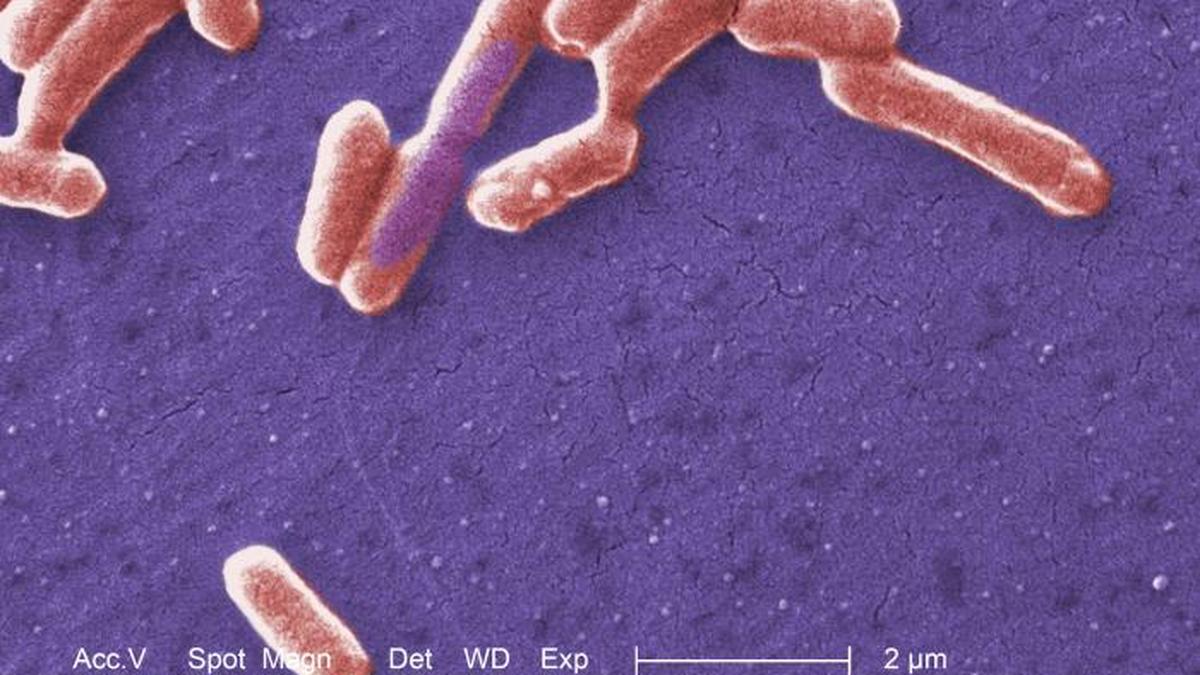
Antaya University, Türkiye, researchers have used E. coli bacteria as a versatile factory to produce useful compounds such as insulin.
| Photo Credit: Public domain

We know photosynthesis is a feature of plants which absorb sunlight and use the energy to convert atmospheric CO2into glucose. While sunlight peaks in the 400-700 nm region (of wavelengths), scientists have shone ultraviolet radiation (well below 400 nm) on plants and found that this opens new avenues in enzyme engineering and drugs through photocatalysis — the process of using light to jumpstart chemical reactions.

Light-activated enzymes turn light energy into chemical action. In some cases, light triggers lightning-fast shape changes that turn on the enzyme. These movements can now be tracked in real-time on a scale of trillionths of a second using ultra-fast imaging.

Researchers at Nanjing University, China, have used visible light to trigger inherent enzymes as catalysts, paving the way for manufacturing useful products and drugs. This technology, called ‘photobiocatalysis’, repurposes natural enzymes to produce novel products of medicinal value (Organic Chemistry Frontiers, 12 (16), April 2025, pages).

Photobiocatalysis pairs the energy of light with the precision engineering of enzymes, allowing scientists to assemble very complex structures.

Use of microbes, bacteria

Some plants have been found to contain an alkaloid called securinine. The genes that make this alkaloid resemble bacterial genes and have been borrowed from bacteria that invade  plants. This discovery has allowed scientists to look for more such repurposed genes in plants and find new paths for drug discovery. These use the molecules offered by microbes in order to produce new defence molecules that are toxic.

Taking a cue from this transfer of genes seen in nature, scientists have engineered the yeast Pichia pastoris, which is found in the soil, to help produce two plant-derived anti-cancer drugs called vinblastine and vincristine (Nature Synthesis, 2, 231-242, 2023). These alkaloids, found in the periwinkle plant, are very complex molecules that are put together by the coordinated action of 30 enzymes.

There is also increasing use of intact organisms like mice or zebrafish, and even the bacterial workhorse Escherichia coli to produce novel chemicals of use in agriculture or medicine. 

Driven by light

İbrahim İncir and Özlem Kaplan from the genetics and bioengineering faculty of Antaya University, Türkiye, have shown that E. coli is a versatile cell factory, which has been used to produce novel and useful products such as insulin and other cost-effective proteins of medical interest. Scientists at Kobe University, Japan have similarly used E. coli to produce pyridine dicarboxylate, a degradable plastic (Nature Chemical Biology 21, 1171–1181 (2025)).

And researchers from DuPont, Wilmington, Delaware have used E. coli to convert glucose to an industrial styrene polymer (Metabolic Engineering vol. 9, issue 3, May 2007). Likewise, Ajikumaran et al. from the Massachusetts Institute of Technology in the U.S. have used E. coli to synthesise the precursor of the anti-cancer drug Taxol.

The most recent application of combining photobiosynthesis with a microbial ‘bioreactor’ has come from the group of Huimin Zhao  at the University of Illinois, Urbana-Champaign, who have engineered E. coli to produce non-natural olefins and reductases directly from glucose using enzymes activated by blue light.

Using E. coli allows scientists to scale the process up for large scale production, where they combine biosynthesis with photo-biotechnology (Nature Catalysis vol. 9, January 2026, pages 62-72). They also point out that this approach has the potential for large-scale chemical production where reactions driven by light are integrated into cellular metabolism.

dbala@lvpei.org

Published – April 03, 2026 07:15 am IST


Source link

Science

Post navigation

Previous Post: Access Denied
Next Post: Access Denied

Related Posts

  • Mendelian genetics, Darwinian evolution closely linked with chemistry, says expert
    Mendelian genetics, Darwinian evolution closely linked with chemistry, says expert Science
  • Octopuses and their relatives are a new animal welfare frontier
    Octopuses and their relatives are a new animal welfare frontier Science
  • The Science Quiz | Security features of rupee notes
    The Science Quiz | Security features of rupee notes Science
  • What is Google’s ‘quantum advantage’ leap? | Explained
    What is Google’s ‘quantum advantage’ leap? | Explained Science
  • Glacial lakes rise as glaciers retreat
    Glacial lakes rise as glaciers retreat Science
  • What do leading scientists make of the R&D Budget in Modi’s third term?
    What do leading scientists make of the R&D Budget in Modi’s third term? Science

More Related Articles

Why can we recycle only some kinds of plastics? Why can we recycle only some kinds of plastics? Science
Anthropocene epoch declaration unlikely soon, but the idea lives on | Explained Anthropocene epoch declaration unlikely soon, but the idea lives on | Explained Science
Dinosaur-killing asteroid impact fouled Earth’s atmosphere with dust Dinosaur-killing asteroid impact fouled Earth’s atmosphere with dust Science
Four new studies report progress towards long-awaited HIV vaccine Four new studies report progress towards long-awaited HIV vaccine Science
Organ-on-chip tech could boost BioE3 goal to personalise medicine Organ-on-chip tech could boost BioE3 goal to personalise medicine Science
The Science Quiz | Twilight time – the world between worlds The Science Quiz | Twilight time – the world between worlds Science
SiteLock

Archives

  • April 2026
  • March 2026
  • February 2026
  • January 2026
  • December 2025
  • November 2025
  • October 2025
  • September 2025
  • August 2025
  • July 2025
  • June 2025
  • May 2025
  • April 2025
  • March 2025
  • February 2025
  • January 2025
  • December 2024
  • November 2024
  • October 2024
  • September 2024
  • August 2024
  • July 2024
  • June 2024
  • May 2024
  • April 2024
  • March 2024
  • February 2024
  • January 2024
  • December 2023
  • November 2023
  • October 2023
  • September 2023
  • August 2023
  • July 2023
  • June 2023
  • May 2023
  • April 2023
  • March 2023
  • February 2023
  • January 2023
  • December 2022
  • November 2022
  • October 2022
  • September 2022
  • August 2022
  • July 2022
  • June 2022
  • May 2022

Categories

  • Business
  • Nation
  • Science
  • Sports
  • World

Recent Posts

  • Access Denied
  • Access Denied
  • Why did Iran war not affect China’s energy security so far?
  • Access Denied
  • Access Denied

Recent Comments

  1. Williamsking on UP Teacher Who Asked Students To Slap Muslim Classmate
  2. Jamesamuse on UP Teacher Who Asked Students To Slap Muslim Classmate
  3. Scottlon on UP Teacher Who Asked Students To Slap Muslim Classmate
  4. Jimmiecef on UP Teacher Who Asked Students To Slap Muslim Classmate
  5. Robertrap on UP Teacher Who Asked Students To Slap Muslim Classmate
  • To Watch Virat Kohli In Delhi’s Ranji Trophy Match, Class 2 Girl Bunks School
    To Watch Virat Kohli In Delhi’s Ranji Trophy Match, Class 2 Girl Bunks School Sports
  • Access Denied Business
  • Israeli officials seize AP equipment and take down live shot of northern Gaza, citing new media law
    Israeli officials seize AP equipment and take down live shot of northern Gaza, citing new media law World
  • Access Denied
    Access Denied Nation
  • Access Denied
    Access Denied Nation
  • Access Denied Sports
  • PCB Announces Free Entry For Fans In Remainder Days Of 1st Test Between Pakistan And Bangladesh
    PCB Announces Free Entry For Fans In Remainder Days Of 1st Test Between Pakistan And Bangladesh Sports
  • Is it possible in mice to restore walking after paralysis from spinal cord injury?
    Is it possible in mice to restore walking after paralysis from spinal cord injury? Science

Editor-in-Chief:
Mohammad Ariff,
MSW, MAJMC, BSW, DTL, CTS, CNM, CCR, CAL, RSL, ASOC.
editor@artifex.news

Associate Editors:
1. Zenellis R. Tuba,
zenelis@artifex.news
2. Haris Daniyel
daniyel@artifex.news

Photograher:
Rohan Das
rohan@artifex.news

Artifex.News offers Online Paid Internships to college students from India and Abroad. Interns will get a PRESS CARD and other online offers.
Send your CV (Subjectline: Paid Internship) to internship@artifex.news

Links:
Associate Journalism
About Us
Privacy Policy

News Links:
Breaking News
World
Nation
Sports
Business
Entertainment
Lifestyle

Registered Office:
72/A, Elliot Road, Kolkata - 700016
Tel: 033-22277777, 033-22172217
Email: office@artifex.news

Editorial Office / News Desk:
No. 13, Mezzanine Floor, Esplanade Metro Rail Station,
12 J. L. Nehru Road, Kolkata - 700069.
(Entry from Gate No. 5)
Tel: 033-46011099, 033-46046046
Email: editor@artifex.news

Copyright © 2023 Artifex.News Newsportal designed by Artifex Infotech.