






Antidepressants and therapy can provide much needed relief to people with mental health illnesses.
But there are many people whose symptoms don’t respond to treatment and whose road to recovery often begins after trial and error with different medicines and/or modes of therapy. And in this time their symptoms could get worse. According to one estimate, people with such treatment-resistant depression make up 30% of seekers of mental healthcare.
A recent study by an international team of researchers, published in Nature Medicine,offers a solution — and it requires reimagining psychiatric diagnoses.
“The way we think about depression in the clinic is it’s one label,” Leonardo Tozzi, a neuroscientist and the study’s first author, said. He was at Stanford before he joined a neurodiagnostics firm in the U.S. last year.
The brain is the seat of our mind and people with depression manifest it in their brains in different ways. These manifestations appear as faulty brain patterns that, the study’s researchers said, psychiatrists often don’t account for.
Dr. Tozzi et al. showed these patterns can be grouped into six unique subtypes of depression. The team also found at least three of these subtypes could predict the antidepressants and/or the modes of therapy that may work to treat these people.
Brain biomarker
Dr. Tozzi joined Stanford Medicine’s Center for Precision Mental Health and Wellness as a postdoctoral researcher in 2018. He likened the study’s purpose to cardiologists using electrocardiogram data to evaluate a patient’s heart condition. “We’re trying to turn psychiatry into that.”
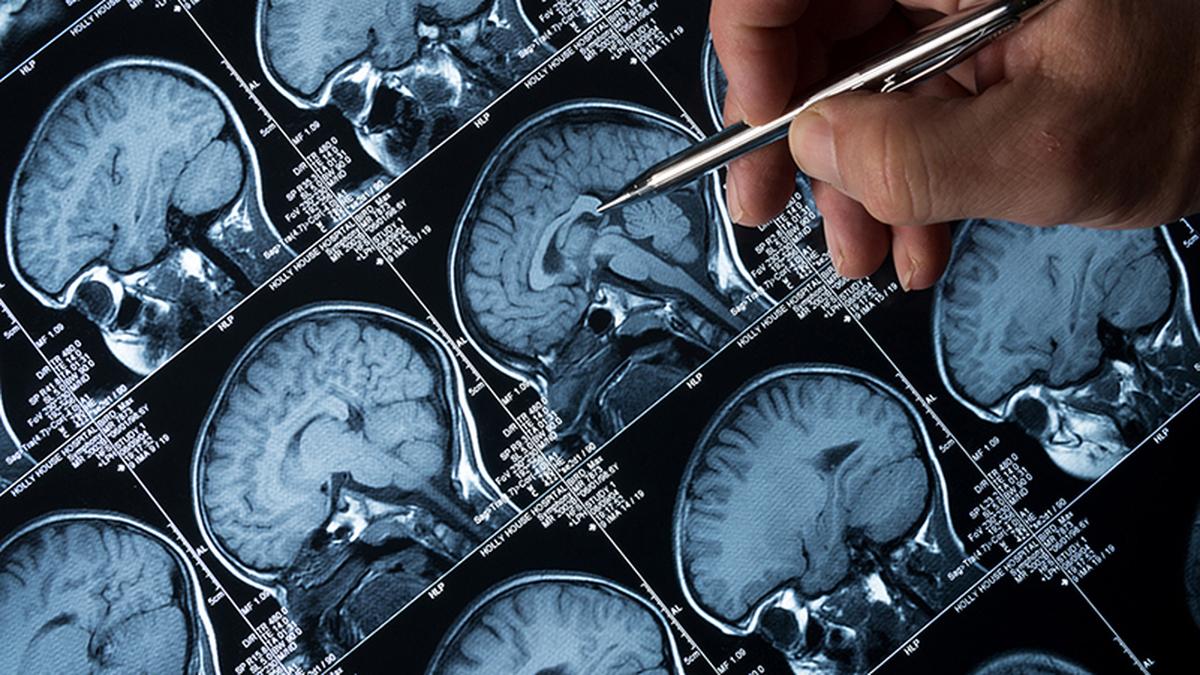
Like the heart, the brain has electrical activity, too. A functional magnetic resonance imaging (fMRI) machine can capture this activity and the way it changes over time through electric signals.
In those with mental illness, the underlying brain circuits that connect different regions don’t activate normally. One region can have more intense electrical activity than it does in a healthy person.
Different people have different patterns, both normal and abnormal. When some of them were shared between people with a specific mental illness, the researchers called it a subtype.
In this way, many studies have subtyped depression based on brain activity. But the new study used a “theory-driven” approach to create subtypes that are also clinically relevant.
Data crunching
In 2021, Dr. Tozzi & co. began work on the study, scouring 801 patient records from clinical trials conducted in the last two decades. All these individuals had been diagnosed with depression and/or an anxiety disorder but didn’t undergo treatment at the time. “Many had comorbid anxiety,” Dr. Tozzi said.

The records had patients’ responses to symptom questionnaires and behavioural performance results, plus fMRI data — lots of it. Scanning each brain volume involves tracking changes in 100,000 data inputs across 20 minutes, the typical scan period in the trials.
“We had to do some sort of compression, and to reduce the data to a meaningful, smaller set of variables,” Dr. Tozzi said.
They narrowed their analysis down to six brain circuits that previous studies had linked to depression and anxiety disorders. But these circuits didn’t light up all the time or in unison in the fMRI data.
Instead, an individual’s attention, salience, and ‘default mode’ circuits were activated when the person was sitting idly, preoccupied with their thoughts. Elucidating the other three circuits — of cognitive, positive, and negative affects — required a series of tasks.
During the clinical trials, the individuals had been scanned with an fMRI machine when they were task-free and again when they were reacting to smiling or sad faces or obeying commands that flashed on a computer screen.
Dr. Tozzi recalled a “eureka” moment when the team realised the best way to go about spotting faulty brain activity in people using a machine-learning algorithm. “Everything else kind of fell into place after that,” he said as the algorithm revealed the six subtypes.
Cutting across depression
The team was subsequently able to prove the subtypes were real, not artefacts in the data, by validating them with people’s reported symptoms and their performance on behavioural tests.
The team also analysed treatment response data of 250 participants from the clinical trials. These individuals had been randomly assigned some common antidepressants — sertraline, venlafaxine XR, and escitalopram — and therapy. The team members found that people bearing three of the six depressive subtypes could avail treatment and expect their symptoms to improve.
One subtype the study discovered features a hyperactive cognitive circuit. The researchers determined that people with this subtype reported a lot of anxiety, a lack of interest in engaging with the outside world, and general feelings of being threatened. Their analysis suggested they could respond better to venlafaxine XR.

Individuals with the two other subtypes could fare well against therapy, per the analysis, although one of them that featured a hyperactive attention circuit had a “worse response to behavioural treatment”, the paper stated.
The researchers couldn’t associate people with the other three subtypes with treatment options that could help them. However, for one of these subtypes the researchers couldn’t find much associated faulty brain activity and there wasn’t enough data to reliably gauge the treatment responses for the other two.
Dr. Tozzi said the next step would be to find more treatments that could address symptoms of depression across all subtypes. In fact, he said Stanford has been running a clinical trial for a year now — after the team’s study concluded — to test the subtypes’ ability to help predict treatment response.
“People get scanned, their [subtype] gets determined, and then they get a medication that is designed to target that specific [subtype],” Dr. Tozzi said about the new trial’s vision.
Karthik Vinod is a freelance science journalist and co-founder of Ed Publica. He has masters’ degrees in astrophysics and science, technology and society.