

Skip to content
  • Facebook
  • X
  • Linkedin
  • WhatsApp
  • YouTube
  • Associate Journalism
  • About Us
  • Privacy Policy
  • 033-46046046
  • editor@artifex.news
Artifex.News

Artifex.News

Stay Connected. Stay Informed.

  • Breaking News
  • World
  • Nation
  • Sports
  • Business
  • Science
  • Entertainment
  • Lifestyle
  • Toggle search form
  • Women’s cricket is evolving fast, reckons Rumesh Ratnayake
    Women’s cricket is evolving fast, reckons Rumesh Ratnayake Sports
  • Access Denied Sports
  • Access Denied Sports
  • Centre to roll out pilot programme for linking out-of-school adolescents to open school
    Centre to roll out pilot programme for linking out-of-school adolescents to open school Nation
  • Actor Nimrat Kaur Inaugurates War Memorial Dedicated To Her Father In Rajasthan
    Actor Nimrat Kaur Inaugurates War Memorial Dedicated To Her Father In Rajasthan Nation
  • T20 World Cup IND vs SA Super 8 Highlights: South Africa beat India by 76 runs
    T20 World Cup IND vs SA Super 8 Highlights: South Africa beat India by 76 runs Sports
  • Bihar Woman, Arrested In Murder Case, Found Dead Inside Police Station: Cops
    Bihar Woman, Arrested In Murder Case, Found Dead Inside Police Station: Cops Nation
  • Himanta Sarma’s Big Solar Infra, Green Energy Push In Assam
    Himanta Sarma’s Big Solar Infra, Green Energy Push In Assam Nation
Soft matter: the unusual yet persistent physics inside your bathroom cabinet

Soft matter: the unusual yet persistent physics inside your bathroom cabinet

Posted on January 19, 2026 By admin


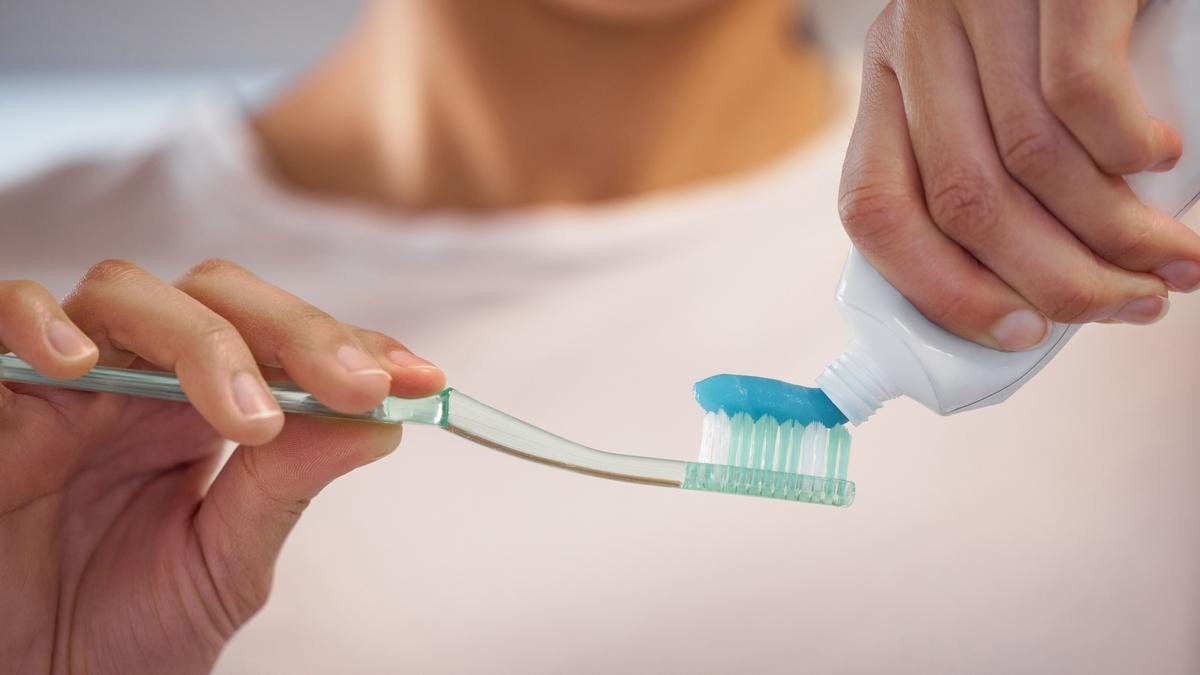
Every morning, you perform a small physics activity without realising it. You squeeze toothpaste out of a tube. You apply a force and the paste flows out like a liquid. When you stop squeezing, the toothpaste stays on the brush, holding its shape against gravity. It doesn’t drip, spread or collapse into a puddle.

This simple act confronts us with a fundamental question in physics: how do materials respond to forces and what makes something like toothpaste flow when pushed yet remain solid when left alone?

Solid or liquid?

In school, materials are neatly divided into solids and liquids. Solids resist deformation and maintain their shape whereas liquids flow under even the slightest force. But toothpaste, shampoo, gels, and creams do neither in the usual way. They belong to a broad class of materials that modern physics calls soft-matter materials: they can behave like solids or flow like liquids depending on the forces applied and the timescales involved.

What makes soft materials different lies in their internal structure. Their basic building blocks are far larger than atoms or simple molecules, yet far too small to see with the naked eye. In personal care products, these building blocks can be small droplets, microscopic clusters or long and flexible macromolecules suspended in a fluid. Because they are relatively large, even gentle actions like squeezing a tube, shaking a bottle or spreading with a brush or finger, can rearrange them.

Equally important are the forces holding these structures together. In hard solids, atoms are bound by strong interactions that lock them in place. In ordinary liquids, the interactions are weaker, allowing molecules to move freely. But the molecules themselves are small and their own structure doesn’t change under gentle forces. In soft materials, on the other hand, the forces between the building blocks are weak and easily disrupted. This makes their internal structure fragile but also highly adaptable. As a result, how soft materials behave depends not only on how strongly they are pushed but also on how quickly. The same force applied in different ways can produce very different outcomes. A slow, gentle stress may leave the internal structure largely intact while a rapid or sudden stress can rearrange it completely, allowing the material to flow.

This sensitivity to both force and time is a defining feature of soft matter. Squeeze a tube of toothpaste slowly and it may barely budge. But squeeze it suddenly and it flows out with ease. Shake a bottle of shampoo and it will pour out freely, but handle it gently and it will feel thick and resistant. In each case, the same material responds differently depending on the rate at which it is forced to move. In fact many shampoos contain long and flexible worm-like molecules dispersed in a liquid. At rest, these molecules are tangled together, forming a loose internal network that gives the shampoo its thickness. When you shake the bottle or pour it out, the molecules are stretched and become aligned with each other, which makes it easier for them to slide past one another.

Under the influence of this motion, the network — the connections between molecules — continually breaks and reforms. The worm-like micelles can for a brief period break into shorter segments and then reconnect, reducing the resistance to flowing. Thus the shampoo becomes more runny. Once the molecules stop moving past each other, they slowly coil back and become entangled with each other once more. This way the network is restored and the shampoo becomes thicker again.

Toothpaste behaves in a similar way, with microscopic structures that are rearranged under pressure and which reassemble when the force is removed. This behaviour is remarkable because the microscopic building blocks are constantly being reorganised, breaking apart, reconnecting, and reshaping themselves in a reversible way. This repeat making and unmaking allows soft materials to adapt smoothly to external forces.

In the end, what we usually call solids and liquids seems to depend on how a material responds to force over time. On very short time scales, even a liquid can resist deformation like a solid while a solid can slowly flow if enough force is applied or enough time is allowed.

The pitch drop experiment

At the University of Queensland in Brisbane, Australia, scientists have been conducting an experiment since 1927, known as the pitch drop experiment, to test the viscosity of pitch, or bitumen, which is a substance derived from tar. At room temperature, pitch seems like a normal solid and can be shattered with a hammer. But according to scientists, pitch is really a liquid with extremely high viscosity — around 200-billion-times that of water.

To demonstrate this, a physics professor named Thomas Parnell heated pitch and poured it into a sealed glass funnel in 1927. After leaving it undisturbed for three years so it could cool and stabilise, he removed a seal from the bottom of the container, allowing the pitch to drip under gravity. In the last almost 100 years, only nine drops have fallen, with the ninth drop in April 2014. Even though this is excruciatingly slow, the fact that it’s dropping at all shows that pitch is in fact a liquid. The next drop is expected by 2030. Similar experiments are underway in Ireland, Scotland, and Wales.

Physicists study this force and time-dependent behaviour in a field called rheology, which examines how materials deform and flow under applied stress. The roots of this study go back to the ancient Greek philosopher Heraclitus, who captured it in the aphorism “panta rhei”, meaning “everything flows”. In soft matter, this metaphor for continuous change, which is in fact a feature inherent to all matter, becomes tangible at the timescales and force levels we encounter in everyday life. Beyond their practical usefulness, soft materials offer insights into the deeper scientific principles of motion, force, flow, and change.

The next time you open your bathroom cabinet, remember you are not just handling personal care products. You are handling materials carefully engineered to balance force and flow, structure, and softness. In their gentle response to a squeeze or a shake lies a rich, hidden chapter of modern physics, playing out out of sight, every day.

Indresh Yadav is an assistant professor in the Department of Physics at IIT-Bhubaneswar.

Published – January 19, 2026 08:30 am IST



Source link

Science

Post navigation

Previous Post: How should India tackle child trafficking? | Explained
Next Post: China’s economy grows 5% in 2025, buoyed by strong exports despite Trump tariffs

Related Posts

  • Bengaluru space startups selected for funding under Technology Adoption Fund
    Bengaluru space startups selected for funding under Technology Adoption Fund Science
  • Will Trump’s bunker buster bombs punch through Iran’s Pickaxe Mountain?
    Will Trump’s bunker buster bombs punch through Iran’s Pickaxe Mountain? Science
  • Science for all newsletter Milkweed is a toxic treat for monarch butterflies
    Science for all newsletter Milkweed is a toxic treat for monarch butterflies Science
  • Science quiz: Applications of lasers
    Science quiz: Applications of lasers Science
  • HIV strains in India resist some top broadly neutralising antibodies
    HIV strains in India resist some top broadly neutralising antibodies Science
  • How will Gaganyaan astronauts return safely to earth? | Explained
    How will Gaganyaan astronauts return safely to earth? | Explained Science

More Related Articles

37th Kerala Science Congress to begin in Thrissur on Saturday  37th Kerala Science Congress to begin in Thrissur on Saturday  Science
Sci-Five | The Hindu Science Quiz: On Octopus Sci-Five | The Hindu Science Quiz: On Octopus Science
What is IADT-1, the Gaganyaan test ISRO conducted on August 24? | Explained What is IADT-1, the Gaganyaan test ISRO conducted on August 24? | Explained Science
Rising number of ‘predatory’ academic journals undermines research and public trust in scholarship Rising number of ‘predatory’ academic journals undermines research and public trust in scholarship Science
Deep-brain stimulation: nudging neurons – The Hindu Deep-brain stimulation: nudging neurons – The Hindu Science
Hundred years ago, Satyendra Nath Bose changed physics forever Hundred years ago, Satyendra Nath Bose changed physics forever Science
SiteLock

Archives

  • September 2026
  • August 2026
  • July 2026
  • June 2026
  • May 2026
  • April 2026
  • March 2026
  • February 2026
  • January 2026
  • December 2025
  • November 2025
  • October 2025
  • September 2025
  • August 2025
  • July 2025
  • June 2025
  • May 2025
  • April 2025
  • March 2025
  • February 2025
  • January 2025
  • December 2024
  • November 2024
  • October 2024
  • September 2024
  • August 2024
  • July 2024
  • June 2024
  • May 2024
  • April 2024
  • March 2024
  • February 2024
  • January 2024
  • December 2023
  • November 2023
  • October 2023
  • September 2023
  • August 2023
  • July 2023
  • June 2023
  • May 2023
  • April 2023
  • March 2023
  • February 2023
  • January 2023
  • December 2022
  • November 2022
  • October 2022
  • September 2022
  • August 2022
  • July 2022
  • June 2022
  • May 2022

Categories

  • Business
  • Nation
  • Science
  • Sports
  • World

Recent Posts

  • Bihar announces OTS scheme for brick kilns, waives ₹90 crore interest on outstanding dues
  • North Korea says nuclear status ‘irreversible’ after UN atomic agency rebuke
  • Bombay High Court permits BMC to cut over 1,200 mangroves for Versova-Madh Island bridge
  • U.S. appeals court rejects Trump policy allowing swift deportations to third countries
  • Trump to meet with Venezuela’s interim President Rodriguez in New York on Sept. 22

Recent Comments

  1. AlvinNet on UP Teacher Who Asked Students To Slap Muslim Classmate
  2. Jamesslits on UP Teacher Who Asked Students To Slap Muslim Classmate
  3. MichaelClear on UP Teacher Who Asked Students To Slap Muslim Classmate
  4. Jamesslits on UP Teacher Who Asked Students To Slap Muslim Classmate
  5. Jamesslits on UP Teacher Who Asked Students To Slap Muslim Classmate
  • “We Want To Bring Honour To India”: Men’s Hockey Star Ahead Of Paris Olympics 2024
    “We Want To Bring Honour To India”: Men’s Hockey Star Ahead Of Paris Olympics 2024 Sports
  • Access Denied Sports
  • Trump urges unity after assassination attempt while proposing sweeping populist agenda in RNC finale
    Trump urges unity after assassination attempt while proposing sweeping populist agenda in RNC finale World
  • Access Denied Sports
  • Access Denied World
  • “Don’t Try To Do Something That…”: Coach Jason Gillespie’s Message To Pakistan Cricket Team
    “Don’t Try To Do Something That…”: Coach Jason Gillespie’s Message To Pakistan Cricket Team Sports
  • Amnesty report finds ethnic cleansing in Sudan. What does it reveal?
    Amnesty report finds ethnic cleansing in Sudan. What does it reveal? World
  • Access Denied
    Access Denied Nation

Editor-in-Chief:
Mohammad Ariff,
MSW, MAJMC, BSW, DTL, CTS, CNM, CCR, CAL, RSL, ASOC.
editor@artifex.news

Associate Editors:
1. Zenellis R. Tuba,
zenelis@artifex.news
2. Haris Daniyel
daniyel@artifex.news

Photograher:
Rohan Das
rohan@artifex.news

Artifex.News offers Online Paid Internships to college students from India and Abroad. Interns will get a PRESS CARD and other online offers.
Send your CV (Subjectline: Paid Internship) to internship@artifex.news

Links:
Associate Journalism
About Us
Privacy Policy

News Links:
Breaking News
World
Nation
Sports
Business
Entertainment
Lifestyle

Registered Office:
72/A, Elliot Road, Kolkata - 700016
Tel: 033-22277777, 033-22172217
Email: office@artifex.news

Editorial Office / News Desk:
No. 13, Mezzanine Floor, Esplanade Metro Rail Station,
12 J. L. Nehru Road, Kolkata - 700069.
(Entry from Gate No. 5)
Tel: 033-46011099, 033-46046046
Email: editor@artifex.news

Copyright © 2023 Artifex.News Newsportal designed by Artifex Infotech.