


Skip to content
  • Facebook
  • X
  • Linkedin
  • WhatsApp
  • YouTube
  • Associate Journalism
  • About Us
  • Privacy Policy
  • 033-46046046
  • editor@artifex.news
Artifex.News

Artifex.News

Stay Connected. Stay Informed.

  • Breaking News
  • World
  • Nation
  • Sports
  • Business
  • Science
  • Entertainment
  • Lifestyle
  • Toggle search form
  • Three police officers suspended for allegedly taking money from scrap dealer in Kochi
    Three police officers suspended for allegedly taking money from scrap dealer in Kochi Nation
  • U.K. elections: Sunak and Starmer clash in noisy final debate on tax, borders and gender
    U.K. elections: Sunak and Starmer clash in noisy final debate on tax, borders and gender World
  • Lebanon President says Israel must fully implement truce as strikes continue
    Lebanon President says Israel must fully implement truce as strikes continue World
  • Jude Bellingham Grabs Real Madrid Late Valencia Win After Vinicius Red
    Jude Bellingham Grabs Real Madrid Late Valencia Win After Vinicius Red Sports
  • 400 IndiGo Passengers Stranded In Istanbul Without Food, Accommodation
    400 IndiGo Passengers Stranded In Istanbul Without Food, Accommodation World
  • Access Denied
    Access Denied Nation
  • Australia to put two-year ban on foreigners buying existing homes amid housing crunch
    Australia to put two-year ban on foreigners buying existing homes amid housing crunch World
  • Brazilian President Lula says Trump has ‘no right’ to threaten countries
    Brazilian President Lula says Trump has ‘no right’ to threaten countries World
Genetic enigma: two new studies reveal why some cats are orange

Genetic enigma: two new studies reveal why some cats are orange

Posted on December 6, 2024 By admin


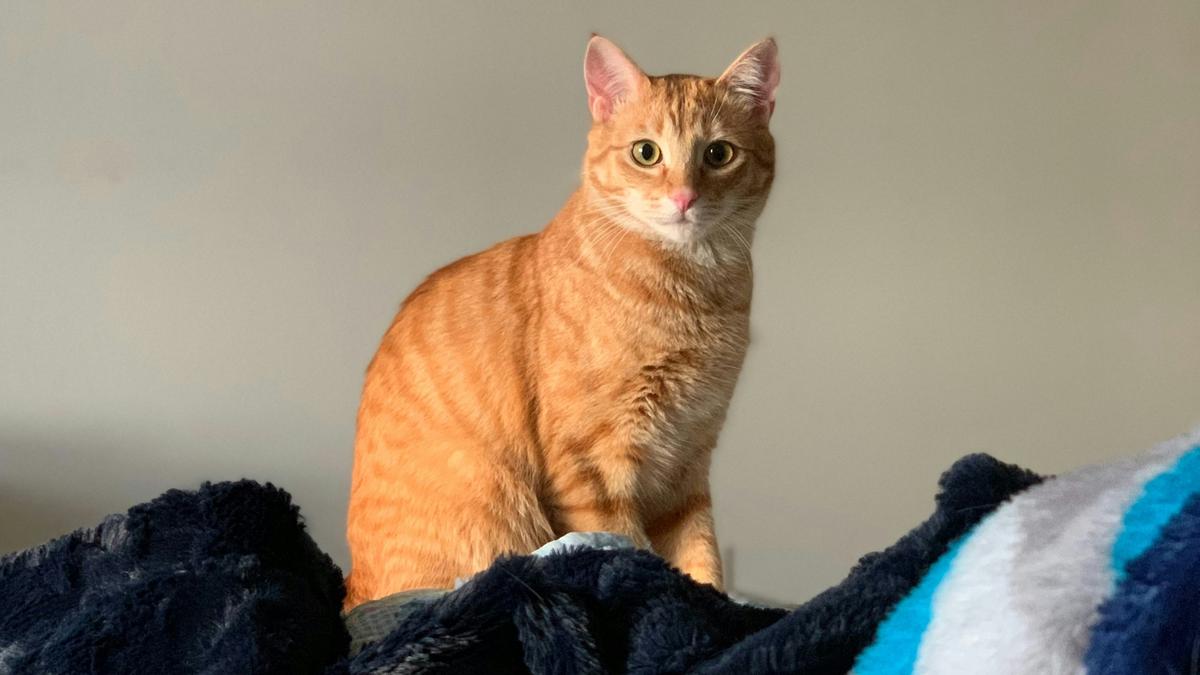
Garfield, star of the eponymous comic strip created by Jim Davis in 1978, is, like many of the cats that roam our homes, orange. He is orange in the same way that some people are redheaded, some horses are brown, or some dogs are Irish setters, but there is one important difference.

For all other animals, including redheaded humans, we know what causes this characteristic colour, but surprisingly, we didn’t know what causes it in cats – and felines in general – until now.

Two papers have just been published on bioRxiv – one of the most popular pre-publication repositories of unreviewed articles – that explain the genetics behind orange cats. One comes from Greg Barsh’s lab at Stanford University, California. The other is from Hiroyuki Sasaki’s lab at Kyushu University, Japan.

The two mammal pigments

Mammals have only two pigments, which are two colours of melanin: eumelanin (dark brown, blackish) and pheomelanin (yellowish, reddish or orange). Redheads only produce pheomelanin, while dark-skinned people accumulate mainly eumelanin. All other skin and hair colours fall somwehere in between, thanks to as many as 700 genes that regulate pigmentation in animals.

In primates, horses, rodents, dogs, cows and many other animals, melanin production and the decision to produce eumelanin or pheomelanin is in the hands of a membrane protein called MC1R. This controls the skin cells known as melanocytes that release melanin. If a melanocyte-stimulating hormone (alpha-MSH) is released, melanocytes start producing eumelanin. If an antagonist, such as agouti-signalling protein or beta-defensin in dogs, comes into play, the production of dark eumelanin stops, and melanocytes produce orange pheomelanin instead.
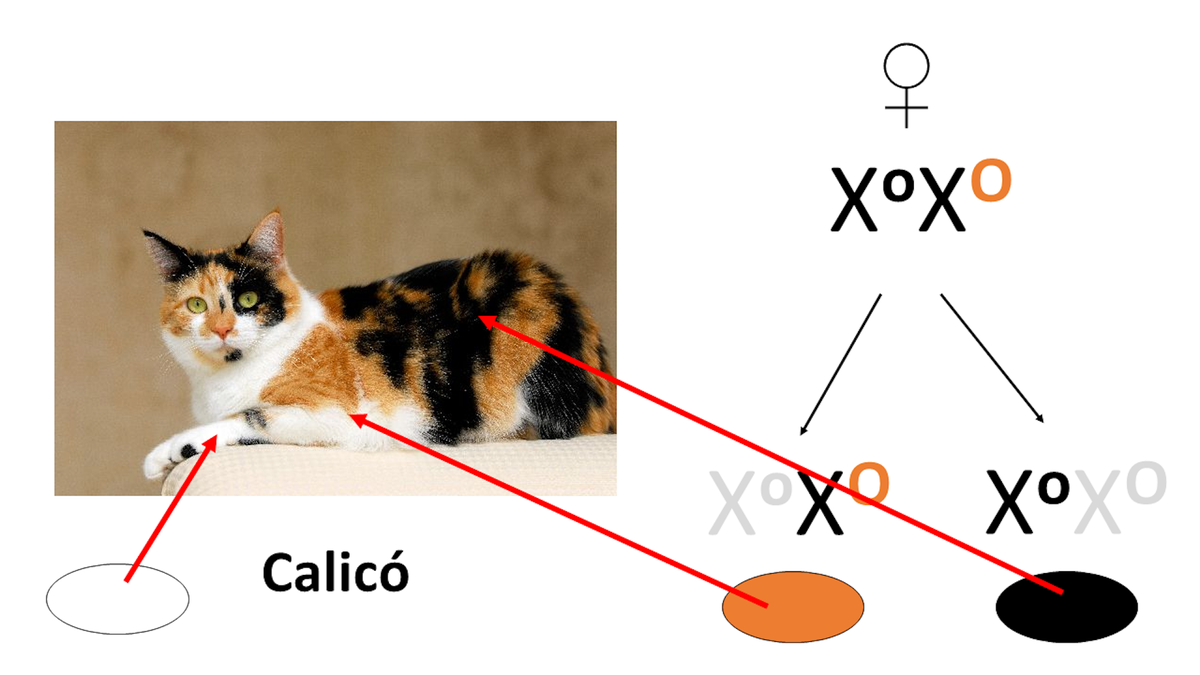
Three-colour pigmentation patterns in calico cats.

Three-colour pigmentation patterns in calico cats.
| Photo Credit:
Lluis Montoliu/The Conversation

However, cats are another matter altogether. Anyone who keeps a cat around the house knows that they are very peculiar animals, very special in every way, and this extends to their pigmentation.

In cats, eumelanin or pheomelanin production is not controlled by the MC1R receptor. Instead, it is in the hands of a locus (whose gene was, until now, unknown) called “orange”. A locus is a physical location in the genome whose effects are known (e. g. black or orange coat), but not the details of the precise DNA sequence it contains, nor the gene to which it belongs.

For this reason, we usually first identify the locus and then, over time, we discover and describe the associated gene in detail. The orange locus in cats can come in two versions: an ‘O’ variant that supports the production of pheomelanin (orange), and an ‘o’ variant that is responsible for producing eumelanin (black).

One detail to note is that the orange locus is on the X chromosome. Female cats are XX and male cats are XY, like all other mammals. And as with all female mammals, all cells throughout development will randomly inactivate one of the two copies of the X chromosome. Oo female cats – carrying the O variant on one X chromosome and the o variant on the other – will generate areas of their body that are orange (in areas where they have inactivated the ‘o’ allele) and others that are black (when inactivating the ‘O’ allele).

This means that when we see a bicolour (black/orange) or tricolour (black/orange/white) cat, or one of its more diluted versions, we know that it must be a female, and its pigmentation pattern will be completely unique.

Male cats are either orange or black (they have only one X chromosome), but cannot be bicoloured or tricoloured, unless they carry a chromosomal alteration equivalent to Klinefelter’s syndrome in humans (where males are born with an extra X chromosome).

Calico cats

Females can therefore have the unique mosaic patterns so prized by cat lovers. When coinciding with another mutation that affects the proliferation and differentiation of melanocytes (producing white patches, without pigmentation), this generates a tricolour cat, commonly known as a calico.

Each calico is unique, as the inactivation of one of the X chromosomes in each pigment cell occurs randomly during development. The earlier this inactivation occurs during development, the larger the resulting spot. The later it occurs, the smaller the spots.

The feline orange coat gene

Until now, we did not know which gene was hidden behind the orange locus in felines. Barsh and Sasaki’s recent work has identified that it is not the cat homologue of MC1R, but a different one: the Arhgap36 gene. Male cats with orange coats, as well as the orange spots of calico cats, carry a mutation in this gene that blocks the production of eumelanin and allows the production of pheomelanin.

These two studies are a wonderful example of good, basic, solid research, which only aims to satisfy scientific curiosity without knowing its immediate applications, and to understand, in this case, why that naughty cat Garfield is orange.

Lluís Montoliu is a scientific researcher at the CSIC, National Centre for Biotechnology, Madrid. This article is republished from The Conversation.

The Conversation

Published – December 06, 2024 09:55 am IST



Source link

Science

Post navigation

Previous Post: Student’s Science Project With Bird Poop Leads To Discovery Of Cancer-Fighting Compound
Next Post: India vs Sri Lanka Live Streaming U19 Asia Cup 2024 2nd Semi-Final Live Telecast: When And Where To Watch

Related Posts

  • The Science Quiz | The unusual star V886 Centauri
    The Science Quiz | The unusual star V886 Centauri Science
  • March is tenth straight month to be hottest on record, scientists say
    March is tenth straight month to be hottest on record, scientists say Science
  • Who do langurs drink salt water?
    Who do langurs drink salt water? Science
  • Preventing malaria using genetically modified malaria parasites
    Preventing malaria using genetically modified malaria parasites Science
  • Can CAR-T, a therapy for cancer, help treat autoimmune diseases? | In Focus podcast
    Can CAR-T, a therapy for cancer, help treat autoimmune diseases? | In Focus podcast Science
  • inStem’s fabric offers protection from pesticides
    inStem’s fabric offers protection from pesticides Science

More Related Articles

‘Extremely exciting’: the ice cores that could help save glaciers ‘Extremely exciting’: the ice cores that could help save glaciers Science
Question Corner | Why does wildfire smoke swirl only one way in the air? Question Corner | Why does wildfire smoke swirl only one way in the air? Science
Does Uranus’s moon Ariel also have an underground ocean? Does Uranus’s moon Ariel also have an underground ocean? Science
Zoopharmacognosy — when animals medicate themselves Zoopharmacognosy — when animals medicate themselves Science
Scientists genetically modify ‘sexual’ fruit fly to reproduce asexually Scientists genetically modify ‘sexual’ fruit fly to reproduce asexually Science
Extinct volcanoes could help sate humanity’s hunger for rare earth elements Extinct volcanoes could help sate humanity’s hunger for rare earth elements Science
SiteLock

Archives

  • September 2026
  • August 2026
  • July 2026
  • June 2026
  • May 2026
  • April 2026
  • March 2026
  • February 2026
  • January 2026
  • December 2025
  • November 2025
  • October 2025
  • September 2025
  • August 2025
  • July 2025
  • June 2025
  • May 2025
  • April 2025
  • March 2025
  • February 2025
  • January 2025
  • December 2024
  • November 2024
  • October 2024
  • September 2024
  • August 2024
  • July 2024
  • June 2024
  • May 2024
  • April 2024
  • March 2024
  • February 2024
  • January 2024
  • December 2023
  • November 2023
  • October 2023
  • September 2023
  • August 2023
  • July 2023
  • June 2023
  • May 2023
  • April 2023
  • March 2023
  • February 2023
  • January 2023
  • December 2022
  • November 2022
  • October 2022
  • September 2022
  • August 2022
  • July 2022
  • June 2022
  • May 2022

Categories

  • Business
  • Nation
  • Science
  • Sports
  • World

Recent Posts

  • Odisha government plans 870-Acre Silicon Valley hub in Cuttack’s Naraj for semiconductor, IT projects
  • Bihar announces OTS scheme for brick kilns, waives ₹90 crore interest on outstanding dues
  • North Korea says nuclear status ‘irreversible’ after UN atomic agency rebuke
  • Bombay High Court permits BMC to cut over 1,200 mangroves for Versova-Madh Island bridge
  • U.S. appeals court rejects Trump policy allowing swift deportations to third countries

Recent Comments

  1. AlvinNet on UP Teacher Who Asked Students To Slap Muslim Classmate
  2. Jamesslits on UP Teacher Who Asked Students To Slap Muslim Classmate
  3. MichaelClear on UP Teacher Who Asked Students To Slap Muslim Classmate
  4. Jamesslits on UP Teacher Who Asked Students To Slap Muslim Classmate
  5. Jamesslits on UP Teacher Who Asked Students To Slap Muslim Classmate
  • U.S. probes China chip industry on ‘anticompetitive’ concerns
    U.S. probes China chip industry on ‘anticompetitive’ concerns World
  • IPL 2026 | KKR hopes for a RR slip-up, eyes win over DC
    IPL 2026 | KKR hopes for a RR slip-up, eyes win over DC Sports
  • Access Denied World
  • Access Denied Sports
  • Russia Pulling Back But Not Out Of Syria After Assad’s Fall: Report
    Russia Pulling Back But Not Out Of Syria After Assad’s Fall: Report World
  • Tanmay and Aman shine as Hyderabad shocks Mumbai
    Tanmay and Aman shine as Hyderabad shocks Mumbai Sports
  • Larissa, Corinthian and Circle Of Dreams catch the eye
    Larissa, Corinthian and Circle Of Dreams catch the eye Sports
  • Noida Woman Finds Centipede Inside Amul Ice Cream Tub Ordered Online
    Noida Woman Finds Centipede Inside Amul Ice Cream Tub Ordered Online Nation

Editor-in-Chief:
Mohammad Ariff,
MSW, MAJMC, BSW, DTL, CTS, CNM, CCR, CAL, RSL, ASOC.
editor@artifex.news

Associate Editors:
1. Zenellis R. Tuba,
zenelis@artifex.news
2. Haris Daniyel
daniyel@artifex.news

Photograher:
Rohan Das
rohan@artifex.news

Artifex.News offers Online Paid Internships to college students from India and Abroad. Interns will get a PRESS CARD and other online offers.
Send your CV (Subjectline: Paid Internship) to internship@artifex.news

Links:
Associate Journalism
About Us
Privacy Policy

News Links:
Breaking News
World
Nation
Sports
Business
Entertainment
Lifestyle

Registered Office:
72/A, Elliot Road, Kolkata - 700016
Tel: 033-22277777, 033-22172217
Email: office@artifex.news

Editorial Office / News Desk:
No. 13, Mezzanine Floor, Esplanade Metro Rail Station,
12 J. L. Nehru Road, Kolkata - 700069.
(Entry from Gate No. 5)
Tel: 033-46011099, 033-46046046
Email: editor@artifex.news

Copyright © 2023 Artifex.News Newsportal designed by Artifex Infotech.