





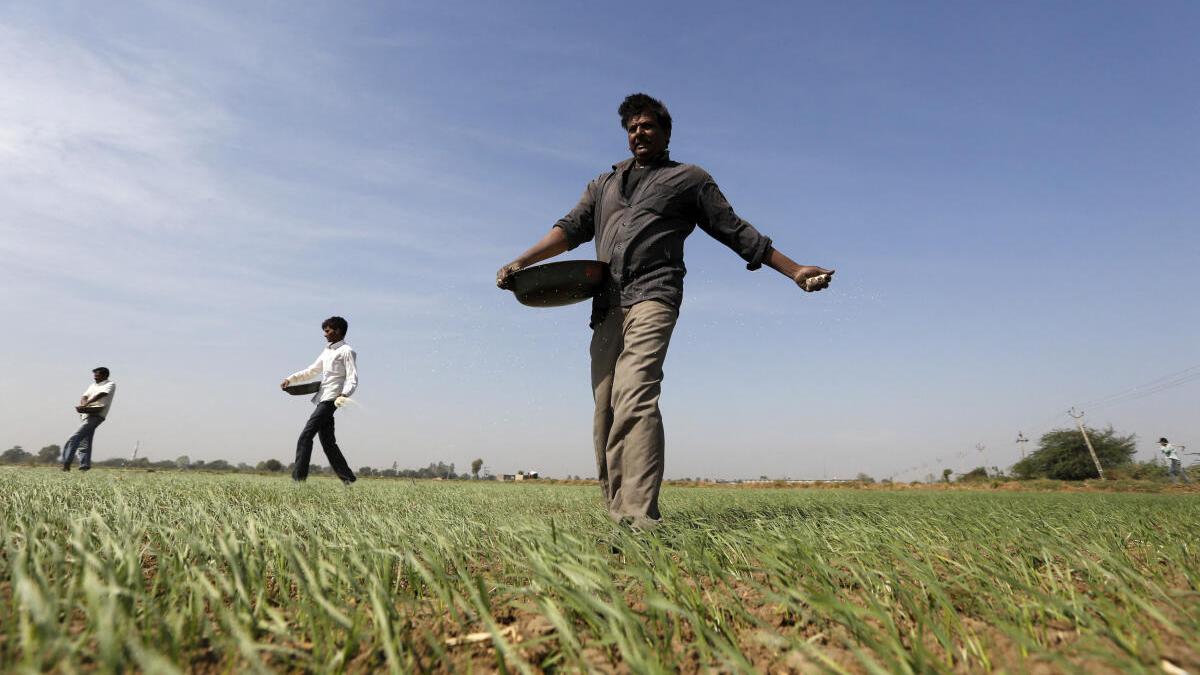
The problem with the fertilisation of land is as old as agriculture itself. When early humans first began to engage in settled agriculture, they quickly realised that while crops require nutrients for their growth, repeated cycles of cultivation and harvest depleted these nutrients, reducing yield over time. Early agricultural societies began to notice that certain areas produced better crops and that soils could be replenished.
This observation led to practices to restore essential nutrients in the soil necessary for plant and crop growth. Indigenous communities around the world developed methods of fertilisation, for example, using fish remnants and bird droppings (guano) as fertilisers.
This changed in the 19th century, which saw significant advancements in chemistry, leading to the creation of synthetic fertilisers as well as the identification of nitrogen, phosphorus, and potassium. They’re the foundation of modern synthetic chemical fertilisers and have caused agricultural productivity to boom. The Green Revolution of the mid-20th century accelerated the adoption of high-yield crop varieties and intensive use of these fertilisers, and today these substances are crucial to sustain global food production.
But we now have a problem. Phosphorus is scarce and exists only in limited quantities, in certain geological formations. Not only are we running out of it, it also pollutes the environment. It doesn’t exist as a gas, which means it can only move from land to water, where it leads to algal blooms and eutrophication.
Geopolitics and the phosphorus game
The history of phosphorus spans its discovery in guano to current global supply chains. Today, a handful of countries control most of the world’s reserves of phosphorus. This is a major geopolitical concern. The world’s largest reserves are in Morocco and the Western Sahara region. But here, phosphorus coexists with cadmium, a heavy metal that can accumulate in animal and human kidneys when ingested. Removing cadmium is also an expensive process.
As a result, cadmium-laden fertilisers are often applied to the soil, absorbed by crops, and consumed, bioaccumulating in our bodies. Studies have found that this accelerates heart disease. In 2018, the EU passed new legislation to regulate cadmium levels in fertilisers.
Only six countries have substantial cadmium-free phosphorous reserves. Of them, China restricted exports in 2020 and many EU countries no longer buy from Russia. So the market for safe phosphorus has suddenly exploded. This is one reason why Sri Lanka banned the import of synthetic fertilisers and went organic in 2021, later experiencing a sudden drop in crop yield that precipitated a political crisis.
Today, India is the world’s largest importer of phosphorus, most of it from the cadmium-laden deposits of West Africa. Not all crops absorb cadmium at the same rate, but paddy, a staple crop in India, is particularly susceptible; Indian farmers also apply a lot of fertilisers to paddy. Other grains, such as wheat, barley, and maize also absorb cadmium, just less.
(The uptake of cadmium by crops varies based on soil quality, climatic conditions, and the type and variety of crops grown. Social and cultural factors further affect the intake of cadmium into human bodies and the severity of health effects.)
Thus, we may face a hard choice down the line: if we don’t remove cadmium from the phosphorus, we may face a public health crisis; if we do, fertilisers will become more expensive.
The phosphorus disposal problem
First, only about a fifth of the phosphorus mined is actually consumed through food. Much of it is lost directly to water bodies as agricultural run-off, due to the excessive application of fertilisers.
Second, most of the phosphorus that people consume ends up in the sewage. Most sewage in India is still not treated or treated only up to the secondary level. So even if the organic matter is digested, the effluent discharged from STPs still contains nitrates and phosphates. Of these, nitrates can be digested by denitrifying bacteria and released safely as nitrogen gas into the atmosphere, while phosphorus remains trapped in the sediments and water column.
It is then absorbed by the algal blooms that grow in response to the high nutrient supply, and when they decompose, the bacteria that feed on them consume the dissolved oxygen. The result: water bodies become oxygen-starved, leading to fish deaths. The algal blooms are also toxic, causing respiratory issues, nausea, and other ailments to people exposed to them.
Finding phosphorus elsewhere
Since much of the phosphorus is not actually taken up by crops, one way to ameliorate the phosphorus paucity is to reduce the use of chemical fertilisers through precision agriculture. Low-input agro-ecological approaches are increasingly proving to be a viable alternative. If practised correctly, they can be achieved with little to no loss in yield, especially in smallholder farmers that cannot afford the cost of chemical fertilisers and pesticides.
But there is increasing interest in closing the phosphorous loop by mining urban sewage to produce high quality phosphorus. Interest in ‘circular water economies’ has in fact prompted the European Union – which has almost no phosphorus reserves of its own – to rethink the urban water cycle.
First, source separating toilets – Almost two thirds of the phosphorus we consume leaves in our urine and the rest in faeces. Urine also contains large amounts of nitrogen and potassium. If we can collect this safe and concentrated waste stream, we could generate a local fertiliser source. Source-separating toilets are designed to separate urine from faeces. If they are to become mainstream, buildings and homes will require a collection and storage system, leading to a logistics system that collects and processes the urine centrally.
Second, recycling wastewater and sludge – Sewage recycling already occurs in some form in India today. Nutrient-rich wastewater is applied directly to agriculture as at the KC Valley-Kolar project, which transports Bengaluru’s wastewater to the water-scarce regions of Kolar. But there are concerns that the quantity of nutrients may be too high and eventually degrade the soil. Similarly, in many cities and towns, farmers already take away the sludge from STPs but it is bulky to transport. So while farmers may be willing to pay to transport sludge, they cannot afford to pay an STP for the sludge itself. Thus, sewage recycling today doesn’t help render sewage treatment profitable.
There is potential here for a game-changing innovation: sludge-mining from STPs to recover nutrients. Companies like EasyMining in Europe are retrofitting STPs to recover nutrients from the sewage. The end product looks exactly like conventional fertiliser and is in fact of higher quality and marketable at a comparable cost.
Mining phosphorus from sewage allows countries to control their own phosphorus production while also addressing the problem of water-body eutrophication.
Trouble with the incentives
In theory, given the currently high fertiliser prices, these technologies are already economically viable. Why then have they not been realised?
One problem is the incentives at the sourcing and the user ends of the phosphorus value chain. In rural India, the most powerful farmers in villages are typically also the pesticide and fertiliser dealers and extend credit to farmers with smaller holdings. As a result, the latter are incentivised to over-apply fertilisers rather than to reduce them. This needs to be tackled separately, through better extension services and awareness campaigns.
In urban India, sewage is perceived to be an undignified activity historically relegated to people belonging to the so-called ‘lower’ castes. The regulations reflect this “get rid of it” mindset. Around the world, regulations have been framed in terms of discharge standards. Companies have to ensure nitrate and phosphate levels in effluent treatment plants are below an acceptable level. But when the regulations are written this way, treatment plant operators in India often dilute effluents with freshwater before discharging it. Dilution is not really a solution to pollution as the same quantity of nutrients end up in water bodies anyway.
Even if regulation and enforcement are tightened, the fundamental problem persists: wastewater treatment is a cost centre, not a revenue centre, for most cities. No one wants to pay the high cost, not even Bengaluru, a city with a relatively high GDP per capita. And while utilities get paid to supply water, they don’t gain additional revenue from treating wastewater to standards. In fact, from their perspective, it merely increases the cost of sewage treatment, further burdening them. So they tend to drag their feet until the National Green Tribunal imposes a fine.
Creating a circular water economy
This is why fundamentally rethinking our whole approach may work. If the technology is cheap enough, can we give a concession to set up STPs with phosphorus mining plants and allow them to sell the fertiliser? To do this, we need systemic – not incremental – change.
This requires every single stakeholder to make small adjustments. Innovators need to lower the costs of sewage mining to be financially viable in India; regulators need to allow the use of urban-mined phosphorus in agriculture; and STPs need to be paid not based on discharge standards but on nutrient recovery.
And such changes, while complicated, could also solve multiple problems. India can become less dependent on uncertain geopolitical crises; farmers can procure fertilisers at affordable rates; water bodies will have some hope of becoming swimmable (after eliminating legacy nutrients in lake beds); and public health can gain from the consumption of food grown in cadmium-free soils.
Dr. Veena Srinivasan is the Executive Director of the Water, Environment, Land and Livelihoods (WELL) Labs, a new research centre based at the Institute of Financial Management and Research (IFMR) Society and Krea University. Sneha Singh is a researcher in the Urban Water Programme at WELL Labs.