



Skip to content
  • Facebook
  • X
  • Linkedin
  • WhatsApp
  • YouTube
  • Associate Journalism
  • About Us
  • Privacy Policy
  • 033-46046046
  • editor@artifex.news
Artifex.News

Artifex.News

Stay Connected. Stay Informed.

  • Breaking News
  • World
  • Nation
  • Sports
  • Business
  • Science
  • Entertainment
  • Lifestyle
  • Toggle search form
  • WikiLeaks Founder Julian Assange Pleads Guilty In US Court
    WikiLeaks Founder Julian Assange Pleads Guilty In US Court World
  • Access Denied
    Access Denied Nation
  • Can A Zimbabwean Cricketer Out Shine David Warner In Zim Afro T10? Sikandar Raza Is Hopeful
    Can A Zimbabwean Cricketer Out Shine David Warner In Zim Afro T10? Sikandar Raza Is Hopeful Sports
  • Access Denied Sports
  • Access Denied
    Access Denied Nation
  • In Focus Podcast | Naming chimps, making room: Jane Goodall’s wild legacy for women in science
    In Focus Podcast | Naming chimps, making room: Jane Goodall’s wild legacy for women in science Science
  • Armies of India, China making ‘great progress’ in implementing settlement: Chinese military spokesperson
    Armies of India, China making ‘great progress’ in implementing settlement: Chinese military spokesperson World
  • Son, His Friends Kill Woman, She Had Refused 20,000 To Repair DJ Console
    Son, His Friends Kill Woman, She Had Refused 20,000 To Repair DJ Console Nation
New NOvA data deepens mystery of subatomic particle’s mass

New NOvA data deepens mystery of subatomic particle’s mass

Posted on July 23, 2024 By admin


Neutrinos are a type of subatomic particle. They don’t have an electric charge, have a small mass, and are left-handed (a physics term meaning the direction of its spin is opposite to the direction of its motion). And they are flooding the universe. They are the second-most abundant particles after photons (particles of light) and the most abundant among particles that make up matter.

The study of neutrinos is an area of immense current interest among particle physicists and astrophysicists. These particles are produced when particles called leptons interact with matter. For example, when a type of lepton called a muon interacts with matter, the interaction produces a muon-neutrino. The same goes for electrons (electron-neutrino) and tauons (tau-neutrino). However, the neutrinos themselves interact with matter very, very rarely to produce a corresponding muon, electron or tauon.

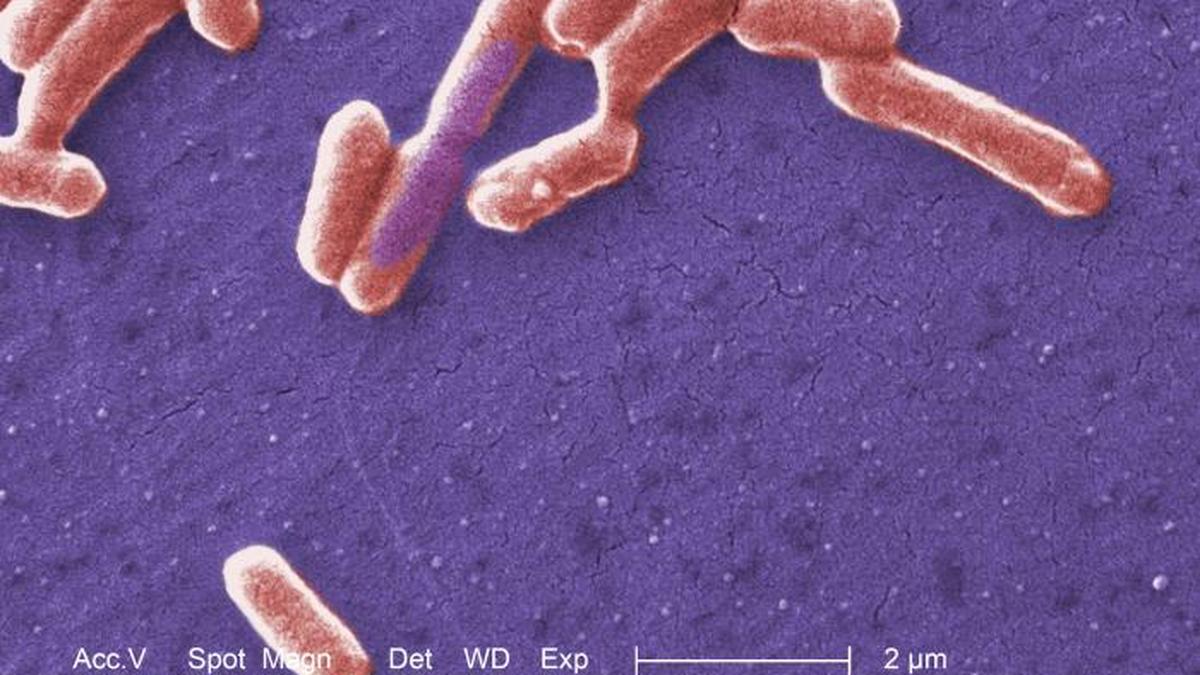
This small interaction rate makes studying neutrinos difficult. For example, a muon-neutrino will scatter off an atom’s nucleus only once out of a million times or so, producing a muon and a proton. So to study them, physicists have built detectors with very fine tracking capabilities. They are also large to maximise the number of interactions between the neutrinos and the detectors’ matter.

New data from NOvA

One such experiment is NovA, an acronym for ‘NuMI Off-axis e Appearance’, in Minnesota in the U.S. It creates a beam of neutrinos that fly towards a 14,000-tonne detector located 800 km away. NOvA is managed by the Fermi National Accelerator Laboratory.

Scientists presented the latest results from the NOvA collaboration at a conference in Italy on June 17. They said the collaboration had acquired twice as much data as it had during NOvA’s previous run, four years ago. The new results complemented the previous ones with greater precision.

NOvA was designed to determine the role of neutrinos in the evolution of the cosmos. It does this by trying to understand which neutrino type has the most mass and which type the least. This is an important detail because neutrinos may get their mass through a different mechanism from other matter particles. Unravelling it could answer many open questions in physics.

In pursuit of this goal, on July 11, a study at the Large Hadron Collider in Europe also reported observing electron-neutrinos at a particle collider for the first time.

The surprise of mass

Physicists first detected extraterrestrial neutrinos coming from a supernova in 1987, when a star exploded around 150,000 light years away. Three hours before light from the explosion reached the earth, three underground detectors in Japan, Russia, and the U.S. recorded a spike in the number of neutrinos coming from the explosion. This event was the birth of neutrino astronomy.

For almost 50 years, physicists thought neutrinos were massless particles, like photons. According to the special theory of relativity, a massive particle can’t travel at the speed of light (in vacuum). So a light signal could overtake the neutrino and it would appear right-handed when viewed in the opposite direction, i.e. with its directions of motion and spin aligned with each other. However, physicists had never detected right-handed neutrinos, so they concluded neutrinos are massless.

But from the late 1990s, scientists in Japan and Canada found evidence to overturn this view and prove neutrinos actually have mass. They found that when neutrinos travel through space, they can change from one type to another, which massless particles can’t do.

The existing theory of how particles behave and their properties, called the Standard Model of particle physics, doesn’t predict massive neutrinos. Incorporating them in the Standard Model will require far-reaching changes that physicists are still working out.

Ordering the neutrinos

This is why physicists study how neutrinos (and their antimatter counterparts, antineutrinos) change their type as they travel large distances. This quantum mechanical phenomenon is called neutrino oscillation. For example, all neutrinos from the Sun are electron-neutrinos, yet we receive a big chunk of them on the earth as muon-neutrinos.

Theoretical models predict two possible solutions for the neutrino mass hierarchy problem, called normal and inverted. The normal order proposes that one of the three types is much heavier and that the other two have comparable lower masses. In the inverted order, one of the neutrino types is lighter and the other two have comparable heavier masses.

The new NOvA data favours the normal order, but not conclusively.

Cracking the hierarchy problem is closely related to the universe’s evolution. Their low interaction rate means neutrinos are excellent carriers of information from the universe’s past, from sources like exploding stars and black holes. We can’t otherwise access a lot of this information today. Supernovae are known to release 99% of their radiant energy in a short, 10-second burst of neutrinos.

Studying these neutrinos can reveal how light or radio waves from the explosion diffuse after travelling a certain distance.

The best information carriers

Indeed, because neutrinos pass through most matter untouched, they can carry information across large distances. Humans currently use electromagnetic waves to do this job because they are easier to transmit and to detect. But in some situations, they don’t work well.

For example, seawater is opaque to electromagnetic radiation of shorter wavelength, which impedes the transmission of waves of certain frequencies to submarines. Neutrinos on the other hand can easily pass through 1,000 light years (9,400 million million km) of lead, so an ocean will hardly be a barrier.

We only need to find a way to transmit and capture them, which is tied to understanding them fully. If this happens, it wouldn’t be far-fetched to say we can replace electromagnetic waves in communication channels with neutrino beams within a few decades.

Eyes on the neutrino universe

Given all these advantages, the world’s more scientifically endowed countries are racing to study neutrinos. A few of the experiments involved are the Super-K III in Japan; the Sudbury Neutrino Observatory (in its new SNO+ avatar) in Canada; the MiniBOONe, the MicroBOONe, and NOνA in the U.S.; the Double CHOOZ in France; the Jiangmen Underground Neutrino Observatory in China; the OPERA experiment in Switzerland; and the IceCube Neutrino Observatory in Antarctica.

India’s own India-based Neutrino Observatory, funded by the Department of Atomic Energy, was supposed to come up in Tamil Nadu but currently faces an uncertain future over procedural lapses and lack of political support.

Just as more matter increases the number of interactions with neutrinos, a large number of experiments increase the chances of cracking the mass hierarchy and other problems, and bring us closer to a complete picture of the universe.

Qudsia Gani is an assistant professor in the Department of Physics, Government Degree College Pattan, Baramulla.



Source link

Science Tags:neutrino mass hierarchy

Post navigation

Previous Post: Aftab Poonawal’s Plea For Trial Only Twice A Month Rejected
Next Post: Kamala Harris smashes fundraising record with $81 million haul in just 24 hours

Related Posts

  • Is the bat’s brain wired for collective behaviour?
    Is the bat’s brain wired for collective behaviour? Science
  • Sci-Five | The Hindu Science Quiz: On Bioprinting
    Sci-Five | The Hindu Science Quiz: On Bioprinting Science
  • India’s open ecosystems face an unusual threat: trees
    India’s open ecosystems face an unusual threat: trees Science
  • Rare celestial object sighted over Bengaluru skies
    Rare celestial object sighted over Bengaluru skies Science
  • Google’s GenCast AI turns spotlight on powerful new weather forecasters Explained
    Google’s GenCast AI turns spotlight on powerful new weather forecasters Explained Science
  • India successfully test-fires Agni-5 ballistic missile from Odisha
    India successfully test-fires Agni-5 ballistic missile from Odisha Science

More Related Articles

Erich von Daeniken, Swiss author who popularised ancient‑alien theories, dies at 90 Erich von Daeniken, Swiss author who popularised ancient‑alien theories, dies at 90 Science
NASA’s Artemis II moonship returns home to its launch site after historic voyage NASA’s Artemis II moonship returns home to its launch site after historic voyage Science
What is xenobiology? – The Hindu What is xenobiology? – The Hindu Science
65-ft-tall Gaganyaan launch vehicle model unveiled at Birla Science Centre 65-ft-tall Gaganyaan launch vehicle model unveiled at Birla Science Centre Science
How is the immune system kept in check? | Explained How is the immune system kept in check? | Explained Science
The INO that wasn’t and the JUNO that is The INO that wasn’t and the JUNO that is Science
SiteLock

Archives

  • May 2026
  • April 2026
  • March 2026
  • February 2026
  • January 2026
  • December 2025
  • November 2025
  • October 2025
  • September 2025
  • August 2025
  • July 2025
  • June 2025
  • May 2025
  • April 2025
  • March 2025
  • February 2025
  • January 2025
  • December 2024
  • November 2024
  • October 2024
  • September 2024
  • August 2024
  • July 2024
  • June 2024
  • May 2024
  • April 2024
  • March 2024
  • February 2024
  • January 2024
  • December 2023
  • November 2023
  • October 2023
  • September 2023
  • August 2023
  • July 2023
  • June 2023
  • May 2023
  • April 2023
  • March 2023
  • February 2023
  • January 2023
  • December 2022
  • November 2022
  • October 2022
  • September 2022
  • August 2022
  • July 2022
  • June 2022
  • May 2022

Categories

  • Business
  • Nation
  • Science
  • Sports
  • World

Recent Posts

  • BEST conductor dies in accident involving four buses in Mumbai
  • Nayar reckons KKR got a par total, rues missed chances
  • Pope Leo decries European military spending as ‘betrayal’ of diplomacy
  • Scent Of Rain, Shutterfly, Stud Poker and Starzella please
  • New factional battle lines emerge in Congress hours after nomination of Kerala CM

Recent Comments

  1. JamesHeR on UP Teacher Who Asked Students To Slap Muslim Classmate
  2. RafaelNar on UP Teacher Who Asked Students To Slap Muslim Classmate
  3. CarlosExorb on UP Teacher Who Asked Students To Slap Muslim Classmate
  4. Robertfloup on UP Teacher Who Asked Students To Slap Muslim Classmate
  5. Davidcag on UP Teacher Who Asked Students To Slap Muslim Classmate
  • Access Denied
    Access Denied Nation
  • Rising number of ‘predatory’ academic journals undermines research and public trust in scholarship
    Rising number of ‘predatory’ academic journals undermines research and public trust in scholarship Science
  • Cold wave alert for four Telangana districts on December 15
    Cold wave alert for four Telangana districts on December 15 Nation
  • Danish court rejects extradition to India of an arms smuggling suspect
    Danish court rejects extradition to India of an arms smuggling suspect World
  • U.S. gets along with India very well, but trade relationship was one-sided, says Trump
    U.S. gets along with India very well, but trade relationship was one-sided, says Trump World
  • “I’d Hit Him Back Over…”: On Jasprit Bumrah, Australia Great’s Clear Message Ahead of Day-Night Test
    “I’d Hit Him Back Over…”: On Jasprit Bumrah, Australia Great’s Clear Message Ahead of Day-Night Test Sports
  • PM Modi Can Influence End Of Ukraine War: Volodymyr Zelenskyy
    PM Modi Can Influence End Of Ukraine War: Volodymyr Zelenskyy World
  • Access Denied Sports

Editor-in-Chief:
Mohammad Ariff,
MSW, MAJMC, BSW, DTL, CTS, CNM, CCR, CAL, RSL, ASOC.
editor@artifex.news

Associate Editors:
1. Zenellis R. Tuba,
zenelis@artifex.news
2. Haris Daniyel
daniyel@artifex.news

Photograher:
Rohan Das
rohan@artifex.news

Artifex.News offers Online Paid Internships to college students from India and Abroad. Interns will get a PRESS CARD and other online offers.
Send your CV (Subjectline: Paid Internship) to internship@artifex.news

Links:
Associate Journalism
About Us
Privacy Policy

News Links:
Breaking News
World
Nation
Sports
Business
Entertainment
Lifestyle

Registered Office:
72/A, Elliot Road, Kolkata - 700016
Tel: 033-22277777, 033-22172217
Email: office@artifex.news

Editorial Office / News Desk:
No. 13, Mezzanine Floor, Esplanade Metro Rail Station,
12 J. L. Nehru Road, Kolkata - 700069.
(Entry from Gate No. 5)
Tel: 033-46011099, 033-46046046
Email: editor@artifex.news

Copyright © 2023 Artifex.News Newsportal designed by Artifex Infotech.