
Skip to content
  • Facebook
  • X
  • Linkedin
  • WhatsApp
  • YouTube
  • Associate Journalism
  • About Us
  • Privacy Policy
  • 033-46046046
  • editor@artifex.news
Artifex.News

Artifex.News

Stay Connected. Stay Informed.

  • Breaking News
  • World
  • Nation
  • Sports
  • Business
  • Science
  • Entertainment
  • Lifestyle
  • Toggle search form
  • Access Denied
    Access Denied Nation
  • Access Denied Sports
  • Labour Codes: Kerala govt. to finalise decision in consultation with trade unions
    Labour Codes: Kerala govt. to finalise decision in consultation with trade unions Nation
  • Access Denied Sports
  • Harry Maguire Can Handle ‘Pressure’ From Mocking Rival Fans
    Harry Maguire Can Handle ‘Pressure’ From Mocking Rival Fans Sports
  • Ex-Chelsea Footballer Tries ‘Spinning Kick’ As Fans Invade Pitch In Turkey – Watch
    Ex-Chelsea Footballer Tries ‘Spinning Kick’ As Fans Invade Pitch In Turkey – Watch Sports
  • Chief Justice DY Chandrachud’s Parting Dig At Trolls
    Chief Justice DY Chandrachud’s Parting Dig At Trolls Nation
  • Access Denied
    Access Denied Nation
How is the immune system kept in check? | Explained

How is the immune system kept in check? | Explained

Posted on October 11, 2025 By admin


The story so far: The Nobel Prize season for 2025 began with the announcement of the Physiology or Medicine Prize on October 6. The three awardees — U.S.-based researchers, Mary E. Brunkow and Fred Ramsdell, and Japan’s Shimon Sakaguchi — were chosen for their “discoveries concerning peripheral immune tolerance.” Their discovery enabled a fundamental understanding of how the immune system works — how it is regulated and kept in check. This has led to the evolution of several new potential treatment options, currently being tested, including for cancer.

What does their discovery mean?

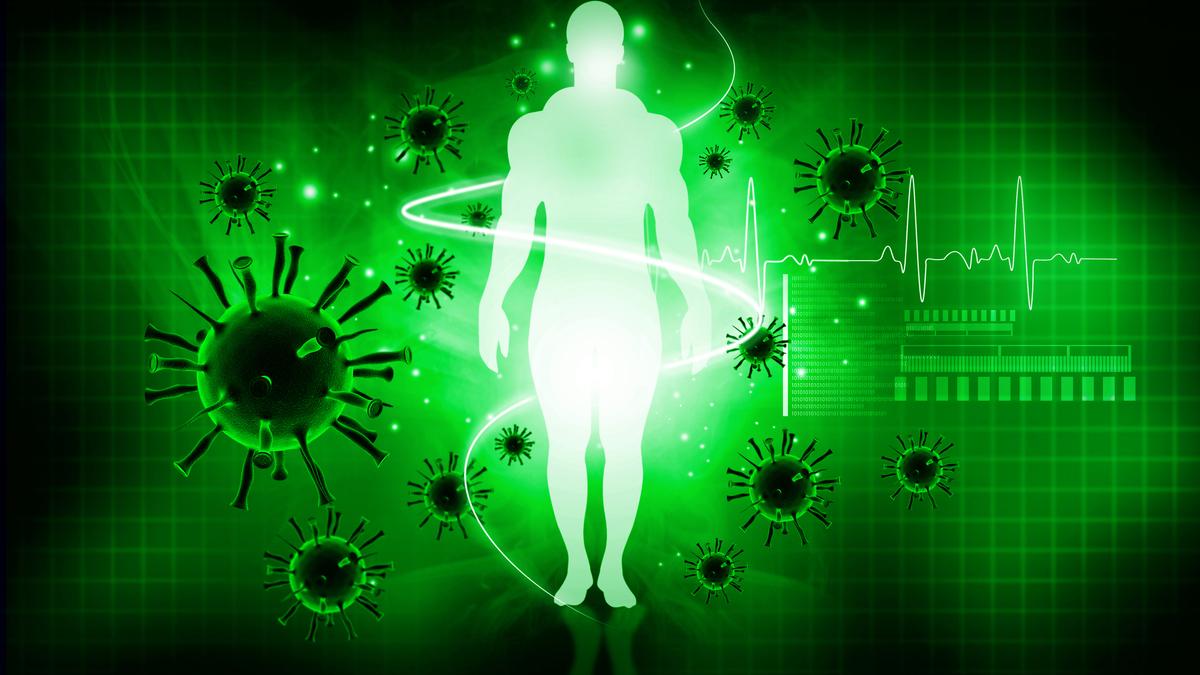
Unless the body’s immune system is kept in check, it can attack its own organs. In that case, why do most people not develop autoimmune conditions where the body turns on itself? U.S. and Japanese scientists, working independently, arrived at an explanation for how the immune system is kept in check. It is for their work in making discoveries concerning what prevents the immune system from attacking the body that the Nobel was awarded. The laureates identified the immune system’s regulatory T cells which perform the precise task of preventing immune cells from launching an attack on the body.

Literally every day the immune system, a formidable army, is on guard, battling pathogens that try to invade the body. The question here is how do these cells “know what they should attack and what they should defend”, as the Nobel Committee pointed out. “Their discoveries have been decisive for our understanding of how the immune system functions and why we do not all develop serious autoimmune diseases,” said Olle Kämpe, chair of the Nobel Committee.

What are regulatory T cells?

The story goes back to Sakaguchi when he was working at the Aichi Cancer Centre Research Institute, Japan, some four decades ago. All T cells have special proteins called T-cell receptors on their surface. These receptors can be likened to a type of sensor. Using them, T cells can scan other cells to discover whether the body is under attack. There are a vast number of T cells with different receptors that can detect invaders, including new viruses. But they also have receptors that can attach to human tissues. But then, intuitively, is there a switch mechanism that warns the T cells off body cells?

In the 1980s, scientists realised that when T cells mature in the thymus, a small gland located in the upper chest behind the breastbone and in front of the heart that plays a crucial role in the immune system, they are taught to recognise and eliminate the body’s own proteins in a process called central tolerance. By the time Sakaguchi began his research into trying to understand this mechanism, his colleagues had already reportedly performed an experiment on newborn mice. They hypothesised that the mice would develop fewer T cells and have a weaker immune system if they removed the thymus. Instead, the immune system went into overdrive and ran amok, with the little mice developing several autoimmune conditions. This experiment might not have satisfied its primary goal, but in it was the idea for a Nobel that would come about 30 years later. Sakaguchi took off from where the experiment stopped. He injected these mice with T cells and it appeared that the T cells could protect the mice from autoimmune diseases.

Veering off from the current scientific wisdom of the time, Sakaguchi was convinced that the immune system must have some form of security guard — one that calms down T cells and keeps them in check; in this case, protecting the mice from the autoimmune condition. It took him over a decade, but in 1995, he presented to the world, a new class of T cells to the world, those that carried an extra protein called CD25 on their surface. This was called the regulatory T cell. But other researchers were not convinced yet of this idea.

It would take a second act, and efforts from Brunkow and Ramsdell, to concretely prove the experiment. A new set of mice, being studied since the Manhattan Project in fact, stood up to the occasion. In this instance, half of all the male mice were sickly and died in a few weeks, while the females thrived. It turned out the male’s organs were being attacked by T cells that destroyed the tissues. The Nobel-winning pair, who were then working at a biotech company Celltech Chiroscience in the U.S., realised that the mice could provide important clues in their work. After years of study, at an age when molecular biology was at best infantile, with a great deal of patience, they narrowed down on the faulty, mutant gene and named it Foxp3. They finally had an explanation for why a specific mouse strain was particularly vulnerable to autoimmune diseases. They also showed that mutations in the human equivalent of this gene cause a serious autoimmune disease, IPEX.

Two years later, Sakaguchi and others could prove, this time, convincingly, that the Foxp3 gene controls the development of the regulatory T cells, being able to prevent other T cells from mistakenly attacking the body’s own tissue, in a process that is called peripheral immune tolerance. Regulatory T cells also ensure that the immune system calms down after it has attacked invaders, answering Sakaguchi’s initial question.

What are the specific uses in medicine?

While specific therapies are yet to hit the market, over 200 studies involving regulatory T cells are currently in progress, said Thomas Perlmann, secretary-general of the Nobel Assembly, while making the announcement of the prize on October 6. These stand testimony to the potential slew of new treatment modalities to address various conditions.

This includes work on cancer — dismantling the regulatory T cells so that the immune system can access the tumours and set to work on them; and on autoimmune disorders where researchers are trying to promote the growth of more regulatory T cells, inside the body, but also outside of it, in order to make sure that the immune system does not attack its own body.

It is also believed that this research will have far-reaching implications for organ transplantation by regulating organ acceptance. Clinical studies are afoot to test many of these pathbreaking treatment modalities.

Published – October 12, 2025 02:37 am IST


Source link

Science Tags:Immune System, Nobel Prize for Physiology or Medicine, Physiology or Medicine Prize, Research on immune system

Post navigation

Previous Post: Sanae Takaichi | Madam conservative
Next Post: Have to work hard on slow turners: Jadeja

Related Posts

  • Centre may raise retirement age of scientists from 60 to 65
    Centre may raise retirement age of scientists from 60 to 65 Science
  • What role does CSTT play in standardising technical terms?
    What role does CSTT play in standardising technical terms? Science
  • How clothed pig carcasses are revealing the secrets of mummification
    How clothed pig carcasses are revealing the secrets of mummification Science
  • BRICS condemns EU carbon tax
    BRICS condemns EU carbon tax Science
  • Kerala Monsoon 2026: How to track clouds through IMD INSAT 3D-S satellite imagery
    Kerala Monsoon 2026: How to track clouds through IMD INSAT 3D-S satellite imagery Science
  • Nobel Prize 2023 in Chemistry is awarded to
    Nobel Prize 2023 in Chemistry is awarded to Science

More Related Articles

The Science Quiz | Words that begin ‘cell-’ The Science Quiz | Words that begin ‘cell-’ Science
The Gino data scandal in behavioural science and research misconduct The Gino data scandal in behavioural science and research misconduct Science
Early climate warning systems: getting there, but not there yet Early climate warning systems: getting there, but not there yet Science
Science Quiz on explorers who undertook ‘impossible’ expeditions Science Quiz on explorers who undertook ‘impossible’ expeditions Science
Science Snapshots: May 10, 2026 Science Snapshots: May 10, 2026 Science
T. K. Radha: from Kerala to Oppenheimer T. K. Radha: from Kerala to Oppenheimer Science
SiteLock

Archives

  • September 2026
  • August 2026
  • July 2026
  • June 2026
  • May 2026
  • April 2026
  • March 2026
  • February 2026
  • January 2026
  • December 2025
  • November 2025
  • October 2025
  • September 2025
  • August 2025
  • July 2025
  • June 2025
  • May 2025
  • April 2025
  • March 2025
  • February 2025
  • January 2025
  • December 2024
  • November 2024
  • October 2024
  • September 2024
  • August 2024
  • July 2024
  • June 2024
  • May 2024
  • April 2024
  • March 2024
  • February 2024
  • January 2024
  • December 2023
  • November 2023
  • October 2023
  • September 2023
  • August 2023
  • July 2023
  • June 2023
  • May 2023
  • April 2023
  • March 2023
  • February 2023
  • January 2023
  • December 2022
  • November 2022
  • October 2022
  • September 2022
  • August 2022
  • July 2022
  • June 2022
  • May 2022

Categories

  • Business
  • Nation
  • Science
  • Sports
  • World

Recent Posts

  • Chandni Chowk’s Town Hall to be developed as ‘Global Heritage Centre’: CM
  • Missing measure in India’s magnet mission
  • Dengue cases in Tamil Nadu decline for third consecutive year as per government data
  • 3 dead, three missing in Nilambur flash flood
  • Meloni plans to ban burqas and niqabs in Italian schools, cap foreign students in classrooms

Recent Comments

  1. Josephjab on UP Teacher Who Asked Students To Slap Muslim Classmate
  2. LarryKef on UP Teacher Who Asked Students To Slap Muslim Classmate
  3. Jasonnekly on UP Teacher Who Asked Students To Slap Muslim Classmate
  4. Jasonnekly on UP Teacher Who Asked Students To Slap Muslim Classmate
  5. Frankenrib on UP Teacher Who Asked Students To Slap Muslim Classmate
  • Delhi Airport Gets Special Enclosure For Fliers Stuck Due To Poor Weather
    Delhi Airport Gets Special Enclosure For Fliers Stuck Due To Poor Weather Nation
  • Congress’ Kumari Selja On Joining BJP Rumours
    Congress’ Kumari Selja On Joining BJP Rumours Nation
  • “He Comes Up To Me A Lot”: Jasprit Bumrah On Team India Newcomer Akash Deep
    “He Comes Up To Me A Lot”: Jasprit Bumrah On Team India Newcomer Akash Deep Sports
  • Vaishnavi loses in the final
    Vaishnavi loses in the final Sports
  • The Hindu Morning Digest – May 5, 2024
    The Hindu Morning Digest – May 5, 2024 World
  • Access Denied Business
  • Pakistan rejects India’s remarks over Shahzad Bhatti terror network
    Pakistan rejects India’s remarks over Shahzad Bhatti terror network World
  • Watch: India’s July-September GDP growth slides: what options does RBI have? | Business Matters
    Watch: India’s July-September GDP growth slides: what options does RBI have? | Business Matters Business

Editor-in-Chief:
Mohammad Ariff,
MSW, MAJMC, BSW, DTL, CTS, CNM, CCR, CAL, RSL, ASOC.
editor@artifex.news

Associate Editors:
1. Zenellis R. Tuba,
zenelis@artifex.news
2. Haris Daniyel
daniyel@artifex.news

Photograher:
Rohan Das
rohan@artifex.news

Artifex.News offers Online Paid Internships to college students from India and Abroad. Interns will get a PRESS CARD and other online offers.
Send your CV (Subjectline: Paid Internship) to internship@artifex.news

Links:
Associate Journalism
About Us
Privacy Policy

News Links:
Breaking News
World
Nation
Sports
Business
Entertainment
Lifestyle

Registered Office:
72/A, Elliot Road, Kolkata - 700016
Tel: 033-22277777, 033-22172217
Email: office@artifex.news

Editorial Office / News Desk:
No. 13, Mezzanine Floor, Esplanade Metro Rail Station,
12 J. L. Nehru Road, Kolkata - 700069.
(Entry from Gate No. 5)
Tel: 033-46011099, 033-46046046
Email: editor@artifex.news

Copyright © 2023 Artifex.News Newsportal designed by Artifex Infotech.