


Increasing tree cover is often seen as a positive outcome of biodiversity conservation, and a much-needed effort to combat climate change. What happens, then, if tree cover increases in areas that historically hosted a different habitat?
In a study published on June 5 in the journal Global Change Biology, scientists of the Universities of Witwatersrand, Cape Town, and Oxford reported that more trees in open ecosystems like savannahs and grasslands have substantially reduced the number of native grassland birds. In the African Savannah in particular, the population of grassland birds has declined by more than 20%.
Many become one
Grasslands and savannahs are biodiverse habitats in tropical and temperate regions throughout the world. They cover nearly 40% of the earth’s total landmass, and are home to many endemic and at-risk species of plants and animals. From megaherbivores like elephants, rhinoceroses, and buffaloes in Africa and Asia to grassland birds like the bustards, floricans, and grouse of the Himalayan grasslands and American prairies, open ecosystems have it all. However, we are rapidly losing them.
Activities threatening them include the conversion of grasslands, intensive agriculture, loss due to erosion, large-scale development projects, overgrazing. But lurking among these usual suspects is also a highly unusual one: trees.
The increase of tree and shrub cover is called woody encroachment — and it is widespread across most ecosystems. Woody encroachment entails the conversion of open habitats to habitats with greater tree cover and/or shrub density. The end result is the homogenisation of an ecosystem, meaning a diverse, multi-layered ecosystem turns into a uniform layer of woody plants.
This is a dire prospect because open ecosystems are characterised by a grassy understory and a scattering of native tree species. They are generally maintained by certain natural as well as human activities like grazing and fire, which are called disturbance regimes because they work in tandem to limit the growth of tree species. But once these regimes are disrupted, trees have the calm they need to establish themselves and start woody encroachment.
When trees have ill-effects
A higher concentration of carbon dioxide in the air due to ongoing climate change also encourages deep-rooted woody plants in grasslands to proliferate.
“Increased atmospheric CO2 is likely to promote trees over grasses because the C3 photosynthetic pathway used by trees is favoured under high CO2 conditions,” Jayashree Ratnam, programme director, Wildlife Biology and Conservation at the National Center for Biological Sciences (NCBS), Bengaluru, said. “Once trees become dominant in a system, they may further suppress grasses through shading and fire suppression.”
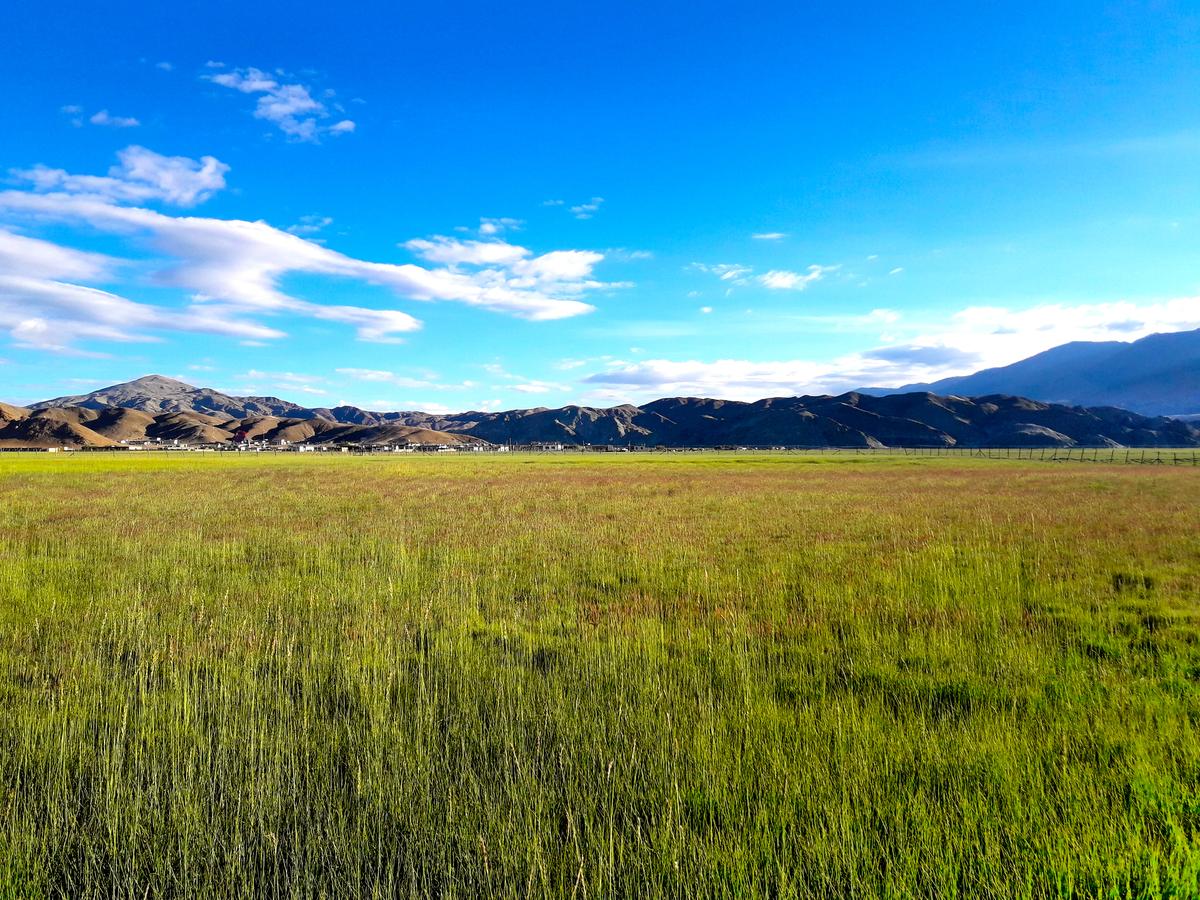
A grassland in Hanle, Ladakh, July 12, 2024.
| Photo Credit:
KSL
Dr. Ratnam studies the biophysical and anthropogenic drivers of tropical savannah and rangeland structure and function and forest-savannah transition zones.
Woody encroachment is widespread worldwide. Manystudieshave unearthed evidence of different drivers of encroachment in different continents. Fire suppression and fragmentation dominate in the South American grasslands whereas more carbon dioxide and variations in rainfall do so in Australia and Africa.
Inside and outside parks
Closer home, in India, grasslands occur across different climatic regimes: the country’s west sports arid grasslands; floodplain grasslands dot the Himalayan landscape; and the high-altitude Shola grasslands crown the Western Ghats, to name a few. In the Himalayan foothills, the tall, wet grasslands are biodiverse habitats inhabited by iconic species such as Indian one-horned rhinoceroses, swamp deer, Bengal floricans, swamp grass babblers, and some other endemic species.
These grasslands are highly threatened, not least because previous damage has broken them up into fragmented patches in a sea of forests, agriculture, and other human-derived habitats. Such fragmentation leaves these patches even more vulnerable than before.
Most of today’s wet grasslands occur inside protected areas such as national parks and sanctuaries. Yet woody encroachment is rampant inside these parks as well, as a February 2023 study by researchers from the Indian Institute of Science Education and Research (IISER), Kolkata; Hainan University in China; and the Durrell Conservation Trust in the U.K., reported. Using data from remote-sensing satellites, they uncovered overwhelmingly high woody encroachment in several national parks in India and Nepal over the last three decades. The cover of grassland habitats had shrunk by 34% while tree cover in these places had increased by 8.7%.
The human hand
Woody encroachment is a direct result of human-driven factors that are changing the disturbance regimes open ecosystems need to thrive. The suppression of the practices grasslands need to thrive stem from colonial conservation and management policies. Colonial officers in tropical countries were known to regard open ecosystems as “wastelands” because they took up space in which trees could grow instead, and provide timber. The classification allowed these habitats to be converted to plantations as well as provided ground for the colonial government to criminalise communities that practised grazing and fire management.
A different colonialism threatens open ecosystems today: instead of timber, many see trees as providers of carbon sequestration potential, and open ecosystems as encroachments that deprive humans of access to this potential.
Refusing to acknowledge the historical presence of grasslands and savannahs have also led to the ongoing failure to protect them. Woody encroachment in open ecosystems has altered biodiversity in myriad ways. There has been a big decline in grassland birds due to woody encroachment.
In the southern African countries of South Africa, Eswatini, and Lesotho, scientists used citizen science data from the ‘South African Bird Atlas Project 2’ to find a dramatic decline in the population of open ecosystem birds. Of the 191 species they analysed from 2007 to 2016, declining population trends prevailed in 121. Of these, the decline of 34 species correlated with woody encroachment.
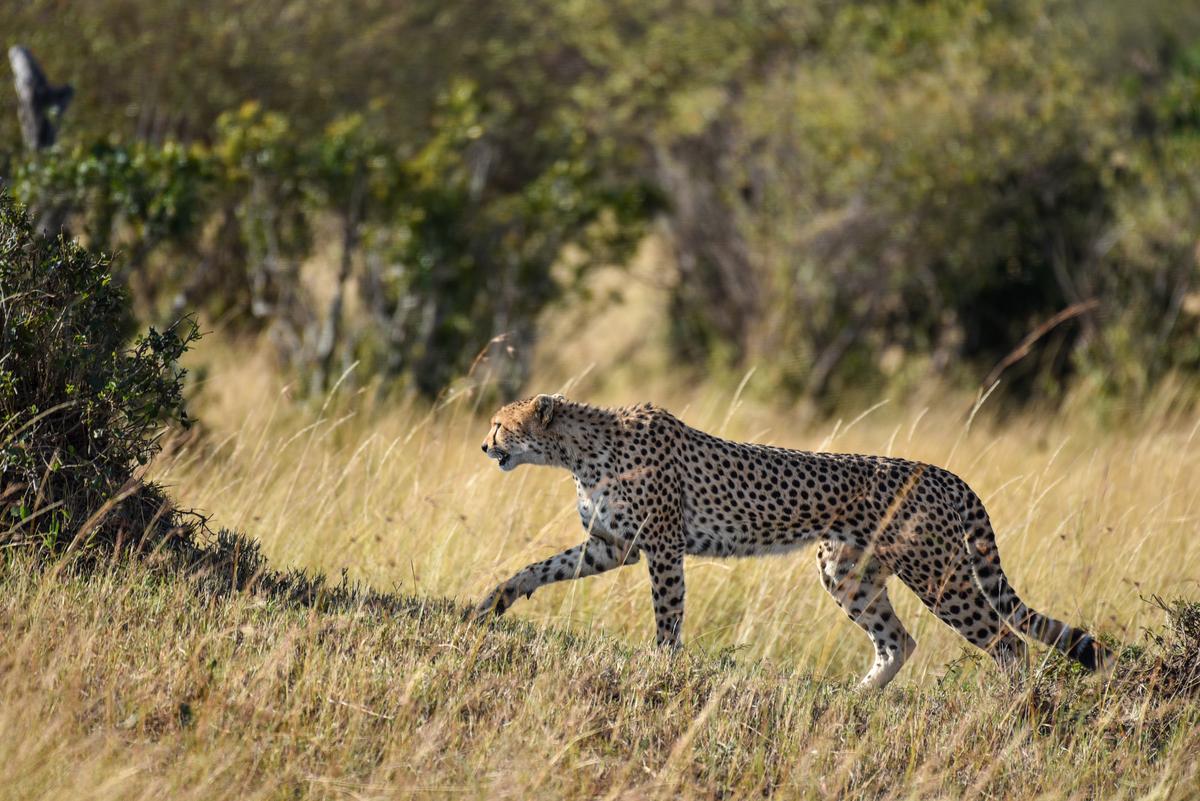
A six-year-old cheetah in the Masai Mara Savannah cautiously approaches prey hiding amid the grass. Under Project Cheetah, some of the next batch of cheetahs from Africa may be sent to a cheetah-breeding and conservation centre in the Banni grasslands, The Hindu reported on July 25.
| Photo Credit:
RAMESH SUSARLA
“Succession of woody species changes the soil conditions, which changes the grass species and faunal association. Woody species invite increased predation especially of the specialist birds’ nests,” Hem Sagar Baral, a noted ornithologist and former head of the Zoological Society of London (Nepal chapter), said.
For similar reasons, woody encroachment brought down the population of grassland specialist rodents in the Banni grasslands of Kutch. These species also incurred a survivability penalty: the grass allowed them to hide from predators, but as trees cropped up, they spent more time keeping vigil and less time feeding.
An invasion by trees
Woody encroachment in grasslands has also received a leg-up from large-scale tree plantation programmes. In the Banni grasslands, studies have found that the spread of the invasive species Prosopis juliflora — which the Gujarat Forest Department planted from 1961 to combat desertification and provide firewood to communities — have since then transformed swaths of the grasslands into a Prosopis woodland.

In fact, most of India’s open ecosystems have stories to tell of ruin led by artificially introduced plants. In the Shola grasslands, eucalyptus plantations have run amok, whereas the Malabar silk-cotton tree has been running riot in the wet terai grasslands of the Himalaya.
To combat the increasing threat of woody encroachment to grasslands, it is imperative we first develop more evidence of their impact. Many studies have revealed the adverse effects of woody encroachment for biodiversity in grasslands, yet they are also the tip of the proverbial iceberg.
We also need long-term ecological monitoring in open ecosystems because they provide valuable fine-scale information. “A lot more science is needed before actions and policy-changes,” Ashish Nerlekar, a presidential postdoctoral fellow at Michigan State University who studies the ecology and conservation of open ecosystems in India, said.
In India itself, we also need to dismantle colonial terminologies like “wastelands”, which perpetuate the misclassification of open ecosystems and passively promote activities that convert them to use for other purposes.
Sutirtha Lahiri is a doctoral student in conservation science at the University of Minnesota and a recipient of the Interdisciplinary Center for the study of Global Change (ICGC) fellowship.