Skip to content
  • Facebook
  • X
  • Linkedin
  • WhatsApp
  • YouTube
  • Associate Journalism
  • About Us
  • Privacy Policy
  • 033-46046046
  • editor@artifex.news
Artifex.News

Artifex.News

Stay Connected. Stay Informed.

  • Breaking News
  • World
  • Nation
  • Sports
  • Business
  • Science
  • Entertainment
  • Lifestyle
  • Toggle search form
  • Trump extends ceasefire until Iranian proposal is submitted, talks are over
    Trump extends ceasefire until Iranian proposal is submitted, talks are over World
  • Stock markets decline in early trade amid rising oil prices, West Asia crisis
    Stock markets decline in early trade amid rising oil prices, West Asia crisis Business
  • Iran tells U.S. it does not seek ‘expansion of tensions’
    Iran tells U.S. it does not seek ‘expansion of tensions’ World
  • ‘Dada’: Rajkummar Rao’s first look from Saurav Ganguly biopic unveiled
    ‘Dada’: Rajkummar Rao’s first look from Saurav Ganguly biopic unveiled Nation
  • Access Denied World
  • East Zone crush North East to reach Senior Women’s Inter Zonal trophy semifinals
    East Zone crush North East to reach Senior Women’s Inter Zonal trophy semifinals Sports
  • Manav-Manush pair hopes to make amends
    Manav-Manush pair hopes to make amends Sports
  • Bangladeshi Soldiers Detain Ex-Supreme Court Judge Near Border With India
    Bangladeshi Soldiers Detain Ex-Supreme Court Judge Near Border With India World
Experiencing heat during pregnancy results in fewer male babies: study

Experiencing heat during pregnancy results in fewer male babies: study

Posted on March 5, 2026 By admin


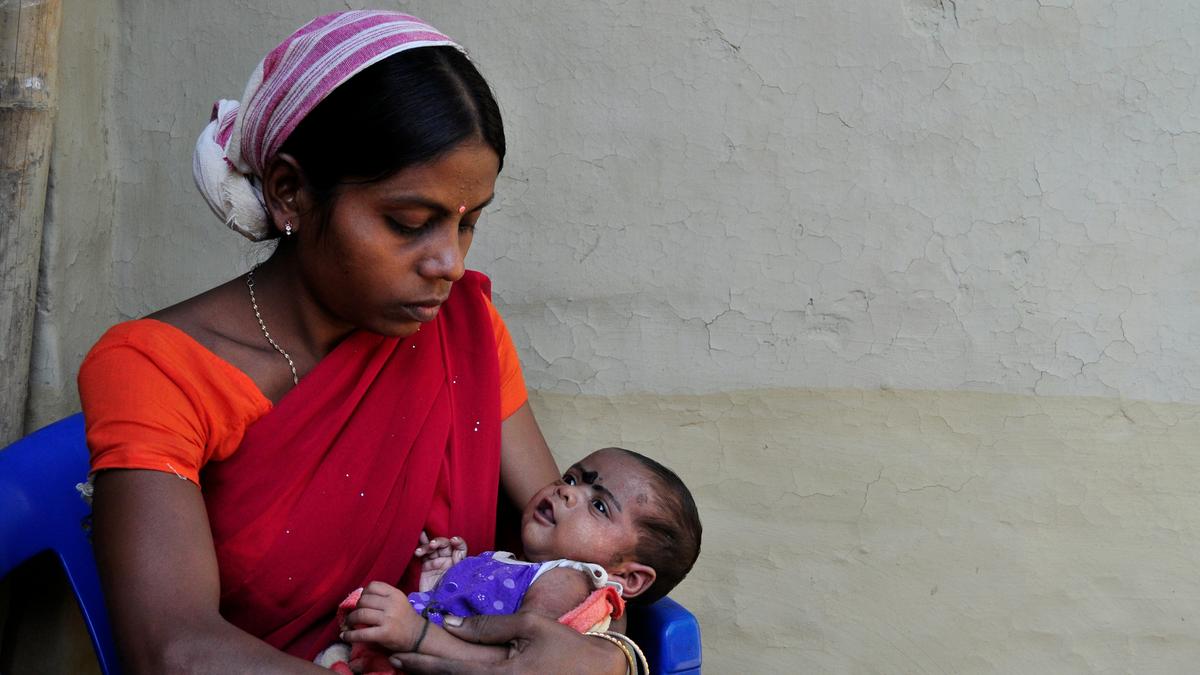
When pregnant women experience higher ambient temperatures during gestation, fewer males are born, a recent analysis of demographic and health surveys in sub-Saharan Africa and India, showed.  

A paper titled ‘Temperature and sex ratios at birth’ in the journal Demography, by Jasmin Abdel Ghany et al., concludes after a detailed analysis that experiencing higher ambient temperatures during pregnancy is associated with changes in the natural sex ratio at birth across India and sub-Saharan Africa. The paper analyses over five million births drawn from more than 90 Demographic and Health Surveys, containing local temperature data, to examine how heat exposure across trimesters shapes sex ratio at birth. Sex ratios at birth shape population composition and are closely linked to maternal health and gender discrimination. 

The researchers write: “We find that days with a maximum temperature above 20 °C are negatively associated with male births in both regions. In sub-Saharan Africa, we observe fewer male births after high first-trimester temperature exposure, consistent with increased spontaneous abortions from maternal heat stress… By contrast, in India, we find that second-trimester temperature exposure is associated with fewer male births.” These reductions are focused among older mothers in rural areas who have had a number of children, the study highlights.

The daily maximum temperature in the month of birth is 30.0 °C in sub-Saharan Africa and 30.3 °C in India. In India, in the second trimester, the results indicate a negative relationship between temperature exposure and birth sex. The effect of a 25 to 30 °C indicates a lower male birth probability by 0.014 percentage points.  

To account for both biophysical health and behavioral mechanisms, researchers chose two regions with vastly different experiences with son preference and sex-selective abortion: India (where several regions have high son preference and sex selective abortions) and sub-Saharan Africa (where there is little evidence of son preference and sex-selective abortions are minimal).  

The hypothesis is that these heat-induced pregnancy losses are male-biased, in line with Trivers and Willard’s “frail male” hypothesis. “According to this evolutionary argument, weak males may have a lower chance of surviving to birth under poor environmental conditions. After birth, males have lower survival probabilities than females and thus require greater maternal investment, the authors write.  

Vidhya Venugopal, Country Director (NIHR GHRC NCD-EC), faculty of Public Health, Sri Ramachandra Institute of Higher Education and Research, Chennai, says the results are not unexpected. Instead, they underline the urgency to examine solutions to protect vulnerable groups when temperatures soar.   

“When your body temperature rises by one or two degrees above the basal temperature, it is a fever. Pregnant women already have a higher body temperature and if with rising heat situations, there will certainly be a cascade of negative impacts… Physiologically, the organss take a hit. We can expect the same things as happen after a bout of fever – extreme tiredness, fatigue, lower cognition, at a mimimum here. In pregnant women, there is a definite increase in adverse events including hypertension, gestational diabetes, preterm births, the risk of underweight babies increases,” she explains.  

While heat is considered ‘extremely natural in tropical countries’, such as India and sub-Saharan Africa, the impact of heat stress particularly on people who live in resource poor settings is grossly underestimated, Dr. Vidhya says.  

Jane Hirst, Chair in Global Women’s Health, The George Institute for Global Health, Imperial College London, agrees. “Most of the evidence associating that risk is not from the hottest, or the low and middle income countries, she adds. That is slowly changing,” she says. Evidence is now emerging from these nations also, indicating the risks might actually be greater. “For instance, the combined global evidence points to a 25 % increase in pre-term births with heat stress. Our study in Tamil Nadu however indicated that it was three times the risk, nearly 300 %.”  

There is a huge role for governments to play here, Dr. Vidhya and Prof. Jane agree. Both of them see communicating risk to the vulnerable populations as a key step, as risk perception is very low, and thereby, capacity to intervene as well. “The communication must be done in a manner that reaches all of them,” Dr. Vidhya says. Protecting vanishing traditional knowledge systems that allow for resource-appropriate cooling mechanisms, including the diet, is also important, she adds. 

Structural changes must also be initiated according to Prof. Jane – make sure the antenatal clinic is located inside a well-ventilated building, or safe drinking water is available to help them cool off. “The Indian government has taken the lead in putting together heat action plans, at the regional and sub regional levels. However, a third of them did not consider pregnant and lactating women, and infants as a vulnerable group,” she points out.

While ensuring that there is sufficient funding and resources for climate engineering, Prof. Jane says it is important to learn from the best practices. The SMART Health Pregnancy trial, currently underway in two Indian States has been looking at providing early warning signals to AASHA workers on weather events: “This has shown acceptability and is also to be expanded across 7 other countries.”

ramya.kannan@thehindu.co.in

Published – March 06, 2026 07:15 am IST


Source link

Science

Post navigation

Previous Post: MRPL refutes declaring any force-majeure on exports
Next Post: Access Denied

Related Posts

  • Smooth operation of Liquid Apogee Motor engine critical to Aditya-L1 success
    Smooth operation of Liquid Apogee Motor engine critical to Aditya-L1 success Science
  • Watch: Is climate change driving people out of the Sunderbans?
    Watch: Is climate change driving people out of the Sunderbans? Science
  • Private US moon lander still working after breaking leg and falling, but not for long
    Private US moon lander still working after breaking leg and falling, but not for long Science
  • Bacteria can talk to each other and are multilingual, says biologist
    Bacteria can talk to each other and are multilingual, says biologist Science
  • Academics warn new science papers are being generated with AI chatbots
    Academics warn new science papers are being generated with AI chatbots Science
  • UN report finds countries’ emission reductions short of goal set in Paris
    UN report finds countries’ emission reductions short of goal set in Paris Science

More Related Articles

Science Quiz | What computers need to compute: Logic gates Science Quiz | What computers need to compute: Logic gates Science
How does U.K.’s OpenSAFELY ensure transparency? How does U.K.’s OpenSAFELY ensure transparency? Science
What is the Baikonur cosmodrome? What is the Baikonur cosmodrome? Science
NIMHANS to arrange first-in-the-world mind and thoughts museum NIMHANS to arrange first-in-the-world mind and thoughts museum Science
Panel suggests booster shot of BCG vaccine to fight TB Panel suggests booster shot of BCG vaccine to fight TB Science
Not binary: India can save its forests by winning the war on poverty Not binary: India can save its forests by winning the war on poverty Science
SiteLock

Archives

  • September 2026
  • August 2026
  • July 2026
  • June 2026
  • May 2026
  • April 2026
  • March 2026
  • February 2026
  • January 2026
  • December 2025
  • November 2025
  • October 2025
  • September 2025
  • August 2025
  • July 2025
  • June 2025
  • May 2025
  • April 2025
  • March 2025
  • February 2025
  • January 2025
  • December 2024
  • November 2024
  • October 2024
  • September 2024
  • August 2024
  • July 2024
  • June 2024
  • May 2024
  • April 2024
  • March 2024
  • February 2024
  • January 2024
  • December 2023
  • November 2023
  • October 2023
  • September 2023
  • August 2023
  • July 2023
  • June 2023
  • May 2023
  • April 2023
  • March 2023
  • February 2023
  • January 2023
  • December 2022
  • November 2022
  • October 2022
  • September 2022
  • August 2022
  • July 2022
  • June 2022
  • May 2022

Categories

  • Business
  • Nation
  • Science
  • Sports
  • World

Recent Posts

  • ICE agent shoots, wounds man in Austin
  • Australia completes cricket series sweep with 1-wicket win against Zimbabwe in third ODI
  • Heavy rains, squally wind likely in West Bengal from September 22
  • Far-left Elif Eralp wins Berlin vote on anti-AfD, pro-poor campaign
  • Premier League: Man City outgun Sunderland despite Brobbey hat-trick, Liverpool marks Iraola’s winning return

Recent Comments

  1. LarryKef on UP Teacher Who Asked Students To Slap Muslim Classmate
  2. Josephjab on UP Teacher Who Asked Students To Slap Muslim Classmate
  3. LarryKef on UP Teacher Who Asked Students To Slap Muslim Classmate
  4. Jasonnekly on UP Teacher Who Asked Students To Slap Muslim Classmate
  5. Jasonnekly on UP Teacher Who Asked Students To Slap Muslim Classmate
  • Access Denied
    Access Denied Nation
  • Mohammed Shami Not Certain For Australia Tour Too? Jay Shah Says “Decision Will Be Taken After…”
    Mohammed Shami Not Certain For Australia Tour Too? Jay Shah Says “Decision Will Be Taken After…” Sports
  • Southeastern Australia Treated To Stunning Southern Lights Display
    Southeastern Australia Treated To Stunning Southern Lights Display World
  • Iran’s Shadloui Becomes Costliest Player In Pro Kabaddi League Auction At Rs 2.35 Crore
    Iran’s Shadloui Becomes Costliest Player In Pro Kabaddi League Auction At Rs 2.35 Crore Sports
  • Pink Eye Epidemic Sweeping Parts of Pakistan, Infecting Lakhs Of People
    Pink Eye Epidemic Sweeping Parts of Pakistan, Infecting Lakhs Of People World
  • “When You Go To India, Sri Lanka…”: England Coach Brendon McCullum Points Out Missed Trick After Pakistan Loss
    “When You Go To India, Sri Lanka…”: England Coach Brendon McCullum Points Out Missed Trick After Pakistan Loss Sports
  • Bangladesh’s Interim Leader Muhammad Yunus Condemns Heinous Attacks On Minorities
    Bangladesh’s Interim Leader Muhammad Yunus Condemns Heinous Attacks On Minorities World
  • Mbappé watches from subs’ bench as France and Netherlands produce Euro 2024’s first 0-0
    Mbappé watches from subs’ bench as France and Netherlands produce Euro 2024’s first 0-0 Sports

Editor-in-Chief:
Mohammad Ariff,
MSW, MAJMC, BSW, DTL, CTS, CNM, CCR, CAL, RSL, ASOC.
editor@artifex.news

Associate Editors:
1. Zenellis R. Tuba,
zenelis@artifex.news
2. Haris Daniyel
daniyel@artifex.news

Photograher:
Rohan Das
rohan@artifex.news

Artifex.News offers Online Paid Internships to college students from India and Abroad. Interns will get a PRESS CARD and other online offers.
Send your CV (Subjectline: Paid Internship) to internship@artifex.news

Links:
Associate Journalism
About Us
Privacy Policy

News Links:
Breaking News
World
Nation
Sports
Business
Entertainment
Lifestyle

Registered Office:
72/A, Elliot Road, Kolkata - 700016
Tel: 033-22277777, 033-22172217
Email: office@artifex.news

Editorial Office / News Desk:
No. 13, Mezzanine Floor, Esplanade Metro Rail Station,
12 J. L. Nehru Road, Kolkata - 700069.
(Entry from Gate No. 5)
Tel: 033-46011099, 033-46046046
Email: editor@artifex.news

Copyright © 2023 Artifex.News Newsportal designed by Artifex Infotech.