

Just as 2024 was the year India developed a vision for its space programme, 2025 is likely to have the programme in mission mode. The PSLV-C60 mission, underway as the year began, laid the foundations for Chandrayaan-4 and the Bharatiya Antariksh Station.
Forthcoming test flights will move India closer to human spaceflight, soon to receive a helping hand from a third launch pad approved for construction at Sriharikota, continuing work on the Next-Generation Launch Vehicle (NGLV), and a change of guard at ISRO.
SpaDeX, a team effort
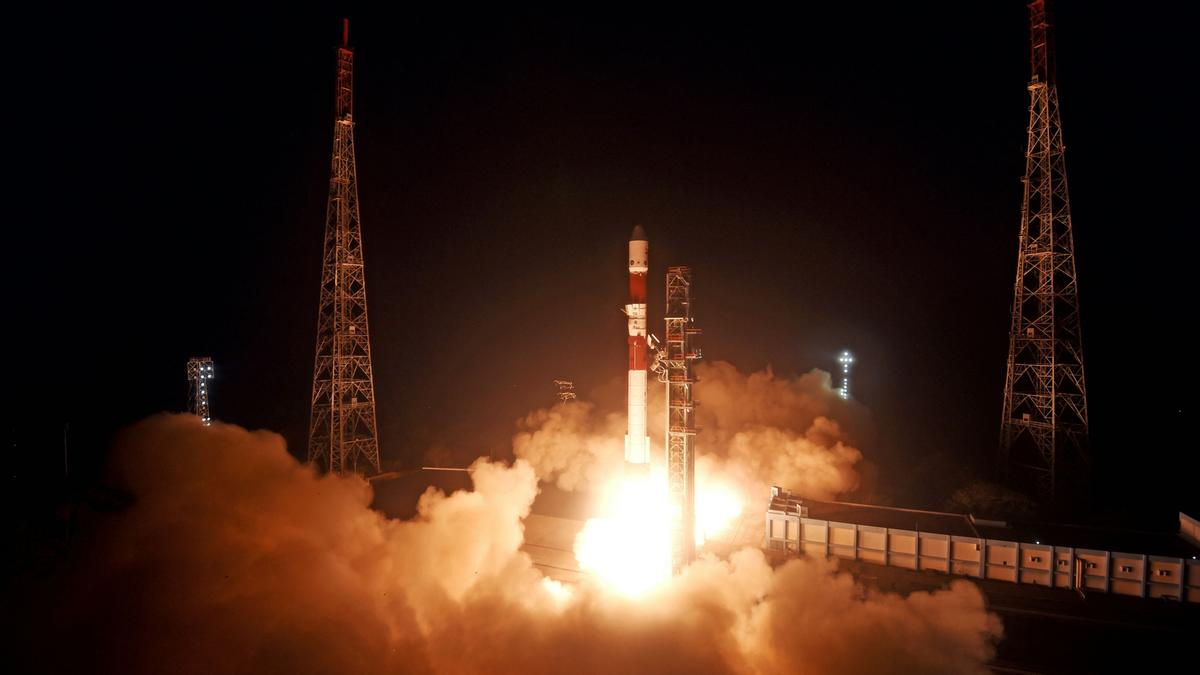
On December 30, 2024, the PSLV-C60 mission lifted off from the Satish Dhawan Space Center (SDSC) in Sriharikota. About 15 minutes after liftoff, the rocket delivered the Space Docking Experiment (SpaDeX) satellites at slightly different velocities into a 475-km circular orbit.
Then ISRO chairman S. Somanath said the nominal date for the docking attempt would be January 7, 2025. M. Sankaran, director of the UR Rao Satellite Centre (URSC), said this was to allow the satellites to power up with its solar cells.
Indian private company Kepler Aerospace provided ground station-as-a-service support for the mission alongside ISRO. It was able to simultaneously command the two SpaDeX satellites and provided “comprehensive mission support in under a month”.
Swiss space situational awareness company s2a systems also shared details of the distance between the two satellites on social media.
This separation reached far-rendezvous conditions, i.e. 10-20 km, on January 2, 2025, and started moving closer on January 6. ISRO had originally planned a webcast for January 7, but pushed it by two days before calling it off altogether.
On January 8, the organisation said when the inter-satellite distance was reduced from 500 m to 225 m, the drift between the satellites was greater than expected. So it re-increased the separation to 6-8 km on January 9 and started over.
On January 10, the satellites were put on ‘hold’ mode to maintain an inter-satellite distance of 1.5 km, then moved closer together on January 11 and ‘held’ at 230 m. On January 12, the inter-satellite distance was reduced further to 105 m, subsequently to 15 m and then to 3 m. At this point, ISRO decided to move the satellites apart once again so it could analyse data from the satellites’ sensors before the next attempt.
According to s2a systems, the inter-satellite separation grew to 10.9 km on January 12 and from there launched the next docking attempt. They came within 2.6 km of each other on January 13 and to 900 m on January 15.
Finally, on January 16, ISRO issued a statement saying the two satellites had successfully docked and stabilised themselves in orbit. ISRO thus made history by completing its first in-orbit rendezvous and docking. Later that day, both satellites were controlled together from one of them, a feat necessary for lunar and space-station docking.
ISRO said the next steps involved transferring power from one satellite to the other and, later, undocking.
POEM4, the orbital testbed
After the PSLV-C60 mission deployed the SpaDeX satellites, the rocket’s fourth stage was moved to a 350-km circular orbit and had its fuel dumped (a process called passivation, done so that the fuel doesn’t explode and create a debris field). In this form, it was ready for the PSLV Orbital Experimental Module (POEM4) phase of its mission, when the fourth stage was to orbit the earth like a satellite. It carried 24 payloads: 14 from ISRO and 10 from academia and private industry.
ISRO’s Relocatable Robotic Manipulator-Technology Demonstrator tested its movement and relocation capability by moving from one part of POEM4 to another. The Debris Capture Robotic Arm Manipulator also moved its arm but ISRO wasn’t clear about whether it managed to capture the piece of debris tethered to the payload. The Compact Research Module for Orbital Plant Studies (CROPS) had cowpea seeds germinate in orbit and studied the leaves.

On December 31, 2024, Manastu Space’s Vyom 2U payload fired its green propulsion system for 30 seconds, tilting the POEM4 stage by 24º. The system used the company’s proprietary green fuel MS289. Manastu fired the system once again on January 13, this time having POEM4 perform a somersault with an angular velocity of 1.5º per second.
Similarly, Bellatrix Aerospace fired its RUDRA payload for 60 seconds to impart an angular velocity of 1.4º per second and turn POEM4 around by 80º.
N Space Tech’s payload SwetchaSAT-V0 established communications with its ground station. The payload, designed and built in-house, tested communications in the UHF to Ku bands.
The SJC Institute of Technology and the Upagraha Amateur Radio Club at URSC said they had successfully received data from BGS-ARPIT, their jointly-developed amateur radio messaging payload. Many amateur radio operators also shared images received from BGS-ARPIT on amateur radio mailing lists.
GalaxEye also announced the successful performance of its payload GLX-SQ. The company said it had achieved all mission objectives, including using GLX-SQ to create a synthetic-aperture radar (SAR) image.
TakeMe2Space successfully conducted an in-orbit demonstration of its MOI-TD payload. An artificial intelligence unit, it uploaded “large models from the ground station, [executed] external code on the satellite, and [downlinked] the … results.” The company said it faced “a critical failure in the camera hardware”, however.
Amity University said its Amity Plant Experimental Module in Space (APEMS) yielded positive results in its attempt to grow a plant in controlled conditions onboard POEM4.
Change of guard
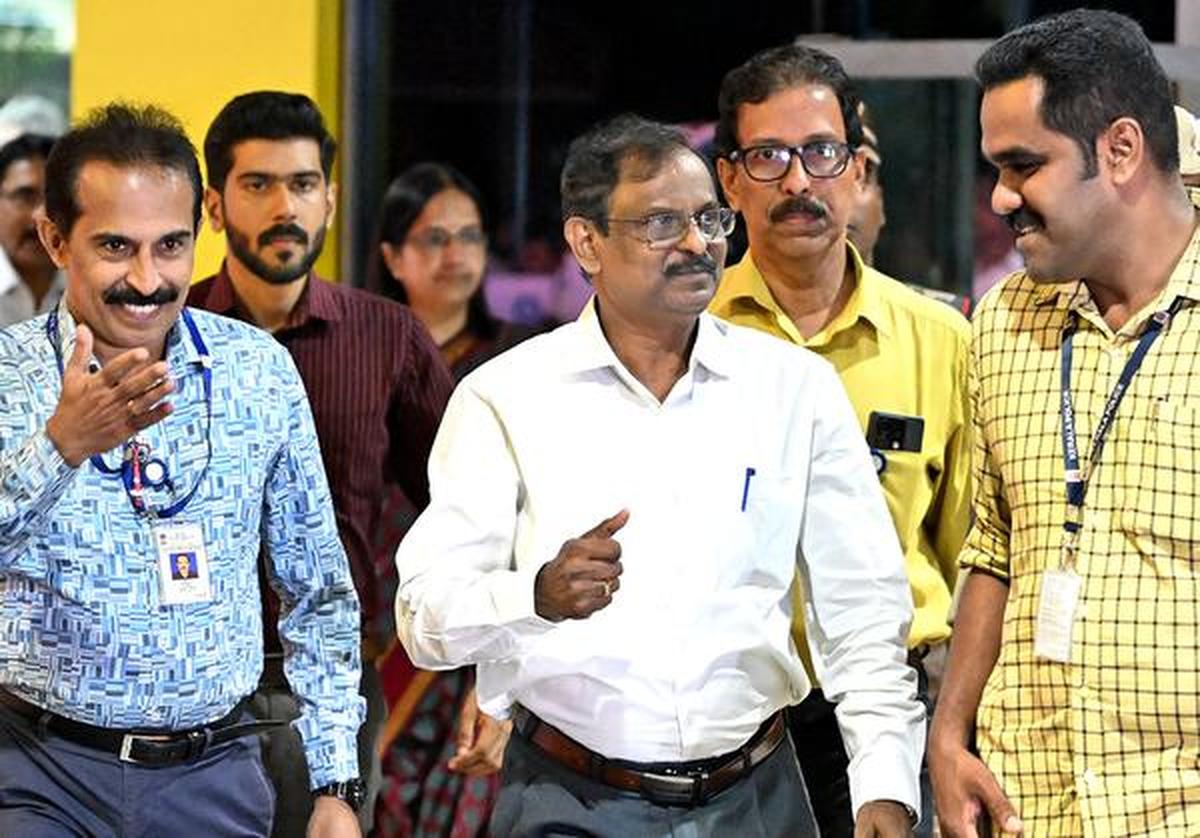
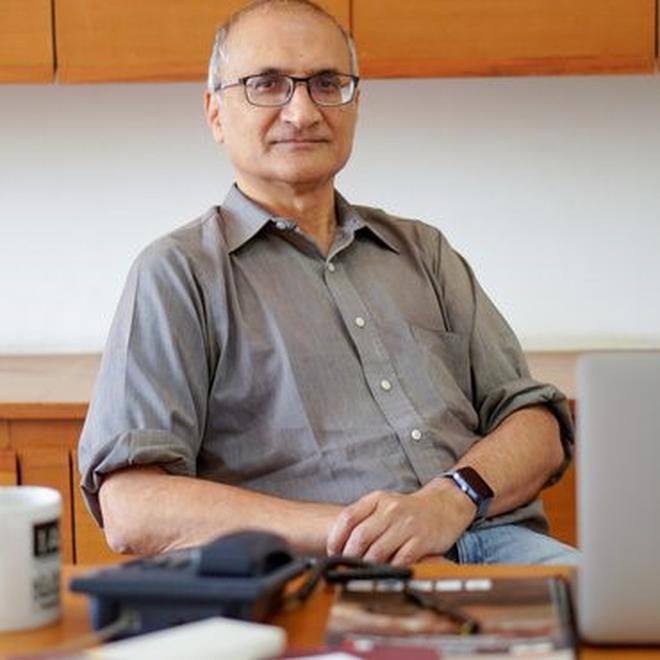
The new ISRO Chairman V. Narayanan (centre) arrives at Thiruvananthapuram airport on Saturday following the successful completion of the SpaDeX mission on January 16.
| Photo Credit:
Nirmal Harindran/The Hindu
While the SpaDeX and POEM4 missions were being executed in space, V. Narayanan took over from Somanath as ISRO chairman on January 14. Narayanan was director of the Liquid Propulsion Systems Center, Thiruvananthapuram, and led work on the cryogenic and semi-cryogenic engines. He also chaired a committee to examine the failure of the Chandrayaan-2 moon-landing attempt.
Aboard Transporter 12
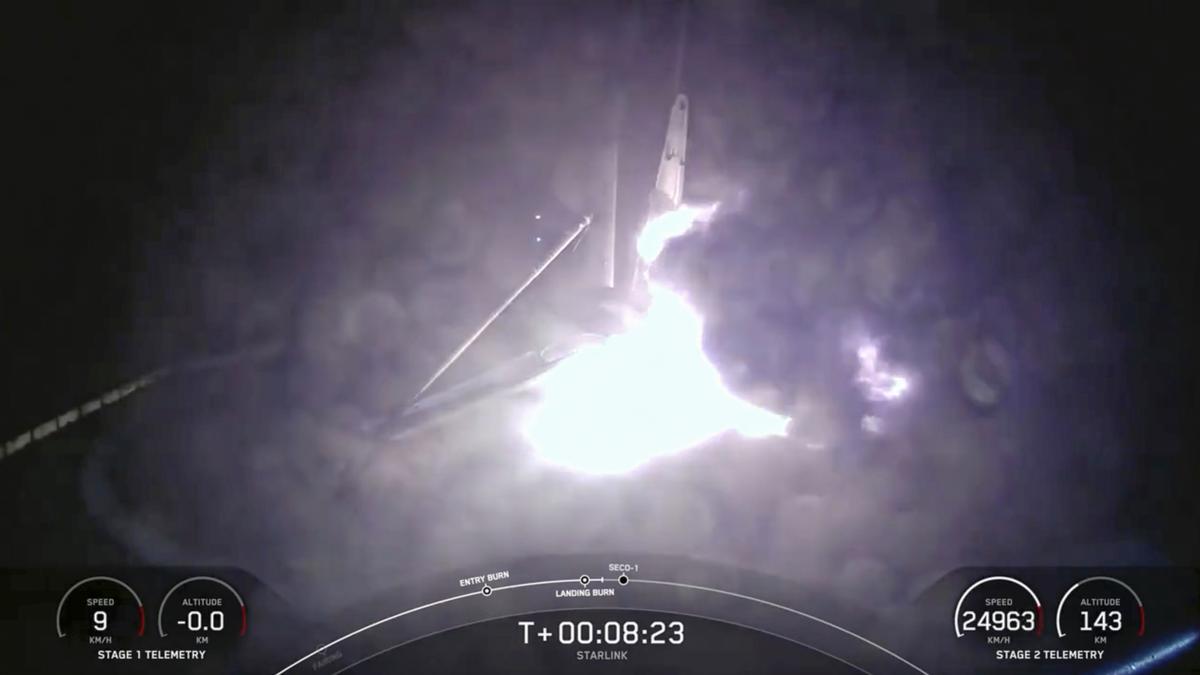
Three Indian companies flew their payloads onboard SpaceX’s Transporter 12 mission on January 15. They were part of another 131 payloads that the Falcon 9 rocket delivered to orbit.

First, Pixxel Space’s three Firefly hyperspectral satellites became the first private Indian satellite constellation; three more are to fly in future. The company announced on social media that all three satellites had deployed their solar arrays and had started generating power, were stabilised, and had established two-way communication links.
Second, Digantara launched its Space Camera for Object Tracking for space situational awareness and to augment its ground capabilities. The company said the satellite was generating solar power and had stabilised. The satellite will now move to its commissioning phase to prepare for its mission: to precisely track objects in low-earth orbit.
Third, XDLINX Labs’ Elevation 1 miniaturised communications satellite, built for US-based Almagest Space Corporation on its XDSATNS platform, was assembled, integrated, and tested by Ananth Technologies. The satellite has a small E-band satellite communications payload that sent a “hello from space” message to mark its start of mission.
Space tech and science
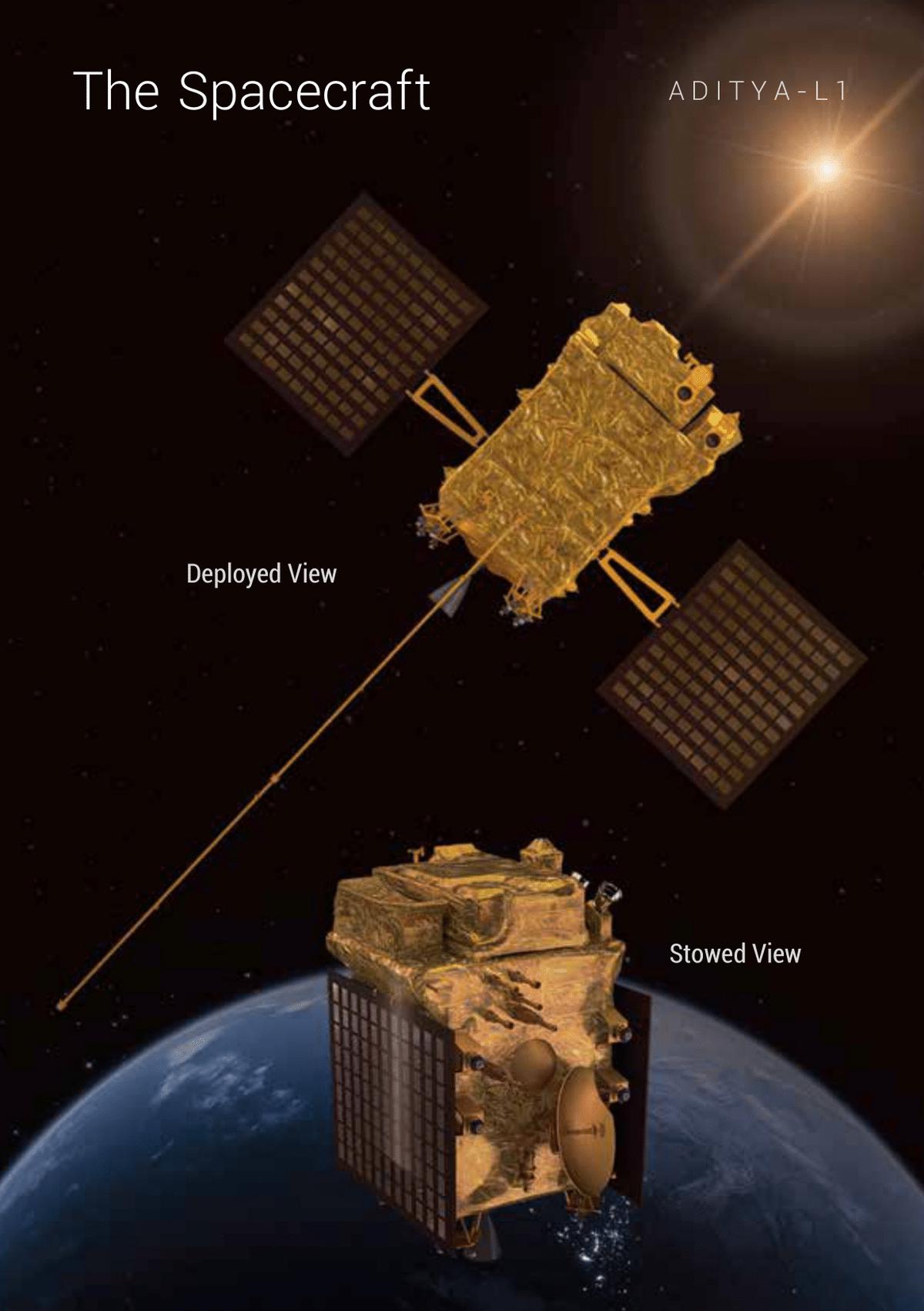
Aditya-L1 is India’s first space-based observatory to study the sun. This artist’s impression shows the spacecraft in its deployed and stowed configurations.
| Photo Credit:
ISRO
The Union cabinet approved the construction of a third launch pad at SDSC at a cost of Rs 3984.86 crore. It’s expected to be built by 2029, to serve as a backup for the second launch Pad as well as support for human spaceflight facilities and ISRO’s NGLV.
ISRO also successfully tested its Vikas engine’s ability to restart, i.e. stop firing, then start again, at its propulsion complex in Mahendragiri. The engine was fired for 60 seconds, shut-off for 120 seconds, and fired again for seven seconds. ISRO has more tests planned ahead of certifying the engine’s readiness to operate in this way in the atmosphere.
The fourth stage liquid engine of the PSLV already has restart capability in the vacuum of space.
Finally, on January 6, ISRO released the first tranche of data collected by its Aditya-L1 mission, exactly a year after the mission had started to study the sun and its effects on the inner solar system.
Pradeep Mohandas is a technical writer and space enthusiast in Pune.
Published – January 27, 2025 05:30 am IST