

Skip to content
  • Facebook
  • X
  • Linkedin
  • WhatsApp
  • YouTube
  • Associate Journalism
  • About Us
  • Privacy Policy
  • 033-46046046
  • editor@artifex.news
Artifex.News

Artifex.News

Stay Connected. Stay Informed.

  • Breaking News
  • World
  • Nation
  • Sports
  • Business
  • Science
  • Entertainment
  • Lifestyle
  • Toggle search form
  • Virender Sehwag Schools ‘Lucky’ Shubman Gill, Triggers Another ‘Strike-Rate Debate’
    Virender Sehwag Schools ‘Lucky’ Shubman Gill, Triggers Another ‘Strike-Rate Debate’ Sports
  • Access Denied Sports
  • England Great Gives Massive Verdict On IPL After Series Win Over Pakistan
    England Great Gives Massive Verdict On IPL After Series Win Over Pakistan Sports
  • Access Denied World
  • Access Denied
    Access Denied Nation
  • Crisil upgrades rating on Adani Power bank loan facilities to AA-
    Crisil upgrades rating on Adani Power bank loan facilities to AA- Business
  • Access Denied Business
  • Gautam Gambhir’s One-Line Message For Virat Kohli’s RCB After Thrilling Loss vs KKR
    Gautam Gambhir’s One-Line Message For Virat Kohli’s RCB After Thrilling Loss vs KKR Sports
Budget may cut reliance on foreign telescopes; trips on space spending

Budget may cut reliance on foreign telescopes; trips on space spending

Posted on February 8, 2026 By admin


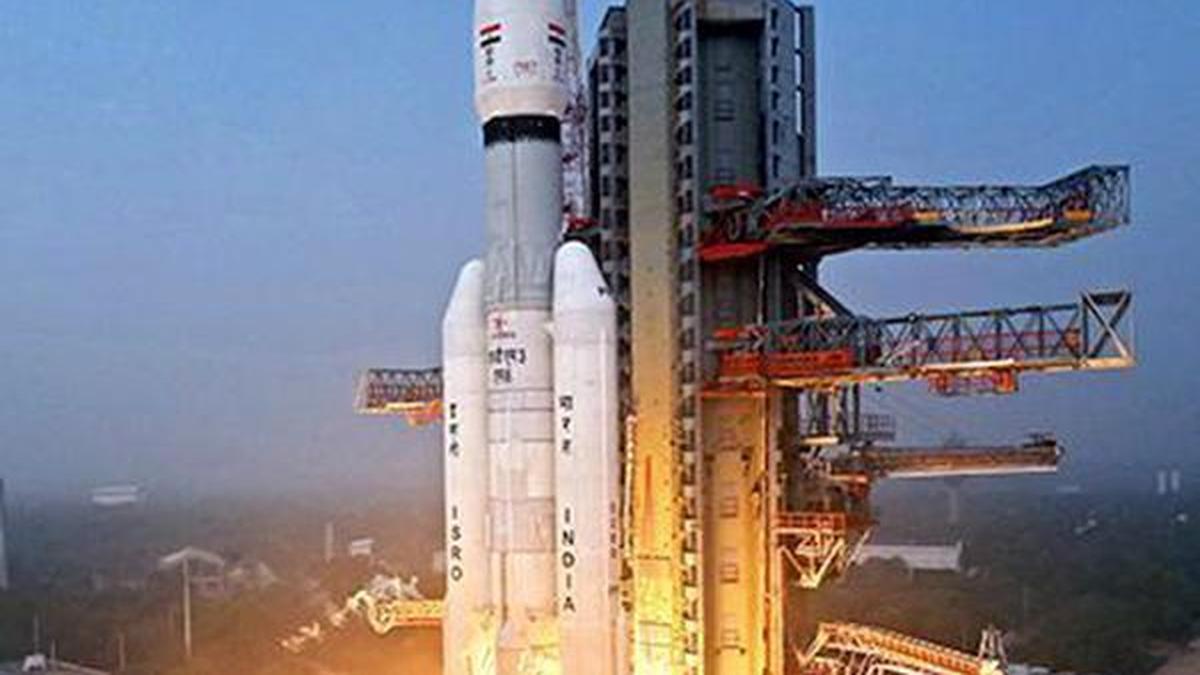
The budget has brought some cheer to India’s research community, particularly for those involved in astronomy and space research, as it has earmarked ₹13,416.20 crore for the Department of Space for 2026-27.

A large chunk of the allocation has been set aside for deep-space exploration and astrophysics, including to build two advanced telescope facilities: the 30-m National Large Optical-Infrared Telescope and the National Large Solar Telescope near Pangong Lake in Ladakh.

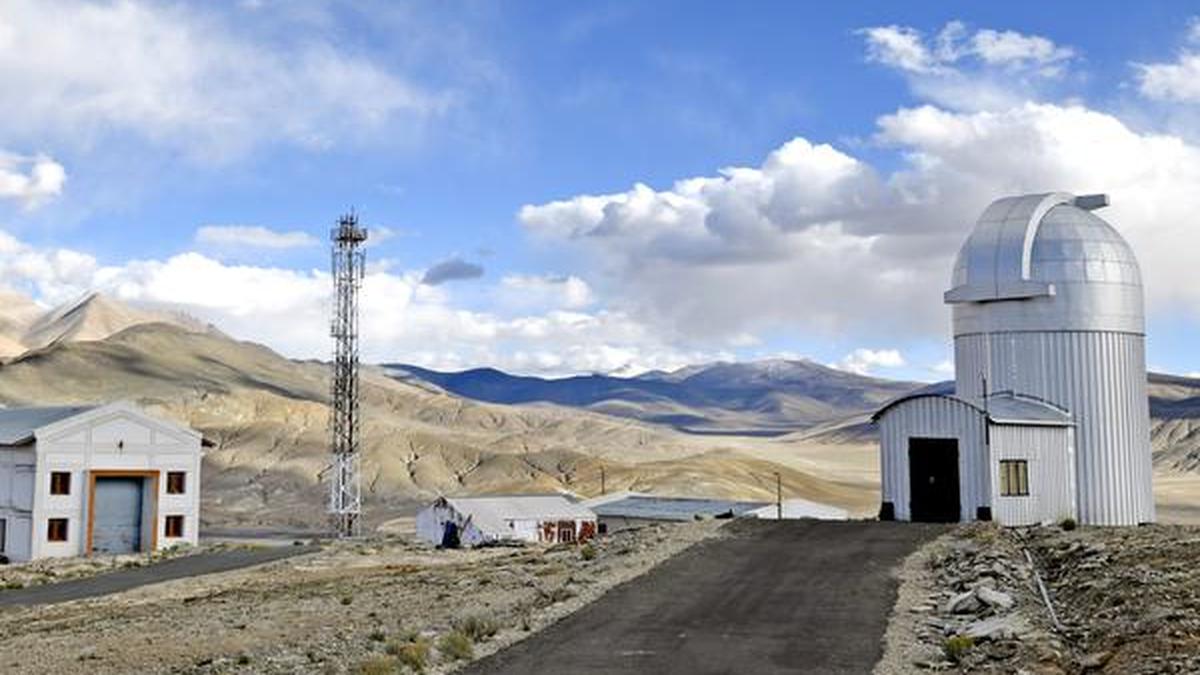
Also in focus is the COSMOS-2 planetarium in Amaravati, Andhra Pradesh, to be completed soon, and improving the control systems of the Himalayan Chandra Telescope in Hanle, Ladakh. Currently, only the U.S., China, Japan and the European Union prioritise astronomy research to a high degree and constantly invest large sums to upgrade their terrestrial and space telescopes. So, astronomers have said, the telescope allocations will improve space research capability and science outreach in India.

Frontier research

However, experts also raised concerns about a significant drop in expenditure, with the actual expense falling short of budgetary estimates. This underutilisation has in the past led to bottlenecks in the planning and executing major projects.

“There were several proposed space missions which were finally not supported,” Bhaswati Mookerjea, professor and chairperson of the Department of Astronomy and Astrophysics at the Tata Institute of Fundamental Research, Mumbai, said.

Dr. Mookerjea added that although this budget “is an extremely positive step for astronomy in India,” the importance of following it through couldn’t be overstated: “The execution of big projects in India would still require some streamlining of resources with checks and balances.”

Only a few large astronomical observatories are capable of frontier research and groundbreaking discoveries worldwide, which means researchers have to compete for observation time. And when funding agencies favour their own national researchers, international scientists’ access becomes increasingly restricted, and Indians are no exception.

Relying on overseas facilities

To make matters worse, an astrophysicist (who didn’t wish to be identified) told this reporter that India’s problem is compounded by the attitude of bureaucrats and administrators.

“They are close-minded regarding concepts like buying fractional time on large telescopes or missions — measures that are not only essential to foster stronger international collaborations and keep us at the forefront of astronomy research, but also serve as a stop-gap arrangement till we have our own large telescopes,” the astrophysicist said.

For far too long has the country relied on overseas facilities for high-resolution data and specialised equipment to do space science, including collaborative projects such as radio, optical, and space-based observations. Acquiring strong domestic capabilities in space science and astrophysics is thus imperative if India is to reduce its dependence on foreign observatories.

Steadily strengthened

Building large-scale, next-generation observatories for cutting-edge space research, however, involves overcoming formidable financial and technological hurdles. These challenges often require collaborative partnerships with international teams and pooling resources and expertise with them is often the only way for Indian scientists to participate in ambitious projects. Adequate funding, effective governance and partnership with domestic industry offer a realistic solution to shrug off this dependence on foreign facilities and research data. 

Fortunately, India’s astronomy and space research ecosystem is being steadily strengthened with the addition of cutting-edge technology platforms. These include optical and radio telescopes, such as the Giant Metrewave Radio Telescope (GMRT) near Pune, and data processing centres capable of AI-driven data analysis. These efforts, alongside the new budgetary push, could boost India’s research capabilities, with the growing shift towards public-private partnerships in space research adding to the optimism.

“Basic science and big budget experiments all over the world require funding from state agencies” Dr. Mookerjea said. “While there are many private enterprises in the space sector, proper channeling of their efforts and overall quality control and monitoring would require setting up of statutory bodies involving government agencies.”

“In the past decade or so we have seen many startups in the space sector, often working in close collaboration with Indian Space Research Organisation (ISRO) experts,” Abhimanyu Susobhanan, assistant professor of physics at the Indian Institute of Science Education and Research, Thiruvananthapuram, said. “The Department of Space established the Indian National Space Promotion and Authorisation Centre in 2020 to promote such partnerships. This is a positive sign as such partnerships will promote innovation and attract private investment in the space sector.”

Sub-millimetre sky

For that to happen, however, policymakers should acknowledge “the imperative for strategic resource allocation and collaborative initiatives to maximise the scientific output from the country’s astronomical assets.” But, he cautioned, “we also have to keep in mind that private interests may not always align with the interests of the nation as a whole.”

An important upside of developing homegrown cutting-edge resources in space science is that it will encourage students to engage in advanced research in the country, arresting the steady brain drain to institutions abroad. But that has been easier said, with a lot of homework still being required before it becomes a reality. For instance, the GMRT is the world’s largest radio telescope array operating at low frequencies and attracts astronomers from across the world. But in the absence of a comparable optical telescope in the country, Indian scientists are forced to stand in line for telescope time at foreign facilities, as they do for doing research in high frequency radio astronomy. 

Similarly, India doesn’t have any telescope that operates in the critical sub-millimeter wavelengths.

“The sub-millimetre sky is a unique window for probing the architecture of the universe and structures within it, from the dusty sub-millimetre galaxies to the ringed nature of proto-stellar disks,” Dr. Mookerjea said. “A proposal is in the pipeline and it is also a part of the Astronomy & Astrophysics Mega Science Vision 2035.”

Only when such projects are realised can India’s march towards becoming a leader in space exploration gather pace.

Prakash Chandra is a science writer.

Published – February 09, 2026 05:30 am IST



Source link

Science

Post navigation

Previous Post: Access Denied
Next Post: Access Denied

Related Posts

  • Top climate scientist declares 2C climate goal ‘dead’
    Top climate scientist declares 2C climate goal ‘dead’ Science
  • Sci-Five | The Hindu Science Quiz: On Paradox
    Sci-Five | The Hindu Science Quiz: On Paradox Science
  • The many benefits of coconut
    The many benefits of coconut Science
  • A beetle named Hitler: The case to change offensive animal, plant names
    A beetle named Hitler: The case to change offensive animal, plant names Science
  • Why do so many contemporary vaccines have low durability? | Explained
    Why do so many contemporary vaccines have low durability? | Explained Science
  • Study reveals how new species evolve without geographic barriers 
    Study reveals how new species evolve without geographic barriers  Science

More Related Articles

Canadian climate lawsuit by young people could sway global cases Canadian climate lawsuit by young people could sway global cases Science
Uncovered: how RNA, amino acids may have linked on early earth Uncovered: how RNA, amino acids may have linked on early earth Science
Study uncovers surprising new ‘spatial grammar’ of gene expression Study uncovers surprising new ‘spatial grammar’ of gene expression Science
America’s first Black astronaut candidate finally goes to space 60 years later on Bezos rocket America’s first Black astronaut candidate finally goes to space 60 years later on Bezos rocket Science
The Southern Ocean has the earth’s cleanest air — scientists finally know why The Southern Ocean has the earth’s cleanest air — scientists finally know why Science
India to convey its plans to build a new research station in Antarctica at Antarctic Treaty Consultative Meeting India to convey its plans to build a new research station in Antarctica at Antarctic Treaty Consultative Meeting Science
SiteLock

Archives

  • May 2026
  • April 2026
  • March 2026
  • February 2026
  • January 2026
  • December 2025
  • November 2025
  • October 2025
  • September 2025
  • August 2025
  • July 2025
  • June 2025
  • May 2025
  • April 2025
  • March 2025
  • February 2025
  • January 2025
  • December 2024
  • November 2024
  • October 2024
  • September 2024
  • August 2024
  • July 2024
  • June 2024
  • May 2024
  • April 2024
  • March 2024
  • February 2024
  • January 2024
  • December 2023
  • November 2023
  • October 2023
  • September 2023
  • August 2023
  • July 2023
  • June 2023
  • May 2023
  • April 2023
  • March 2023
  • February 2023
  • January 2023
  • December 2022
  • November 2022
  • October 2022
  • September 2022
  • August 2022
  • July 2022
  • June 2022
  • May 2022

Categories

  • Business
  • Nation
  • Science
  • Sports
  • World

Recent Posts

  • Man booked for using fake number plate on car to evade traffic challans in Hyderabad
  • Pentagon says U.S. cost of Iran war nearing $29 billion
  • INCOIS expands coastal flood monitoring to tackle ‘Kallakkadal’ surges
  • Gold, silver futures rally 7% after govt raises import duty on bullion
  • Gold duty hike to jeopardise jewellery trade; spur grey market, says GJC

Recent Comments

  1. WilliamTOP on UP Teacher Who Asked Students To Slap Muslim Classmate
  2. DavidAnymn on UP Teacher Who Asked Students To Slap Muslim Classmate
  3. Jesusetexy on UP Teacher Who Asked Students To Slap Muslim Classmate
  4. JeffryFok on UP Teacher Who Asked Students To Slap Muslim Classmate
  5. StanleyPeapy on UP Teacher Who Asked Students To Slap Muslim Classmate
  • Access Denied Sports
  • Trouble At T20 WC? Rahul Dravid, Rohit Sharma And Co. Concerned Over Average Facilities: Report. ICC Responds
    Trouble At T20 WC? Rahul Dravid, Rohit Sharma And Co. Concerned Over Average Facilities: Report. ICC Responds Sports
  • Union Ministers meet Google, app developers to resolve offloading from Play Store
    Union Ministers meet Google, app developers to resolve offloading from Play Store Business
  • Women Cricket World Cup: England beats India to seal semifinal berth
    Women Cricket World Cup: England beats India to seal semifinal berth Sports
  • Access Denied Business
  • Centre asks Karnataka Labour Department to intervene on delayed onboarding of Infosys campus recruits
    Centre asks Karnataka Labour Department to intervene on delayed onboarding of Infosys campus recruits Business
  • 4 Killed, 120 Injured As 4.9 Magnitude Earthquake Hits Iran: Report
    4 Killed, 120 Injured As 4.9 Magnitude Earthquake Hits Iran: Report World
  • How Central Europe’s ’water guardians’ are fighting desertification
    How Central Europe’s ’water guardians’ are fighting desertification Science

Editor-in-Chief:
Mohammad Ariff,
MSW, MAJMC, BSW, DTL, CTS, CNM, CCR, CAL, RSL, ASOC.
editor@artifex.news

Associate Editors:
1. Zenellis R. Tuba,
zenelis@artifex.news
2. Haris Daniyel
daniyel@artifex.news

Photograher:
Rohan Das
rohan@artifex.news

Artifex.News offers Online Paid Internships to college students from India and Abroad. Interns will get a PRESS CARD and other online offers.
Send your CV (Subjectline: Paid Internship) to internship@artifex.news

Links:
Associate Journalism
About Us
Privacy Policy

News Links:
Breaking News
World
Nation
Sports
Business
Entertainment
Lifestyle

Registered Office:
72/A, Elliot Road, Kolkata - 700016
Tel: 033-22277777, 033-22172217
Email: office@artifex.news

Editorial Office / News Desk:
No. 13, Mezzanine Floor, Esplanade Metro Rail Station,
12 J. L. Nehru Road, Kolkata - 700069.
(Entry from Gate No. 5)
Tel: 033-46011099, 033-46046046
Email: editor@artifex.news

Copyright © 2023 Artifex.News Newsportal designed by Artifex Infotech.