

Skip to content
  • Facebook
  • X
  • Linkedin
  • WhatsApp
  • YouTube
  • Associate Journalism
  • About Us
  • Privacy Policy
  • 033-46046046
  • editor@artifex.news
Artifex.News

Artifex.News

Stay Connected. Stay Informed.

  • Breaking News
  • World
  • Nation
  • Sports
  • Business
  • Science
  • Entertainment
  • Lifestyle
  • Toggle search form
  • Boxing Fights For Olympic Future After Gender-Row ‘Disaster’
    Boxing Fights For Olympic Future After Gender-Row ‘Disaster’ Sports
  • Omar infuses fresh blood in J&K Cabinet
    Omar infuses fresh blood in J&K Cabinet Nation
  • 2 Terrorists Killed In Encounter In Jammu And Kashmir’s Baramulla
    2 Terrorists Killed In Encounter In Jammu And Kashmir’s Baramulla Nation
  • Access Denied World
  • Access Denied World
  • As Vladimir Putin orchestrates his reelection, a resilient Russian economy is a key selling point
    As Vladimir Putin orchestrates his reelection, a resilient Russian economy is a key selling point Business
  • Access Denied Sports
  • 8 TTP terrorists killed, 5 injured in Pakistan’s Khyber Pakhtunkhwa
    8 TTP terrorists killed, 5 injured in Pakistan’s Khyber Pakhtunkhwa World
Study uncovers surprising new ‘spatial grammar’ of gene expression

Study uncovers surprising new ‘spatial grammar’ of gene expression

Posted on October 9, 2024 By admin


In his quest to understand how each cell of an organism interprets the same genome in a different way, researcher Sascha Duttke wondered whether there might be any undiscovered rules of biology.

The human genome contains information about our development, functioning, growth, and reproduction, and all of it takes up only about 2 MB of space.

“That led us to wonder: maybe some of the magic is in the CD player, too?” Duttke, an assistant professor at the College of Veterinary Medicine, Washington State University, wrote in an email. “In this analogy, the CD is our genome and the CD player is the regulatory machinery,” and the transcription factors are important components in the player.

Inspired by a toddler

Transcription factors are proteins that bind to specific portions of the DNA and control the rate at which the cell transcribes genetic information from DNA to RNA. The cell then makes proteins by ‘reading’ the RNA.

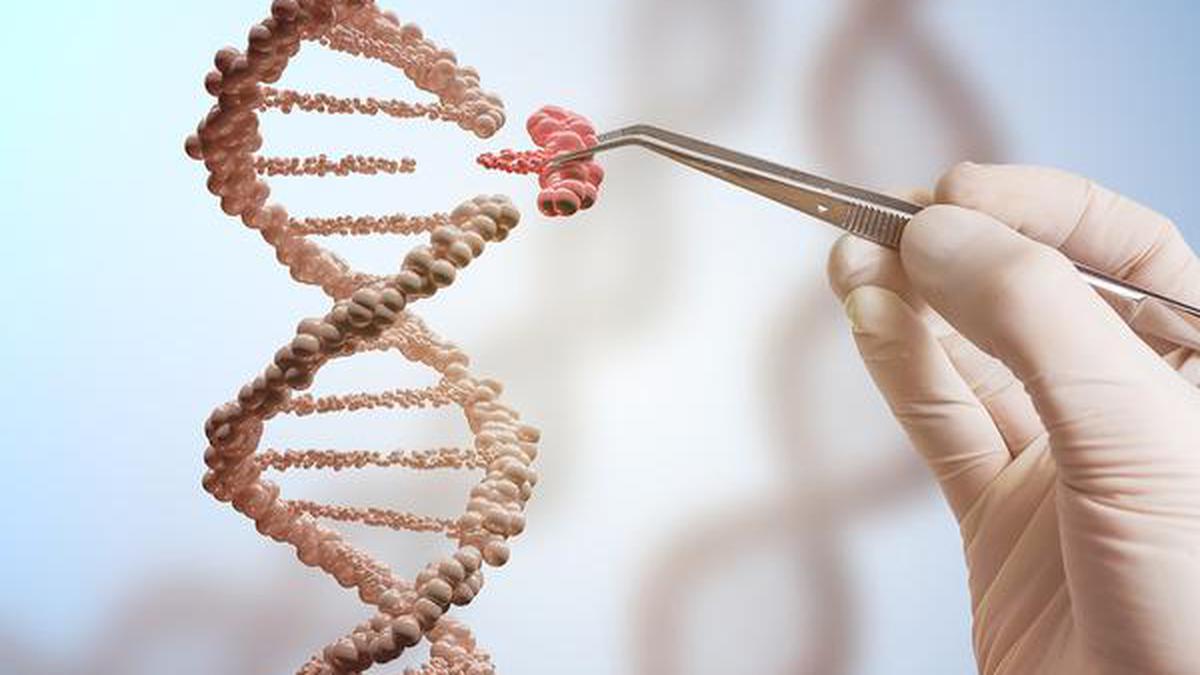
Groundbreaking new work by Duttke and his colleagues has shown that the fate of a gene being transcribed depends on the location of the transcription factor binding site relative to the location where transcription begins.

The results, published in the journal Nature, provide insights into how different spatial arrangements of the same transcription factors can have different effects.

The findings can “help filter and refine genomic tools and algorithms that predict gene expression”, which can inform new diagnostic and therapeutic strategies for diseases like cancers caused by mutations in regulatory elements, Meenakshi Ghosh, a structural biologist-turned clinical scientist, said.

“Watching my toddler destroy a puzzle by forcing in the right colour but the wrong shaped piece made me think: maybe we’ve been focusing too much on transcription factor binding sites and protein interactions, and not enough on how everything fits together spatially and in an even bigger picture,” Duttke said.

Before or after?

The team investigated whether the arrangement of transcription factors relative to the transcription start site could influence gene expression.

When presented with the DNA, the activator transcription factor binds to it at specific points, the binding sites. These points are different from the transcription start site.

Team members developed tools to help them analyse patterns in the building blocks of the DNA that are typically found at the start sites. They subjected cells specially cultured in the lab to a form of RNA sequencing that could detect these sites in RNA. Then they identified the preferred locations at which transcription factors bound relative to an active start site.

The researchers found the binding sites for activator transcription factor NRF1 were located before the start sites and for factor YY1 it was located after the start site. Curiously, NRF1 is an activator whereas YY1 is both an activator and a repressor, a factor that stops transcription.

Next they checked how the relative position of the start site affected how the transcription factor behaved. When they knocked down the gene that cells used to make NRF1, the cells transcribed less DNA only when NRF1’s binding site was located before the transcription start site. If its binding site was located after, the absence of NRF1 increased the transcription rate.

Natural genetic variations

These results were “surprising,” Duttke said. “If you look in textbooks or even Wikipedia, transcription factors are usually grouped into either activators or repressors. The fact that some factors can do both was considered unusual.”

Organisms often carry natural genetic variations at the binding sites. The researchers assessed how these variations influenced the start of transcription. They analysed more than 4 million variations and 80,000 start sites in mice cells and found opposing transcription outcomes depending on whether the variations affected the factors before or after the start site. For instance, only mutations affecting NRF1 binding before the start site reduced the transcription rate.

The researchers also synthetically inserted binding sites for six factors at different distances from the start sites in some DNA sequences. They observed similar position-dependent outcomes. For example, adding an NRF1 binding site ahead of the start increased transcription, consistent with its activator function. Inserting it after the start site reduced transcription.

‘Spatial grammar’

Last, the researchers studied the relevance of these effects in human diseases. They identified start sites from genomic sequences from 67 people and combined this information with databases that describe disease risk linked to specific genetic variants. Consistent with previous results, they observed position-dependent effects of disease-associated variants based on the location of the start sites and the binding sites.

“Uncovering this spatial ‘grammar’ was a true eureka moment for many scientists like us who are working to understand how DNA encodes the instructions for turning genes on and off,” Duttke said, adding it would be “exciting” to explore how interactions between different factors affect this spatial grammar.

These results have “vast potential applications”, including helping researchers identify and predict disease-associated mutations, called polymorphisms, that occur outside genes and provide a basis for therapeutic interventions.

“How many of those polymorphisms contribute to disease is currently largely unknown,” he said. “The discovery of the spatial grammar may help to change that.”

The light of evolution

This study is “pretty cool,” Ghosh said. “It adds crucial new insights about how positioning and spacing relative to [start sites] can impact the ability of [factors] to either activate or repress gene expression.”

She added that the results can also improve our understanding of evolution and how organisms regulate gene expression to adapt to environmental changes.

Duttke said he would like to understand more about how this grammar evolved and how it helped create complex organisms like humans. He quoted the title of geneticist Theodosius Dobzhansky’s famous 1973 essay to make his point: “Nothing in biology makes sense except in the light of evolution”.

Sneha Khedkar is a biologist turned freelance science journalist.

Published – October 09, 2024 05:30 am IST



Source link

Science

Post navigation

Previous Post: Netanyahu says Israel has ‘taken out’ Hassan Nasrallah’s successors
Next Post: OnlyFans Creator Pleads Guilty In Child Pornography Case In US

Related Posts

  • Gaganyaan: ISRO all geared up for first test flight
    Gaganyaan: ISRO all geared up for first test flight Science
  • Could the key to how good we are at maths be hidden in our brains?
    Could the key to how good we are at maths be hidden in our brains? Science
  • Do sheep swim? If so, how do they learn?
    Do sheep swim? If so, how do they learn? Science
  • While good, ICMR impact scale may deter research in public interest
    While good, ICMR impact scale may deter research in public interest Science
  • Is it possible to remove microplastics from water?
    Is it possible to remove microplastics from water? Science
  • Science Snapshots: March 22, 2026
    Science Snapshots: March 22, 2026 Science

More Related Articles

Prototype fast breeder reactor | Nuclear paradox Prototype fast breeder reactor | Nuclear paradox Science
Whales can live way longer than scientists had thought, new research shows Whales can live way longer than scientists had thought, new research shows Science
In Delhi study, ragas in the operation theatre cut anaesthesia use In Delhi study, ragas in the operation theatre cut anaesthesia use Science
Hyderabad: Ocean research, resilience in focus as IIOSC-2025 opens in INCOIS Hyderabad: Ocean research, resilience in focus as IIOSC-2025 opens in INCOIS Science
The Science Quiz | Revisiting malaria and its unique challenges The Science Quiz | Revisiting malaria and its unique challenges Science
Healthocide: war against healthcare – The Hindu Healthocide: war against healthcare – The Hindu Science
SiteLock

Archives

  • May 2026
  • April 2026
  • March 2026
  • February 2026
  • January 2026
  • December 2025
  • November 2025
  • October 2025
  • September 2025
  • August 2025
  • July 2025
  • June 2025
  • May 2025
  • April 2025
  • March 2025
  • February 2025
  • January 2025
  • December 2024
  • November 2024
  • October 2024
  • September 2024
  • August 2024
  • July 2024
  • June 2024
  • May 2024
  • April 2024
  • March 2024
  • February 2024
  • January 2024
  • December 2023
  • November 2023
  • October 2023
  • September 2023
  • August 2023
  • July 2023
  • June 2023
  • May 2023
  • April 2023
  • March 2023
  • February 2023
  • January 2023
  • December 2022
  • November 2022
  • October 2022
  • September 2022
  • August 2022
  • July 2022
  • June 2022
  • May 2022

Categories

  • Business
  • Nation
  • Science
  • Sports
  • World

Recent Posts

  • Nicobarese oppose proposal for three wildlife sanctuaries
  • Visakhapatnam Collector calls for inter-departmental synergy to boost investments
  • Kohli’s masterful knock powers Royal Challengers to the top
  • Senior IPS officer Asra Garg posted IGP Intelligence
  • Vijay Narayan earns rare distinction of being Advocate General under two different governments

Recent Comments

  1. StevenLek on UP Teacher Who Asked Students To Slap Muslim Classmate
  2. Leonardren on UP Teacher Who Asked Students To Slap Muslim Classmate
  3. NathanQuins on UP Teacher Who Asked Students To Slap Muslim Classmate
  4. Davidgof on UP Teacher Who Asked Students To Slap Muslim Classmate
  5. NathanJobre on UP Teacher Who Asked Students To Slap Muslim Classmate
  • Top US Senator Found Guilty Of Corruption In Bribery Trial: Report
    Top US Senator Found Guilty Of Corruption In Bribery Trial: Report World
  • Biden, Harris on joint trip after U.S. drug price deal
    Biden, Harris on joint trip after U.S. drug price deal World
  • BJP Leader Fresh Dare To Asaduddin Owaisi
    BJP Leader Fresh Dare To Asaduddin Owaisi Nation
  • Access Denied World
  • Suzlon to sharply grow EPC business for better margin, starts acquiring land
    Suzlon to sharply grow EPC business for better margin, starts acquiring land Business
  • Rate cut hopes may bolster U.S. stocks as investors await earnings, elections
    Rate cut hopes may bolster U.S. stocks as investors await earnings, elections World
  • Australia’s Predicted XI vs New Zealand, Cricket World Cup 2023: Will Travis Head Make The Cut?
    Australia’s Predicted XI vs New Zealand, Cricket World Cup 2023: Will Travis Head Make The Cut? Sports
  • Man who attacked Nancy Pelosi’s husband also found guilty of kidnapping and faces life in prison
    Man who attacked Nancy Pelosi’s husband also found guilty of kidnapping and faces life in prison World

Editor-in-Chief:
Mohammad Ariff,
MSW, MAJMC, BSW, DTL, CTS, CNM, CCR, CAL, RSL, ASOC.
editor@artifex.news

Associate Editors:
1. Zenellis R. Tuba,
zenelis@artifex.news
2. Haris Daniyel
daniyel@artifex.news

Photograher:
Rohan Das
rohan@artifex.news

Artifex.News offers Online Paid Internships to college students from India and Abroad. Interns will get a PRESS CARD and other online offers.
Send your CV (Subjectline: Paid Internship) to internship@artifex.news

Links:
Associate Journalism
About Us
Privacy Policy

News Links:
Breaking News
World
Nation
Sports
Business
Entertainment
Lifestyle

Registered Office:
72/A, Elliot Road, Kolkata - 700016
Tel: 033-22277777, 033-22172217
Email: office@artifex.news

Editorial Office / News Desk:
No. 13, Mezzanine Floor, Esplanade Metro Rail Station,
12 J. L. Nehru Road, Kolkata - 700069.
(Entry from Gate No. 5)
Tel: 033-46011099, 033-46046046
Email: editor@artifex.news

Copyright © 2023 Artifex.News Newsportal designed by Artifex Infotech.