

Skip to content
  • Facebook
  • X
  • Linkedin
  • WhatsApp
  • YouTube
  • Associate Journalism
  • About Us
  • Privacy Policy
  • 033-46046046
  • editor@artifex.news
Artifex.News

Artifex.News

Stay Connected. Stay Informed.

  • Breaking News
  • World
  • Nation
  • Sports
  • Business
  • Science
  • Entertainment
  • Lifestyle
  • Toggle search form
  • Sofas, ACs, Beds Missing From Official Bungalow Vacated By Tejashwi Yadav, Claims BJP
    Sofas, ACs, Beds Missing From Official Bungalow Vacated By Tejashwi Yadav, Claims BJP Nation
  • With KL Rahul Out, Can Sanju Samson Play Against Pakistan?
    With KL Rahul Out, Can Sanju Samson Play Against Pakistan? Sports
  • Delhi Records Season’s Coldest Night, Air Quality Remains ‘Very Poor’
    Delhi Records Season’s Coldest Night, Air Quality Remains ‘Very Poor’ Nation
  • Wirtz And Musiala Dazzle To Kick-Start New Germany Era
    Wirtz And Musiala Dazzle To Kick-Start New Germany Era Sports
  • India’s Strong Message After Kathua Ambush Kills 5
    India’s Strong Message After Kathua Ambush Kills 5 Nation
  • Bihar Launches ‘Safe Travel’ Helpline For Women In 6 Districts
    Bihar Launches ‘Safe Travel’ Helpline For Women In 6 Districts Nation
  • Rupee recovers from all-time low, gains 10 paise to 85.03 against U.S. dollar
    Rupee recovers from all-time low, gains 10 paise to 85.03 against U.S. dollar Business
  • Haryana Votes To Be Counted Tomorrow; BJP Confident, Congress Hopeful
    Haryana Votes To Be Counted Tomorrow; BJP Confident, Congress Hopeful Nation
While good, ICMR impact scale may deter research in public interest

While good, ICMR impact scale may deter research in public interest

Posted on September 20, 2025 By admin


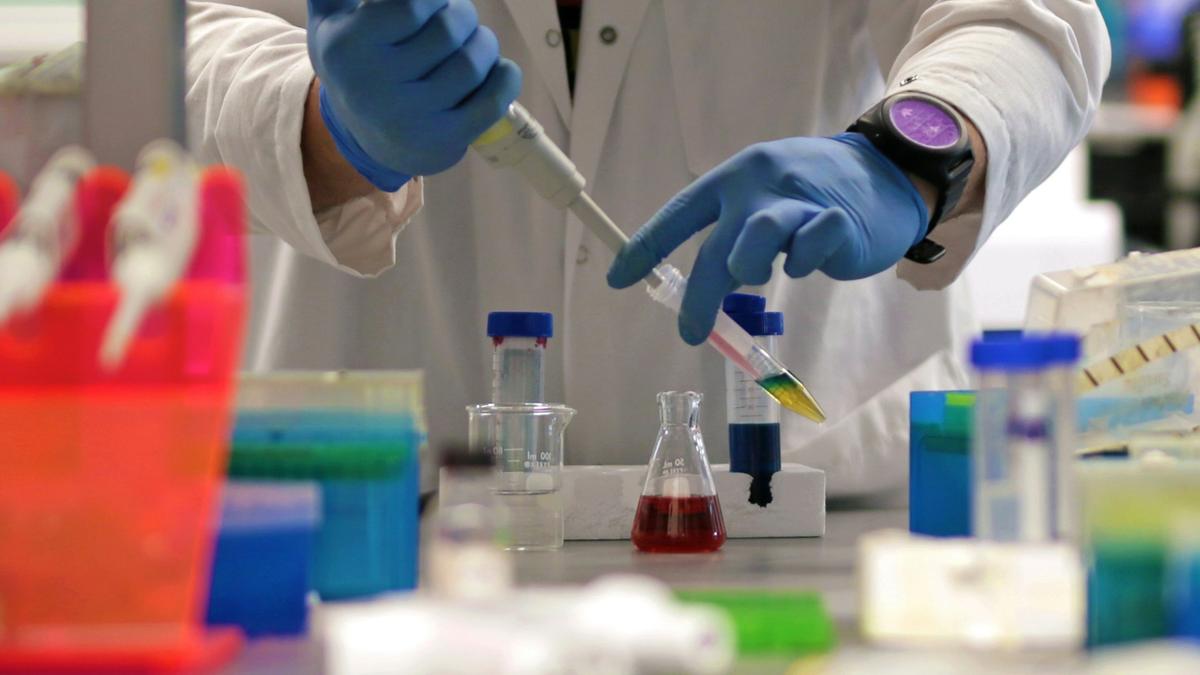
There is more to research impact than citations.
| Photo Credit: Adam Bezer/Unsplash

The Indian Council of Medical Research (ICMR) recently proposed the Impact of Research and Innovation Scale (IRIS), a scale with which to measure the impactfulness of the effects of biomedical, public health, and allied research projects funded by the organisation. ICMR is India’s topmost governmental grants-giving and research agenda-setting body vis-à-vis health research, so the scale and its calculi will be of great consequence to the Indian medical and health research communities.

ICMR proposes to measure research impact in units called publication-equivalents (PEs). A research paper published in a peer-reviewed journal that reports results or methods of primary research, or a systematic review and meta-analysis is assigned 1 PE — while a research paper that is cited in policies/guidelines is assigned 10 PEs. A patent’s impact is 5 PEs and that of a commercial device being used at scale is 20 PEs.

Pros of standardisation

There are several advantages to measuring research impact in this way. First, using PEs as the ‘unit of impact’ provides a standardised frame of reference to discuss different kinds of impact. It will allow ICMR to assess the impact of heterogenous work from researchers across disciplines, such as biochemistry, physiology, biomedical engineering, public health, etc., operating at different scales, including basic science, translational sciences, population public health sciences, etc.

Second, IRIS recognises that there is more to research impact than citations. Medical and health researchers, particularly those working in academic setups, typically lack incentives to pursue research that wouldn’t lead to citable academic papers. But a scale like IRIS could break that structure and incentivise researchers to diversify scholars’ research portfolio. Third, tying PEs and IRIS to actual decisions about funding allocation and project prioritisation ensures it won’t be a theoretical,  academic exercise. That ICMR is piloting IRIS to measure the impact of existing research grant programmes and institutes is an important signal of action.

Skewing research evaluation

For the same reasons, it’s important to examine where and how this relatively simple approach to standardising research evaluation could fail. First, a sound theoretical rationale is missing for PEs as a unit of research impact the way the ICMR will wield it. The ICMR note states that commentary, perspective, and narratives review papers will have 0 PE. In this case, the 1977 paper that introduced the biopsychosocial model of medicine, which transformed medical and public health research, will have no impact. Articulating new ideas and critical discourse around emerging evidence are at the foundation of research and are evidently impactful, yet the PE-based system could discourage Indian researchers from pursuing articles of this nature.

Second, IRIS can skew how certain research is valued over some other. Research that leads to policy changes receives 10 PEs while commercial devices receive 20 PEs. As a result, the RATIONS clinical trial that studied nutrition in tuberculosis patients and India’s Home-Based Neonatal Care that revolutionised community health programming will be deemed to be less impactful than, say, a commercialised robotic surgery device. This outlook could discourage basic science and academic medicine and coerce researchers and institutions to commercialise their research and innovations.

While it is their prerogative to do so, there is a danger of this happening at the expense of the ethos of scientific research as a public good. The merits of new proposals are contingent on the local context. Biomedical and health research in India are known to have suffered from a poor research ethics culture, and there is a risk this could expand to affect PEs as well. It is thus vital that our public sector institutions hold the line and stand with the ethos of ‘research as a public good’.

Finally, a unit and scale that will determine the fate of biomedical and health research in India should be developed following rigorous research standards, with full transparency and mechanisms for accountability. The ICMR note mentions an ongoing pilot across its institutions and positive feedback, but it should follow well-established study design and analysis methods to develop such scales. For instance, the assignment of PEs to different indicators could be done through a national-level Delphi study where researchers form a consensus on the assignment. Data must be shared with independent groups to analyse and validate the scale.

Measuring research impact is a complicated exercise with no correct answers. Institutions such as the ICMR have the opportunity and the responsibility to solve it creatively and collaboratively.

Siddhesh Zadey is a co-founder of the nonprofit Association for Socially Applicable Research (ASAR) and a doctoral student in epidemiology at Columbia University.

Published – September 20, 2025 09:32 pm IST


Source link

Science

Post navigation

Previous Post: Access Denied
Next Post: Access Denied

Related Posts

  • Science Quiz: The role of fasting in metabolic health
    Science Quiz: The role of fasting in metabolic health Science
  • Landmark study offers new insights into what protects against dengue
    Landmark study offers new insights into what protects against dengue Science
  • Chandrayaan-3 | Centre asks universities to organise special assemblies to watch Moon landing
    Chandrayaan-3 | Centre asks universities to organise special assemblies to watch Moon landing Science
  • Could the near-extinct Asiatic cheetah rewild Saudi Arabia?
    Could the near-extinct Asiatic cheetah rewild Saudi Arabia? Science
  • India to submit updated climate targets to U.N. by December end: Bhupender Yadav
    India to submit updated climate targets to U.N. by December end: Bhupender Yadav Science
  • Revolutionising home-food preservation, one jar at a time
    Revolutionising home-food preservation, one jar at a time Science

More Related Articles

Meet the woman who’s on a climate mission to the North Pole Meet the woman who’s on a climate mission to the North Pole Science
Nobel Prize in Physics 2023: Three scientists win for research on electrons in flashes of light Nobel Prize in Physics 2023: Three scientists win for research on electrons in flashes of light Science
How women in India have fared How women in India have fared Science
Science Quiz: On medical disasters Science Quiz: On medical disasters Science
CERN supercollider discovers heaviest particles can entangle CERN supercollider discovers heaviest particles can entangle Science
How do SIM cards work? | Explained How do SIM cards work? | Explained Science
SiteLock

Archives

  • May 2026
  • April 2026
  • March 2026
  • February 2026
  • January 2026
  • December 2025
  • November 2025
  • October 2025
  • September 2025
  • August 2025
  • July 2025
  • June 2025
  • May 2025
  • April 2025
  • March 2025
  • February 2025
  • January 2025
  • December 2024
  • November 2024
  • October 2024
  • September 2024
  • August 2024
  • July 2024
  • June 2024
  • May 2024
  • April 2024
  • March 2024
  • February 2024
  • January 2024
  • December 2023
  • November 2023
  • October 2023
  • September 2023
  • August 2023
  • July 2023
  • June 2023
  • May 2023
  • April 2023
  • March 2023
  • February 2023
  • January 2023
  • December 2022
  • November 2022
  • October 2022
  • September 2022
  • August 2022
  • July 2022
  • June 2022
  • May 2022

Categories

  • Business
  • Nation
  • Science
  • Sports
  • World

Recent Posts

  • Muslim population in India may match that of Indonesia after Census: Kiren Rijiju
  • Birds read invisible maps – The Hindu
  • Punjab Congress to release ‘chargesheet’ against AAP government
  • CBI searches 17 locations in Reliance ADA Group cases
  • What is India’s first orbital data centre satellite?

Recent Comments

  1. Andrewfoods on UP Teacher Who Asked Students To Slap Muslim Classmate
  2. DonaldGlymn on UP Teacher Who Asked Students To Slap Muslim Classmate
  3. ShaneElden on UP Teacher Who Asked Students To Slap Muslim Classmate
  4. JasonCobby on UP Teacher Who Asked Students To Slap Muslim Classmate
  5. Andrewveift on UP Teacher Who Asked Students To Slap Muslim Classmate
  • Access Denied
    Access Denied Nation
  • Markets decline in early trade on profit-taking
    Markets decline in early trade on profit-taking Business
  • Access Denied Sports
  • Do wild chimpanzees seek out medicinal plants to treat illness and injuries?
    Do wild chimpanzees seek out medicinal plants to treat illness and injuries? Science
  • Access Denied Sports
  • Access Denied
    Access Denied Nation
  • UK regulators rush to assess risks of latest Anthropic AI model: Report
    UK regulators rush to assess risks of latest Anthropic AI model: Report Science
  • Gang Violence Grips Haiti Capital, 360,000 Displaced
    Gang Violence Grips Haiti Capital, 360,000 Displaced World

Editor-in-Chief:
Mohammad Ariff,
MSW, MAJMC, BSW, DTL, CTS, CNM, CCR, CAL, RSL, ASOC.
editor@artifex.news

Associate Editors:
1. Zenellis R. Tuba,
zenelis@artifex.news
2. Haris Daniyel
daniyel@artifex.news

Photograher:
Rohan Das
rohan@artifex.news

Artifex.News offers Online Paid Internships to college students from India and Abroad. Interns will get a PRESS CARD and other online offers.
Send your CV (Subjectline: Paid Internship) to internship@artifex.news

Links:
Associate Journalism
About Us
Privacy Policy

News Links:
Breaking News
World
Nation
Sports
Business
Entertainment
Lifestyle

Registered Office:
72/A, Elliot Road, Kolkata - 700016
Tel: 033-22277777, 033-22172217
Email: office@artifex.news

Editorial Office / News Desk:
No. 13, Mezzanine Floor, Esplanade Metro Rail Station,
12 J. L. Nehru Road, Kolkata - 700069.
(Entry from Gate No. 5)
Tel: 033-46011099, 033-46046046
Email: editor@artifex.news

Copyright © 2023 Artifex.News Newsportal designed by Artifex Infotech.