
Skip to content
  • Facebook
  • X
  • Linkedin
  • WhatsApp
  • YouTube
  • Associate Journalism
  • About Us
  • Privacy Policy
  • 033-46046046
  • editor@artifex.news
Artifex.News

Artifex.News

Stay Connected. Stay Informed.

  • Breaking News
  • World
  • Nation
  • Sports
  • Business
  • Science
  • Entertainment
  • Lifestyle
  • Toggle search form
  • Rohit Sharma Will Not Be Retained By Mumbai Indians? India Great’s Big Verdict
    Rohit Sharma Will Not Be Retained By Mumbai Indians? India Great’s Big Verdict Sports
  • Xi says China, Russia ties ‘most stable’ in turbulent world
    Xi says China, Russia ties ‘most stable’ in turbulent world World
  • UP Police Recruitment Board Chairperson Renuka Mishra Removed Over Paper Leak
    UP Police Recruitment Board Chairperson Renuka Mishra Removed Over Paper Leak Nation
  • US Senate Passes First Major Child Online Safety Bills In Years
    US Senate Passes First Major Child Online Safety Bills In Years World
  • Access Denied Sports
  • Ola Electric IPO: Ola Electric valued at .4 billion in debut trade
    Ola Electric IPO: Ola Electric valued at $4.4 billion in debut trade Business
  • Bloody Christmas In Ukraine As Russia Launches “Massive Attacks” On Cities
    Bloody Christmas In Ukraine As Russia Launches “Massive Attacks” On Cities World
  • Star Batter Dropped As Australia Make Plethora Of Changes In Squad For Last 2 Tests vs India
    Star Batter Dropped As Australia Make Plethora Of Changes In Squad For Last 2 Tests vs India Sports
In Delhi study, ragas in the operation theatre cut anaesthesia use

In Delhi study, ragas in the operation theatre cut anaesthesia use

Posted on November 18, 2025 By admin


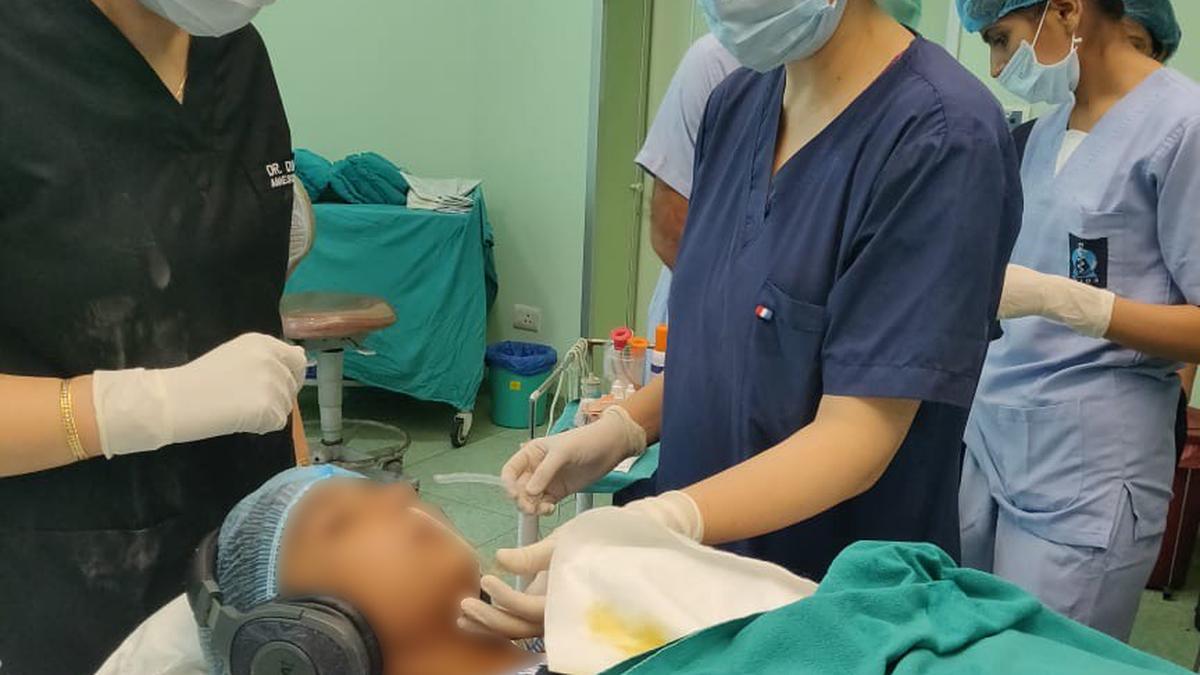
At first glance, the photograph looks like a scene from a science-fiction film or one of those viral, digitally altered images. A woman lies calm on an operating table under bright white lights, a headset snug over her ears. But it’s real and was taken inside a hospital in New Delhi more than a year ago.

It’s a snapshot of an unusual clinical trial by a group of anaesthesiologists from Lok Nayak Hospital and Maulana Azad Medical College. They wanted to investigate if music flowing through headsets during a minor surgery could soften the blow of strong medicines.

“All our surgeries are in completely new environments for patients and we give them general anaesthesia to produce unconsciousness,” Sonia Wadhavan, director professor of Anaesthesia and Intensive Care at Maulana Azad Medical College, said. “But since all these groups of drugs come with some amount of side effects, we asked: if we integrate music therapy with our anaesthetic agents, can it help us reduce the requirement of these drugs?”

Dr. Wadhavan and her team designed a randomised controlled trial, which is a kind of experiment where people are split into groups by chance, like drawing names from a hat, to see if something truly works. One group listened to slow, soothing ragas for the entire surgery; the other did not.

The results were telling: people who heard the music needed about 15% less anaesthetic. Their heart rates stayed steady, their blood pressure held firm, and stress hormone levels fell. The study suggested that music helps patients heal with less strain and less medicine.

Soundtrack under the scalpel

The study, published in the October 2025 edition of the journal Music and Medicine, ran over 11 months. Fifty-six adults planning gallbladder removal, a common surgery to take out the small organ that holds digestive fluid used to break down fats, volunteered for this research.

The patients were split into two groups: one listened to soft flute and piano music during surgery; the other wore identical noise-cancellation headphones and were in silence.

The music the researchers chose wasn’t random. It featured two Hindustani ragas: the bright, uplifting tones of Raga Yaman and the calm, soothing notes of Raga Kirvani. They chose these ragas because they believed the tones could gently steer the body’s “fight or flight” system, which raises heart rate and blood pressure under stress, towards a calmer and steadier state.

“Since the ability to hear remains intact even under anaesthesia, we used music therapy to study its effect on the sympathetic system and stress modulators like cortisol,” Dr. Wadhavan said.

And it worked. Patients who listened to the music needed, on average, about 15% less propofol, a fast-acting anaesthetic that puts you under in seconds and keeps you pain-free and perfectly still. Not only that: their levels of cortisol, a hormone the body releases when it’s stressed, were lower. The participants also needed fewer painkillers and had steady blood pressure throughout the surgery. 

“It was a eureka moment,” said Tanvi Goel, principal investigator and anaesthesiologist at Lok Nayak Hospital and Maulana Azad Medical College. “The music group not only required less anaesthesia but their stress levels were significantly lower.”

Even under anaesthesia, the brain doesn’t shut down. The auditory cortex still registers sound, catching rhythm and tone. As surgery begins — with its pokes, pricks, and cuts — the body’s stress systems stir. The levels of cortisol and other hormones rise, pushing up blood pressure and blood sugar to cope with the strain. The person feels nothing but the body still braces. Music seems to mellow this response, releasing endorphins and oxytocin to steady the heart, ease stress, and support healing.

“It’s non-pharmacological, low-cost, and safe,” said Farah Husain, co-investigator and a certified music therapist. “All it needs is a Bluetooth device and a pair of headphones. There’s no side-effect, only potential benefits.”

‘Complementary approaches’

Alex Street is a senior research fellow at the Cambridge Institute for Music Therapy Research in the UK. He studies how music stirs the brain, the nervous system, and emotions, and how it can be used in real therapy.

“What needs to happen is medicine always has to have a non-medical adjunct,” Dr. Street said. “Complementary approaches like music can reduce the need for medications that often have nasty side effects.”

For instance, fentanyl is a synthetic opioid often used to control severe pain during surgery. But just 2 mg of fentanyl can kill an adult human. It has become the leading cause of death for Americans aged 18 to 45, surpassing car accidents and gun violence. This is part of the opioid crisis, driven by the overuse of powerful painkillers. The epidemic shows why gentler ways to ease pain and stress are needed now more than ever.

In the Lok Nayak Hospital study, patients who listened to soothing music also needed less fentanyl during the surgery, signalling that non-drug approaches could help reduce reliance on powerful painkillers.

“There is still so much to discover about what happens in the depths of the subconscious,” said Dr. Husain. “And maybe the effects of music on the subconscious mind can actually provide a window to this new unexplored world of knowledge for us.”

Dr. Street added a practical reminder: that patients still need to hear the surgical team, even when the music plays.

“You can’t just block everything out with noise-cancelling headphones,” he said. “The patient needs to be able to hear what people are saying.”

The Delhi team now hopes to test their music experiment with more surgeries and larger groups. In a country where hospitals overflow and resources are stretched thin, every drop of drug and every minute saved can ease costs, speed recovery, and free beds. That image of a patient on an operating table with headsets on may soon feel less like science fiction and more like standard care.

Published – November 18, 2025 04:00 pm IST



Source link

Science

Post navigation

Previous Post: Access Denied
Next Post: Parasocial is Cambridge dictionary’s Word of the Year 2025; delulu, slop among new entrants

Related Posts

  • India reports far fewer people with orphan diseases
    India reports far fewer people with orphan diseases Science
  • Common diabetes drug may lower dementia risk, study in Korea shows
    Common diabetes drug may lower dementia risk, study in Korea shows Science
  • Explained | After Chandrayaan-3, what has ISRO planned?
    Explained | After Chandrayaan-3, what has ISRO planned? Science
  • The Science Quiz | Deals to protect the planet
    The Science Quiz | Deals to protect the planet Science
  • What it takes to move heat action plans from advisories to mandates
    What it takes to move heat action plans from advisories to mandates Science
  • Why NASA astronauts Butch Wilmore and Sunita Williams may be stuck in space until next year
    Why NASA astronauts Butch Wilmore and Sunita Williams may be stuck in space until next year Science

More Related Articles

What scientists make of R&D allocations in the 2025 Union Budget What scientists make of R&D allocations in the 2025 Union Budget Science
Fast-moving cornstarch acts like a liquid before hardening Fast-moving cornstarch acts like a liquid before hardening Science
Before and after satellite images of Wayanad landslip Before and after satellite images of Wayanad landslip Science
ISRO is hand-holding start-ups to create a vibrant space ecosystem ISRO is hand-holding start-ups to create a vibrant space ecosystem Science
Roman Baths may harbour novel antimicrobial natural products Roman Baths may harbour novel antimicrobial natural products Science
Study says patient perceptions drive frivolous antibiotic use in India Study says patient perceptions drive frivolous antibiotic use in India Science
SiteLock

Archives

  • May 2026
  • April 2026
  • March 2026
  • February 2026
  • January 2026
  • December 2025
  • November 2025
  • October 2025
  • September 2025
  • August 2025
  • July 2025
  • June 2025
  • May 2025
  • April 2025
  • March 2025
  • February 2025
  • January 2025
  • December 2024
  • November 2024
  • October 2024
  • September 2024
  • August 2024
  • July 2024
  • June 2024
  • May 2024
  • April 2024
  • March 2024
  • February 2024
  • January 2024
  • December 2023
  • November 2023
  • October 2023
  • September 2023
  • August 2023
  • July 2023
  • June 2023
  • May 2023
  • April 2023
  • March 2023
  • February 2023
  • January 2023
  • December 2022
  • November 2022
  • October 2022
  • September 2022
  • August 2022
  • July 2022
  • June 2022
  • May 2022

Categories

  • Business
  • Nation
  • Science
  • Sports
  • World

Recent Posts

  • Qatar says Iran should not use Hormuz to ‘blackmail’ Gulf
  • MLA-elect V. Muraleedharan slams delay in Kerala government formation, warns of governance vacuum
  • Retail inflation inches up to 3.48% in April: Govt data
  • Investors continue selling as PM Modi signals crisis readiness
  • NEET-UG candidates in Tamil Nadu upset over exam cancellation

Recent Comments

  1. AaronThymn on UP Teacher Who Asked Students To Slap Muslim Classmate
  2. Matthewerano on UP Teacher Who Asked Students To Slap Muslim Classmate
  3. JorgeBousa on UP Teacher Who Asked Students To Slap Muslim Classmate
  4. Jamesemifs on UP Teacher Who Asked Students To Slap Muslim Classmate
  5. Martinpex on UP Teacher Who Asked Students To Slap Muslim Classmate
  • Access Denied Sports
  • Finance Ministry says economy likely to grow closer to 7% in 2024-25
    Finance Ministry says economy likely to grow closer to 7% in 2024-25 Business
  • Access Denied Business
  • High Court Cancels Governor Arif Mohammed Khan’s Nominations To University Of Kerala Senate
    High Court Cancels Governor Arif Mohammed Khan’s Nominations To University Of Kerala Senate Nation
  • CSK, Hussey – The Hindu
    CSK, Hussey – The Hindu Sports
  • NASA’s Juno Shares Stunning Close-Up Images Of Jupiter And Its Storms
    NASA’s Juno Shares Stunning Close-Up Images Of Jupiter And Its Storms World
  • Access Denied
    Access Denied Nation
  • Access Denied Sports

Editor-in-Chief:
Mohammad Ariff,
MSW, MAJMC, BSW, DTL, CTS, CNM, CCR, CAL, RSL, ASOC.
editor@artifex.news

Associate Editors:
1. Zenellis R. Tuba,
zenelis@artifex.news
2. Haris Daniyel
daniyel@artifex.news

Photograher:
Rohan Das
rohan@artifex.news

Artifex.News offers Online Paid Internships to college students from India and Abroad. Interns will get a PRESS CARD and other online offers.
Send your CV (Subjectline: Paid Internship) to internship@artifex.news

Links:
Associate Journalism
About Us
Privacy Policy

News Links:
Breaking News
World
Nation
Sports
Business
Entertainment
Lifestyle

Registered Office:
72/A, Elliot Road, Kolkata - 700016
Tel: 033-22277777, 033-22172217
Email: office@artifex.news

Editorial Office / News Desk:
No. 13, Mezzanine Floor, Esplanade Metro Rail Station,
12 J. L. Nehru Road, Kolkata - 700069.
(Entry from Gate No. 5)
Tel: 033-46011099, 033-46046046
Email: editor@artifex.news

Copyright © 2023 Artifex.News Newsportal designed by Artifex Infotech.