
Skip to content
  • Facebook
  • X
  • Linkedin
  • WhatsApp
  • YouTube
  • Associate Journalism
  • About Us
  • Privacy Policy
  • 033-46046046
  • editor@artifex.news
Artifex.News

Artifex.News

Stay Connected. Stay Informed.

  • Breaking News
  • World
  • Nation
  • Sports
  • Business
  • Science
  • Entertainment
  • Lifestyle
  • Toggle search form
  • Ethiopia rebels committed summary executions; gang-raped women, girls: Amnesty International
    Ethiopia rebels committed summary executions; gang-raped women, girls: Amnesty International World
  • Abandon incinerator project in Kodungaiyur, say north Chennai residents
    Abandon incinerator project in Kodungaiyur, say north Chennai residents Nation
  • Faith vs therapy: Inside the Philippine school for exorcists
    Faith vs therapy: Inside the Philippine school for exorcists World
  • North Korea Says “Will Build Overwhelming Military Power”
    North Korea Says “Will Build Overwhelming Military Power” World
  • Access Denied Sports
  • Two policewomen arrested for accepting ₹20,000 bribe in Thirumullaivoyal
    Two policewomen arrested for accepting ₹20,000 bribe in Thirumullaivoyal Nation
  • Profit Rises 8%; Dividend Of Rs 2.75 Declared Business
  • UPI and the cost of policy reversal
    UPI and the cost of policy reversal Business
Study says patient perceptions drive frivolous antibiotic use in India

Study says patient perceptions drive frivolous antibiotic use in India

Posted on September 11, 2025 By admin


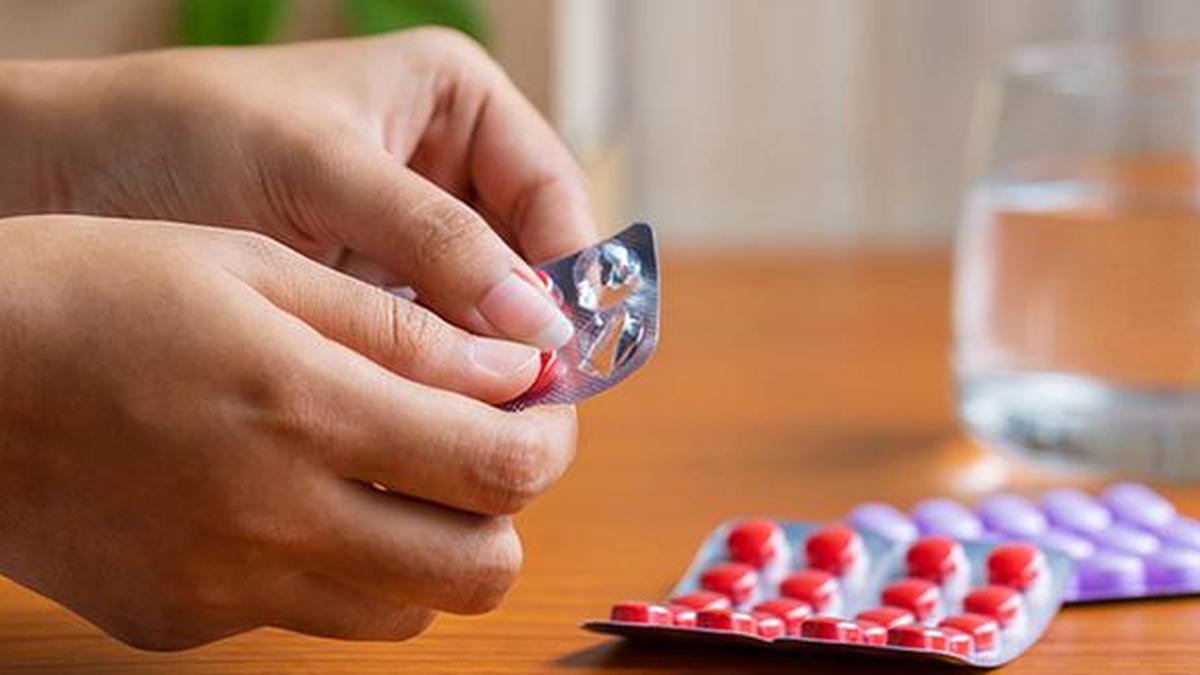
India issues more than half a billion antibiotic prescriptions annually in the private sector alone.
| Photo Credit: Getty Images/iStockphoto

Antimicrobial resistance is one of the most pressing global health threats of the 21st century, already causing around 5 million deaths a year. A major driver is the overuse of antibiotics, particularly for conditions that don’t benefit from them.

This problem is acute in low- and middle-income countries. India in particular issues more than half a billion antibiotic prescriptions annually in the private sector alone. Although most cases of childhood diarrhoea are viral and should be treated with ORS and zinc, for example, studies have shown that about 70% of cases are still treated with antibiotics.

One possible explanation for why providers overprescribe antibiotics despite knowing better is lack of knowledge. However, earlier evidence has suggested another force at work, called the know-do gap, i.e. the gap between what providers know and what prevents them from following it. Understanding which of these gaps matters more is crucial to determine what the appropriate solution is: training programmes or different interventions.

In a new study in Science Advances, an international team of researchers, including from IIM-Bangalore and an NGO named NEERMAN in New Delhi, studied 2,282 private providers in Karnataka and Bihar. First, they assessed knowledge through hypothetical cases of viral diarrhoea. Then they used “standardised patients” — trained actors posing as caretakers — to observe real prescribing behaviour. Randomised experiments tested the effects of patient preferences, financial incentives, and drug availability.

Half the providers displayed poor knowledge but even among those who knew antibiotics were unnecessary, 62% still prescribed them. Closing the knowledge gap would reduce inappropriate prescribing by only about 6 percentage points while closing the know-do gap could reduce it by 30, the study reported.

The team also showed the main driver was providers’ belief that patients wanted antibiotics. When actors expressed a preference for ORS, antibiotic use fell sharply. Financial incentives and drug supply played little role. These findings suggest that simply educating providers may not suffice to curb antibiotic misuse. Many already understand correct practice but act differently, fearing they will disappoint patients or lose them to competitors if they don’t offer “strong medicines”.

In reality, patients cared more about kindness, trust, and overall treatment quality than about receiving antibiotics. This mismatch between perception and reality fuels the know-do gap, per the study. The study also highlighted the importance of targeting less-trained providers, such as pharmacists and rural medical practitioners, who showed the widest gaps.

Published – September 11, 2025 06:00 am IST


Source link

Science

Post navigation

Previous Post: Access Denied
Next Post: South Korea, U.S. to discuss new visa category as detained workers set to head home

Related Posts

  • Scientists make plans to keep spacefarers from contaminating other worlds
    Scientists make plans to keep spacefarers from contaminating other worlds Science
  • India backing high risk, high impact R&D projects: PM Modi
    India backing high risk, high impact R&D projects: PM Modi Science
  • Failure of atomic clock cripples ISRO’s NavIC system
    Failure of atomic clock cripples ISRO’s NavIC system Science
  • Science Quiz: Vibranium’s equally unusual cousins
    Science Quiz: Vibranium’s equally unusual cousins Science
  • India is running out of phosphorus. Does the solution lie in our sewage?
    India is running out of phosphorus. Does the solution lie in our sewage? Science
  • Plankton balloon to six times their size to reach ocean surface
    Plankton balloon to six times their size to reach ocean surface Science

More Related Articles

How will AI revolutionize drug development? How will AI revolutionize drug development? Science
The Science Quiz | Spacetime continuum The Science Quiz | Spacetime continuum Science
COVID-19 virus poses higher cardiac, clotting risks in kids than vaccines, large study says COVID-19 virus poses higher cardiac, clotting risks in kids than vaccines, large study says Science
Mouse embryos grown in space for first time: Japan researchers Mouse embryos grown in space for first time: Japan researchers Science
Bird species exploded after dinos’ doom, largest yet bird genetics study says Bird species exploded after dinos’ doom, largest yet bird genetics study says Science
New species of finless snake eel named after Kanniyakumari New species of finless snake eel named after Kanniyakumari Science
SiteLock

Archives

  • September 2026
  • August 2026
  • July 2026
  • June 2026
  • May 2026
  • April 2026
  • March 2026
  • February 2026
  • January 2026
  • December 2025
  • November 2025
  • October 2025
  • September 2025
  • August 2025
  • July 2025
  • June 2025
  • May 2025
  • April 2025
  • March 2025
  • February 2025
  • January 2025
  • December 2024
  • November 2024
  • October 2024
  • September 2024
  • August 2024
  • July 2024
  • June 2024
  • May 2024
  • April 2024
  • March 2024
  • February 2024
  • January 2024
  • December 2023
  • November 2023
  • October 2023
  • September 2023
  • August 2023
  • July 2023
  • June 2023
  • May 2023
  • April 2023
  • March 2023
  • February 2023
  • January 2023
  • December 2022
  • November 2022
  • October 2022
  • September 2022
  • August 2022
  • July 2022
  • June 2022
  • May 2022

Categories

  • Business
  • Nation
  • Science
  • Sports
  • World

Recent Posts

  • Odisha government plans 870-Acre Silicon Valley hub in Cuttack’s Naraj for semiconductor, IT projects
  • Bihar announces OTS scheme for brick kilns, waives ₹90 crore interest on outstanding dues
  • North Korea says nuclear status ‘irreversible’ after UN atomic agency rebuke
  • Bombay High Court permits BMC to cut over 1,200 mangroves for Versova-Madh Island bridge
  • U.S. appeals court rejects Trump policy allowing swift deportations to third countries

Recent Comments

  1. AlvinNet on UP Teacher Who Asked Students To Slap Muslim Classmate
  2. Jamesslits on UP Teacher Who Asked Students To Slap Muslim Classmate
  3. MichaelClear on UP Teacher Who Asked Students To Slap Muslim Classmate
  4. Jamesslits on UP Teacher Who Asked Students To Slap Muslim Classmate
  5. Jamesslits on UP Teacher Who Asked Students To Slap Muslim Classmate
  • On Camera, Chief Engineer Bihar Katihar On Inspection Duty Swept Away By Ganga River, Rescued
    On Camera, Chief Engineer Bihar Katihar On Inspection Duty Swept Away By Ganga River, Rescued Nation
  • Access Denied
    Access Denied Nation
  • Kejriwal demands Centre to remove 18% GST on air purifiers
    Kejriwal demands Centre to remove 18% GST on air purifiers Business
  • Access Denied Sports
  • Biden Calls For Ceasefire In Lebanon But Israeli Incursion Seems Imminent
    Biden Calls For Ceasefire In Lebanon But Israeli Incursion Seems Imminent World
  • Abandon incinerator project in Kodungaiyur, say north Chennai residents
    Two groups of youngsters clash during Vinayaka idol procession in Erode Nation
  • At least 25 civilians killed in 48 hours in Sudan: activists, medic
    At least 25 civilians killed in 48 hours in Sudan: activists, medic World
  • Access Denied
    Access Denied Nation

Editor-in-Chief:
Mohammad Ariff,
MSW, MAJMC, BSW, DTL, CTS, CNM, CCR, CAL, RSL, ASOC.
editor@artifex.news

Associate Editors:
1. Zenellis R. Tuba,
zenelis@artifex.news
2. Haris Daniyel
daniyel@artifex.news

Photograher:
Rohan Das
rohan@artifex.news

Artifex.News offers Online Paid Internships to college students from India and Abroad. Interns will get a PRESS CARD and other online offers.
Send your CV (Subjectline: Paid Internship) to internship@artifex.news

Links:
Associate Journalism
About Us
Privacy Policy

News Links:
Breaking News
World
Nation
Sports
Business
Entertainment
Lifestyle

Registered Office:
72/A, Elliot Road, Kolkata - 700016
Tel: 033-22277777, 033-22172217
Email: office@artifex.news

Editorial Office / News Desk:
No. 13, Mezzanine Floor, Esplanade Metro Rail Station,
12 J. L. Nehru Road, Kolkata - 700069.
(Entry from Gate No. 5)
Tel: 033-46011099, 033-46046046
Email: editor@artifex.news

Copyright © 2023 Artifex.News Newsportal designed by Artifex Infotech.