


Skip to content
  • Facebook
  • X
  • Linkedin
  • WhatsApp
  • YouTube
  • Associate Journalism
  • About Us
  • Privacy Policy
  • 033-46046046
  • editor@artifex.news
Artifex.News

Artifex.News

Stay Connected. Stay Informed.

  • Breaking News
  • World
  • Nation
  • Sports
  • Business
  • Science
  • Entertainment
  • Lifestyle
  • Toggle search form
  • Access Denied World
  • Fresh Bomb Threats To Over 70 Flights After Series Of Hoax Calls: Report
    Fresh Bomb Threats To Over 70 Flights After Series Of Hoax Calls: Report Nation
  • Babar Azam Told ‘You Don’t Deserve Place In T20I Team’ By Fan. His Reaction Is Viral
    Babar Azam Told ‘You Don’t Deserve Place In T20I Team’ By Fan. His Reaction Is Viral Sports
  • Access Denied
    Access Denied Nation
  • After Congress, Communist Party Gets Rs 11 Crore Tax Notice: Report
    After Congress, Communist Party Gets Rs 11 Crore Tax Notice: Report Nation
  • Hamas Says Gaza Will “Rise Again”, Rebuild After Israeli Destruction
    Hamas Says Gaza Will “Rise Again”, Rebuild After Israeli Destruction World
  • Access Denied Business
  • Access Denied Sports
The Southern Ocean has the earth’s cleanest air — scientists finally know why

The Southern Ocean has the earth’s cleanest air — scientists finally know why

Posted on April 5, 2024 By admin


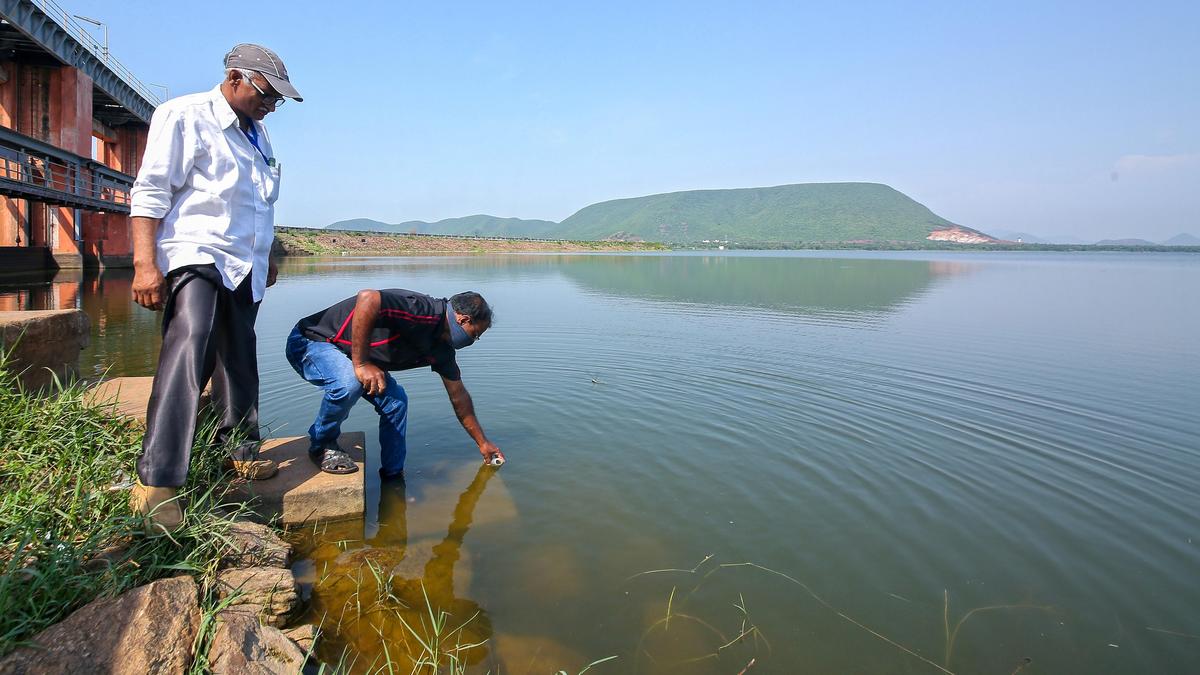
The Southern Ocean is renowned for having the cleanest air on Earth. But the precise reasons why have remained a mystery, until now. Image for Representation.
| Photo Credit: AP

The Southern Ocean is renowned for having the cleanest air on Earth. But the precise reasons why have remained a mystery, until now.

There’s more to it than just a lack of human activity. Yes, there are fewer people down there using industrial chemicals and burning fossil fuels. But there are natural sources of fine particles too, such as salt from sea spray or dust whipped up by the wind.

Regardless of origin, fine solid particles or liquid droplets suspended in air are known as “aerosols”. We consider clean air to have low levels of aerosols, without discriminating between natural or industrial sources.

Our recent research discovered clouds and rain play a crucial role in scrubbing the atmosphere clean.

Understanding the role of clouds and rain

Aerosol levels over the Southern Ocean are influenced by a range of factors. These include the amount of salt spray and seasonal variation in the growth of tiny plant-like organisms called phytoplankton, which are a source of airborne sulphate particles.

Fewer sulphates are produced during winter, which is when the air over the Southern Ocean is most pristine.

But that’s not the full story. The Southern Ocean is also the cloudiest place on Earth. It experiences short-lived, sporadic showers like nowhere else. We wanted to understand the role of clouds and rain in cleaning the air.

The biggest barrier to understanding these processes has always been the lack of high-quality observations of clouds, rainfall and aerosols in this poorly observed region of the world.

Thankfully, a new generation of satellites allows us to study images of clouds in unprecedented detail. We developed a computer program to recognise different cloud patterns over a vast area of the Southern Ocean.

In particular we were on the lookout for distinctive honeycomb-shaped patterns in the cloud field. These honeycomb-like clouds are of great interest because they have a major role in regulating the climate.

When the honeycomb cell is filled with cloud or “closed” it is whiter and brighter, reflecting more sunlight back to space. So these clouds help keep the Earth cool.

Empty or “open” honeycomb cells, on the other hand, let more sunlight in.

These intricacies remain a source of error in modelling the Earth’s climate because they are not being properly included. It’s important to get the balance of open and closed cells right, or the results can be way off.

Whether the honeycomb cells are open or closed also relates to the amount of rainfall they can produce.

The cells are big enough to be seen from space, around 40-60km in diameter. So we can study them using satellite images.

Our research is particularly timely given this month’s launch of a cloud and precipitation experiment at Kennaook/Cape Grim in Tasmania. It aims to get higher resolution data on clouds, rain and sunlight.

Scrubbing aerosols out of the sky

We compared the honeycomb cloud patterns with measurements of aerosols from the Kennaook/Cape Grim observatory and also with the Bureau of Meteorology’s rainfall observations from a nearby rain gauge.

Our results showed days with the cleanest air were associated with the presence of open honeycomb cloud. We think this is because these clouds generate sporadic but intense rain showers, which seem to “wash” the aerosol particles out of the air.

It’s somewhat counter-intuitive, but it turns out the open cells contain more moisture and produce more rain than the fluffy white closed cells filled with cloud. We found the open honeycomb clouds produce six times as much rain as the closed ones.

So what looks like less cloudy weather by satellite actually triggers the most effective rain showers for washing the aerosols out. Whereas the filled or closed honeycomb pattern, which looks cloudier, is less effective. That was one of the more surprising aspects of our findings.

We found the empty honeycombs to be far more common during the winter months, when the air is cleanest.

We also wanted to know what makes cloud fields look the way they do. Our analysis suggests large-scale weather systems control the pattern of the cloud field. As unruly storms track across the Southern Ocean, they produce these open and closed cells.

Fresh air and better climate models

Our research has added a new piece to the puzzle of why the Southern Ocean has the world’s cleanest air. Rainfall is the key, especially rain from these clear, open honeycomb cell-type clouds. We were first to discover they are truly responsible for cleaning up all the air flowing over the Southern Ocean.

These honeycomb patterns are also found in both the North Atlantic and North Pacific regions during winter. So our work will also help explain how these clouds remove aerosols including dust and pollution in these locations. And our findings will help improve climate models, enabling more accurate predictions.

Rain scrubs the aerosols out of the sky in much the same way as a washing machine acts to clean clothes.

After the cold front comes through, the air is clean. If you’re wintering on the south coast of Australia, you can breathe in the benefits as this fresh air comes in off the Southern Ocean.

The Conversation

Tahereh Alinejadtabrizi, PhD student, Monash University; Steven Siems, Professor in Cloud Microphysics, Monash University, and Yi Huang, Senior Lecturer in Climate Science, The University of Melbourne

This article is republished from The Conversation under a Creative Commons license. Read the original article.
Source link

Science Tags:Environment news, science news, Southern ocean, Why is the southern ocean has the cleanest air

Post navigation

Previous Post: A century after the EEG was discovered, it remains a crucial tool for understanding the brain
Next Post: Every Billionaire Under The Age Of 30 Inherited Their Fortune, Research Finds

Related Posts

  • Satellites, science, and the new fight for spectrum in space
    Satellites, science, and the new fight for spectrum in space Science
  • Veteran space scientist Eknath Vasant Chitnis dies at 100
    Veteran space scientist Eknath Vasant Chitnis dies at 100 Science
  • Sci-Five | The Hindu Science Quiz: On Bioprinting
    Sci-Five | The Hindu Science Quiz: On Bioprinting Science
  • Space tech funding in India on the rise, Bengaluru tops the chart: Report
    Space tech funding in India on the rise, Bengaluru tops the chart: Report Science
  • Marine heatwave killed four million Alaska seabirds
    Marine heatwave killed four million Alaska seabirds Science
  • Inside the underground lab in China tasked with solving a physics mystery
    Inside the underground lab in China tasked with solving a physics mystery Science

More Related Articles

The Silent Killer: tackling hypertension in India The Silent Killer: tackling hypertension in India Science
Hold tight! How two hurricanes forced a lizard to change its grip Hold tight! How two hurricanes forced a lizard to change its grip Science
39% TB cases found during Tamil Nadu TB survey had no symptoms 39% TB cases found during Tamil Nadu TB survey had no symptoms Science
What is perpetual motion? – The Hindu What is perpetual motion? – The Hindu Science
How an Indian can go to space for just .50 How an Indian can go to space for just $2.50 Science
What is ‘healthocide’? What is ‘healthocide’? Science
SiteLock

Archives

  • September 2026
  • August 2026
  • July 2026
  • June 2026
  • May 2026
  • April 2026
  • March 2026
  • February 2026
  • January 2026
  • December 2025
  • November 2025
  • October 2025
  • September 2025
  • August 2025
  • July 2025
  • June 2025
  • May 2025
  • April 2025
  • March 2025
  • February 2025
  • January 2025
  • December 2024
  • November 2024
  • October 2024
  • September 2024
  • August 2024
  • July 2024
  • June 2024
  • May 2024
  • April 2024
  • March 2024
  • February 2024
  • January 2024
  • December 2023
  • November 2023
  • October 2023
  • September 2023
  • August 2023
  • July 2023
  • June 2023
  • May 2023
  • April 2023
  • March 2023
  • February 2023
  • January 2023
  • December 2022
  • November 2022
  • October 2022
  • September 2022
  • August 2022
  • July 2022
  • June 2022
  • May 2022

Categories

  • Business
  • Nation
  • Science
  • Sports
  • World

Recent Posts

  • Delegation from Ghana visits crime records bureau in T.N. to study digital policing initiatives
  • Maldives unveils $20 billion UAE investment
  • State owes sanctioned subsidies, incentives worth ₹2,880 crore to 3,716 industrial units: KASSIA
  • State owes sanctioned subsidies, incentives worth ₹2,880 crore to 3,716 industrial units: KASSIA
  • China expels generals accused of graft from Communist Party: state media

Recent Comments

  1. BrandonDib on UP Teacher Who Asked Students To Slap Muslim Classmate
  2. Daviddrire on UP Teacher Who Asked Students To Slap Muslim Classmate
  3. JesseHaf on UP Teacher Who Asked Students To Slap Muslim Classmate
  4. JustinPet on UP Teacher Who Asked Students To Slap Muslim Classmate
  5. Davidscush on UP Teacher Who Asked Students To Slap Muslim Classmate
  • Water leak at Paris Louvre Museum damages books at Egyptian antiquities department
    Water leak at Paris Louvre Museum damages books at Egyptian antiquities department World
  • MS Dhoni’s Look Right Before RCB Win Prompts Huge ‘Definitely Not’ Trend On X
    MS Dhoni’s Look Right Before RCB Win Prompts Huge ‘Definitely Not’ Trend On X Sports
  • Iran-Israel war LIVE: Israel, Lebanon say extending ceasefire despite new strikes
    Iran-Israel war LIVE: Israel, Lebanon say extending ceasefire despite new strikes World
  • Bus crash in eastern Brazil leaves 23 dead
    Bus crash in eastern Brazil leaves 23 dead World
  • EU Imposes Asset Freezes, Visa Bans On Hamas Financiers
    EU Imposes Asset Freezes, Visa Bans On Hamas Financiers World
  • Access Denied
    Access Denied Nation
  • Georgia’s president urges the West to back protests of governing party that claimed election win
    Georgia’s president urges the West to back protests of governing party that claimed election win World
  • Can India Can Beat Any Side In The World? Ex-Star Says “Don’t Need Pitches Like…”
    Can India Can Beat Any Side In The World? Ex-Star Says “Don’t Need Pitches Like…” Sports

Editor-in-Chief:
Mohammad Ariff,
MSW, MAJMC, BSW, DTL, CTS, CNM, CCR, CAL, RSL, ASOC.
editor@artifex.news

Associate Editors:
1. Zenellis R. Tuba,
zenelis@artifex.news
2. Haris Daniyel
daniyel@artifex.news

Photograher:
Rohan Das
rohan@artifex.news

Artifex.News offers Online Paid Internships to college students from India and Abroad. Interns will get a PRESS CARD and other online offers.
Send your CV (Subjectline: Paid Internship) to internship@artifex.news

Links:
Associate Journalism
About Us
Privacy Policy

News Links:
Breaking News
World
Nation
Sports
Business
Entertainment
Lifestyle

Registered Office:
72/A, Elliot Road, Kolkata - 700016
Tel: 033-22277777, 033-22172217
Email: office@artifex.news

Editorial Office / News Desk:
No. 13, Mezzanine Floor, Esplanade Metro Rail Station,
12 J. L. Nehru Road, Kolkata - 700069.
(Entry from Gate No. 5)
Tel: 033-46011099, 033-46046046
Email: editor@artifex.news

Copyright © 2023 Artifex.News Newsportal designed by Artifex Infotech.