


Slamming the recently published paper by Dr. Jacob Puliyel from the International Institute of Health Management Research, New Delhi, on rotavirus vaccine safety, microbiologist Dr. Gagandeep Kang says: “If you do 20 different analyses, one of them will appear significant. This is truly cherry picking data, cherry picking analysis, changing the data around, adjusting the data, not using the whole data in order to find something [that shows the vaccine is not safe].” Dr. Kang was the principal investigator of the rotavirus vaccine trials and the corresponding author of the 2020 paper in The New England Journal of Medicine, the data of which was used by Dr. Puliyel for his reanalysis.
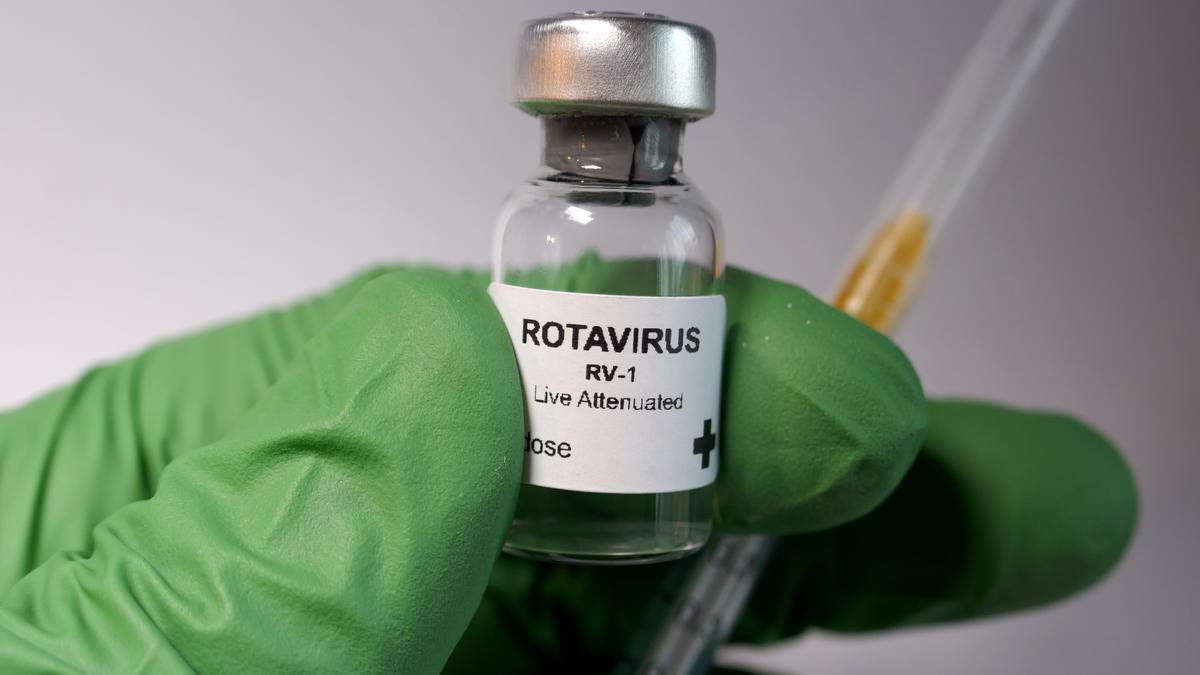
Dr. Kang’s study was a post-licensure, hospital-based, active surveillance study carried out in 27 hospitals across 10 States in India. For the study, 589 infants 28 to 365 days of age who were admitted in hospitals due to intussusception (where a part of the intestine slides into an adjacent part of the intestine) and met certain criteria were recruited as study participants. The main objective was to monitor Bharat Biotech’s rotavirus vaccine (Rotavac) for any increased risk of intussusception after any dose of the vaccine. Three doses of the vaccine are administered at 6, 10, and 14 weeks of age. The vaccine was introduced into the universal immunisation programme in a few States in 2016 and across India in 2019.
Since the phase-3 trial with only 6,799 participants was not powered to pick up cases of intussusception, there was active surveillance of hospitalised cases of intussusception. The NEJM study used the self-controlled case series method to assess the risk of intussusception after vaccine administration. The relative risk was calculated by comparing the incidence in three risk windows — one-seven days, 8-21 days, and 1-21 days after each dose of vaccine — with the incidence in all other observational non-risk periods for each case patient. A case-controlled study was also done to see if there is a difference in the rate of risk among vaccinated and non-vaccinated. There was no increased risk of intussusception due to vaccination during the risk periods and in the case-controlled study. Two other self-controlled case series studies analysing the safety of Rotavax vaccine in infants in India and published in the journal Vaccine in July 2020, and January 2021 also did not find the vaccine to be associated with increased risk of intussusception after any dose.
While the NEJM study restricted the analysis to 365 days in order to look at the risk more carefully, Dr. Puliyel shortened the period of observation to six months and found 59 cases in the high-risk periods and 90 cases in the low-risk window. Based on this, Dr. Puliyel concluded that the “risk of intussusception with the rotavirus vaccine was significantly higher in the high-risk period”. The premise for restricting the period of observation to six months is that intussusception peaks around seven months in the unvaccinated. “No, it peaks anywhere between 6-15 months. Paediatric intussusception is generally seen around 10-12 months depending on which country you are in. It is towards the end of the first year of life that you see the most number of cases,” says Dr. Kang. “The distribution of all cases of intussusception in infants who are vaccinated in our study show the cases going up and staying high for a long time. It certainly doesn’t stop at seven months.” With nearly 55 cases, intussusception cases peaked at 31 weeks as per the NEJM study and remained high at 35-42 cases per week between 22 and 37 weeks, and 10-15 cases per week between 46 and 51 weeks.
“What we are seeing is a pattern of intussusception due to vaccination coming to hospital is no different from the natural pattern of intussusception coming to hospital. There is no peaking,” says Dr. Kang. Data shows cases of intussusception after each dose, and many more cases after the third dose but no peak. Explaining the reason for more cases seen after the third dose, Dr. Kang says it is because children are getting into the age when natural intussusception is increasing. “One month after the third dose is when we have more cases anyway, whether vaccinated or unvaccinated,” she says.
In the first three weeks after vaccination, four developed intussusception after the first dose, 19 after the second dose and 37 after the third dose. Totally, 31 cases were seen within 59 days and 345 cases after 59 days after the first dose, 78 cases within 59 days and 265 cases after 59 days after the second dose, and 108 with 59 days and 181 cases after 59 days after the third dose.
Based on the premise that susceptibility to adverse events need not be highest immediately after vaccination, Dr. Puliyel had considered 21 days after any dose of the vaccine as the high-risk window. But across the world, published data show that if there is a risk with rotavirus vaccine it will happen within three weeks after the child gets a vaccine dose. As per CDC, “intussusception from rotavirus vaccination usually occurs within a week of receiving a dose of vaccine”.
In another analysis, Dr. Puliyel excluded the unvaccinated and found an increased risk of intussusception after the third dose of the vaccine. “In the U.S., Australia, the U.K and other countries where they actually found increased risk of intussusception following vaccination, unlike our study of Indian children, the risk is usually in the first week after the first dose. You don’t get it after the second or third dose. A study in Brazil found a slight increase after the second dose.” A meta-analysis of 10 self-controlled case series studies found the relative risks for intussusception was highest after the first dose and far lower after the second and third doses.
Importantly, 0.5 billion doses of Rotovac have been used globally to date. Developed countries with good AEFI reporting would have surely picked any increased cases of intussusception, particularly as it was known that rotavirus vaccines can cause more intussusception.
Epidemiologist Dr. Giridhara Babu from the Public Health Foundation of India, Bengaluru says the self-controlled risk interval (SCRI) analysis carried out by Dr. Puliyel is less common and needs a large sample size and representative sample to adjust for age-related confounders. “A smaller sample size of vaccinated infants only could reduce the statistical power compared to analyses that include larger cohorts,” he says. “The study’s relatively small sample size and the resulting wide confidence intervals further diminish the statistical power and precision of the findings. The effects of a vaccine on a rare outcome can have a serious bias when the data lack adequate case numbers for some combination of vaccine and intussusception levels.”
Commenting on multiple analyses conducted by Dr. Puliyel, Dr. Babu says: “Employing multiple analytical methods, while robust, complicates the interpretation of the results and may lead to inconsistent conclusions.”