


Skip to content
  • Facebook
  • X
  • Linkedin
  • WhatsApp
  • YouTube
  • Associate Journalism
  • About Us
  • Privacy Policy
  • 033-46046046
  • editor@artifex.news
Artifex.News

Artifex.News

Stay Connected. Stay Informed.

  • Breaking News
  • World
  • Nation
  • Sports
  • Business
  • Science
  • Entertainment
  • Lifestyle
  • Toggle search form
  • “Rashid Khan Greater Than Wasim Akram”: Ex Pakistan Star’s Soul-Shaking Verdict
    “Rashid Khan Greater Than Wasim Akram”: Ex Pakistan Star’s Soul-Shaking Verdict Sports
  • ‘Great Victory’ Against Israel: Hezbollah Chief
    ‘Great Victory’ Against Israel: Hezbollah Chief World
  • India B vs India C Day 1 Live Updates, Duleep Trophy 2024: Rinku Singh, Sarfaraz Khan In Action, India B Opt To Bowl
    India B vs India C Day 1 Live Updates, Duleep Trophy 2024: Rinku Singh, Sarfaraz Khan In Action, India B Opt To Bowl Sports
  • Access Denied
    Access Denied Nation
  • Largest city in the U.S. with Arab-majority backs Trump
    Largest city in the U.S. with Arab-majority backs Trump World
  • Washington DC shooting: U.S. stops processing Afghan immigration requests after attack near White House
    Washington DC shooting: U.S. stops processing Afghan immigration requests after attack near White House World
  • Access Denied
    Access Denied Nation
  • Access Denied Sports
The power of choice: a case for life-saving modern contraception

The power of choice: a case for life-saving modern contraception

Posted on March 2, 2024 By admin


The article on high-risk pregnancies in The Hindu on February 17 astutely drew public attention to a matter of great concern to the obstetrics and gynaecology community, but often overlooked by the rest of the country. India has great strides in decreasing maternal mortality — from an MMR of 130/100,000 live births in 2016-2018 to a MMR of 97/100,000 in 2018-2020 — by ensuring an increase in institutionalised deliveries and antenatal care, and improving women’s access to reproductive healthcare services. However, India still has a long way to go. While we celebrate our achievements, we must confront the challenges that persist, ensuring that every pregnancy is safe, and every woman is assured of the best possible care.

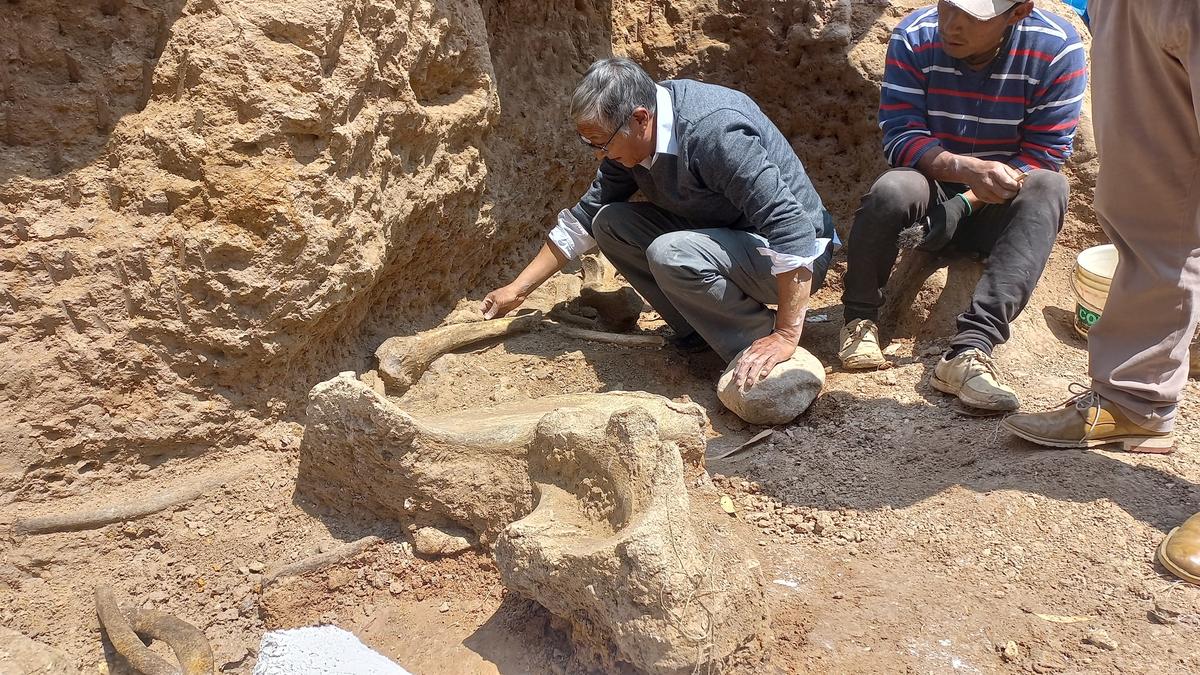
Acknowledging that India is now the most populous country in the world, most States have begun to see an optimal total fertility rate to ensure a more stable population growth. But pregnancy is not always easy to go through and abound with risk factors. The study referenced in the mentioned piece, illustrates that on average across India 49.1% pregnancies are high-risk. Short birth spacing — less than 18 months between two pregnancies — tops the list making up for 31% of the contributing risk factors, followed by previous adverse outcomes at 19%. These risks are disproportionately higher among women with limited or no education. In a telling comment, the researchers noted in the article, “nearly half of Indian women were not using contraception to delay their next pregnancy”. This is a stark reminder of a critical gap in our healthcare and educational systems: the underutilisation of continuous, consistent, effective, modern contraception. Women and their partners need more information about and access to modern contraceptive products to help them choose what’s best for their bodies.

Pregnancy is an intense physiological experience. A gap of two-three years between pregnancies is recommended to give a woman enough time to recover, regain her health, strength, and nourishment before she is ready to give birth to and take care of another child. Beyond the health benefits, when women exercise autonomy and agency over their bodies and reproductive decisions, they are not merely making personal choices; they are stepping into a realm of empowerment that has ripple effects beyond themselves. The economic benefits for example of such empowerment are profound.

Contraception or family planning helps ensure that women and men can choose if, and when they want to have children. The Indian family planning programme has for many years effectively offered a basket of choices for modern methods — and has reached many milestones in reducing what is known as the unmet need across most parts of the country. In the public sector, the current basket includes condoms, combined oral contraceptive pills, emergency contraceptive pills, intrauterine contraceptive device (IUCD), an injectable contraceptive (medroxyprogesterone acetate or MPA) and contraceptive tablet centchroman (Chhaya). Additionally, two new methods — a subdermal contraceptive implant (HI) and the subcutaneous injectable contraceptive (DMPA-SC) — have been introduced in the public health programmes of a few States (these two methods though aren’t available in the private sector just yet). They are easy to administer and can prevent pregnancy for three years (subcutaneous implants) and three-four months (DMPA-SC) at a time thus making them convenient and discreet choices. All these methods are safe, high-quality, and reversible.

But evidence suggests that the most common modern methods still in use in the country are female sterilisation (which is permanent), and male condoms (which are often incorrectly used — thus reducing their effectiveness — and women may not always have the choice to use them).

Awareness and evidence-based information are key to encouraging people to choose the best method for themselves. But a lack of information and understanding among the end users, limited engagement with communities can mean that people do not feel comfortable and empowered to make these choices. Misconceptions, negative experiences, misinformation, and taboos, often fuel hesitancy. Better counselling and stronger communication are imperative.

And that is where medical providers come in. As trusted credible sources of information, it is incumbent on medical providers to go the extra mile to ensure that people have accurate information that can help them exercise their right to choose. Contraception and family planning are no longer just about population; they are an essential part of a woman’s freedom, her agency, her bodily autonomy — her empowerment. When we make sure our women are empowered, we can unleash and realise the full potential of Nari Shakti.

(Jaydeep Tank is the president of The Federation of Obstetric and Gynaecological Societies of India (FOGSI))



Source link

Science Tags:Empowering women, Family planning, High-risk pregnancies, Modern contraception

Post navigation

Previous Post: AIFF Legal Head Accuses President Kalyan Chaubey Of Corruption
Next Post: U.S. military aircraft airdrop thousands of meals into Gaza in emergency humanitarian aid operation

Related Posts

  • Nobel laureate supports India’s pursuit for a neutrino lab
    Nobel laureate supports India’s pursuit for a neutrino lab Science
  • The evolving China-Pakistan space cooperation
    The evolving China-Pakistan space cooperation Science
  • Scientists trace powerful radio signal to most distant galaxy yet
    Scientists trace powerful radio signal to most distant galaxy yet Science
  • ISRO dispatches crew module for first uncrewed mission of Gaganyaan
    ISRO dispatches crew module for first uncrewed mission of Gaganyaan Science
  • What role does Arctic sea ice play in Indian monsoon?
    What role does Arctic sea ice play in Indian monsoon? Science
  • How does glue work: the physics of what makes glue so sticky
    How does glue work: the physics of what makes glue so sticky Science

More Related Articles

IIT Roorkee uses bacterial enzymes to degrade plasticizers IIT Roorkee uses bacterial enzymes to degrade plasticizers Science
Pyramids were built along a ‘lost’ branch of the Nile, study finds Pyramids were built along a ‘lost’ branch of the Nile, study finds Science
New study finds how calcium and pH regulate ovarian cancer spheroids New study finds how calcium and pH regulate ovarian cancer spheroids Science
Countdown begins for launch of ISRO’s heaviest communication satellite CMS-03 for military on November 2 Countdown begins for launch of ISRO’s heaviest communication satellite CMS-03 for military on November 2 Science
Cloud clustering patterns reveal increasing severity of extreme rainfall in tropics in new study Cloud clustering patterns reveal increasing severity of extreme rainfall in tropics in new study Science
What is jet lag? – The Hindu What is jet lag? – The Hindu Science
SiteLock

Archives

  • May 2026
  • April 2026
  • March 2026
  • February 2026
  • January 2026
  • December 2025
  • November 2025
  • October 2025
  • September 2025
  • August 2025
  • July 2025
  • June 2025
  • May 2025
  • April 2025
  • March 2025
  • February 2025
  • January 2025
  • December 2024
  • November 2024
  • October 2024
  • September 2024
  • August 2024
  • July 2024
  • June 2024
  • May 2024
  • April 2024
  • March 2024
  • February 2024
  • January 2024
  • December 2023
  • November 2023
  • October 2023
  • September 2023
  • August 2023
  • July 2023
  • June 2023
  • May 2023
  • April 2023
  • March 2023
  • February 2023
  • January 2023
  • December 2022
  • November 2022
  • October 2022
  • September 2022
  • August 2022
  • July 2022
  • June 2022
  • May 2022

Categories

  • Business
  • Nation
  • Science
  • Sports
  • World

Recent Posts

  • Nicobarese oppose proposal for three wildlife sanctuaries
  • Visakhapatnam Collector calls for inter-departmental synergy to boost investments
  • Kohli’s masterful knock powers Royal Challengers to the top
  • Senior IPS officer Asra Garg posted IGP Intelligence
  • Vijay Narayan earns rare distinction of being Advocate General under two different governments

Recent Comments

  1. StevenLek on UP Teacher Who Asked Students To Slap Muslim Classmate
  2. Leonardren on UP Teacher Who Asked Students To Slap Muslim Classmate
  3. NathanQuins on UP Teacher Who Asked Students To Slap Muslim Classmate
  4. Davidgof on UP Teacher Who Asked Students To Slap Muslim Classmate
  5. NathanJobre on UP Teacher Who Asked Students To Slap Muslim Classmate
  • WEF 2026: India a sleeping giant, can become world’s top economy if it wakes up, says Chandrababu Naidu
    WEF 2026: India a sleeping giant, can become world’s top economy if it wakes up, says Chandrababu Naidu Business
  • Access Denied
    Access Denied Business
  • Vistara to merge with Air India from November 12
    Vistara to merge with Air India from November 12 Business
  • Earth Day 2026: India’s plastic crisis and blame game
    Earth Day 2026: India’s plastic crisis and blame game Science
  • Access Denied Sports
  • Bulgarians head to the polls to elect a parliament for the eighth time in 5 years
    Bulgarians head to the polls to elect a parliament for the eighth time in 5 years World
  • Cricket World Cup 2023: Rohit Sharma Shatters Kapil Dev’s 1983 World Cup Record With Huge Ton Against Afghanistan
    Cricket World Cup 2023: Rohit Sharma Shatters Kapil Dev’s 1983 World Cup Record With Huge Ton Against Afghanistan Sports
  • Stock markets end lower amid profit-taking in banking, auto shares ahead of GST Council meeting
    Stock markets end lower amid profit-taking in banking, auto shares ahead of GST Council meeting Business

Editor-in-Chief:
Mohammad Ariff,
MSW, MAJMC, BSW, DTL, CTS, CNM, CCR, CAL, RSL, ASOC.
editor@artifex.news

Associate Editors:
1. Zenellis R. Tuba,
zenelis@artifex.news
2. Haris Daniyel
daniyel@artifex.news

Photograher:
Rohan Das
rohan@artifex.news

Artifex.News offers Online Paid Internships to college students from India and Abroad. Interns will get a PRESS CARD and other online offers.
Send your CV (Subjectline: Paid Internship) to internship@artifex.news

Links:
Associate Journalism
About Us
Privacy Policy

News Links:
Breaking News
World
Nation
Sports
Business
Entertainment
Lifestyle

Registered Office:
72/A, Elliot Road, Kolkata - 700016
Tel: 033-22277777, 033-22172217
Email: office@artifex.news

Editorial Office / News Desk:
No. 13, Mezzanine Floor, Esplanade Metro Rail Station,
12 J. L. Nehru Road, Kolkata - 700069.
(Entry from Gate No. 5)
Tel: 033-46011099, 033-46046046
Email: editor@artifex.news

Copyright © 2023 Artifex.News Newsportal designed by Artifex Infotech.