



Skip to content
  • Facebook
  • X
  • Linkedin
  • WhatsApp
  • YouTube
  • Associate Journalism
  • About Us
  • Privacy Policy
  • 033-46046046
  • editor@artifex.news
Artifex.News

Artifex.News

Stay Connected. Stay Informed.

  • Breaking News
  • World
  • Nation
  • Sports
  • Business
  • Science
  • Entertainment
  • Lifestyle
  • Toggle search form
  • Hazare Trophy: Jagadeesan, spinners power TN to a big win
    Hazare Trophy: Jagadeesan, spinners power TN to a big win Sports
  • Chinese Hackers Targeted Phones Of Trump And His Mate JD Vance: Report
    Chinese Hackers Targeted Phones Of Trump And His Mate JD Vance: Report World
  • Epstein files: Paris prosecutors open two Jeffrey Epstein-linked probes and call on victims to come forward
    Epstein files: Paris prosecutors open two Jeffrey Epstein-linked probes and call on victims to come forward World
  • WPL Final | Lacked self-belief in pressure situations last year, this season it stayed intact: Smriti Mandhana
    WPL Final | Lacked self-belief in pressure situations last year, this season it stayed intact: Smriti Mandhana Sports
  • Access Denied
    Access Denied Nation
  • U.S. will receive 0 billion in tariffs: Trump
    U.S. will receive $600 billion in tariffs: Trump World
  • Thousands bid silent farewell to Giorgio Armani in Milan
    Thousands bid silent farewell to Giorgio Armani in Milan World
  • Turkiye’s Syrian refugees in dilemma about returning home
    Turkiye’s Syrian refugees in dilemma about returning home World
Pyramids were built along a ‘lost’ branch of the Nile, study finds

Pyramids were built along a ‘lost’ branch of the Nile, study finds

Posted on May 23, 2024 By admin


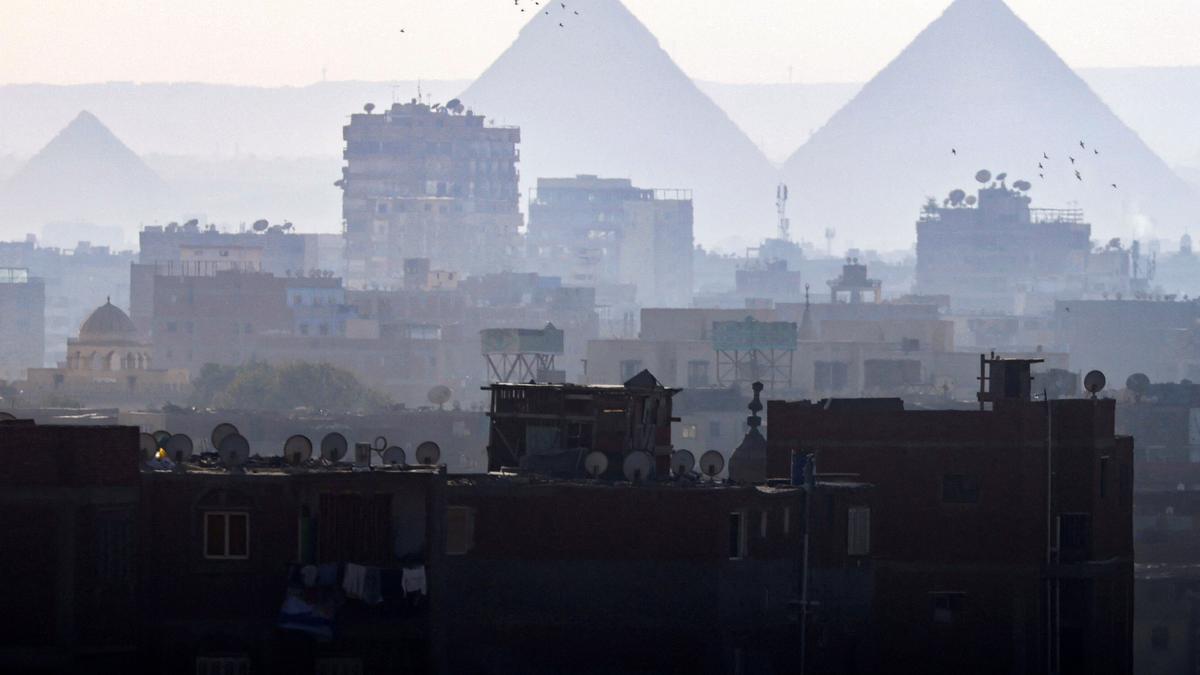
The largest field of pyramids in Egypt – consisting of 31 pyramids built over a millennium, including the famous Great Pyramid at Giza – lies along a narrow strip of land in the desert several kilometres west of the Nile River.

The Nile was at the heart of ancient Egyptian civilisation, and the location of so many pyramids some distance away from the river has until now not been fully explained.

In a new study published in Communications Earth & Environment, we addressed this puzzle. When the pyramids were built they sat next to a now-vanished branch of the Nile, which likely provided transport for workers and their materials.

A changing river

Like other rivers, the Nile adjusts and changes over time in response to climate change, floods and droughts. People and places also move with the river. In the past, civilisations fell and rose on its ebb and flow.

The Nile has not always looked or functioned the way it does now. By reading the landscape in Egypt, traces of the former river and its branches can be found hidden just beneath the land surface.

Now obscured by areas of cultivation and urban settlements, buried by centuries of mud from the modern river, the old channels and their stories have largely been lost to time. Once a mosaic of waterways and wetlands, the Nile is ready to share its secrets again.

Many scholars have discussed and sought answers to the mysteries of the Nile. Previous research has documented evidence for the existence of parts of ancient waterways or wetlands, particularly near the Giza pyramids.

Upstream near Luxor, Nile migration patterns have been investigated, and downstream abandoned channels have been discovered in the Nile Delta. Yet until now we did not have a comprehensive map and understanding of the waterways that fed the extensive pyramid chain from Lisht to Giza in the past.

The Ahramat Branch

Using satellite imagery, high-resolution digital elevation data and historical maps, we identified and traced the long path of a previously unknown channel of the Nile. What we have called the Ahramat Branch once flowed along the Western Desert margin of the Nile floodplain, close to the ancient pyramids.

Many of the pyramids, built during the Old Kingdom (roughly 2700–2200 BCE) and the Middle Kingdom (2050–1650 BCE), have causeways that lead to the branch. Many of these paths terminate in temples that may have acted as river docks in the past.

This suggests the Ahramat Branch was active during multiple phases of pyramid construction and was probably used as a transportation waterway for workmen and building materials to the sites.

Some pyramids have longer or differently angled causeways than others, indicating the builders adapted their construction approaches to the changing riverscape and local conditions at the desert margin.

Other pyramids were connected to inlets associated with tributaries of the Ahramat Branch on the edge of the Western Desert. In all, analysis of the ground elevation of 31 pyramids and their proximity to the floodplain helped explain the position and relative water level of the Ahramat Branch during the time between the Old Kingdom and the Second Intermediate Period (roughly 2649–1540 BCE).

Digging deep

Once we had mapped the Ahramat Branch, we surveyed the landscape and its shape, and took deep core samples of soil and sediment to study the structure and sedimentology of the former river. We also worked with archaeologists, scientists and members of local communities to gather more context for our work.

The path of the defunct waterway lies between 2.5 and 10.25 kilometres west of the modern Nile river.

Our research suggests the branch ran for about 64 kilometres, was between two and eight metres deep, and between 200 and 700 metres wide. This is similar to the width of the river today.

At one of the sites we examined, near the town of Jirzah, the Ahramat Branch has a symmetrical channel shape. It has also been filled in with muddy and sandy sediment different to other surrounding deposits and the underlying bedrock. This indicates that the old channel has been slowly buried by fine sediment deposited by floods, as the main flow diverted towards the path of the modern river.

What happened to the Ahramat Branch?

Over time, the Ahramat Branch moved eastward and eventually water stopped flowing along it. We don’t know exactly why. Perhaps the Ahramat Branch and its daughter, the modern river, were active together for a time.

The river may have gradually moved to the lower-lying floodplain, towards the current location of the Nile. It is also possible that tectonic activity tilted the whole floodplain to the northeast.

A third possibility is that an increase in windblown sand may have filled up the river’s channel. Increases in sand deposition are most likely related to periods of desertification in the Sahara desert in North Africa.

The movement and diminishing of the Ahramat Branch might also be explained by an overall reduction in water flow due to reduced rainfall and greater aridity in the region, particularly during the end of the Old Kingdom.

This research shows that a multidisciplinary approach to river science is needed to gain a better understanding of dynamic river landscapes. If we want to understand and protect the rivers we have today – and the environmentally and culturally significant sites to which they are inextricably tied – we need a greater appreciation of the interconnected factors that affect rivers and how they can be managed.

This article is republished from The Conversation under a Creative Commons license. Read the original article.


Source link

Science Tags:Environment news, Pyramids, pyramids of Giza, River next to giza pyramids, science news

Post navigation

Previous Post: After 180 years, clues reveal how general anaesthesia works in the brain
Next Post: RCB Stars Partied After Beating CSK Till 5 AM: Big Revelation From A Player’s Father

Related Posts

  • ISRO develops PraVaHa software for aerodynamic design and analysis
    ISRO develops PraVaHa software for aerodynamic design and analysis Science
  • If antibiotics are becoming less effective, why not combine them?
    If antibiotics are becoming less effective, why not combine them? Science
  • A computer science conundrum that could transform healthcare
    A computer science conundrum that could transform healthcare Science
  • 7 researchers of KLE Technological University among top 2% of scientists: Stanford University
    7 researchers of KLE Technological University among top 2% of scientists: Stanford University Science
  • Veteran nuclear scientist Rajagopala Chidambaram dies at 88
    Veteran nuclear scientist Rajagopala Chidambaram dies at 88 Science
  • Preventing malaria using genetically modified malaria parasites
    Preventing malaria using genetically modified malaria parasites Science

More Related Articles

Indian scientists build breakthrough gene-editor, aim for patent Indian scientists build breakthrough gene-editor, aim for patent Science
Hotter Kalahari desert may stop hornbills breeding by 2027 Hotter Kalahari desert may stop hornbills breeding by 2027 Science
Breast cancer cases in India have more than doubled in three decades, experts say Breast cancer cases in India have more than doubled in three decades, experts say Science
Artemis II | Mission moon Artemis II | Mission moon Science
Gaganyaan’s expected launch by end of 2025, says ISRO chief Gaganyaan’s expected launch by end of 2025, says ISRO chief Science
Antibiotic resistance fuels 87% of India’s typhoid economic burden: Study Antibiotic resistance fuels 87% of India’s typhoid economic burden: Study Science
SiteLock

Archives

  • May 2026
  • April 2026
  • March 2026
  • February 2026
  • January 2026
  • December 2025
  • November 2025
  • October 2025
  • September 2025
  • August 2025
  • July 2025
  • June 2025
  • May 2025
  • April 2025
  • March 2025
  • February 2025
  • January 2025
  • December 2024
  • November 2024
  • October 2024
  • September 2024
  • August 2024
  • July 2024
  • June 2024
  • May 2024
  • April 2024
  • March 2024
  • February 2024
  • January 2024
  • December 2023
  • November 2023
  • October 2023
  • September 2023
  • August 2023
  • July 2023
  • June 2023
  • May 2023
  • April 2023
  • March 2023
  • February 2023
  • January 2023
  • December 2022
  • November 2022
  • October 2022
  • September 2022
  • August 2022
  • July 2022
  • June 2022
  • May 2022

Categories

  • Business
  • Nation
  • Science
  • Sports
  • World

Recent Posts

  • Nicobarese oppose proposal for three wildlife sanctuaries
  • Visakhapatnam Collector calls for inter-departmental synergy to boost investments
  • Kohli’s masterful knock powers Royal Challengers to the top
  • Senior IPS officer Asra Garg posted IGP Intelligence
  • Vijay Narayan earns rare distinction of being Advocate General under two different governments

Recent Comments

  1. StevenLek on UP Teacher Who Asked Students To Slap Muslim Classmate
  2. Leonardren on UP Teacher Who Asked Students To Slap Muslim Classmate
  3. NathanQuins on UP Teacher Who Asked Students To Slap Muslim Classmate
  4. Davidgof on UP Teacher Who Asked Students To Slap Muslim Classmate
  5. NathanJobre on UP Teacher Who Asked Students To Slap Muslim Classmate
  • Why Paytm CEO Vijay Shekhar Sharma Quit Payments Bank Board
    Why Paytm CEO Vijay Shekhar Sharma Quit Payments Bank Board Nation
  • S Jaishankar Concludes US Visit, Shares Highlights From The Trip
    S Jaishankar Concludes US Visit, Shares Highlights From The Trip Nation
  • Have Asked BJP For 10 Seats In Maharashtra Polls: Minister Ramdas Athawale
    Have Asked BJP For 10 Seats In Maharashtra Polls: Minister Ramdas Athawale Nation
  • Joe Biden Makes First Campaign Trip Since Donald Trump Assassination Attempt
    Joe Biden Makes First Campaign Trip Since Donald Trump Assassination Attempt World
  • Access Denied Sports
  • Access Denied Sports
  • Sri Lanka Cricket Board Breaks Silence On Alleged ‘Drinks Party’ Before T20 World Cup 2024 Game
    Sri Lanka Cricket Board Breaks Silence On Alleged ‘Drinks Party’ Before T20 World Cup 2024 Game Sports
  • Access Denied
    Access Denied Nation

Editor-in-Chief:
Mohammad Ariff,
MSW, MAJMC, BSW, DTL, CTS, CNM, CCR, CAL, RSL, ASOC.
editor@artifex.news

Associate Editors:
1. Zenellis R. Tuba,
zenelis@artifex.news
2. Haris Daniyel
daniyel@artifex.news

Photograher:
Rohan Das
rohan@artifex.news

Artifex.News offers Online Paid Internships to college students from India and Abroad. Interns will get a PRESS CARD and other online offers.
Send your CV (Subjectline: Paid Internship) to internship@artifex.news

Links:
Associate Journalism
About Us
Privacy Policy

News Links:
Breaking News
World
Nation
Sports
Business
Entertainment
Lifestyle

Registered Office:
72/A, Elliot Road, Kolkata - 700016
Tel: 033-22277777, 033-22172217
Email: office@artifex.news

Editorial Office / News Desk:
No. 13, Mezzanine Floor, Esplanade Metro Rail Station,
12 J. L. Nehru Road, Kolkata - 700069.
(Entry from Gate No. 5)
Tel: 033-46011099, 033-46046046
Email: editor@artifex.news

Copyright © 2023 Artifex.News Newsportal designed by Artifex Infotech.