


Skip to content
  • Facebook
  • X
  • Linkedin
  • WhatsApp
  • YouTube
  • Associate Journalism
  • About Us
  • Privacy Policy
  • 033-46046046
  • editor@artifex.news
Artifex.News

Artifex.News

Stay Connected. Stay Informed.

  • Breaking News
  • World
  • Nation
  • Sports
  • Business
  • Science
  • Entertainment
  • Lifestyle
  • Toggle search form
  • Syrian army says cleared last Kurdish-held area in Aleppo, Kurdish forces deny takeover
    Syrian army says cleared last Kurdish-held area in Aleppo, Kurdish forces deny takeover World
  • Access Denied Business
  • Rupee weakens 12 paise to settle at 86.52 against U.S. dollar
    Rupee weakens 12 paise to settle at 86.52 against U.S. dollar Business
  • Trump Fined ,000 For Violating Gag Order Again In Civil Fraud Case
    Trump Fined $10,000 For Violating Gag Order Again In Civil Fraud Case World
  • ‘Modi For 2024’ Campaign In Australia To Drum Up Support For PM, BJP
    ‘Modi For 2024’ Campaign In Australia To Drum Up Support For PM, BJP World
  • Indian researchers reveal novel mutation that causes rare condition among consanguineous children
    Indian researchers reveal novel mutation that causes rare condition among consanguineous children Science
  • Fitness-freak Marcus Stoinis travelling with Indian chef during World Cup
    Fitness-freak Marcus Stoinis travelling with Indian chef during World Cup Sports
  • Gautam Gambhir, VVS Laxman Not Behind Sanju Samson’s Fiery Form? AB De Villiers Serves ‘I Doubt’ Verdict
    Gautam Gambhir, VVS Laxman Not Behind Sanju Samson’s Fiery Form? AB De Villiers Serves ‘I Doubt’ Verdict Sports
Preventing malaria using genetically modified malaria parasites

Preventing malaria using genetically modified malaria parasites

Posted on December 7, 2024 By admin


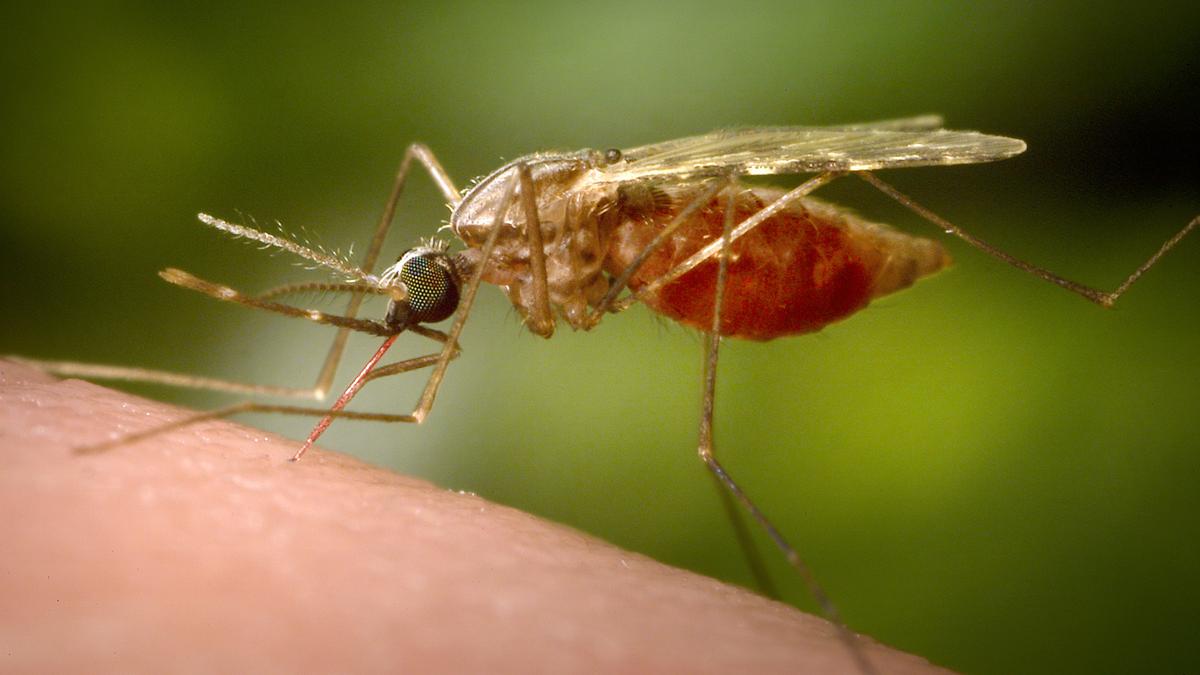
Two vaccines against malaria have been rolled out in some countries in Africa. Besides vaccines, scientists have been using genetically altered mosquitoes to stop the spread of malaria. One is the release of radiation-sterilised male mosquitoes to prevent eggs from hatching. Another is engineering mosquitoes that slow the growth of malaria-causing parasites in the gut thereby preventing transmission of malaria to humans. The other method is using genetically modified mosquitoes that can spread resistance to malaria-causing parasites by thriving and mating with wild mosquitoes.

Now, in a radical approach, scientists have shifted their focus from genetic modification of malaria-causing mosquitoes to malaria-causing parasites. They have genetically modified malaria-causing parasites so that the parasites do not cause disease. Instead, they prime the immune system during the initial stage of their life cycle in the liver and before they enter the bloodstream. Malaria-causing parasites cause infection and symptoms begin to show only when they move into the bloodstream from the liver stage.

The priming of the immune system, like in the case of vaccines, by the genetically modified malaria parasites shield the individuals when malaria-causing mosquitoes bite them later. While the genetic modification kills the parasites by completely arresting its growth on day six during the liver stage (late-arresting parasite), the parasites have sufficient time to prime the immune system far more effectively than when the parasites are killed on day one (early-arresting parasite) of entering the liver.

In a small trial, researchers exposed nine healthy adults who had not had malaria to 50 bites by mosquitoes that carried the genetically modified late-arresting parasites that were designed to die on day six of the liver stage, eight healthy adults with the early-arresting parasites, and three adults in the placebo group who were bitten by uninfected mosquitoes. The 50 mosquito bites were considered as one immunisation session, and the participants were exposed to three such sessions in all. Each successive immunisation session was set at 28-day interval.

Three weeks after the third immunisation session, all participants were exposed to controlled human malaria infection by means of five bites from mosquitoes infected with genetically unaltered P. falciparum parasite. This was to test the efficacy of genetically modified malaria parasites in priming the immune system.

As per the results published in the New England Journal of Medicine, the efficacy results were striking. While eight of nine (89%) participants primed by late-arresting parasites were protected from malaria when exposed to mosquitoes carrying unaltered P. falciparum parasite, only one of eight (13%) participants who were primed by early-arresting parasites was protected from malaria. No participants in the placebo arm were protected from malaria.

The titres of antibodies targeting key P. falciparum antigens in both the early-arresting and last-arresting parasite groups were far higher than those observed in the placebo group and did not differ between participants in the two intervention arms. This suggests that the vastly different timings of killing the parasites in the liver did not affect the amount of antibody produced. But there were differences in the cellular immunity in the two intervention groups. Though the overall cellular frequency T-cell lineages remained similar, certain P. falciparum-specific T cells were seen only in participants who were primed by mosquitoes carrying the last-arresting parasites. “This suggests an important independent role of late-liver-stage antigens in inducing gamma delta T-cell responses,” they write.

Sporozoites, which are the infective stage of the malaria parasite, when attenuated by radiation also offers protection against malaria. And in contrast to the genetically modified parasites used in this study, the protection offered by radiation-attenuated sporozoites against malaria ranged between 50% and 90%. However, administration of radiation-attenuated sporozoites by means of mosquito bites requires higher doses (approximately 1,000 mosquito bites) to reach levels of protection similar to the level offered by last-arresting parasites used in this study.

“Our findings suggest that parasites arresting late during the liver stage offer improved protection, as compared with early-arresting sporozoites, and provide a step toward a next-generation malaria vaccine,” they write. However, they also caution that the conclusions from the trial are limited by the small sample size, and urge that studies with greater numbers of participants be done for better understanding of both the efficacy and the safety profile of genetically modified last-arresting parasites. They also note that the “immunologic assessments were exploratory, and the relevance of the variables associated with last-arresting-induced protection needs confirmation”. Also, the durability of immune protection offered by last-arresting parasites needs to be assessed especially against heterologous P. falciparum strains where malaria is endemic.

Published – December 07, 2024 09:14 pm IST



Source link

Science

Post navigation

Previous Post: Mother Tigress Accidentally Kills Her Cub In Bengal Zoo
Next Post: Soap, home insecticides segments hit, GCPL expects flattish volume growth in India sales in Q3

Related Posts

  • Consistent effort key to India’s growth in space technology, says ISRO chairman
    Consistent effort key to India’s growth in space technology, says ISRO chairman Science
  • Sci-five | The Hindu Science Quiz: On the first cat in space
    Sci-five | The Hindu Science Quiz: On the first cat in space Science
  •  Extinct humans occupied the Tibetan plateau 160,000 years ago
     Extinct humans occupied the Tibetan plateau 160,000 years ago Science
  • Science Quiz | 75 years of the UNIVAC I computer
    Science Quiz | 75 years of the UNIVAC I computer Science
  • Earlier California fire shows how Los Angeles could rebuild
    Earlier California fire shows how Los Angeles could rebuild Science
  • Panel suggests booster shot of BCG vaccine to fight TB
    Panel suggests booster shot of BCG vaccine to fight TB Science

More Related Articles

Parched Philippine dam reveals centuries-old town, luring tourists Parched Philippine dam reveals centuries-old town, luring tourists Science
Portable ion chromatograph brings real-world practice to classrooms Portable ion chromatograph brings real-world practice to classrooms Science
Conservation in the Global South erases human rights, researchers say Conservation in the Global South erases human rights, researchers say Science
Where is the centre of the universe? Where is the centre of the universe? Science
Do plants listen to music? How do they respond? Do plants listen to music? How do they respond? Science
Boeing’s first astronaut flight called off at the last minute in latest setback Boeing’s first astronaut flight called off at the last minute in latest setback Science
SiteLock

Archives

  • May 2026
  • April 2026
  • March 2026
  • February 2026
  • January 2026
  • December 2025
  • November 2025
  • October 2025
  • September 2025
  • August 2025
  • July 2025
  • June 2025
  • May 2025
  • April 2025
  • March 2025
  • February 2025
  • January 2025
  • December 2024
  • November 2024
  • October 2024
  • September 2024
  • August 2024
  • July 2024
  • June 2024
  • May 2024
  • April 2024
  • March 2024
  • February 2024
  • January 2024
  • December 2023
  • November 2023
  • October 2023
  • September 2023
  • August 2023
  • July 2023
  • June 2023
  • May 2023
  • April 2023
  • March 2023
  • February 2023
  • January 2023
  • December 2022
  • November 2022
  • October 2022
  • September 2022
  • August 2022
  • July 2022
  • June 2022
  • May 2022

Categories

  • Business
  • Nation
  • Science
  • Sports
  • World

Recent Posts

  • BEST conductor dies in accident involving four buses in Mumbai
  • Nayar reckons KKR got a par total, rues missed chances
  • Pope Leo decries European military spending as ‘betrayal’ of diplomacy
  • Scent Of Rain, Shutterfly, Stud Poker and Starzella please
  • New factional battle lines emerge in Congress hours after nomination of Kerala CM

Recent Comments

  1. JamesHeR on UP Teacher Who Asked Students To Slap Muslim Classmate
  2. RafaelNar on UP Teacher Who Asked Students To Slap Muslim Classmate
  3. CarlosExorb on UP Teacher Who Asked Students To Slap Muslim Classmate
  4. Robertfloup on UP Teacher Who Asked Students To Slap Muslim Classmate
  5. Davidcag on UP Teacher Who Asked Students To Slap Muslim Classmate
  • Myanmar junta chief Min Aung Hlaing elected President by pro-military parliament
    Myanmar junta chief Min Aung Hlaing elected President by pro-military parliament World
  • Access Denied
    Access Denied Nation
  • Nifty hits fresh record high in early trade; Sensex climbs 290 points
    Nifty hits fresh record high in early trade; Sensex climbs 290 points Business
  • Access Denied Sports
  • Tata Investment Corporation PAT net up 11.6% at ₹146.3 crore
    Tata Investment Corporation PAT net up 11.6% at ₹146.3 crore Business
  • Access Denied
    Access Denied Nation
  • Watch: U.S.-Israel strike Iran: What really happened| Explained
    Watch: U.S.-Israel strike Iran: What really happened| Explained World
  • Access Denied World

Editor-in-Chief:
Mohammad Ariff,
MSW, MAJMC, BSW, DTL, CTS, CNM, CCR, CAL, RSL, ASOC.
editor@artifex.news

Associate Editors:
1. Zenellis R. Tuba,
zenelis@artifex.news
2. Haris Daniyel
daniyel@artifex.news

Photograher:
Rohan Das
rohan@artifex.news

Artifex.News offers Online Paid Internships to college students from India and Abroad. Interns will get a PRESS CARD and other online offers.
Send your CV (Subjectline: Paid Internship) to internship@artifex.news

Links:
Associate Journalism
About Us
Privacy Policy

News Links:
Breaking News
World
Nation
Sports
Business
Entertainment
Lifestyle

Registered Office:
72/A, Elliot Road, Kolkata - 700016
Tel: 033-22277777, 033-22172217
Email: office@artifex.news

Editorial Office / News Desk:
No. 13, Mezzanine Floor, Esplanade Metro Rail Station,
12 J. L. Nehru Road, Kolkata - 700069.
(Entry from Gate No. 5)
Tel: 033-46011099, 033-46046046
Email: editor@artifex.news

Copyright © 2023 Artifex.News Newsportal designed by Artifex Infotech.