

Skip to content
  • Facebook
  • X
  • Linkedin
  • WhatsApp
  • YouTube
  • Associate Journalism
  • About Us
  • Privacy Policy
  • 033-46046046
  • editor@artifex.news
Artifex.News

Artifex.News

Stay Connected. Stay Informed.

  • Breaking News
  • World
  • Nation
  • Sports
  • Business
  • Science
  • Entertainment
  • Lifestyle
  • Toggle search form
  • Painting Found By Junk Dealer Turns Out To Be An Original Picasso Worth Over Rs 50 Crore
    Painting Found By Junk Dealer Turns Out To Be An Original Picasso Worth Over Rs 50 Crore World
  • Closely Monitoring Situation Of Bomb Threats To Airlines, Says Aviation Minister
    Closely Monitoring Situation Of Bomb Threats To Airlines, Says Aviation Minister Nation
  • Man Arrested For Raping 12-Year-Old Girl In UP’s Shahjahanpur
    Man Arrested For Raping 12-Year-Old Girl In UP’s Shahjahanpur Nation
  • Access Denied Sports
  • Trump says U.S. needs to own Greenland to deter Russia, China
    Trump says U.S. needs to own Greenland to deter Russia, China World
  • Siddaramaiah Summoned For Questioning On Wednesday In Mysuru Land Scam Case
    Siddaramaiah Summoned For Questioning On Wednesday In Mysuru Land Scam Case Nation
  • PM Narendra Modi Greets People On Vishwakarma Jayanti
    PM Narendra Modi Greets People On Vishwakarma Jayanti Nation
  • Two Russians die in Ukraine drone attacks: local authorities
    Two Russians die in Ukraine drone attacks: local authorities World
After 180 years, clues reveal how general anaesthesia works in the brain

After 180 years, clues reveal how general anaesthesia works in the brain

Posted on May 23, 2024 By admin


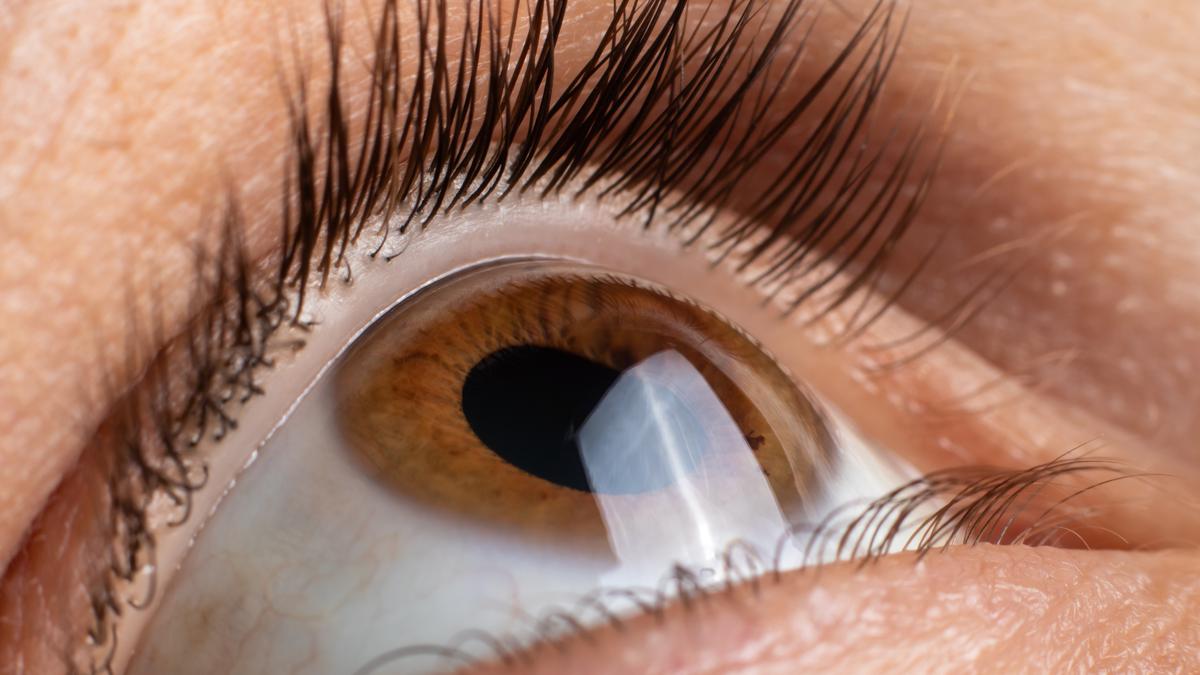
How anaesthetic drugs work in the brain has largely remained a mystery since it was introduced into medicine over 180 years ago.
| Photo Credit: The Hindu

Over 350 million surgeries are performed globally each year. For most of us, it’s likely at some point in our lives we’ll have to undergo a procedure that needs general anaesthesia.

Even though it is one of the safest medical practices, we still don’t have a complete, thorough understanding of precisely how anaesthetic drugs work in the brain.

In fact, it has largely remained a mystery since general anaesthesia was introduced into medicine over 180 years ago.

Our study published in The Journal of Neuroscience today provides new clues on the intricacies of the process. General anaesthetic drugs seem to only affect specific parts of the brain responsible for keeping us alert and awake.

Brain cells striking a balance

In a study using fruit flies, we found a potential way that allows anaesthetic drugs to interact with specific types of neurons (brain cells), and it’s all to do with proteins. Your brain has around 86 billion neurons and not all of them are the same – it’s these differences that allow general anaesthesia to be effective.

To be clear, we’re not completely in the dark on how anaesthetic drugs affect us. We know why general anaesthetics are able to make us lose consciousness so quickly, thanks to a landmark discovery made in 1994.

But to better understand the fine details, we first have to look to the minute differences between the cells in our brains.

Broadly speaking, there are two main categories of neurons in the brain.

The first are what we call “excitatory” neurons, generally responsible for keeping us alert and awake. The second are “inhibitory” neurons – their job is to regulate and control the excitatory ones.

Also Read | The birth of modern local anaesthesia

In our day-to-day lives, excitatory and inhibitory neurons are constantly working and balancing one another.

When we fall asleep, there are inhibitory neurons in the brain that “silence” the excitatory ones keeping us awake. This happens gradually over time, which is why you may feel progressively more tired through the day.

General anaesthetics speed up this process by directly silencing these excitatory neurons without any action from the inhibitory ones. This is why your anaesthetist will tell you that they’ll “put you to sleep” for the procedure: it’s essentially the same process.

A special kind of sleep

While we know why anaesthetics put us to sleep, the question then becomes: “why do we stay asleep during surgery?”. If you went to bed tonight, fell asleep and somebody tried to do surgery on you, you’d wake up with quite a shock.

To date, there is no strong consensus in the field as to why general anaesthesia causes people to remain unconscious during surgery.

Over the last couple of decades, researchers have proposed several potential explanations, but they all seem to point to one root cause. Neurons stop talking to each other when exposed to general anaesthetics.

While the idea of “cells talking to each other” may sound a little strange, it’s a fundamental concept in neuroscience. Without this communication, our brains wouldn’t be able to function at all. And it allows the brain to know what’s happening throughout the body.

What did we discover?

Our new study shows that general anaesthetics appear to stop excitatory neurons from communicating, but not inhibitory ones. This concept isn’t new, but we found some compelling evidence as to why only excitatory neurons are affected.

For neurons to communicate, proteins have to get involved. One of the jobs these proteins have is to get neurons to release molecules called neurotransmitters. These chemical messengers are what gets signals across from one neuron to another: dopamine, adrenaline and serotonin are all neurotransmitters, for example.

We found that general anaesthetics impair the ability of these proteins to release neurotransmitters, but only in excitatory neurons. To test this, we used Drosophila melanogaster fruit flies and super resolution microscopy to directly see what effects a general anaesthetic was having on these proteins at a molecular scale.

Part of what makes excitatory and inhibitory neurons different from each other is that they express different types of the same protein. This is kind of like having two cars of the same make and model, but one is green and has a sports package, while the other is just standard and red. They both do the same thing, but one’s just a little bit different.

Neurotransmitter release is a complex process involving lots of different proteins. If one piece of the puzzle isn’t exactly right, then general anaesthetics won’t be able to do their job.

As a next research step, we will need to figure out which piece of the puzzle is different, to understand why general anaesthetics only stop excitatory communication.

Ultimately, our results hint that the drugs used in general anaesthetics cause massive global inhibition in the brain. By silencing excitability in two ways, these drugs put us to sleep and keep it that way.

This article is republished from The Conversation under a Creative Commons license. Read the original article.


Source link

Science Tags:general anaesthesia, General anaesthetic drugs, how anaesthesia works in the brain, Neuroscience, science news

Post navigation

Previous Post: What is ‘Net Zero’, anyway? A short history of a monumental concept
Next Post: Pyramids were built along a ‘lost’ branch of the Nile, study finds

Related Posts

  • Four gurukula students from Telangana nominated for Sakura Science Programme in Japan
    Four gurukula students from Telangana nominated for Sakura Science Programme in Japan Science
  • Budget 2024: Urban, rural land reforms ‘welcome move’ by government
    Budget 2024: Urban, rural land reforms ‘welcome move’ by government Science
  • Ahead of Chandrayaan-4, IIT and PRL team decodes moon’s titanium-rich rocks
    Ahead of Chandrayaan-4, IIT and PRL team decodes moon’s titanium-rich rocks Science
  • What are antihistamines?
    What are antihistamines? Science
  • Indian astro community’s vision for solar physics, space weather
    Indian astro community’s vision for solar physics, space weather Science
  • Life-saving numbers: what the 2026 U.S. cholesterol guidelines mean for everyone
    Life-saving numbers: what the 2026 U.S. cholesterol guidelines mean for everyone Science

More Related Articles

What our ancestors’ genomes can tell us about modern health | Explained What our ancestors’ genomes can tell us about modern health | Explained Science
The last of the Mariners The last of the Mariners Science
The Science Quiz | Twilight time – the world between worlds The Science Quiz | Twilight time – the world between worlds Science
The Science Quiz | Computer viruses The Science Quiz | Computer viruses Science
What is the ‘responsible quantum technologies’ movement? | Explained What is the ‘responsible quantum technologies’ movement? | Explained Science
India needs a diversified portfolio of future-ready power system technologies, say experts India needs a diversified portfolio of future-ready power system technologies, say experts Science
SiteLock

Archives

  • May 2026
  • April 2026
  • March 2026
  • February 2026
  • January 2026
  • December 2025
  • November 2025
  • October 2025
  • September 2025
  • August 2025
  • July 2025
  • June 2025
  • May 2025
  • April 2025
  • March 2025
  • February 2025
  • January 2025
  • December 2024
  • November 2024
  • October 2024
  • September 2024
  • August 2024
  • July 2024
  • June 2024
  • May 2024
  • April 2024
  • March 2024
  • February 2024
  • January 2024
  • December 2023
  • November 2023
  • October 2023
  • September 2023
  • August 2023
  • July 2023
  • June 2023
  • May 2023
  • April 2023
  • March 2023
  • February 2023
  • January 2023
  • December 2022
  • November 2022
  • October 2022
  • September 2022
  • August 2022
  • July 2022
  • June 2022
  • May 2022

Categories

  • Business
  • Nation
  • Science
  • Sports
  • World

Recent Posts

  • China, U.S. should be ‘partners not rivals’, says Xi Jinping after meeting Donald Trump
  • Iran working on Hormuz ‘protocol’ to cover ‘costs’, says Deputy Foreign Minister Gharibabadi
  • Zydus Lifesciences arm to acquire U.S. oncology firm Assertio for $166 million
  • Israel-Iran war LIVE: Iran working on Hormuz ‘protocol’ to cover ‘costs’, says Dy FM Gharibabadi
  • Russia to fulfil all agreements on energy supply to India: FM Lavrov

Recent Comments

  1. Jeffreyroure on UP Teacher Who Asked Students To Slap Muslim Classmate
  2. Stevemonge on UP Teacher Who Asked Students To Slap Muslim Classmate
  3. RichardClage on UP Teacher Who Asked Students To Slap Muslim Classmate
  4. StevenLek on UP Teacher Who Asked Students To Slap Muslim Classmate
  5. Leonardren on UP Teacher Who Asked Students To Slap Muslim Classmate
  • Toll from clashes in Sudan’s El-Fasher now at least 134: MSF
    Toll from clashes in Sudan’s El-Fasher now at least 134: MSF World
  • Lara Trump withdraws from consideration to replace Rubio in U.S. Senate
    Lara Trump withdraws from consideration to replace Rubio in U.S. Senate World
  • Access Denied Sports
  • Access Denied Sports
  • Access Denied
    Access Denied Nation
  • Jio seeks revised paper on satellite spectrum allocation as it ignores level-playing field
    Jio seeks revised paper on satellite spectrum allocation as it ignores level-playing field Business
  • Access Denied Sports
  • Access Denied World

Editor-in-Chief:
Mohammad Ariff,
MSW, MAJMC, BSW, DTL, CTS, CNM, CCR, CAL, RSL, ASOC.
editor@artifex.news

Associate Editors:
1. Zenellis R. Tuba,
zenelis@artifex.news
2. Haris Daniyel
daniyel@artifex.news

Photograher:
Rohan Das
rohan@artifex.news

Artifex.News offers Online Paid Internships to college students from India and Abroad. Interns will get a PRESS CARD and other online offers.
Send your CV (Subjectline: Paid Internship) to internship@artifex.news

Links:
Associate Journalism
About Us
Privacy Policy

News Links:
Breaking News
World
Nation
Sports
Business
Entertainment
Lifestyle

Registered Office:
72/A, Elliot Road, Kolkata - 700016
Tel: 033-22277777, 033-22172217
Email: office@artifex.news

Editorial Office / News Desk:
No. 13, Mezzanine Floor, Esplanade Metro Rail Station,
12 J. L. Nehru Road, Kolkata - 700069.
(Entry from Gate No. 5)
Tel: 033-46011099, 033-46046046
Email: editor@artifex.news

Copyright © 2023 Artifex.News Newsportal designed by Artifex Infotech.