



Skip to content
  • Facebook
  • X
  • Linkedin
  • WhatsApp
  • Associate Journalism
  • About Us
  • Privacy Policy
  • 033-46046046
  • editor@artifex.news
Artifex.News

Artifex.News

Stay Connected. Stay Informed.

  • Breaking News
  • World
  • Nation
  • Sports
  • Business
  • Science
  • Entertainment
  • Lifestyle
  • Toggle search form
  • Polling Official, Security Personnel Die Due To Cardiac Arrest During Voting In Arunachal Pradesh
    Polling Official, Security Personnel Die Due To Cardiac Arrest During Voting In Arunachal Pradesh Nation
  • Arjun Tendulkar Drops MI Batter On Ground With Yorker, Fans Wonder If It’s Ishan Kishan. Watch
    Arjun Tendulkar Drops MI Batter On Ground With Yorker, Fans Wonder If It’s Ishan Kishan. Watch Sports
  • Worry For Australia: Pat Cummins To Undergo Scan On Sore Ankle As Champions Trophy Looms
    Worry For Australia: Pat Cummins To Undergo Scan On Sore Ankle As Champions Trophy Looms Sports
  • Rupee falls 12 paise to settle at 86.47 against U.S. dollar
    Rupee falls 12 paise to settle at 86.47 against U.S. dollar Business
  • Boeing factory workers on strike after rejecting contract offer
    Boeing factory workers on strike after rejecting contract offer Business
  • Former Maharaja Of Bharatpur Vishwendra Singh Takes Wife, Son To Court Over Property Dispute
    Former Maharaja Of Bharatpur Vishwendra Singh Takes Wife, Son To Court Over Property Dispute Nation
  • Arshad Nadeem Olympics Felicitation: Pakistan Hockey Stalwarts Feel Insulted Over PM Dinner Invitation Withdrawal
    Arshad Nadeem Olympics Felicitation: Pakistan Hockey Stalwarts Feel Insulted Over PM Dinner Invitation Withdrawal Sports
  • “We Dented Our Batters’ Confidence”: Harbhajan Singh Takes Dig On India’s ‘2-And-Half Day Win’ Style
    “We Dented Our Batters’ Confidence”: Harbhajan Singh Takes Dig On India’s ‘2-And-Half Day Win’ Style Sports
The last of the Mariners

The last of the Mariners

Posted on March 19, 2026 By admin


Ever since Pluto was reclassified as a dwarf planet, the first planet of the solar system — Mercury — has also become its smallest. Mercury might be the smallest planet orbiting the sun, but studying it is no mean feat. In fact, it is quite the opposite, as studying Mercury is quite a challenge. 

Did you know that it actually takes more energy for a spacecraft to get to Mercury, than it does to reach Pluto, which is at the outer end of the solar system? This is because Mercury is deep within the sun’s gravity well. As a result, a spacecraft that approaches Mercury also gets closer to the sun and hence speeds up because of the sun’s gravity. The spacecraft would thus need a vast amount of energy to be able to slow down. In addition to fuel, missions to Mercury employ gravity assists to help get the spacecraft to the first planet of the solar system. 

The power of the gravitational slingshot

Gravity assist or a gravitational slingshot is a technique by which a spacecraft uses a planet’s gravity and orbital velocity to change its speed and trajectory, thereby saving on fuel. Think of it like a ball bouncing off a moving train. 

While the technique had been theorised for decades, it hadn’t been used before it was employed by the Mariner 10 for its mission to Mercury. The manoeuvre brought with it a number of advantages. It not only cut the costs involved — be it for the additional fuel or the larger rocket that would have been necessary for launching a heavier spacecraft — but also provided a way to reduce the time involved to get to the final destination.

In 1969 — the year in which human beings landed on the moon — NASA finalised its plan for sending a spacecraft to Mercury using Venus for a gravity assist. First known as the Mariner Venus Mercury, the mission was renamed Mariner 10 and became the last of the Mariner series of robotic probes. 

A view of the Mariner 10 spacecraft, while it was still known as Mariner Venus Mercury.
| Photo Credit:
THE HINDU ARCHIVES

Getting to Mercury

The solar system’s innermost planet remained largely unknown up until Mariner 10 completed its mission. A combination of factors were at play here in addition to the fact that no spacecraft had visited it before. The planet’s small size, its distance from Earth and its closeness to the sun all contributed to make terrestrial observations from Earth rather difficult. Mariner 10’s primary goal was to study Mercury’s atmosphere, if any, and provide close-up photography to reveal the surface and physical characteristics of the planet.

Launched on November 3, 1973, Mariner 10 returned stunning visuals of Earth and its moon soon after leaving Earth orbit. During its three-month cruise to Venus — which included many malfunctions that were overcome thanks to the ground control team — Mariner 10 made ultraviolet observations of Comet C/1973 E1 Kohoutek in January 1974. This made it the first spacecraft to return data on a long-period comet. 

On January 21, Mariner 10 approached Venus for the gravity assist manoeuvre that would send it towards Mercury. Mariner 10 made its closest flyby of Venus at a distance of 5,768 km on February 5. With the gravity assist turning out to be successful, it sped on its way to Mercury thereafter.

Following a course correction on March 16, it made its first flyby of Mercury on March 29 at a distance of 703 km. Mariner 10’s trajectory meant that the spacecraft made one revolution of the sun for every two of Mercury. This didn’t escape the notice of Italian scientist and mathematician Giuseppe “Bepi” Colombo, who realised that this would make it possible for the spacecraft to flyby Mercury every six months. 

And so it was that six months later, on September 21, Mariner 10 made a second flyby of Mercury, this time at a distance 48,069 km. By the time it arrived for a third flyby, it was nearly out of gas for attitude control. Nevertheless, the third and final flyby turned out to be the closest, as Mariner 10 went within 327 km of Mercury on March 16, 1975. The gas supply was soon exhausted, and the spacecraft made final contact on March 24, before sailing on in its solar orbit.
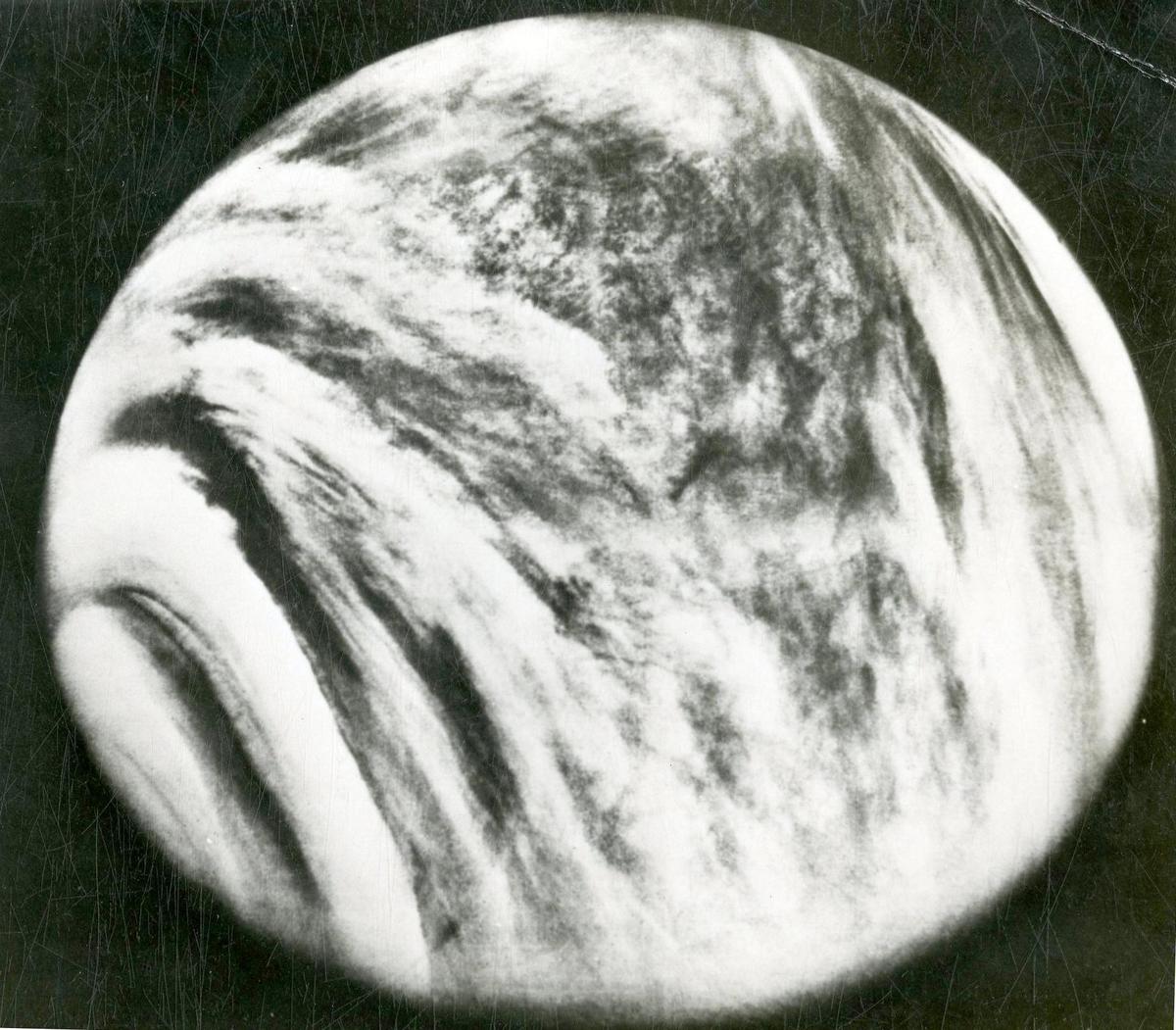
A view of Venus as seen by Mariner 10.

A view of Venus as seen by Mariner 10.
| Photo Credit:
THE HINDU ARCHIVES

What did we learn?

The many firsts that the Mariner 10 mission achieved meant that it contributed immensely to our understanding of the inner solar system. During its flyby of Venus, it sent back information about that planet’s atmosphere. It sent a total of 4,165 pictures of Venus, including some of the first close-up images of the planet. 

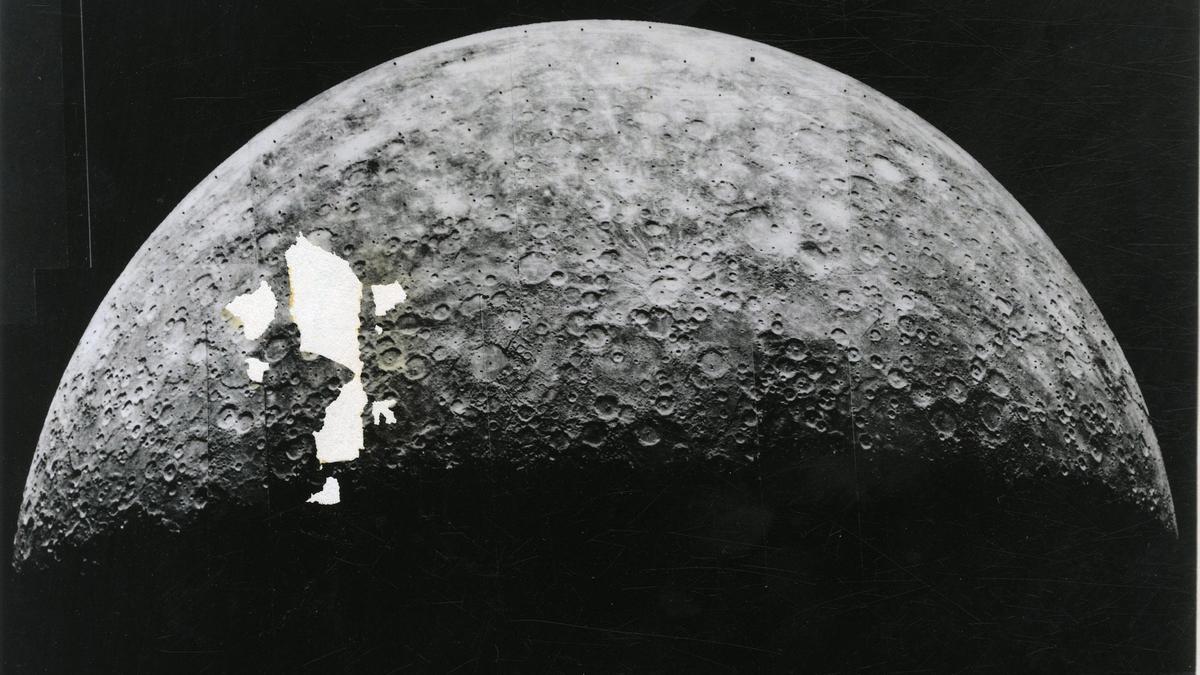
As far as Mercury was concerned, the first flyby provided plenty of photographs that revealed the innermost planet’s surface to be heavily cratered, not unlike that of our moon. Some of the instruments mounted on the spacecraft were also able to detect a weak magnetic field and that the planet’s atmosphere was very thin. 

Overall, Mariner 10 sent more 2,700 photographs of Mercury during the course of its three flybys. In addition to covering almost half of the planet’s surface, some of these images carried immaculate detail, capable of showing detail as small as 100m wide on occasions. 
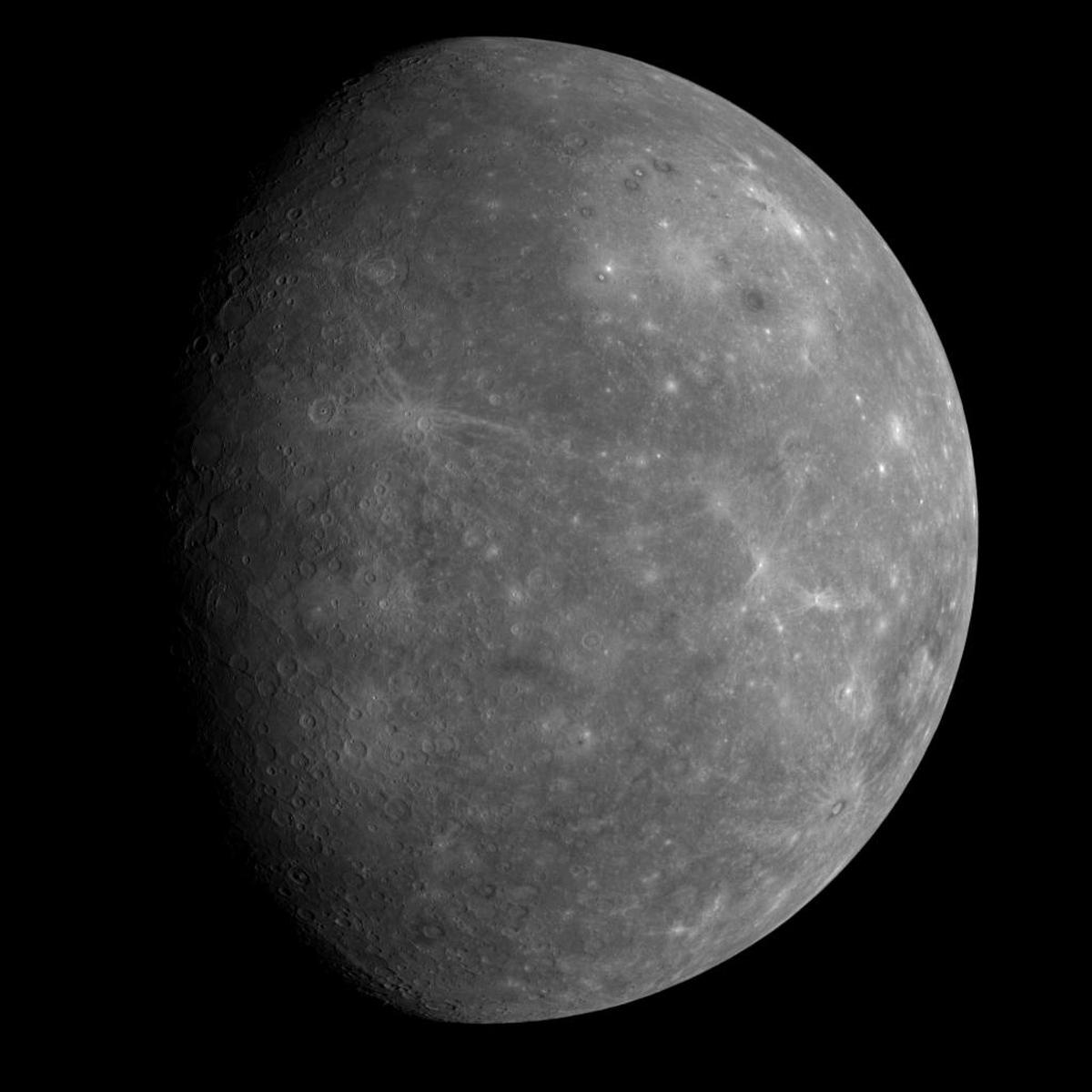
This image provided by NASA shows the planet Mercury. This 2008 picture was made by the MESSENGER spacecraft at a distance of approximately 27,000 km.

This image provided by NASA shows the planet Mercury. This 2008 picture was made by the MESSENGER spacecraft at a distance of approximately 27,000 km.
| Photo Credit:
AP / NASA

Missions to Mercury

Did you know that only two missions have ever made it to Mercury so far, with a third currently on its way?

The Mariner 10 mission that we’ve looked at here in detail was the first to study Mercury. Following Mariner 10’s final flyby in 1975, no spacecraft visited the planet for over 30 years. When NASA’s MESSENGER — that’s short for MErcury Surface, Space ENvironment, GEochemistry, and Ranging — eventually made it, it became the first to orbit Mercury. Orbiting Mercury from 2011-15, MESSENGER gave us a more complete picture of the planet. 

The third mission that is currently on its way is BepiColombo. Yes, you guessed it right. It is named after the Italian who calculated Mariner 10’s trajectory, suggested using gravity assist to get it to Mercury, and ensured that it made three flybys. He was also the first to explain that Mercury rotates three times for every two orbits around the sun. A joint European-Japanese mission, it brings together the European Space Agency (ESA) and the Japan Aerospace Exploration Agency (JAXA). Launched in 2018, it has completed six Mercury flybys between 2021-25 to reduce its speed and is set to enter into orbit around the innermost planet in November this year. Watch out for that!

Many firsts of Mariner 10

First to study Mercury

First to use gravity assist to change flight path

First mission to explore two planets

First mission to return to its primary target for another look

Published – March 29, 2026 07:23 am IST



Source link

Science Tags:Mariner 10, Mariner programme, NASA space mission in 1970s

Post navigation

Previous Post: Access Denied
Next Post: Russia-Ukraine peace talks paused amid Iran war: report

Related Posts

  • Prof. Neena Gupta: ‘Not every problem will give you a eureka moment‘ National Mathematics Day
    Prof. Neena Gupta: ‘Not every problem will give you a eureka moment‘ National Mathematics Day Science
  • Over-reliance on smear microscopy for TB detection continues
    Over-reliance on smear microscopy for TB detection continues Science
  • Question Corner | Why does wildfire smoke swirl only one way in the air?
    Question Corner | Why does wildfire smoke swirl only one way in the air? Science
  • SpaceX agrees to take Italian experiments to Mars
    SpaceX agrees to take Italian experiments to Mars Science
  • Pentagon study finds no sign of alien life in reported UFO sightings going back decades
    Pentagon study finds no sign of alien life in reported UFO sightings going back decades Science
  • Nobel laureate supports India’s pursuit for a neutrino lab
    Nobel laureate supports India’s pursuit for a neutrino lab Science

More Related Articles

CSIR-CCMB scientists discover novel way to expedite tissue repair and regeneration CSIR-CCMB scientists discover novel way to expedite tissue repair and regeneration Science
Fossil dung reveals clues to the rise of dinosaurs Fossil dung reveals clues to the rise of dinosaurs Science
Climate, land-use change reduced flows in 70% of China’s river stations Climate, land-use change reduced flows in 70% of China’s river stations Science
Solar eclipse to create rare ‘ring of fire’ over South America Solar eclipse to create rare ‘ring of fire’ over South America Science
Tech billionaire pulls off first private spacewalk high above Earth Tech billionaire pulls off first private spacewalk high above Earth Science
Climate Change and Climate Justice: India’s efforts to balance economic growth with green transition Climate Change and Climate Justice: India’s efforts to balance economic growth with green transition Science
SiteLock

Archives

  • March 2026
  • February 2026
  • January 2026
  • December 2025
  • November 2025
  • October 2025
  • September 2025
  • August 2025
  • July 2025
  • June 2025
  • May 2025
  • April 2025
  • March 2025
  • February 2025
  • January 2025
  • December 2024
  • November 2024
  • October 2024
  • September 2024
  • August 2024
  • July 2024
  • June 2024
  • May 2024
  • April 2024
  • March 2024
  • February 2024
  • January 2024
  • December 2023
  • November 2023
  • October 2023
  • September 2023
  • August 2023
  • July 2023
  • June 2023
  • May 2023
  • April 2023
  • March 2023
  • February 2023
  • January 2023
  • December 2022
  • November 2022
  • October 2022
  • September 2022
  • August 2022
  • July 2022
  • June 2022
  • May 2022

Categories

  • Business
  • Nation
  • Science
  • Sports
  • World

Recent Posts

  • Unknown gunmen kill more than 70 in South Sudan after dispute at gold mine
  • Access Denied
  • Access Denied
  • Access Denied
  • Leaders killed, U.S. strikes and Iranian response: a month of Iran-U.S. war

Recent Comments

  1. Robertvog on UP Teacher Who Asked Students To Slap Muslim Classmate
  2. RonaldPlove on UP Teacher Who Asked Students To Slap Muslim Classmate
  3. Michaelensum on UP Teacher Who Asked Students To Slap Muslim Classmate
  4. KeithCaf on UP Teacher Who Asked Students To Slap Muslim Classmate
  5. KeithCaf on UP Teacher Who Asked Students To Slap Muslim Classmate
  • Car drives into group of people at Christmas market in Germany
    Car drives into group of people at Christmas market in Germany World
  • Jeep Hits Bike, Then Both Collide With Speeding Truck In Bihar, 9 Dead
    Jeep Hits Bike, Then Both Collide With Speeding Truck In Bihar, 9 Dead Nation
  • Access Denied World
  • Access Denied Business
  • Growth Momentum Will Continue In PM Modi’s 3rd Term: Nirmala Sitharaman
    Growth Momentum Will Continue In PM Modi’s 3rd Term: Nirmala Sitharaman Nation
  • Access Denied World
  • Armenia, Azerbaijan to hold U.S.-mediated peace talks
    Armenia, Azerbaijan to hold U.S.-mediated peace talks World
  • India evacuates non-essential staff from its embassy, consulates in Bangladesh: Official sources
    India evacuates non-essential staff from its embassy, consulates in Bangladesh: Official sources World

Editor-in-Chief:
Mohammad Ariff,
MSW, MAJMC, BSW, DTL, CTS, CNM, CCR, CAL, RSL, ASOC.
editor@artifex.news

Associate Editors:
1. Zenellis R. Tuba,
zenelis@artifex.news
2. Haris Daniyel
daniyel@artifex.news

Photograher:
Rohan Das
rohan@artifex.news

Artifex.News offers Online Paid Internships to college students from India and Abroad. Interns will get a PRESS CARD and other online offers.
Send your CV (Subjectline: Paid Internship) to internship@artifex.news

Links:
Associate Journalism
About Us
Privacy Policy

News Links:
Breaking News
World
Nation
Sports
Business
Entertainment
Lifestyle

Registered Office:
72/A, Elliot Road, Kolkata - 700016
Tel: 033-22277777, 033-22172217
Email: office@artifex.news

Editorial Office / News Desk:
No. 13, Mezzanine Floor, Esplanade Metro Rail Station,
12 J. L. Nehru Road, Kolkata - 700069.
(Entry from Gate No. 5)
Tel: 033-46011099, 033-46046046
Email: editor@artifex.news

Copyright © 2023 Artifex.News Newsportal designed by Artifex Infotech.