


Skip to content
  • Facebook
  • X
  • Linkedin
  • WhatsApp
  • YouTube
  • Associate Journalism
  • About Us
  • Privacy Policy
  • 033-46046046
  • editor@artifex.news
Artifex.News

Artifex.News

Stay Connected. Stay Informed.

  • Breaking News
  • World
  • Nation
  • Sports
  • Business
  • Science
  • Entertainment
  • Lifestyle
  • Toggle search form
  • The power of choice: a case for life-saving modern contraception
    The power of choice: a case for life-saving modern contraception Science
  • West Asia conflict: Jaishankar holds ‘detailed’ conversation with Iranian counterpart Araghchi
    West Asia conflict: Jaishankar holds ‘detailed’ conversation with Iranian counterpart Araghchi Nation
  • China slows fertiliser exports, raising industry concerns in India
    China slows fertiliser exports, raising industry concerns in India Business
  • Fiscal discipline improved ‘progressively’; States having better tax positions: CEA in Economic Survey
    Fiscal discipline improved ‘progressively’; States having better tax positions: CEA in Economic Survey Business
  • Access Denied Sports
  • Gold scales all-time high of ₹1,12,750/10 g on Fed easing bets, global cues
    Gold scales all-time high of ₹1,12,750/10 g on Fed easing bets, global cues Business
  • Updated Women’s T20 World Cup Points Table: Australia Defeat New Zealand, Onus On India To Make The Most Out Of It
    Updated Women’s T20 World Cup Points Table: Australia Defeat New Zealand, Onus On India To Make The Most Out Of It Sports
  • Access Denied Sports
IIT Roorkee uses bacterial enzymes to degrade plasticizers

IIT Roorkee uses bacterial enzymes to degrade plasticizers

Posted on January 11, 2025 By admin


Plasticizers, which are added to plastics and personal care products, can be absorbed through the skin

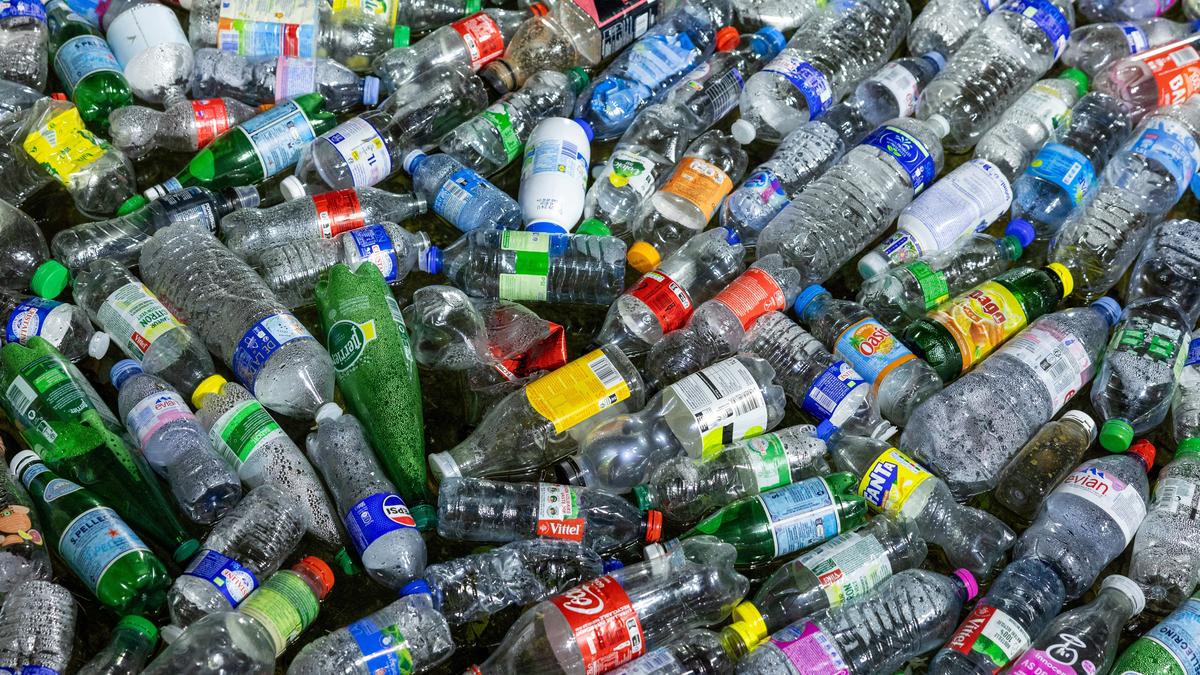
Besides plastics, the amount of carcinogenic plasticizers in the environment is increasing at an alarming rate. Plasticizers are chemicals added to plastics and personal care products to enhance flexibility and shine, and are commonly found in items such as baby toys, shampoos, soaps, and food containers. Plasticizers can be absorbed through the skin, making them a direct threat to human health.

A team of researchers headed by Dr. Pravindra Kumar, Professor at the Department of Biosciences and Bioengineering, IIT Roorkee has successfully used an enzyme — esterase enzyme — produced by soil bacteria Sulfobacillus acidophilus to break down diethyl hexyl phthalate (DEHP) plasticizer. While a Chinese team had characterised this enzyme to degrade low molecular weight phthalate diester plasticizers, which can be degraded by several reported esterase enzymes, the IIT Roorkee team has identified its actual potential and used it for degrading difficult to degrade high molecular weight phthalate plasticizers. The research was funded by THDC India Limited, Rishikesh, and the results were published recently in the journal Structure. The group has also discovered that the esterase enzyme can bind to molecules similar to polypropylene used in plastics, making it a potential tool for extracting polypropylene from contaminated water sources.

The esterase enzyme was structurally characterised using X-ray crystallography. “This helped in identifying the active sites of the enzymes and in understanding the detailed mechanism by which this enzyme degrades the DEHP plasticizer,” says Shalja Verma from IIT Roorkee and the first author of the paper. Other sophisticated biochemical and biophysical approaches were also used to understand the efficiency of the enzyme to degrade the plasticizer.

The esterase enzyme remains active for about a month and catalyzes the degradation of DEHP plasticizer with significant efficiency. For large-scale production of this enzyme, the researchers cloned the genes of the EstS1 esterase enzyme into E. coli bacteria and the enzyme was produced in large-scale through aerobic culture.

The enzyme breaks down the DEHP plasticizer into two products — mono-(2-ethylhexyl) phthalate (MEHP) and 2-ethyl hexanol. According to Prof. Kumar, this esterase enzyme, along with other enzymes identified by their group previously can convert high molecular weight phthalate plasticizers into water and carbon-dioxide. And this is where the IIT Roorkee team appears to have an edge.

“The results of our research mark a significant advancement in addressing one of the most pressing environmental challenges — providing a promising path toward a plastic and plasticizer-free future,” says Dr. Kumar. Other researchers involved in the work include Shweta Choudhary, Kamble Amith Kumar, Jai Krishna Mahto, Ishani Mishra, Dr. Ashwani Kumar Sharma, Dr. Shailly Tomar, Dr. Debabrata Sircar and Dr. Jitin Singla.

In 2017, the team isolated another soil bacteria Comamonas testosteroni that breaks down the phthalates produced by DEHP degradation into carbon-dioxide and water. In the lab, the researchers used the enzymes in sequence to first break down DEHP to MEHP and 2-ethyl hexanol using esterase enzyme, which then was degraded to phthalate using another enzyme. The phthalate is then converted to intermediate compounds using a third enzyme (phthalate dioxygenase). The intermediate compound produced after this step is converted into protocatechuate by the enzyme phthalate decarboxylase. Once protocatechuate is produced, the tricarboxylic acid cycle of the bacteria, which is common in all bacteria, converts it to carbon-dioxide and water.

While the esterase enzyme used for breaking down DEHP into MEHP and 2-ethyl hexanol is from Sulfobacillus acidophilus bacteria, the three other enzymes used in sequence are from Comamonas testosteroni bacteria. “In the lab, we have tried using the enzymes in sequence to break down DEHP into water and carbon-dioxide,” says Ms. Verma. “We are now trying to insert the genes of all the five enzymes into bacteria to directly convert the DEHP plasticizer into water and carbon-dioxide.”

Putting all the five enzymes into bacteria will speed up the degradation process not only because the enzymes will act sequentially but also because degradation of the enzymes itself becomes a non-issue once they are integrated into bacteria. The enzymes, whether used for degradation or not, will remain active only for a short time. But once integrated into bacteria, the enzymes remain active for a longer time and the bacteria can be used continuously for degrading the plasticizers. But when the enzymes are used without integrating into bacteria, a fresh batch of enzymes needs to be produced to continue the degradation process. “We are also undertaking enzyme engineering to speed up the degradation process inside the bacteria,” says Ms. Verma.

Published – January 11, 2025 09:10 pm IST



Source link

Science

Post navigation

Previous Post: DK Shivakumar On Karnataka Power Tussle
Next Post: How do monkeys recognise snakes so fast?

Related Posts

  • India pushes for dialogue on climate finance, adaptation at Bonn climate talks
    India pushes for dialogue on climate finance, adaptation at Bonn climate talks Science
  • Science for all: Most flowers usually pick one father and stick with him
    Science for all: Most flowers usually pick one father and stick with him Science
  • What is heat? How does it animate engines and global warming? | Explained
    What is heat? How does it animate engines and global warming? | Explained Science
  • IIT Guwahati team finds blue-green algae can remove lead from water
    IIT Guwahati team finds blue-green algae can remove lead from water Science
  • Not just nothing, dark matter quests close in on dire ‘neutrino fog’
    Not just nothing, dark matter quests close in on dire ‘neutrino fog’ Science
  • Frigid alien planet may offer a glimpse at Earth’s distant future
    Frigid alien planet may offer a glimpse at Earth’s distant future Science

More Related Articles

Why do we sometimes wake up a few minutes before our alarm rings? Why do we sometimes wake up a few minutes before our alarm rings? Science
Turning carrot waste into edible material again Turning carrot waste into edible material again Science
Ketan Agarwal death case: What is gait analysis? | Explained Ketan Agarwal death case: What is gait analysis? | Explained Science
Why do fish in schools have an easier time swimming in rough waters? Why do fish in schools have an easier time swimming in rough waters? Science
Trump’s Golden Dome looks for alternatives to Elon Musk’s SpaceX Trump’s Golden Dome looks for alternatives to Elon Musk’s SpaceX Science
Chinese spacecraft successfully lands on moon’s far side in growing space rivalry with US Chinese spacecraft successfully lands on moon’s far side in growing space rivalry with US Science
SiteLock

Archives

  • September 2026
  • August 2026
  • July 2026
  • June 2026
  • May 2026
  • April 2026
  • March 2026
  • February 2026
  • January 2026
  • December 2025
  • November 2025
  • October 2025
  • September 2025
  • August 2025
  • July 2025
  • June 2025
  • May 2025
  • April 2025
  • March 2025
  • February 2025
  • January 2025
  • December 2024
  • November 2024
  • October 2024
  • September 2024
  • August 2024
  • July 2024
  • June 2024
  • May 2024
  • April 2024
  • March 2024
  • February 2024
  • January 2024
  • December 2023
  • November 2023
  • October 2023
  • September 2023
  • August 2023
  • July 2023
  • June 2023
  • May 2023
  • April 2023
  • March 2023
  • February 2023
  • January 2023
  • December 2022
  • November 2022
  • October 2022
  • September 2022
  • August 2022
  • July 2022
  • June 2022
  • May 2022

Categories

  • Business
  • Nation
  • Science
  • Sports
  • World

Recent Posts

  • Not in favour of FIRs against farmers over stubble burning: Punjab CM Mann
  • Early warning system Nepal’s top priority: PM Shah
  • Man sentenced to 5 years of imprisonment in POCSO case
  • Ansell to manufacture gloves at Perundurai plant for key global markets
  • Despite zoonotic diseases threat, Keralam’s proposed veterinary public health wing yet to take shape

Recent Comments

  1. AlvinNet on UP Teacher Who Asked Students To Slap Muslim Classmate
  2. AlvinNet on UP Teacher Who Asked Students To Slap Muslim Classmate
  3. Jamesslits on UP Teacher Who Asked Students To Slap Muslim Classmate
  4. MichaelClear on UP Teacher Who Asked Students To Slap Muslim Classmate
  5. Jamesslits on UP Teacher Who Asked Students To Slap Muslim Classmate
  • Fossils of massive prehistoric snake found in lignite mine in Gujarat
    Fossils of massive prehistoric snake found in lignite mine in Gujarat Science
  • Bihar Is Literally A Failed State
    Bihar Is Literally A Failed State Nation
  • India vs Sri Lanka Tests: Visitors brave the heat in Colombo nets ahead of 2nd Test
    India vs Sri Lanka Tests: Visitors brave the heat in Colombo nets ahead of 2nd Test Sports
  • Bihar Man Tied To Pole, Thrashed, Burnt Alive By Brother, Sister-In-Law
    Bihar Man Tied To Pole, Thrashed, Burnt Alive By Brother, Sister-In-Law Nation
  • “India’s Policy Was To Maintain Distance. Now…”: PM In Poland
    “India’s Policy Was To Maintain Distance. Now…”: PM In Poland Nation
  • I’m A Nepo Kid,” Admits Chirag Paswan, But Calls It “Double-Edged Sword
    I’m A Nepo Kid,” Admits Chirag Paswan, But Calls It “Double-Edged Sword Nation
  • Indian Institute of Science study reveals how cancer cells adapt while moving across tissues
    Indian Institute of Science study reveals how cancer cells adapt while moving across tissues Science
  • Supreme Court Raps Delhi, Infra Body Over Tree Cutting In Ridge Area
    Supreme Court Raps Delhi, Infra Body Over Tree Cutting In Ridge Area Nation

Editor-in-Chief:
Mohammad Ariff,
MSW, MAJMC, BSW, DTL, CTS, CNM, CCR, CAL, RSL, ASOC.
editor@artifex.news

Associate Editors:
1. Zenellis R. Tuba,
zenelis@artifex.news
2. Haris Daniyel
daniyel@artifex.news

Photograher:
Rohan Das
rohan@artifex.news

Artifex.News offers Online Paid Internships to college students from India and Abroad. Interns will get a PRESS CARD and other online offers.
Send your CV (Subjectline: Paid Internship) to internship@artifex.news

Links:
Associate Journalism
About Us
Privacy Policy

News Links:
Breaking News
World
Nation
Sports
Business
Entertainment
Lifestyle

Registered Office:
72/A, Elliot Road, Kolkata - 700016
Tel: 033-22277777, 033-22172217
Email: office@artifex.news

Editorial Office / News Desk:
No. 13, Mezzanine Floor, Esplanade Metro Rail Station,
12 J. L. Nehru Road, Kolkata - 700069.
(Entry from Gate No. 5)
Tel: 033-46011099, 033-46046046
Email: editor@artifex.news

Copyright © 2023 Artifex.News Newsportal designed by Artifex Infotech.