



Skip to content
  • Facebook
  • X
  • Linkedin
  • WhatsApp
  • YouTube
  • Associate Journalism
  • About Us
  • Privacy Policy
  • 033-46046046
  • editor@artifex.news
Artifex.News

Artifex.News

Stay Connected. Stay Informed.

  • Breaking News
  • World
  • Nation
  • Sports
  • Business
  • Science
  • Entertainment
  • Lifestyle
  • Toggle search form
  • Russian deputy PM says global oil market will be balanced from second half of 2024
    Russian deputy PM says global oil market will be balanced from second half of 2024 World
  • Zimbabwe vs Afghanistan Live Score Updates 2nd ODI
    Zimbabwe vs Afghanistan Live Score Updates 2nd ODI Sports
  • Access Denied Sports
  • Pakistan confirms talks with Afghanistan failed, accuses Kabul of backtracking on commitments
    Pakistan confirms talks with Afghanistan failed, accuses Kabul of backtracking on commitments World
  • Access Denied Business
  • Access Denied Business
  • Thousands Of Fans On Streets As Afghanistan Reach Historic T20 World Cup Semi-finals. Watch
    Thousands Of Fans On Streets As Afghanistan Reach Historic T20 World Cup Semi-finals. Watch Sports
  • Access Denied Sports
How beggar-thy-neighbour policies can make global trade come to a standstill

How beggar-thy-neighbour policies can make global trade come to a standstill

Posted on February 5, 2025 By admin


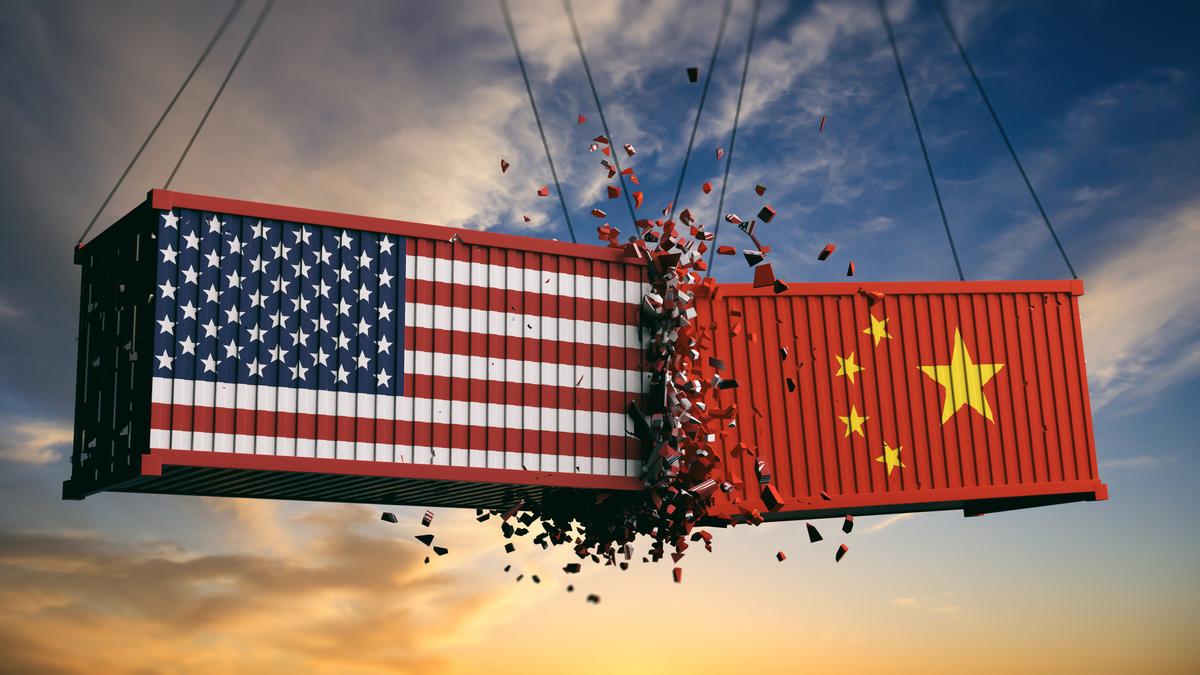
For representative purposes.
| Photo Credit: iStockphoto

Beggar-thy-neighbour policies refer to protectionist economic policies adopted by governments that are aimed at benefiting a country’s economy at the expense of other countries. A trade war in which a government imposes heavy tariffs and strict quotas on the import of foreign goods into the country is the most common example of beggar-thy-neighbour policies. Central banks of countries can also engage in beggar-thy-neighbour policies through currency wars wherein they depreciate the value of their domestic currencies against foreign currencies in an attempt to boost their domestic exports and to discourage the import of foreign goods.

Origins of the idea

The term is attributed to Scottish economist Adam Smith who first used it in his well-known 1776 book The Wealth of Nations. He coined the term to criticise mercantilists of his time who advocated protectionist policies such as the imposition of tariffs and other forms of trade barriers in order to achieve a trade surplus with other countries. The mercantilists believed that a country can grow its wealth through international trade but at the cost of impoverishing other nations. Mr. Smith, on the other hand, believed that free trade in the long-run enriches all nations engaged in such trade.

Supporters of beggar-thy-neighbour policies argue that these policies help boost a country’s domestic economy by aiding certain important industries and protecting jobs. They usually point out that countries need to protect certain industries due to national security reasons and also in order to help protect them from foreign competition during their nascent development stages. Central banks engaged in beggar-thy-neighbour policies, on the other hand, argue that depreciating the national currency will make the country’s exports look cheaper to foreigners, thus boosting exports. They also argue that a depreciation in the value of a nation’s currency will make it more expensive for domestic citizens to purchase foreign goods, thus discouraging imports. Higher exports and lower imports, in turn, are expected to lead to a trade surplus which is said to be good for the domestic economy. It should be noted that supporters of beggar-thy-neighbour policies see exports as a good thing because exports are seen as boosting demand for the goods manufactured by domestic firms. At the same time, imports are considered bad because they are seen as boosting demand for foreign firms.

Opposing voices

Critics, however, argue that beggar-thy-neighbour policies can make all countries poorer, particularly when countries begin to retaliate against each other by imposing tit-for-tat tariffs and currency devaluations. Such tit-for-tat policies were implemented most notably during the interim period between the two major World Wars. Retaliatory tariffs and competitive currency devaluations during the period led to a significant drop in global trade and investment. In fact, economic historians consider such protectionist policies to be one of the major reasons behind the Great Depression that affected countries across the globe. In recent decades, countries such as China and Japan have been accused of devaluing their currencies to help their exporters, and to achieve a trade surplus with other major economies such as the United States. The rise of populist movements in recent years, particularly in the United States under Donald Trump’s presidency, has led to renewed fears that we could see the return of tit-for-tat economic policies that caused global trade to come to a standstill.

It should be noted that beggar-thy-neighbour policies are generally targeted at benefiting domestic producers and their workers who possess significant political influence rather than consumers, who are in fact severely harmed by such policies. For example, U.S. President Trump’s latest tariffs this week against Chinese imports are expected to help American producers who may now likely face lesser competition from Chinese firms. However, the same tariffs and other trade barriers are expected to affect American consumers who will now likely have to pay higher prices for goods due to reduced foreign supplies. Similarly, when a central bank depreciates the exchange value of its currency by flooding the forex market with its currency, it puts more domestic currency in the hands of foreigners, thus reducing the purchasing power of domestic consumers who will now be able to purchase fewer domestic goods.

Some critics of beggar-thy-neighbour policies also argue that countries should not retaliate when a foreign country imposes tariffs or other trade barriers on their exporters or devalues its currency in order to favour its own domestic exporters. They believe that countries that adopt unilateral free trade can avoid the damage caused by retaliatory tariffs, and in fact even benefit from the protectionist policies of other countries. Take the case of a country like China that is hit by tariffs imposed by the United States. While U.S. tariffs would make life hard for Chinese producers, imposing retaliatory tariffs against U.S. goods will only make things worse for China because Chinese consumers will then have to pay more for goods and services imported from the U.S. Retaliatory tariffs can thus turn out to be a double whammy for China. Similarly, according to this view, if the U.S. Federal Reserve depreciates its currency to boost its exports, it would be best for the Chinese central bank to avoid competitive devaluation because the U.S. Federal Reserve is actually subsidising Chinese consumers.

Published – February 05, 2025 08:30 am IST



Source link

Business

Post navigation

Previous Post: Why the tax cuts are a one way gamble
Next Post: Markets trade higher in early trade on fresh foreign fund inflows

Related Posts

  • Rupee turns flat at 83.73 against U.S. dollar in early trade
    Rupee turns flat at 83.73 against U.S. dollar in early trade Business
  • Stock markets trade lower in early deals
    Stock markets trade lower in early deals Business
  • Access Denied Business
  • Rupee rises 11 paise to 89.05 against U.S. dollar in early trade
    Rupee rises 11 paise to 89.05 against U.S. dollar in early trade Business
  • Elon Musk Takes A Dig At Mark Zuckerberg’s WhatsApp Business
  • SEBI bans Anil Ambani, 24 other entities from securities market for five years
    SEBI bans Anil Ambani, 24 other entities from securities market for five years Business

More Related Articles

Dabur India flags sluggish demand in March-quarter; shares drop Dabur India flags sluggish demand in March-quarter; shares drop Business
Housing scheme to be launched for deserving middle class: Sitharaman in Budget speech Housing scheme to be launched for deserving middle class: Sitharaman in Budget speech Business
Access Denied Business
Trade talks with EU reduced ‘outstanding issues’, says Goyal Trade talks with EU reduced ‘outstanding issues’, says Goyal Business
SiteLock

Archives

  • May 2026
  • April 2026
  • March 2026
  • February 2026
  • January 2026
  • December 2025
  • November 2025
  • October 2025
  • September 2025
  • August 2025
  • July 2025
  • June 2025
  • May 2025
  • April 2025
  • March 2025
  • February 2025
  • January 2025
  • December 2024
  • November 2024
  • October 2024
  • September 2024
  • August 2024
  • July 2024
  • June 2024
  • May 2024
  • April 2024
  • March 2024
  • February 2024
  • January 2024
  • December 2023
  • November 2023
  • October 2023
  • September 2023
  • August 2023
  • July 2023
  • June 2023
  • May 2023
  • April 2023
  • March 2023
  • February 2023
  • January 2023
  • December 2022
  • November 2022
  • October 2022
  • September 2022
  • August 2022
  • July 2022
  • June 2022
  • May 2022

Categories

  • Business
  • Nation
  • Science
  • Sports
  • World

Recent Posts

  • Visakhapatnam Collector calls for inter-departmental synergy to boost investments
  • Kohli’s masterful knock powers Royal Challengers to the top
  • Vijay Narayan earns rare distinction of being Advocate General under two different governments
  • Learn from Sri Lanka’s experience on impact of fertilizer supply chains: experts
  • Sewage pollution of Cooum, groundwater depletion raise alarm

Recent Comments

  1. Leonardren on UP Teacher Who Asked Students To Slap Muslim Classmate
  2. NathanQuins on UP Teacher Who Asked Students To Slap Muslim Classmate
  3. Davidgof on UP Teacher Who Asked Students To Slap Muslim Classmate
  4. NathanJobre on UP Teacher Who Asked Students To Slap Muslim Classmate
  5. Davidcag on UP Teacher Who Asked Students To Slap Muslim Classmate
  • Access Denied Sports
  • Access Denied
    Access Denied Nation
  • Access Denied Sports
  • Access Denied
    Access Denied Nation
  • Singapore Embassy’s Dig At Delhi’s Civic Body
    Singapore Embassy’s Dig At Delhi’s Civic Body Nation
  • Newfound genetic variant that causes Parkinson’s shows a way to beat it
    Newfound genetic variant that causes Parkinson’s shows a way to beat it Science
  • Access Denied
    Access Denied Nation
  • List of basic amenities in mining-affected areas of Kerala’s Kollam to be prepared
    List of basic amenities in mining-affected areas of Kerala’s Kollam to be prepared Nation

Editor-in-Chief:
Mohammad Ariff,
MSW, MAJMC, BSW, DTL, CTS, CNM, CCR, CAL, RSL, ASOC.
editor@artifex.news

Associate Editors:
1. Zenellis R. Tuba,
zenelis@artifex.news
2. Haris Daniyel
daniyel@artifex.news

Photograher:
Rohan Das
rohan@artifex.news

Artifex.News offers Online Paid Internships to college students from India and Abroad. Interns will get a PRESS CARD and other online offers.
Send your CV (Subjectline: Paid Internship) to internship@artifex.news

Links:
Associate Journalism
About Us
Privacy Policy

News Links:
Breaking News
World
Nation
Sports
Business
Entertainment
Lifestyle

Registered Office:
72/A, Elliot Road, Kolkata - 700016
Tel: 033-22277777, 033-22172217
Email: office@artifex.news

Editorial Office / News Desk:
No. 13, Mezzanine Floor, Esplanade Metro Rail Station,
12 J. L. Nehru Road, Kolkata - 700069.
(Entry from Gate No. 5)
Tel: 033-46011099, 033-46046046
Email: editor@artifex.news

Copyright © 2023 Artifex.News Newsportal designed by Artifex Infotech.