



Skip to content
  • Facebook
  • X
  • Linkedin
  • WhatsApp
  • YouTube
  • Associate Journalism
  • About Us
  • Privacy Policy
  • 033-46046046
  • editor@artifex.news
Artifex.News

Artifex.News

Stay Connected. Stay Informed.

  • Breaking News
  • World
  • Nation
  • Sports
  • Business
  • Science
  • Entertainment
  • Lifestyle
  • Toggle search form
  • Ashwin and Jadeja: the multidimensional cheat code for India’s dominance
    Ashwin and Jadeja: the multidimensional cheat code for India’s dominance Sports
  • Access Denied Sports
  • Hanuma Vihari Row: Teammates Signed Letter Of Support ‘Under Threat’, Claims ACA – Report
    Hanuma Vihari Row: Teammates Signed Letter Of Support ‘Under Threat’, Claims ACA – Report Sports
  • Will Go To Gaza Even If It Would “Cost My Life”, Says Palestine President
    Will Go To Gaza Even If It Would “Cost My Life”, Says Palestine President Nation
  • US Envoy Ahead Of Trump Inauguration
    US Envoy Ahead Of Trump Inauguration Nation
  • Access Denied
    Access Denied Nation
  • Access Denied
    Access Denied Nation
  • Israel, Hamas Agree To Zoned 3-Day Pauses For Gaza Polio Vaccinations: WHO
    Israel, Hamas Agree To Zoned 3-Day Pauses For Gaza Polio Vaccinations: WHO World
Nobel laureate supports India’s pursuit for a neutrino lab

Nobel laureate supports India’s pursuit for a neutrino lab

Posted on July 13, 2024 By admin


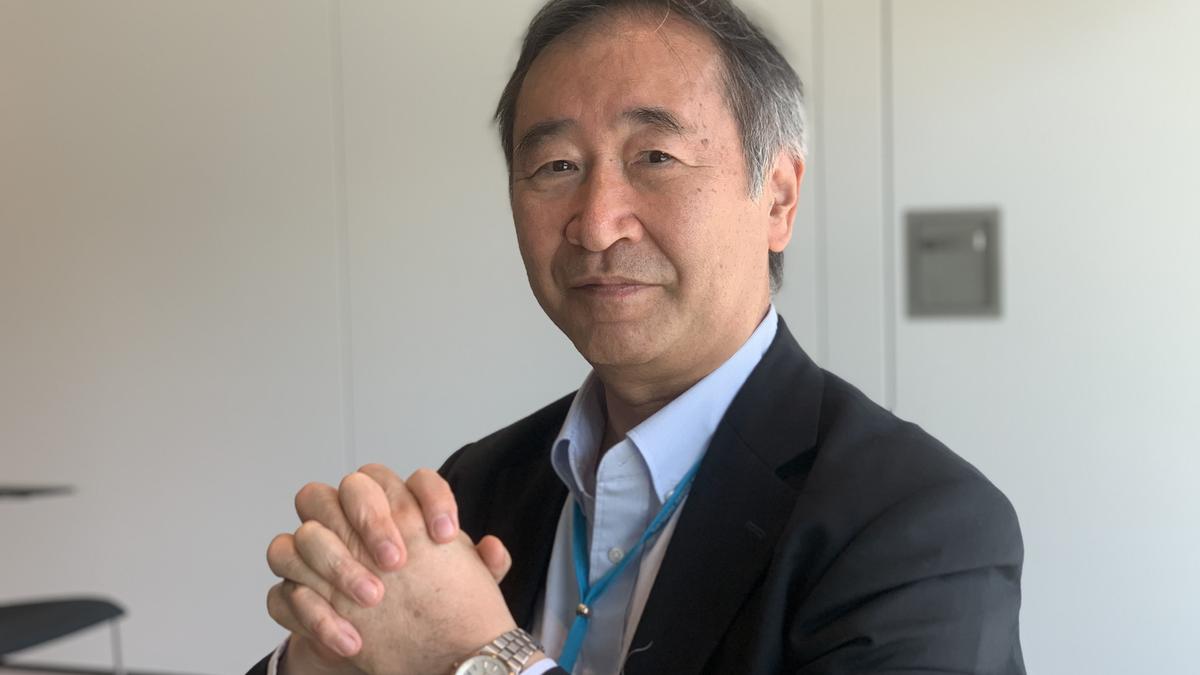
If the obstacle-ridden India-based Neutrino Observatory (INO) ever becomes a reality, it will be one of the largest basic science projects in the country. Nobel laureate and neutrino researcher Takaaki Kajita is convinced that the proposed underground laboratory is still worth fighting for.

Neutrinos are abundant particles that may be relevant to our understanding of the origin of matter in the universe. About 60 years ago, historic science experiments inside a goldmine in Kolar, Karnataka, would lead to the 1965 discovery of atmospheric neutrinos. This was a collaboration between Indian, Japanese and British scientists.

Awakened to the potential of neutrino research, Japan continued with experiments on — or rather, under — their soil, in the underground Kamioka Observatory situated under Mount Ikeno. This was where Masatoshi Koshiba’s team would discover cosmic neutrinos in the late 1980s. Subsequently, Japan decided to establish a dedicated neutrino observatory, Super-Kamiokande, which began operation in 1996. In 2002, Koshiba won a Nobel Prize for his contributions.

Indian scientists had no intention of being left behind. Though the original experiments had to end in 1992 due to the closure of the goldmines in Kolar, plans to build our own observatory were already underway. After extensive deliberations, a proposal was drawn and in 2011, the Indian government announced its intention to set aside about ₹1,350 crores for an India-based Neutrino Observatory, which would be situated 1.3 km underground in Tamil Nadu. Over a decade later, there has been no progress. Today, the fate of INO is uncertain.

Meanwhile, Japanese researchers received the first evidence for a phenomenon called neutrino oscillation within a year of the Super-Kamiokande. This discovery would go on to (jointly) win Koshiba’s student Takaaki Kajita, another Nobel in 2015.

Having spent his entire research career in his home country of Japan, Takaaki Kajita is a living example of how much is to be gained by having a neutrino laboratory close to home. “We can easily access the laboratory and the detector is nearby,” he said, in an interview with this reporter during the 73rd Lindau Nobel Laureate Meeting which concluded on July 5.

Two of the main reasons for opposition to INO are adverse environmental impacts and the fear of radioactivity. This is despite INO scientists repeatedly stating that the observatory would be located a kilometre underground and hence would have minimal impact on wildlife and the ecosystem. What about radioactivity? “The experiment will neither produce any radioactivity nor can it function well where there is radiation,” they point out on INO’s website. The whole point of housing the detector underground is to protect it from the natural radiation that hits the surface of Earth.

According to Kajita, the Japanese project did not face as much opposition. “We decided to construct the detector in an active mine, so there was no need for additional excavation,” he pointed out. Besides, the original experiment was designed to search not for neutrinos but for a hypothetical phenomenon called proton decay. “That was nothing to do with radiation,” he said.

The biggest stroke of luck for the Japanese neutrino scientists was the timing of a supernova that was observed in February 1987. The Supernova 1987A happened while the Kamiokande-II detector was online, leading to the discovery of cosmic neutrinos by the team led by Koshiba. “This had a great impact. People suddenly knew neutrinos, and had only a good image about them,” said Kajita, who was Koshiba’s PhD student.

A neutrino observatory at home is envisioned to give the Indian scientific community, including students of particle physics, the opportunity to work with a world-class detector without needing to travel outside national borders. Back in the 1980s, the young Kajita greatly benefited from this privilege. He recalled the excitement during the construction of the Kamiokande detector. “It’s the young postdocs involved in the Kamiokande and Super Kamiokande experiments who first saw and analysed the data,” he said.

Today, the Super-Kamiokande facility continues to train new generations of particle physicists. While some of them secure positions abroad, many choose to stay back in Japan. After he won his Nobel in 2015, Kajita himself declined invitations to take up new positions in other countries. “As an experimental physicist, it is very important that I am near the detector,” he explained.

Aware of the setbacks his Indian colleagues have suffered, Kajita insists that the INO dream is worth salvaging. “It may be a bit late to start the construction of the detector, but it is very important to continue working towards an underground lab. There are a lot of things [yet] to be done [in the field of neutrino physics].”

(Nandita Jayaraj is a freelance science writer and co-author of Lab Hopping: A Journey to Find India’s Women in Science)


Source link

Science Tags:Neutrino lab, Neutrino Observatory, Neutrino research, Takaaki Kajita

Post navigation

Previous Post: Nobel laureate supports India’s pursuit for a neutrino lab
Next Post: Government mulls handing over MTNL operations to BSNL; merger unlikely

Related Posts

  • Retinal diseases: RNA therapeutics show promise but is India ready?
    Retinal diseases: RNA therapeutics show promise but is India ready? Science
  • IIT Kharagpur-led study says tropical rainforests could survive global warming
    IIT Kharagpur-led study says tropical rainforests could survive global warming Science
  • Egypt is racing to eliminate hepatitis C
    Egypt is racing to eliminate hepatitis C Science
  • India’s western tragopan steadied by captive breeding, an interim fix
    India’s western tragopan steadied by captive breeding, an interim fix Science
  • How are zebrafishes able to repair damaged hearts?
    How are zebrafishes able to repair damaged hearts? Science
  • U.K. to rejoin Europe’s Horizon science programme
    U.K. to rejoin Europe’s Horizon science programme Science

More Related Articles

Pollen in pee: fossilised urine from a small African mammal helps us understand past environments Pollen in pee: fossilised urine from a small African mammal helps us understand past environments Science
Why does India want fast breeder nuclear reactors? | Explained Why does India want fast breeder nuclear reactors? | Explained Science
NASA touts space research in anti-cancer fight NASA touts space research in anti-cancer fight Science
Breast cancer cases in India have more than doubled in three decades, experts say Breast cancer cases in India have more than doubled in three decades, experts say Science
IIT Bombay researchers develop GPS-free control scheme for autonomous drone swarms IIT Bombay researchers develop GPS-free control scheme for autonomous drone swarms Science
Cutting edge projects avoided due to aversion to risk and intolerance of failure: DRDO chief Cutting edge projects avoided due to aversion to risk and intolerance of failure: DRDO chief Science
SiteLock

Archives

  • May 2026
  • April 2026
  • March 2026
  • February 2026
  • January 2026
  • December 2025
  • November 2025
  • October 2025
  • September 2025
  • August 2025
  • July 2025
  • June 2025
  • May 2025
  • April 2025
  • March 2025
  • February 2025
  • January 2025
  • December 2024
  • November 2024
  • October 2024
  • September 2024
  • August 2024
  • July 2024
  • June 2024
  • May 2024
  • April 2024
  • March 2024
  • February 2024
  • January 2024
  • December 2023
  • November 2023
  • October 2023
  • September 2023
  • August 2023
  • July 2023
  • June 2023
  • May 2023
  • April 2023
  • March 2023
  • February 2023
  • January 2023
  • December 2022
  • November 2022
  • October 2022
  • September 2022
  • August 2022
  • July 2022
  • June 2022
  • May 2022

Categories

  • Business
  • Nation
  • Science
  • Sports
  • World

Recent Posts

  • Tradition of singing Tamil Thaai Vazhthu at beginning, National Anthem at end will continue, says Minister Aadhav Arjuna
  • Militia kill at least 69 in DR Congo: local, security sources
  • Want to finish as high as we can: DC batting coach Bell
  • Traffic restrictions around LB Stadium on Monday for state-level education programme
  • PM Modi urges citizens to cut fuel use, avoid foreign travel

Recent Comments

  1. Timothymup on UP Teacher Who Asked Students To Slap Muslim Classmate
  2. HubertInvig on UP Teacher Who Asked Students To Slap Muslim Classmate
  3. Richardhoabe on UP Teacher Who Asked Students To Slap Muslim Classmate
  4. Robertnof on UP Teacher Who Asked Students To Slap Muslim Classmate
  5. EnriqueExins on UP Teacher Who Asked Students To Slap Muslim Classmate
  • Access Denied World
  • Varun Chakravarthy Picks Five-Wicket Haul vs England, Becomes First Ever Player To…
    Varun Chakravarthy Picks Five-Wicket Haul vs England, Becomes First Ever Player To… Sports
  • Republic Day break fuels short trips; nearby getaways in demand, say experts
    Republic Day break fuels short trips; nearby getaways in demand, say experts Business
  • West Bengal Passes Motion Seeking Direct Flights To US, Europe From Kolkata
    West Bengal Passes Motion Seeking Direct Flights To US, Europe From Kolkata Nation
  • Access Denied World
  •  Children at risk as new mpox variant hits Congo displacement camps
     Children at risk as new mpox variant hits Congo displacement camps Science
  • “Great Role Model”: Tennis Legend Rafael Nadal Hails Carlos Alcaraz Ahead Of Olympics Doubles
    “Great Role Model”: Tennis Legend Rafael Nadal Hails Carlos Alcaraz Ahead Of Olympics Doubles Sports
  • Access Denied World

Editor-in-Chief:
Mohammad Ariff,
MSW, MAJMC, BSW, DTL, CTS, CNM, CCR, CAL, RSL, ASOC.
editor@artifex.news

Associate Editors:
1. Zenellis R. Tuba,
zenelis@artifex.news
2. Haris Daniyel
daniyel@artifex.news

Photograher:
Rohan Das
rohan@artifex.news

Artifex.News offers Online Paid Internships to college students from India and Abroad. Interns will get a PRESS CARD and other online offers.
Send your CV (Subjectline: Paid Internship) to internship@artifex.news

Links:
Associate Journalism
About Us
Privacy Policy

News Links:
Breaking News
World
Nation
Sports
Business
Entertainment
Lifestyle

Registered Office:
72/A, Elliot Road, Kolkata - 700016
Tel: 033-22277777, 033-22172217
Email: office@artifex.news

Editorial Office / News Desk:
No. 13, Mezzanine Floor, Esplanade Metro Rail Station,
12 J. L. Nehru Road, Kolkata - 700069.
(Entry from Gate No. 5)
Tel: 033-46011099, 033-46046046
Email: editor@artifex.news

Copyright © 2023 Artifex.News Newsportal designed by Artifex Infotech.