

Skip to content
  • Facebook
  • X
  • Linkedin
  • WhatsApp
  • YouTube
  • Associate Journalism
  • About Us
  • Privacy Policy
  • 033-46046046
  • editor@artifex.news
Artifex.News

Artifex.News

Stay Connected. Stay Informed.

  • Breaking News
  • World
  • Nation
  • Sports
  • Business
  • Science
  • Entertainment
  • Lifestyle
  • Toggle search form
  • India’s traffic chokehold: Bengaluru ranks second; Pune fifth in global congestion index for 2025
    India’s traffic chokehold: Bengaluru ranks second; Pune fifth in global congestion index for 2025 Nation
  • Case Against Gujarat BJP MLA’s Son For Assaulting Student Leader: Cops
    Case Against Gujarat BJP MLA’s Son For Assaulting Student Leader: Cops Nation
  • Rolling Stone Magazine Cofounder Jann Wenner Dropped From Rock Hall Of Fame Board
    Rolling Stone Magazine Cofounder Jann Wenner Dropped From Rock Hall Of Fame Board World
  • 32-Year-Old James Rodriguez Stars In Colombia Copa America Win
    32-Year-Old James Rodriguez Stars In Colombia Copa America Win Sports
  • Access Denied Sports
  • Key Recommendations Of 55th GST Council Meet
    Key Recommendations Of 55th GST Council Meet Nation
  • Death of wild boars raises concerns in Kerala’s Kasaragod
    Death of wild boars raises concerns in Kerala’s Kasaragod Nation
  • China launches coast guard patrol east of Taiwan despite international pushback
    China launches coast guard patrol east of Taiwan despite international pushback World
Nobel laureate supports India’s pursuit for a neutrino lab

Nobel laureate supports India’s pursuit for a neutrino lab

Posted on July 13, 2024 By admin


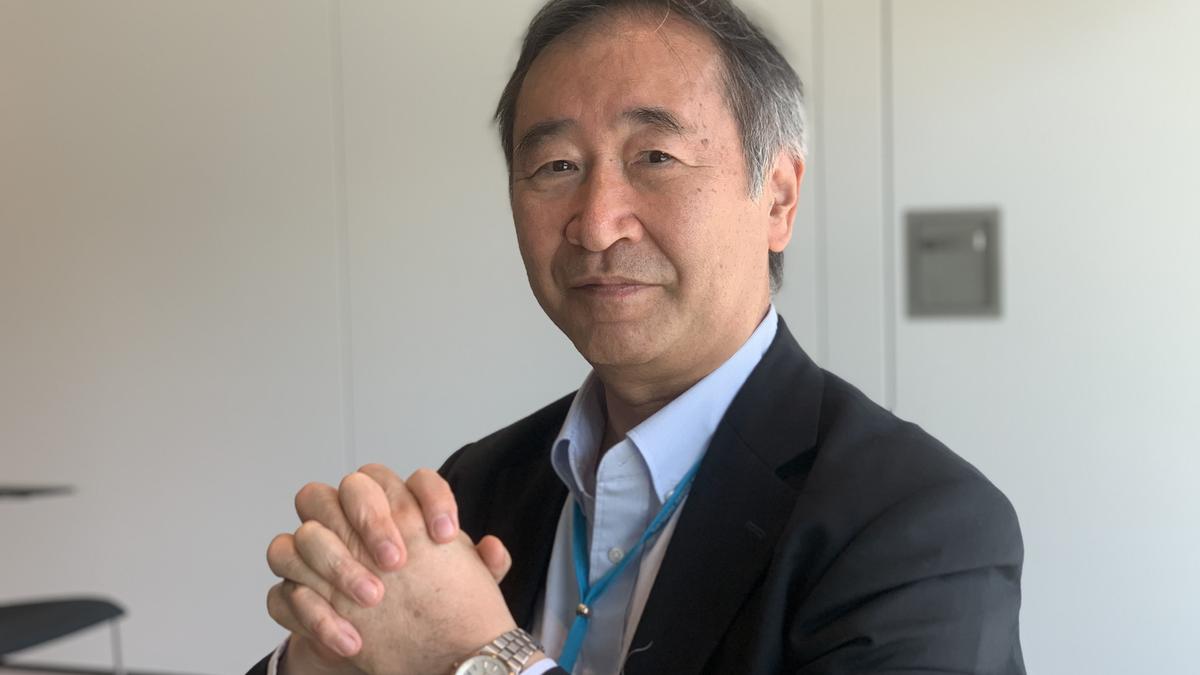
If the obstacle-ridden India-based Neutrino Observatory (INO) ever becomes a reality, it will be one of the largest basic science projects in the country. Nobel laureate and neutrino researcher Takaaki Kajita is convinced that the proposed underground laboratory is still worth fighting for.

Neutrinos are abundant particles that may be relevant to our understanding of the origin of matter in the universe. About 60 years ago, historic science experiments inside a goldmine in Kolar, Karnataka, would lead to the 1965 discovery of atmospheric neutrinos. This was a collaboration between Indian, Japanese and British scientists.

Awakened to the potential of neutrino research, Japan continued with experiments on — or rather, under — their soil, in the underground Kamioka Observatory situated under Mount Ikeno. This was where Masatoshi Koshiba’s team would discover cosmic neutrinos in the late 1980s. Subsequently, Japan decided to establish a dedicated neutrino observatory, Super-Kamiokande, which began operation in 1996. In 2002, Koshiba won a Nobel Prize for his contributions.

Indian scientists had no intention of being left behind. Though the original experiments had to end in 1992 due to the closure of the goldmines in Kolar, plans to build our own observatory were already underway. After extensive deliberations, a proposal was drawn and in 2011, the Indian government announced its intention to set aside about ₹1,350 crores for an India-based Neutrino Observatory, which would be situated 1.3 km underground in Tamil Nadu. Over a decade later, there has been no progress. Today, the fate of INO is uncertain.

Meanwhile, Japanese researchers received the first evidence for a phenomenon called neutrino oscillation within a year of the Super-Kamiokande. This discovery would go on to (jointly) win Koshiba’s student Takaaki Kajita, another Nobel in 2015.

Having spent his entire research career in his home country of Japan, Takaaki Kajita is a living example of how much is to be gained by having a neutrino laboratory close to home. “We can easily access the laboratory and the detector is nearby,” he said, in an interview with this reporter during the 73rd Lindau Nobel Laureate Meeting which concluded on July 5.

Two of the main reasons for opposition to INO are adverse environmental impacts and the fear of radioactivity. This is despite INO scientists repeatedly stating that the observatory would be located a kilometre underground and hence would have minimal impact on wildlife and the ecosystem. What about radioactivity? “The experiment will neither produce any radioactivity nor can it function well where there is radiation,” they point out on INO’s website. The whole point of housing the detector underground is to protect it from the natural radiation that hits the surface of Earth.

According to Kajita, the Japanese project did not face as much opposition. “We decided to construct the detector in an active mine, so there was no need for additional excavation,” he pointed out. Besides, the original experiment was designed to search not for neutrinos but for a hypothetical phenomenon called proton decay. “That was nothing to do with radiation,” he said.

The biggest stroke of luck for the Japanese neutrino scientists was the timing of a supernova that was observed in February 1987. The Supernova 1987A happened while the Kamiokande-II detector was online, leading to the discovery of cosmic neutrinos by the team led by Koshiba. “This had a great impact. People suddenly knew neutrinos, and had only a good image about them,” said Kajita, who was Koshiba’s PhD student.

A neutrino observatory at home is envisioned to give the Indian scientific community, including students of particle physics, the opportunity to work with a world-class detector without needing to travel outside national borders. Back in the 1980s, the young Kajita greatly benefited from this privilege. He recalled the excitement during the construction of the Kamiokande detector. “It’s the young postdocs involved in the Kamiokande and Super Kamiokande experiments who first saw and analysed the data,” he said.

Today, the Super-Kamiokande facility continues to train new generations of particle physicists. While some of them secure positions abroad, many choose to stay back in Japan. After he won his Nobel in 2015, Kajita himself declined invitations to take up new positions in other countries. “As an experimental physicist, it is very important that I am near the detector,” he explained.

Aware of the setbacks his Indian colleagues have suffered, Kajita insists that the INO dream is worth salvaging. “It may be a bit late to start the construction of the detector, but it is very important to continue working towards an underground lab. There are a lot of things [yet] to be done [in the field of neutrino physics].”

(Nandita Jayaraj is a freelance science writer and co-author of Lab Hopping: A Journey to Find India’s Women in Science)


Source link

Science Tags:Neutrino lab, Neutrino Observatory, Neutrino research, Takaaki Kajita

Post navigation

Previous Post: Not Yashasvi Jaiswal Or Shubman Gill. Sikandar Raza Says This Move Helped India Beat Zimbabwe By 10 Wickets
Next Post: Nobel laureate supports India’s pursuit for a neutrino lab

Related Posts

  • How do scientists determine the temperature of planets or stars?
    How do scientists determine the temperature of planets or stars? Science
  • T. K. Radha: from Kerala to Oppenheimer
    T. K. Radha: from Kerala to Oppenheimer Science
  • Controversy over ‘Mathathon’ at Caltech
    Controversy over ‘Mathathon’ at Caltech Science
  • Do sheep swim? If so, how do they learn?
    Do sheep swim? If so, how do they learn? Science
  • World AIDS Day: why HIV infections are still so hard to treat
    World AIDS Day: why HIV infections are still so hard to treat Science
  • James Watson, Nobel prize-winning DNA pioneer, dies at 97
    James Watson, Nobel prize-winning DNA pioneer, dies at 97 Science

More Related Articles

Rise and shine: morning sunlight and your wellbeing Rise and shine: morning sunlight and your wellbeing Science
How is the immune system kept in check? | Explained How is the immune system kept in check? | Explained Science
Will understanding cancer become a data problem?  Will understanding cancer become a data problem?  Science
Sex bias: key to a DNA puzzle Sex bias: key to a DNA puzzle Science
How a Chinese rocket failure boosted Elon Musk’s SpaceX in Indonesia How a Chinese rocket failure boosted Elon Musk’s SpaceX in Indonesia Science
PM Modi congratulates ISRO scientists for successful docking experiment PM Modi congratulates ISRO scientists for successful docking experiment Science
SiteLock

Archives

  • September 2026
  • August 2026
  • July 2026
  • June 2026
  • May 2026
  • April 2026
  • March 2026
  • February 2026
  • January 2026
  • December 2025
  • November 2025
  • October 2025
  • September 2025
  • August 2025
  • July 2025
  • June 2025
  • May 2025
  • April 2025
  • March 2025
  • February 2025
  • January 2025
  • December 2024
  • November 2024
  • October 2024
  • September 2024
  • August 2024
  • July 2024
  • June 2024
  • May 2024
  • April 2024
  • March 2024
  • February 2024
  • January 2024
  • December 2023
  • November 2023
  • October 2023
  • September 2023
  • August 2023
  • July 2023
  • June 2023
  • May 2023
  • April 2023
  • March 2023
  • February 2023
  • January 2023
  • December 2022
  • November 2022
  • October 2022
  • September 2022
  • August 2022
  • July 2022
  • June 2022
  • May 2022

Categories

  • Business
  • Nation
  • Science
  • Sports
  • World

Recent Posts

  • Saudi Arabia confirms Yemen’s Houthi rebels tried to attack its capital with ballistic missile
  • Martin recovers from early setback to win Austrian sprint and retake championship lead
  • Arsenal thrashed by Brighton, sorry Spurs lose again
  • Shamli Police book six over alleged ‘misleading’ social media posts on Ayush Malik High Court proceedings
  • What is the India-Pakistan conflict at sea about? | Explained

Recent Comments

  1. AlvinNet on UP Teacher Who Asked Students To Slap Muslim Classmate
  2. AlvinNet on UP Teacher Who Asked Students To Slap Muslim Classmate
  3. Jamesslits on UP Teacher Who Asked Students To Slap Muslim Classmate
  4. MichaelClear on UP Teacher Who Asked Students To Slap Muslim Classmate
  5. Jamesslits on UP Teacher Who Asked Students To Slap Muslim Classmate
  • “Fitness…”: Report Reveals Reason Behind Prithvi Shaw Getting Dropped By Mumbai For Vijay Hazare Trophy
    “Fitness…”: Report Reveals Reason Behind Prithvi Shaw Getting Dropped By Mumbai For Vijay Hazare Trophy Sports
  • FSSAI initiates legal action against Nestle India over infant nutrition products
    FSSAI initiates legal action against Nestle India over infant nutrition products Business
  • Gulf shipping traffic down after Houthis say they attacked Saudi tanker
    Gulf shipping traffic down after Houthis say they attacked Saudi tanker World
  • PM Modi Wishes S Jaishankar On His Birthday
    PM Modi Wishes S Jaishankar On His Birthday Nation
  • 15 Congress Leaders Join BJP In Jodhpur
    15 Congress Leaders Join BJP In Jodhpur Nation
  • Access Denied Sports
  • Arshad Shaik, Jyoti Gaderiya Disappoint In Track Cycling Events At Paris Paralympics
    Arshad Shaik, Jyoti Gaderiya Disappoint In Track Cycling Events At Paris Paralympics Sports
  • More than 60% of world’s coral reefs may have bleached in past year, NOAA says
    More than 60% of world’s coral reefs may have bleached in past year, NOAA says Science

Editor-in-Chief:
Mohammad Ariff,
MSW, MAJMC, BSW, DTL, CTS, CNM, CCR, CAL, RSL, ASOC.
editor@artifex.news

Associate Editors:
1. Zenellis R. Tuba,
zenelis@artifex.news
2. Haris Daniyel
daniyel@artifex.news

Photograher:
Rohan Das
rohan@artifex.news

Artifex.News offers Online Paid Internships to college students from India and Abroad. Interns will get a PRESS CARD and other online offers.
Send your CV (Subjectline: Paid Internship) to internship@artifex.news

Links:
Associate Journalism
About Us
Privacy Policy

News Links:
Breaking News
World
Nation
Sports
Business
Entertainment
Lifestyle

Registered Office:
72/A, Elliot Road, Kolkata - 700016
Tel: 033-22277777, 033-22172217
Email: office@artifex.news

Editorial Office / News Desk:
No. 13, Mezzanine Floor, Esplanade Metro Rail Station,
12 J. L. Nehru Road, Kolkata - 700069.
(Entry from Gate No. 5)
Tel: 033-46011099, 033-46046046
Email: editor@artifex.news

Copyright © 2023 Artifex.News Newsportal designed by Artifex Infotech.