
Skip to content
  • Facebook
  • X
  • Linkedin
  • WhatsApp
  • YouTube
  • Associate Journalism
  • About Us
  • Privacy Policy
  • 033-46046046
  • editor@artifex.news
Artifex.News

Artifex.News

Stay Connected. Stay Informed.

  • Breaking News
  • World
  • Nation
  • Sports
  • Business
  • Science
  • Entertainment
  • Lifestyle
  • Toggle search form
  • North Korea And Russia Agree To Come To Each Other’s Aid If Attacked World
  • Very happy with my performance, says Bumarh after fifer on day one
    Very happy with my performance, says Bumarh after fifer on day one Sports
  • Australian PM Anthony Albanese hails India’s economic growth; looks forward to hosting PM Modi again
    Australian PM Anthony Albanese hails India’s economic growth; looks forward to hosting PM Modi again Business
  • Delhi Court Dismisses Plea Challenging IAS Officer’s Appointment As CBSE Chief
    Delhi Court Dismisses Plea Challenging IAS Officer’s Appointment As CBSE Chief Nation
  • Norwegian Lawmaker Nominates Elon Musk For Nobel Peace Prize For Enabling “Free Speech”
    Norwegian Lawmaker Nominates Elon Musk For Nobel Peace Prize For Enabling “Free Speech” World
  • Maharashtra Opposition Manifesto Promises Rs 3,000 To Women, Caste Census
    Maharashtra Opposition Manifesto Promises Rs 3,000 To Women, Caste Census Nation
  • Unnatural death of newly married woman demands prompt police investigation: Delhi HC
    Unnatural death of newly married woman demands prompt police investigation: Delhi HC Nation
  • FIFA World Cup 2026: Ecuador coach Sebastián Beccacece steps down after exit
    FIFA World Cup 2026: Ecuador coach Sebastián Beccacece steps down after exit Sports
The bacteria that write new genes to cope with infections

The bacteria that write new genes to cope with infections

Posted on June 5, 2024 By admin


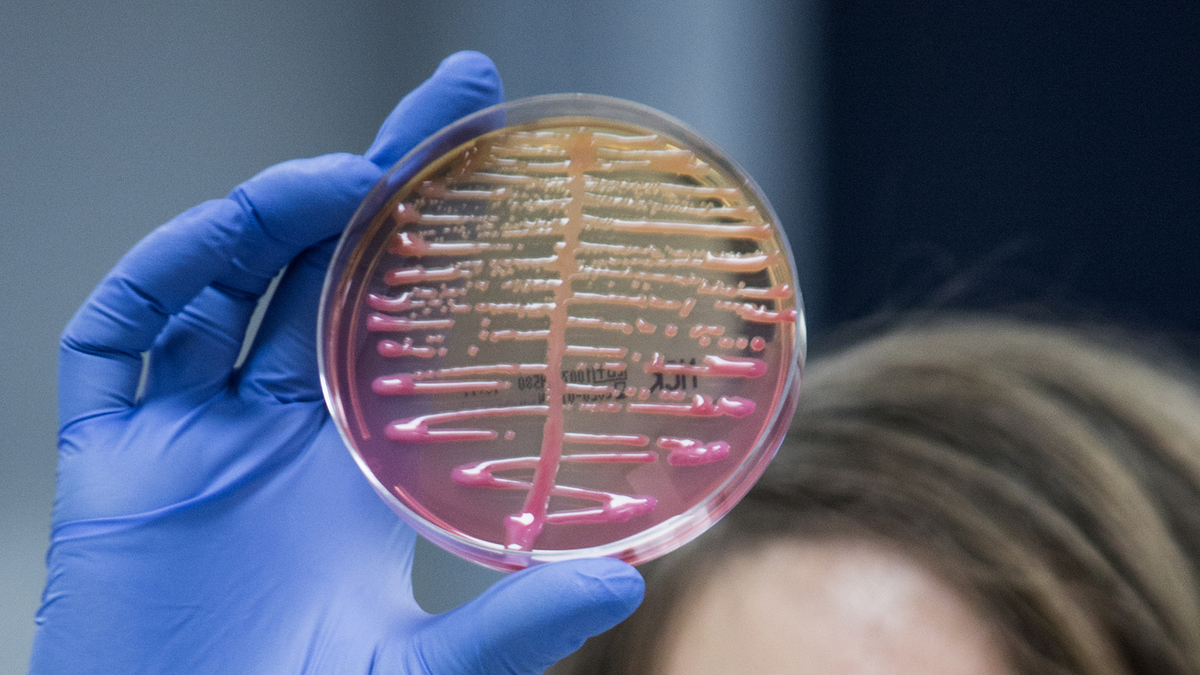
A researcher holds up a plate showing a growth of Klebsiella pneumoniae bacteria from a positive blood culture, December 14, 2019.
| Photo Credit: Chiara Marraccini

Amid the unprecedented challenges presented by the COVID-19 pandemic, a once obscure enzyme found itself in the spotlight: reverse transcriptase. As laboratories worldwide rushed to develop reliable diagnostic tests, techniques using the enzyme became the gold standard to detect the SARS-2 virus, and a cornerstone of molecular diagnostics. This remarkable enzyme didn’t only facilitate rapid and accurate testing; along with another powerful approach — genome-sequencing — it also helped track the virus’s spread, paving the way for surveillance, better public healthcare, and vaccine development.

The discovery of reverse transcriptase is a story unto itself. Researchers in the labs of Howard Temin and David Baltimore independently discovered it and published their findings in back-to-back articles in the journal Nature in 1970. In his paper, Dr. Baltimore suggested that in the vesicular stomatitis virus, a protein called RNA polymerase was involved in reverse-translating RNA to DNA.

A molecular biology revolution

The discovery was transformative. The prevailing belief at the time was that in all living beings, hereditary information flowed only from DNA to RNA and from RNA to protein (a.k.a. the ‘Central Dogma’). The discoveries of Drs. Temin and Baltimore et al. showed information could flow the other way, too, with RNA giving ‘rise’ to DNA. The name “reverse transcriptase” was however coined by the editor of Nature, in an article discussing the significant advance in an accompanying column.

The discovery’s impact was also immediate. The ability of cells to create DNA copies from RNA revolutionised research methods in molecular biology, where researchers could reverse-transcribe messenger RNAs to pieces of DNA, clone that DNA into bacterial vectors, and study the function of the corresponding genes. In diagnostics, clinicians used reverse transcriptase to convert RNA to DNA and thus estimate the amount of viral material in a given sample. This technique quickly found wide application and use in the study of RNA viruses, including hepatitis B and the human immunodeficiency virus (HIV).

Indeed, the discovery of reverse transcriptase had a significant effect on the management and treatment of HIV infections, including Acquired Immunodeficiency Syndrome (AIDS), in the 1980s. A generation of antiviral agents that specifically targeted the reverse transcriptase enzyme helped convert an otherwise deadly disease to one that could be managed, translating to improving the long-term outcomes and survival of people living with AIDS.

Subsequent studies of the reverse transcriptase enzyme since the 1970s led to mechanistic insights into how viruses use this enzyme to replicate, as well.

Retroelements in the human genome

Reverse transcriptases also had a significant role in shaping the human genome.

The human genome is interspersed in many places with sequences, called elements, that appear to have originated from retroviruses. Thus researchers call them retroelements. Evolutionary biologists believe these retroelements to have been transferred horizontally during the course of millions of years of evolution. (Horizontal gene transfer refers to genes ‘jumping’ between organisms rather than from parent to offspring.) And until recently, researchers also considered them to be “junk” elements: they were repeated through the genome and they seemingly did not confer any function to the human organism.

However, recent evidence has suggested that these retroelements could really have had a profound impact on human biology and evolution, and that they play important roles in a variety of physiological processes.

In a recent paper in the journal Nature Communications, researchers extensively studied the expression of genes in different parts of the human brain from post-mortem brain samples. They reported that the expression of more than a thousand human endogenous retroviruses — a major class of retroelements in the human genome — could be associated with a risk of neuropsychiatric diseases in humans.

Retroelements in the human genome and bacterial reverse transcriptases have a common evolutionary history as well as share functional mechanisms. Bacterial reverse transcriptases — believed to be the precursors of their eukaryotic counterparts — exhibit analogous mechanisms.

The discovery of reverse transcriptase activity across the different domains of life underscores the enzyme’s fundamental role in both prokaryotic and eukaryotic systems as well as a remarkable evolutionary continuity and functional versatility.

Writing genes using reverse transcriptase

Researchers widely believed that bacterial reverse transcriptases were the precursors of their eukaryotic counterparts. They discovered the first reverse transcriptase in bacteria in 1989, with papers published back to back in the journals Science and Cell. In bacteria, as in the case of humans, retroelements are categorised as belonging to three broad groups: the Group II introns, the retrons, and the diversity generating retroelements.

In a preprint paper uploaded to the bioRxiv preprint server on May 8, researchers at Columbia University in New York, led by Stephen Tang and Samuel Sternberg, suggested that when the bacteria Klebsiella pneumoniae is infected by bacteriophages — viruses that infect bacteria — they use a non-coding RNA with specific motifs (or structures) that could bind to reverse transcriptase and instruct cells to create DNA. This DNA copy has multiple copies of a gene that can create a specific protein.

The researchers dubbed this protein ‘Neo’ for “never-ending open-reading frame”. It could place the bacterial cell in a state of suspended animation, blocking its replication, and thus stalling the replication of the invading bacteriophage as well. Thus, the infection is stopped in its tracks.

Recent discoveries — including the role of reverse transcriptase in bacterial defence against bacteriophages — hint at the potential of innovative applications in biotechnology and medicine, especially in the context of emerging antimicrobial resistance, the ability of disease-causing microbes to resist the effects of substances designed to incapacitate or kill them. Further exploring reverse transcriptases could also reveal novel mechanisms of genetic evolution and viral resistance, potentially leading to new therapeutic strategies and biotechnological tools.

The authors are senior consultants at Vishwanath Cancer Care Foundation and adjunct professors at IIT Kanpur and Dr. D.Y. Patil Medical College, Hospital & Research Centre, Pune.


Source link

Science Tags:Central Dogma, COVID-19 pandemic, human genome retroelements, Klebsiella pneumoniae, Neo protein, reverse transcriptase, RT-PCR test

Post navigation

Previous Post: India’s May palm oil imports reach 4-month high on price drop-dealers
Next Post: The Science Quiz | Indelible ink

Related Posts

  • What is a birthmark? How does it form?
    What is a birthmark? How does it form? Science
  • IMF chief warns global monetary system not ready for AI cyber threats
    IMF chief warns global monetary system not ready for AI cyber threats Science
  • The Science Quiz | On World Cancer Day
    The Science Quiz | On World Cancer Day Science
  • Gaganyaan Episode 6: Life support: Living in space | The Scope
    Gaganyaan Episode 6: Life support: Living in space | The Scope Science
  • Thiruvananthapuram observatory captures stunning images of rare comet C/2023 A3
    Thiruvananthapuram observatory captures stunning images of rare comet C/2023 A3 Science
  • Astrophysicist Dipankar Banerjee takes charge as director of Indian Institute of Space Science and Technology
    Astrophysicist Dipankar Banerjee takes charge as director of Indian Institute of Space Science and Technology Science

More Related Articles

What the dismissal of Gino defamation lawsuit means for science What the dismissal of Gino defamation lawsuit means for science Science
Data | India tops AI projects in GitHub Data | India tops AI projects in GitHub Science
What ended the ‘dark ages’ in the early universe? Webb telescope finds clue What ended the ‘dark ages’ in the early universe? Webb telescope finds clue Science
India set to transition to hyperlocal extreme weather forecasting India set to transition to hyperlocal extreme weather forecasting Science
SpaDeX Mission | Two satellites just 50 feet away for an exciting handshake says ISRO SpaDeX Mission | Two satellites just 50 feet away for an exciting handshake says ISRO Science
ISRO Chairman S. Somanath receives IAF World Space Award for Chandrayaan-3’s remarkable achievement ISRO Chairman S. Somanath receives IAF World Space Award for Chandrayaan-3’s remarkable achievement Science
SiteLock

Archives

  • September 2026
  • August 2026
  • July 2026
  • June 2026
  • May 2026
  • April 2026
  • March 2026
  • February 2026
  • January 2026
  • December 2025
  • November 2025
  • October 2025
  • September 2025
  • August 2025
  • July 2025
  • June 2025
  • May 2025
  • April 2025
  • March 2025
  • February 2025
  • January 2025
  • December 2024
  • November 2024
  • October 2024
  • September 2024
  • August 2024
  • July 2024
  • June 2024
  • May 2024
  • April 2024
  • March 2024
  • February 2024
  • January 2024
  • December 2023
  • November 2023
  • October 2023
  • September 2023
  • August 2023
  • July 2023
  • June 2023
  • May 2023
  • April 2023
  • March 2023
  • February 2023
  • January 2023
  • December 2022
  • November 2022
  • October 2022
  • September 2022
  • August 2022
  • July 2022
  • June 2022
  • May 2022

Categories

  • Business
  • Nation
  • Science
  • Sports
  • World

Recent Posts

  • Dengue cases in Tamil Nadu decline for third consecutive year as per government data
  • Meloni plans to ban burqas and niqabs in Italian schools, cap foreign students in classrooms
  • TVK regime’s experiment of having two advisers to CM alongside Chief Secretary giving mixed vibes to T.N.’s bureaucratic circles
  • Asian Games 2026: Indian hockey teams don saffron jerseys in opening matches
  • Depositors of finance firm to stage protest on September 21

Recent Comments

  1. Josephjab on UP Teacher Who Asked Students To Slap Muslim Classmate
  2. LarryKef on UP Teacher Who Asked Students To Slap Muslim Classmate
  3. Jasonnekly on UP Teacher Who Asked Students To Slap Muslim Classmate
  4. Jasonnekly on UP Teacher Who Asked Students To Slap Muslim Classmate
  5. Frankenrib on UP Teacher Who Asked Students To Slap Muslim Classmate
  • Sci-Five | The Hindu Science Quiz: On Whale Sharks
    Sci-Five | The Hindu Science Quiz: On Whale Sharks Science
  • Unnatural death of newly married woman demands prompt police investigation: Delhi HC
    CPI will not allow subversion of land reforms in Keralam: Prakash Babu Nation
  • “For 3-4 Years, I Haven’t Performed Well”: Riyan Parag On His Resurgence In IPL 2024
    “For 3-4 Years, I Haven’t Performed Well”: Riyan Parag On His Resurgence In IPL 2024 Sports
  • Access Denied
    Access Denied Nation
  • DC vs KKR, IPL 2024: Rishabh Pant fined ₹24 lakh for second over rate offence
    DC vs KKR, IPL 2024: Rishabh Pant fined ₹24 lakh for second over rate offence Sports
  • When welfare met demographic concerns
    When welfare met demographic concerns Science
  • Jaishankar meets Chinese FM Wang in Laos, pushes for urgency in resolving LAC standoff
    Jaishankar meets Chinese FM Wang in Laos, pushes for urgency in resolving LAC standoff World
  • The Hindu Morning Digest: June 27, 2024
    The Hindu Morning Digest: June 27, 2024 World

Editor-in-Chief:
Mohammad Ariff,
MSW, MAJMC, BSW, DTL, CTS, CNM, CCR, CAL, RSL, ASOC.
editor@artifex.news

Associate Editors:
1. Zenellis R. Tuba,
zenelis@artifex.news
2. Haris Daniyel
daniyel@artifex.news

Photograher:
Rohan Das
rohan@artifex.news

Artifex.News offers Online Paid Internships to college students from India and Abroad. Interns will get a PRESS CARD and other online offers.
Send your CV (Subjectline: Paid Internship) to internship@artifex.news

Links:
Associate Journalism
About Us
Privacy Policy

News Links:
Breaking News
World
Nation
Sports
Business
Entertainment
Lifestyle

Registered Office:
72/A, Elliot Road, Kolkata - 700016
Tel: 033-22277777, 033-22172217
Email: office@artifex.news

Editorial Office / News Desk:
No. 13, Mezzanine Floor, Esplanade Metro Rail Station,
12 J. L. Nehru Road, Kolkata - 700069.
(Entry from Gate No. 5)
Tel: 033-46011099, 033-46046046
Email: editor@artifex.news

Copyright © 2023 Artifex.News Newsportal designed by Artifex Infotech.