





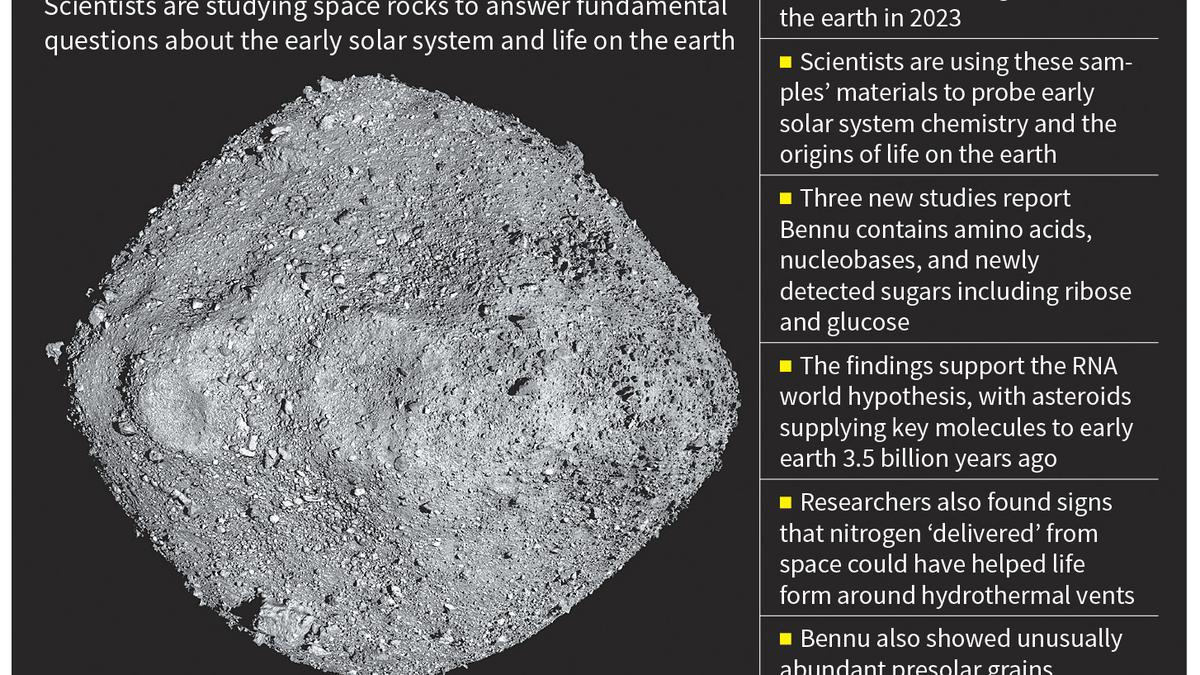
In October 2020, when the world was beginning to come out of a global lockdown, a spacecraft more than 3 lakh km away performed a pogo-stick jump on a small asteroid called Bennu and collected samples of its surface.
The craft, part of NASA’s OSIRIS REx, then launched itself away from the asteroid and towards the earth a few months later. It dropped off the samples inside a canister, which touched down on the earth’s surface using parachutes in September 2023.
Since then, scientists in the US and Japan have been studying pieces of Bennu in an effort to answer fundamental questions about the formation of the early solar system and of life on the earth, and whether its building blocks could have come here from asteroids.
In the latest round of results, three teams published papers on December 2 reporting that Bennu doesn’t only contain amino acids and other important molecules required to form RNA: it also hosts a hard but once-gooey substance as well as a surprising abundance of supernova dust from a time before the sun formed.
New sugar molecules
The planets of our solar system formed from a cloud of dust and gas swirling around the sun, which itself formed around 4.6 billion years ago. In this process, several smaller rocks that had already been floating around in the icy reaches of the solar system were pushed around as well, and they often clumped together.
The larger asteroid from which Bennu broke off formed in this way, around the same time as the sun and somewhere beyond Saturn. When Jupiter migrated to its present orbit, the parent asteroid was kicked into the asteroid belt between Jupiter and Mars, where it collided with other rocks. Over thousands of years, fragments from the parent gave rise to Bennu.
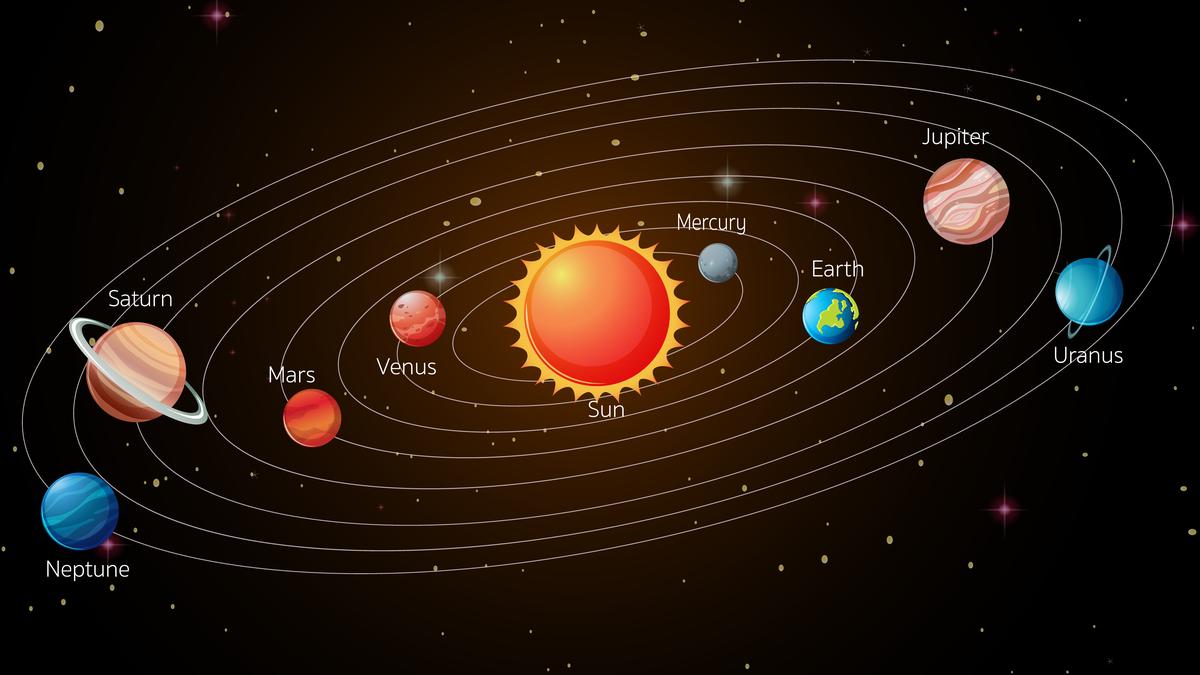
Today, the asteroid Bennu orbits the sun between the orbits of the earth and Mars. In fact, it’s a part of more than 21,000 asteroids scientists call the Apollo group: nearly all their orbits cut across the earth’s at two points.
To study the Bennu samples, NASA collaborated with scientists from the Japanese space agency because it had previously worked with samples from the asteroids Itokawa and the very similar Ryugu. In a paper published in Nature Geoscience, scientists led by those in Tohoku University in Japan reported finding ribose, the sugar molecule present in RNA, and glucose, the sugar molecule required for metabolism, on Bennu.
Together with previously announced findings of amino acids and all the five nucleobases found in DNA and RNA, the entire inventory of molecules scientists believe are needed for life have been confirmed on Bennu.
Such large sugar molecules haven’t been observed on asteroids before; only smaller ones have.
“We had never observed 6-carbon molecules in other asteroids, and this paper answers why,” Kuljeet Kaur Marhas, professor and head of the Planetary Labs Analysis Section at the Physical Research Laboratory, Ahmedabad, who works with samples of the asteroid Itokawa and specialises in the early solar system, said.
“For 5-C to convert to 6-C sugar, the optimal mix of environmental conditions such as very little but liquid brine, the right pH, and extremely low temperatures are required, which the asteroid possessed at formation. The availability of pockets undamaged by exposure to the sun and earth helped make this find.”
The findings strengthen the ‘RNA world hypothesis’: that early life used RNA both as its source of genetic information and to perform catalytic functions before DNA and proteins evolved. According to the study’s authors, the abundant presence of asteroids like Bennu in the inner solar system would have provided sugars and amino acids for the region, eventually leading to the formation of life on the earth more than 3.5 billion years ago.
Scientists have also reported evidence of chemical reactions between ices leading to the formation of polymer molecules before the ices melted. In a paper published in Nature Astronomy, a second team from NASA thus explained the discovery of polymers of nitrogen- and oxygen-rich materials on Bennu.
This material, called carbamate, would have been soft and gummy when it formed and could have hardened since. Scientists haven’t found this material in extraterrestrial samples before — nor have such long polymer chains been observed in an asteroid before.
There are some reasons to believe the first earthlife formed around hydrothermal vents — fissures in the seafloor releasing hot fluids rich in minerals and which have been known to support ecosystems dependent on chemosynthesis, rather than sunlight. But this theory missed a crucial ingredient: a source of nitrogen, which is required for RNA.
But the new findings strengthen the possibility that life was instead seeded from outer space thanks to the nitrogen-rich polymers on Bennu.

Presolar grains
At the time Bennu’s parent asteroid formed, volatile compound ices like ammonia (i.e. frozen ammonia) that are known to accumulate on asteroids’ primordial surface could have been subjected to occasional heat from random radioactive decay. This would have liquefied the ices. Subsequently the liquids could have seeped into rocky pores and deposited the salts and minerals dissolved in them there. And Bennu could have ‘inherited’ a piece of this action.
Dust and gas in the early presolar system, i.e. before the sun, were formed from other exploding stars in the past. By analysing these grains of dust, astronomers hope to find clues about the elements that made up the dust and gas in the early solar system, which could help understand how planets and other bodies formed.
In a third paper also published in Nature Astronomy, a different NASA team showed that the presolar grains on Bennu had indeed been disturbed and moved around by moving liquids on the asteroid’s surface. Importantly, the concentration of presolar grains was at least six-times higher than in other similar asteroid and meteorite samples scientists have studied before. The team also reported signs of nebular heating, i.e. of the grains having been singed by the heat released when the great mass of dust collapsed to form our sun.
Studies of the grains revealed that they originated from various types of stars and supernovae (the dying explosions of massive stars). Of these, the concentrations of grains of supernovae-origin were the highest, indicating it was present in abundant quantities in the part of space where Bennu’s parent formed.
“Why exactly there is an abundance of supernova-origin presolar grains is the biggest question, as Bennu is just like plenty of other asteroids in its neighborhood,” Dr. Marhas, who also reviewed the second Nature Astronomy paper, said. “Will we find similar concentrations if we sample previously studied asteroids in different locations or is there something specific that makes the ordinary-seeming Bennu extremely special?”
Sandhya Ramesh is a freelance science journalist.
Published – January 01, 2026 06:00 am IST