

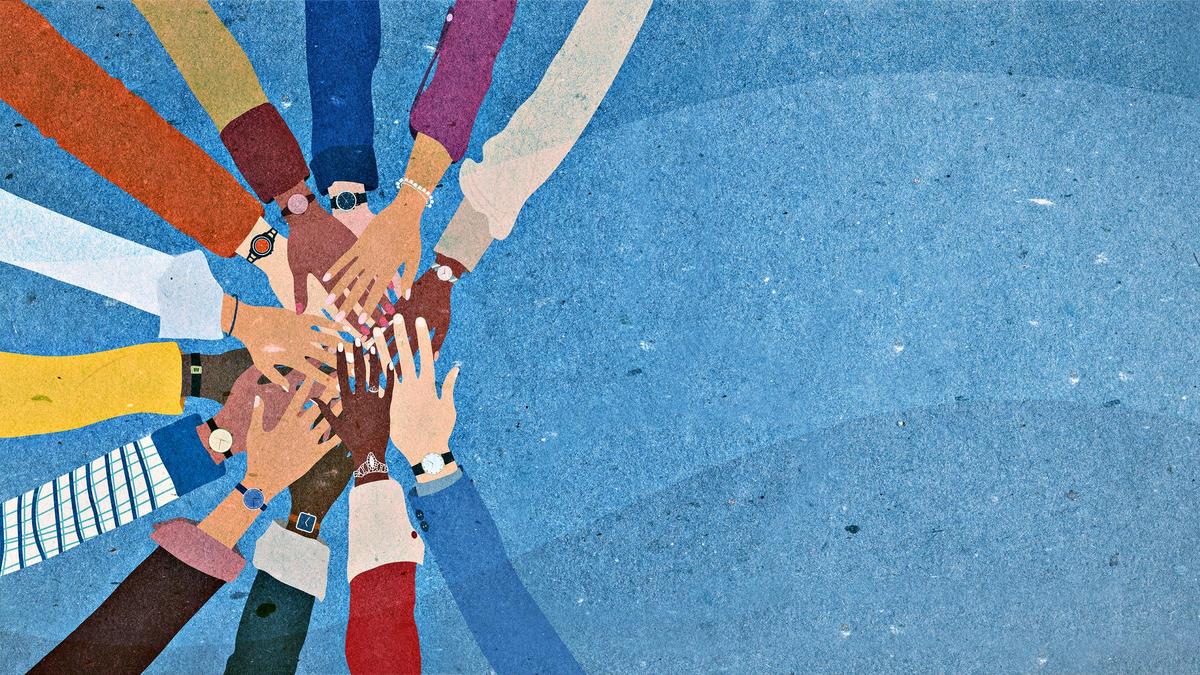
India is home to more than 1.4 billion people, thousands of communities, hundreds of languages, and five major language families. Many communities have historically practised endogamy and in some regions, consanguineous marriage. This is both a social and a biological fact with medical consequences. India is not one genetic population. Indians carry a layered inheritance shaped by ancient migration, mixing, isolation, ecology, language, culture and marriage patterns.
Our political map shows States and districts. Our genetic map often shows boundaries shaped by communities that lived near each other but did not always marry into each other. This matters, because genes influence inherited diseases, drug response, disease risk prediction, and the success of screening programmes.
Ancient layers
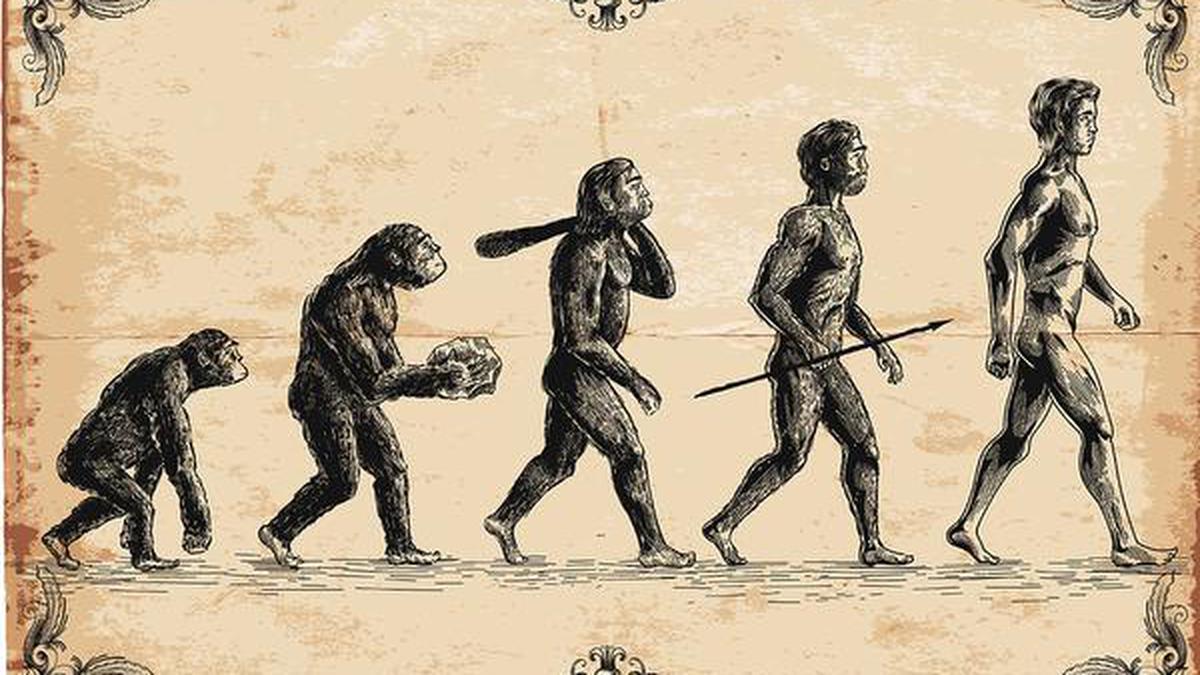
There is no single Indian genome. The oldest layer of Indian ancestry goes back to early modern humans who reached South Asia tens of thousands of years ago. This ancient ancestry forms the deep foundation of the subcontinent’s population history. Later came other ancestry layers linked to populations associated with the Iranian plateau, the Indus Valley world, Steppe pastoralists, and Tibeto-Burman-speaking groups. These movements were not like a single flood covering the whole land evenly. They came through different doors, at different times, and settled into different social worlds. That is why a Punjabi agrarian group, a Tamil caste group, a tribal population in Central India, a North-Eastern community, and an indigenous island community from the Andaman and Nicobar Islands cannot be treated as genetically identical. Some remote island populations preserve deeply distinctive ancestral lineages because of long isolation. But even here, caution is needed. No living community is a fossil.
Genetics can complicate community pride. A community may have a strong language, faith, identity, regional history, or story of origin. These identities matter. They give people belonging. But genes do not always obey the neat boundaries of culture. A group may preserve a language or ritual for centuries while carrying ancestry from multiple ancient sources. Two neighbouring communities may share a landscape but remain genetically distinct because they did not intermarry. Another two groups may speak different languages but share some older ancestry. Cultural continuity does not require genetic purity. It is a story of movement, mixture, separation, adaptation, and memory.

Marriage and disease patterns
After ancient mixing, many Indian communities became socially closed. Endogamy–marriage within a social group, and consanguinity–marriage between biological relatives, became the norm. Both can increase the chance that two parents carry the same rare recessive disease variant. We inherit two copies of most genes, one from the mother and one from the father, and in recessive diseases, a person with one altered copy remains healthy (called a carrier), while persons with two altered copies get the disease. If two carriers of the same disease-causing variant have a child, each pregnancy has a 25% chance of producing an affected child. This is why a child can be born with a serious genetic disease even when both parents are healthy. The family may have no known disease history, but the risk gene may have travelled silently through generations.
When a small community remains genetically closed for centuries, a rare variant present in an ancestor can become more common among descendants. This is called the ‘founder effect’. This is central to India’s public health future. Sickle cell disease is more common among several tribal populations in Central, Western, and Southern India. This pattern reflects old malaria pressure, population structures, and local history. Thalassaemia and other haemoglobin disorders also show region-specific and community-specific patterns. Some metabolic disorders, neuromuscular conditions, inherited hearing disorders, and rare recessive conditions may cluster in particular groups.
The correct message is that specific populations may carry specific risks, and knowing those risks can prevent suffering. Genetics should not be used to label communities; it should be used to guide screening, counselling, diagnosis, and care.

Testing and counselling
Genetic testing without counselling can do harm. A carrier may wrongly think that they are diseased. A family may blame the mother. A marriage proposal may be rejected because a test result is misunderstood. A whole community may feel stigmatised. This is why genetic counselling is not an ornamental part of modern medicine. It is the ethical bridge between a laboratory report and a family decision. Good counselling explains risk without panic. It tells people that being a carrier is common and usually harmless. It helps couples understand reproductive choices. It protects autonomy. It avoids coercion. Carrier screening, when voluntary and confidential, can help couples know their risks before the birth of an affected child. Newborn screening can identify treatable disorders early. Better rare disease diagnosis can end the long and exhausting journey that many families face, moving from one hospital to another without an answer.

Data gap
India does not yet have a large, deeply characterised, health-linked biobank comparable to resources such as the U.K. Biobank. Such a resource would not merely store DNA. It would connect genetic data with health records, laboratory results, imaging, drug response, and long-term outcomes. It would include India’s internal diversity, not only convenient urban samples. It would also require trust, consent, privacy protection, community engagement, and strong ethical governance.
Large population datasets can help identify new disease mechanisms and molecular targets for new medicines. This gap matters. A genetic risk score for diabetes or heart disease developed mainly in European populations may not work accurately in Indian populations. A drug-response marker common in one ancestry group may be uncommon in another. A rare disease variant important in one Indian community may be missed if reference databases are dominated by non-Indian genomes. Precision medicine will remain imprecise if the populations behind it are mismatched.

Mapping medical futures
India’s genetic mosaic is not merely an ancestry story, but a medical map. It can help prevent inherited diseases, improve newborn screening, guide safer prescribing, diagnose rare disorders earlier, and support drug discovery. But the map must be read carefully. Genetics should not be used to make claims of purity, rank communities, or frighten families. Its value lies in the responsibility to turn knowledge into care.
The Indian genome is not a single national portrait. It is a mosaic made of many tiles some ancient, some recent, some widely shared, and some found in small communities and still barely studied. Medicine now has the tools to read this mosaic. Our task is to read it responsibly, without cultural arrogance, without stigma, and without delay.
(Dr. C. Aravinda is an academic and public health physician. aravindaaiimsjr10@hotmail.com; Dr Veera Rajagopal is a physician-scientist and chief scientific officer at Wellytics, a health and wellness solutions company. veera.scientist@gmail.com)
Published – May 13, 2026 01:35 pm IST