






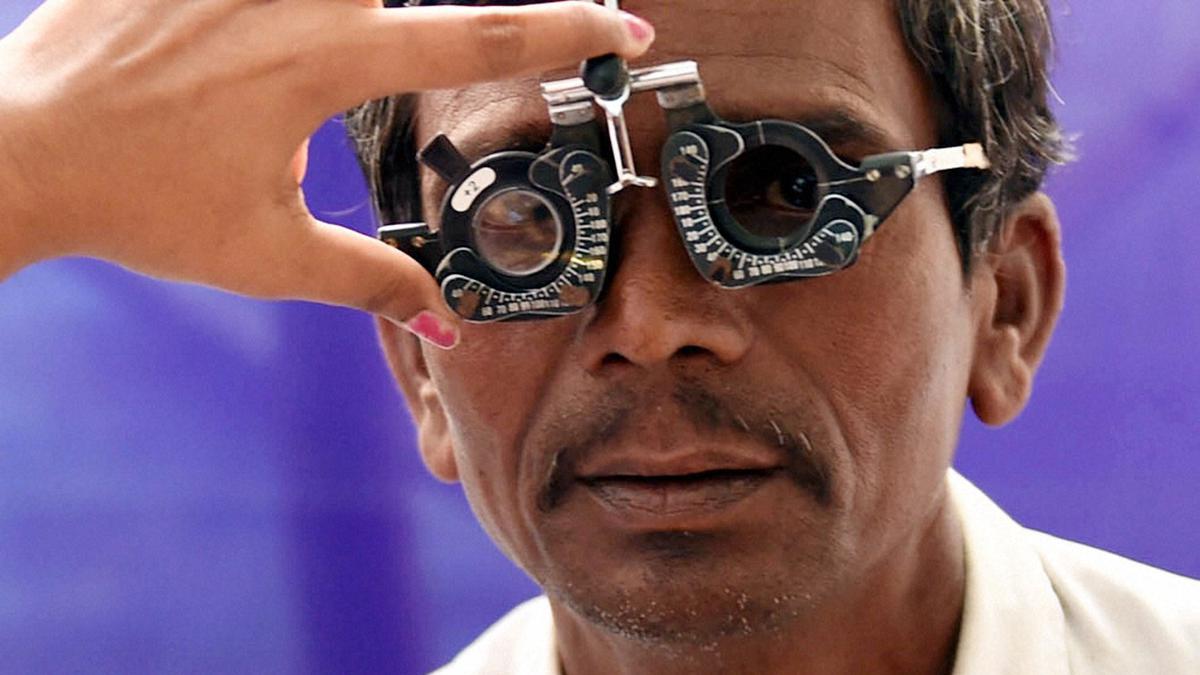
We all know, by now, that Artificial Intelligence (AI) is a branch of computer science that focuses on creating computer systems and software that can perform tasks like problem-solving, learning, reasoning, understanding natural language, and perceiving the environment. The aim of AI is to develop systems that can mimic and replicate various aspects of human intelligence or cognitive functions, and thereby automate and enhance processes, make predictions, assist in decision-making, and improve the efficiency and capabilities of systems and devices.
If AI is touching everything in modern life, then it cannot possibly leave out medicine, can it?
There are certain aspects of artificial intelligence that make it particularly useful in medicine. For instance, AI can analyse data from sensors and predict when equipment or machinery will require maintenance, reducing downtime. This, as you can imagine, will be massively useful in hospitals and clinics, particularly in procedures and diagnostics, where we constantly use some form of machinery to treat patients. Additionally, AI can be used, with machine learning, to analyse and interpret images and videos, making it useful in reading and coming up with interpretations of scans and other diagnostics, based on the data we have fed it already. Already, robotics has been employed in precision surgery, with good outcomes, and faster recovery periods. AI is being used in commerce to tailor recommendations on social media, and it is to be seen whether this application might assist in patient care too.
But the basic question that we must ask in medicine is: can a computer perform better than a human brain? Then the answer is Yes, particularly in the field of ophthalmology.
Potential uses
AI has made significant advancements in the field of ophthalmology, offering a range of potential applications that can improve patient care and enhance the efficiency of eye disease diagnosis and treatment. In fact, we are among the early adopters of AI for health care, and some of the key uses are:
Retinal disease diagnosis: AI algorithms can analyse retinal images, such as fundus photographs and optical coherence tomography (OCT) scans, to detect and classify various retinal diseases, including diabetic retinopathy, age-related macular degeneration (AMD), and glaucoma. These AI systems can help identify diseases at an early stage, allowing for timely treatment and reducing the risk of vision loss.
Automated screening: AI-powered screening programmes can assist in the early identification of eye diseases by analysing large datasets of retinal images. This can be particularly useful in regions with limited access to ophthalmologists, and in mobile medical camps.
Glaucoma diagnosis and management: AI can aid in monitoring glaucoma progression by analysing visual field tests and OCT scans. It helps ophthalmologists in making more informed decisions about the treatment and management of glaucoma patients.
Customised treatment plans: AI can recommend personalised treatment plans for patients with conditions like AMD. By analysing patient data and clinical information, AI can assist in tailoring treatment strategies to maximise effectiveness. Already,AI is also being used regularly by ophthalmologists in surgical assistance. During eye surgeries, AI can provide real-time guidance to surgeons by tracking eye movements, enhancing precision, and reducing the risk of complications. AI is also used to diagnose and stage Retinopathy of Prematurity(ROP) , a blinding disease affecting premature& low birth weight babies and in telemedicine.
Discovering new drugs
Besides these regular areas, AI is also being used to discover new drugs for ophthalmic conditions by analysing vast datasets to identify potential therapeutic targets and compounds and in predicting whether individuals may develop eye diseases, based on their health records, lifestyle factors, and genetic data. This can help in early intervention and preventive care. Besides this, there is the rather well-known deployment of AI in managing and analysing electronic health records and keeping them secure. More recently, AI is being used in ophthalmic research to model disease pathways, thus speeding up the development of new treatments and technologies.
There is a great deal of work that we have to do though, before AI can be let loose. In ophthalmology, as perhaps any other crucial field, deployment of AI involves a systematic procedure that includes data acquisition, preprocessing, model development, validation, and deployment. Since what we input into the software in order to generate output, it is important to make sure that this data is accurate. So, the first step is to gather a large and diverse dataset of relevant ophthalmic images and patient records. These datasets may include fundus photographs, OCT scans, visual field tests, and other types of eye-related data. The data is appropriately de-identified and anonymised to maintain patient privacy.
After that, we need to ‘clean up’ the data to remove artifacts, low-quality images, and other irrelevant information. It is standardised and normalised to ensure consistency in terms of format, resolution, and colour. It is then annotated, and labelled with relevant information (e.g., disease diagnosis, severity levels, patient demographics). The data must be divided into three subsets: training, validation, and testing data. A common split is 70% for training, 15% for validation, and 15% for testing. The training dataset is used to teach the AI model, the validation dataset is used to fine-tune the model and optimise hyperparameters, and the testing dataset is used to evaluate the model’s performance.
Feature extraction
We also need to extract relevant features from the images or data. For ophthalmic images, this could involve detecting blood vessels, optic discs, or lesions. Feature extraction is particularly important for traditional machine-learning approaches. Post that, it is time to focus on model development. Convolutional Neural Networks (CNNs) are commonly used for image-based ophthalmic applications. The model has to be taught to recognise patterns and make predictions based on the provided data. It is fine-tuned using the validation dataset and parameters are adjusted as needed until it reaches an acceptable level of performance.
Then we must assess the model’s performance using the testing dataset. Common evaluation metrics include accuracy, sensitivity, specificity, and area under the receiver operating characteristic curve. Only when the AI model demonstrates sufficient accuracy and reliability, can it be integrated into clinical practice. After deployment, it is important to continue to monitor the AI system’s performance, especially in real-world clinical settings.
As far as approvals go, it is also important to ensure that the AI system we have developed complies with regulatory requirements and obtains the necessary approvals required to operate in the region. (e.g., FDA approval in the U.S.).We would also advise constant collaboration with other ophthalmologists to ensure that the AI is on track, and in tune with the developments.
Smart vision glasses
An innovation that has come to really benefit people with vision impairments is the smart vision glasses. These glasses incorporate a combination of hardware, software, and artificial intelligence (AI) to provide a range of features aimed at improving the visual experience for those with vision challenges. Smart glasses are equipped with cameras and sensors to capture the user’s surroundings. Advanced image recognition algorithms and AI are employed to identify and describe objects, text, people, and more within the wearer’s field of vision. This information is then conveyed to the user, often through audio feedback. Smart glasses can also convert printed text into audible speech, allowing users to “read” signs, documents, labels, and other text-based content. This helps individuals navigate and understand their environment. The glasses can offer real-time directions, guiding users through indoor and outdoor spaces using GPS and mapping data.
While we have enumerated the multiple benefits of using AI systems, it will be half the job done if we do not acknowledge some pain points. For instance, AI systems heavily depend on high-quality, diverse, and unbiased datasets. If the training data is flawed, biased, or unrepresentative, it can lead to inaccurate or biased AI predictions. Naturally, once technology goes digital, regulatory and ethical challenges related to issues of data privacy, informed consent, and patient trust crop up. AI models need rigorous validation in real life clinical setting, and unless updated regularly with emerging data sets, can become outdated. Also, determining responsibility in case of errors made by AI in healthcare can be legally complex. The costs of implementing AI in health care are prohibitively high, not something every institution can afford.
But this is the ultimate bottom line: Even if clinicians employ AI as a valuable tool for ophthalmology, aiding in early disease detection, diagnosis, and treatment, ultimately leading to improved eye health and quality of life for patients, AI should merely complement, not replace, human clinicians. Ophthalmologists must be able to interpret AI-generated recommendations and maintain clinical judgment.
(Dr. Mohan Rajan is Chairman & Medical Director, Rajan Eye Care.drmohanrajan@gmail.com)