


Skip to content
  • Facebook
  • X
  • Linkedin
  • WhatsApp
  • YouTube
  • Associate Journalism
  • About Us
  • Privacy Policy
  • 033-46046046
  • editor@artifex.news
Artifex.News

Artifex.News

Stay Connected. Stay Informed.

  • Breaking News
  • World
  • Nation
  • Sports
  • Business
  • Science
  • Entertainment
  • Lifestyle
  • Toggle search form
  • Buchi Babu tournament: Madhya Pradesh appears to have an edge over Delhi in the summit clash
    Buchi Babu tournament: Madhya Pradesh appears to have an edge over Delhi in the summit clash Sports
  • Access Denied World
  • Morning Digest | New Parliament to host session from September 19; Army jawan abducted and murdered in Manipur, and more
    Morning Digest | New Parliament to host session from September 19; Army jawan abducted and murdered in Manipur, and more World
  • Abhishek Nayar likely to be Gambhir’s assistant
    Abhishek Nayar likely to be Gambhir’s assistant Sports
  • Nara Lokesh On Manmohan Singh Going Against YSR To Give Security To C Naidu
    Nara Lokesh On Manmohan Singh Going Against YSR To Give Security To C Naidu Nation
  • Avalanches can grow 100-times larger undersea than on land
    Avalanches can grow 100-times larger undersea than on land Science
  • Sandeep Dikshit Confident Of Win, To File Nomination Today
    Sandeep Dikshit Confident Of Win, To File Nomination Today Nation
  • What is the latest science telling us about climate change?
    What is the latest science telling us about climate change? Science
Round peg in a square hole: How doctors pulled off cross-blood transplant in patient with rare Bombay blood group

Round peg in a square hole: How doctors pulled off cross-blood transplant in patient with rare Bombay blood group

Posted on February 9, 2025 By admin


It was in his blood that the 30-year-old male should create history. Literally.

In mid-2024, the patient underwent a kidney transplant. Though he was relatively young for a transplant, that’s not where he stands unique. He had the extremely rare Bombay blood group, which prevented him from receiving organs or even blood transfusions from anyone who didn’t have the same blood group running through their veins.

But then that’s exactly what he did: his mother donated her kidney, though she did not have the Bombay blood group. Doctors at MIOT International in Chennai, who had performed cross-blood transplants for close to two decades, were willing to cross the rubicon into a sector with no precedence whatsoever: no one had attempted a cross-blood match on a Bombay group patient ever before.

A sheer miracle

In a recent paper published in the peer-reviewed journal Kidney International Reports, the team that worked on the transplant — Rajan Ravichandran, Yashwanth Raj T., and Kanakaraj Arumugam — chronicled for posterity how a team of doctors in Chennai pulled off what not long ago might have been put down as a sheer miracle. “It was impossible for Bombay blood group patients to receive blood or organs from another blood group, until it was not,” senior nephrologist Dr. Ravichandran explained.

The story he believes begins nearly two decades ago, when he was trained in Japan to perform cross-blood transplants, referring to the transplantation performed when donors and recipients have different blood types. In 2010, he and his team at MIOT Hospitals used a kidney from a donor with B blood group on a recipient with O blood group, successfully. Using a special procedure called double filtration plasmapheresis (DFPP) developed by the Japanese, the team had the patient discharged in a week and back at his software job in three months’ time.

“The most essential requirement in transplantation is a blood group match — ideally, the patient’s own blood group, or in the event it is not available any group for which his blood does not carry antibodies,” Dr. Ravichandran explained.

Antibodies are used by the body to detect and neutralise foreign bodies while antigens are proteins or carbohydrates found on the surface of red blood cells, white blood cells, and platelets, and they determine blood type. 

The Bombay blood group

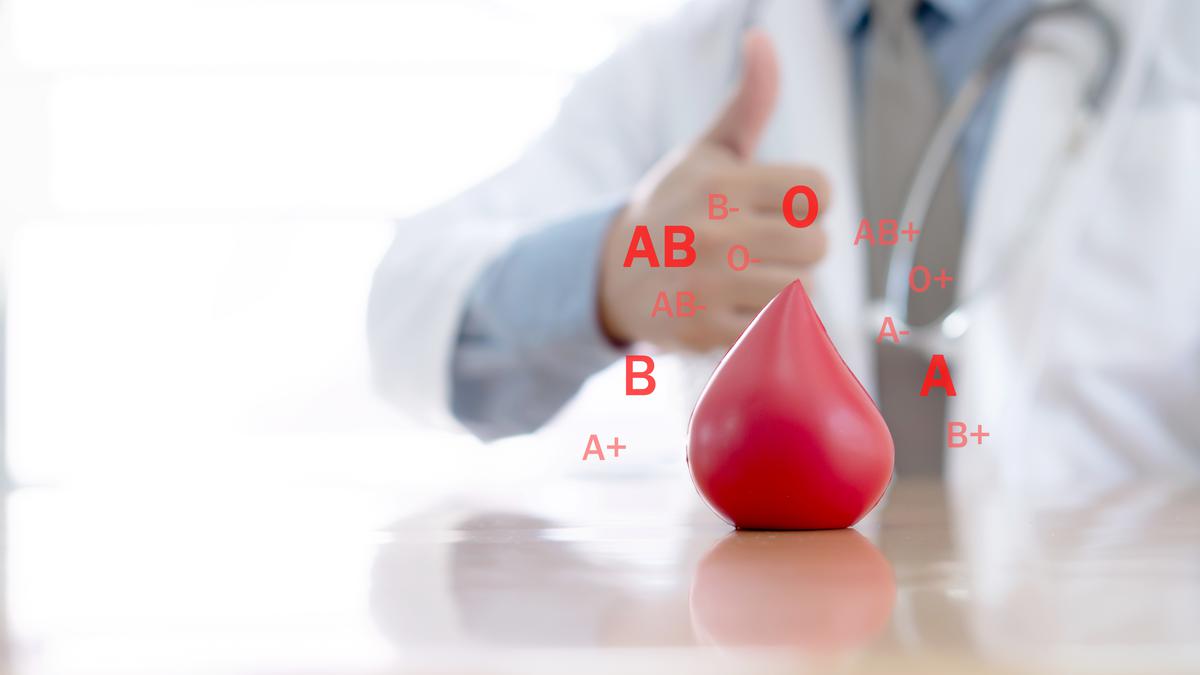
The Bombay, a.k.a. HH, blood group is a rare blood group first discovered in Mumbai in 1952 by Y.M. Bhende. The key differences between the Bombay blood group and the common ABO blood groups lie in the presence (or absence) of the H antigen, which is the fundamental building block for the ABO blood group system.

In normal individuals, the H antigen serves as the base structure for building A and B antigens. In Bombay blood group individuals, the gene responsible for producing the H antigen is mutated or absent, so neither A nor B antigens can be formed.

Therefore, these people cannot receive blood transfusions from any ABO group, including type O, which has the H antigen. They can only receive blood from another Bombay blood group donor. Its prevalence is about 0.0004% (one in 4 million) of the total human population. While it drops to one in a million in the European population and one in 10,000 in Mumbai, the act of finding a donor is still daunting.

Clinical challenges

It was daunting for this index patient as well. The issue was not to find a donor for a kidney: his mother was eager to donate hers; the nub was that his body would reject it outright because they had differing blood groups. “We decided that it was time to use the principles of cross-blood matching that we use for the ABO type here as well. We assumed it was a similar situation and decided to use the Japanese technique of DFPP,” Dr. Ravichandran said.

“Once you identify the Bombay blood group, you know he has anti-H antibodies. Firstly, we measure anti-A and anti-B antibodies in the blood as we do in the case of ABO cross-blood matches. Here, additionally, you have to measure the levels for anti-H antibodies too, and titrate the levels. The next step is to give a monoclonal antibody injection to the patient to deplete B cells that produce antibodies,” he said.

As the authors detailed in the paper, the clinical challenges in such a scenario, even among those with rich cross-blood transplant experience in ABO, include determining a safe anti-H antibody titre cut-off, sufficient enough to stop the body from rejecting the organ from the donor.

Notably, there is no precedence for this, so one had to, again, assume a safe level of antibody concentration. There is a high risk of hyper-acute rejection as anti-H antibodies are more potent than anti-A or anti-B antibodies.

“After determining the titre (levels) of antibodies, we started plasmapheresis, which again removes the antibodies in the blood, lowering the chances of rejection. This was combined with immunosuppressive IVIG [intravenous immunoglobulin] to further suppress antibodies, thereby preventing hyperacute rejection of the organ.”

Every alternate day, the team measured the level of antibodies in the patient. “Normally for anti-A and anti-B, we consider a 1-in-16 concentration of antibody to be an ideal safe point to start transplant. It starts at 1-in-256, we then bring it down, lower the antibodies present. In anti-H there just is no cut off, so we made a few assumptions,” he said.

A new hope

At what was assumed to be a safe, no-rejection antibody titre, the transplant surgery was performed. The team scoured the State for units of Bombay blood group units, just in case the patient might need it during transplant surgery, since cross-blood transfusion is not possible. However, he did not need it. The surgery passed off a breeze and there were no complications during or after surgery, the team said.

While there is no published literature regarding accommodation of anti-H antibodies by the graft, as it had not been tested before, in this patient the doctors seemed to have achieved a no-rejection antibody titre status, and there was no rejection. The first two weeks, which are also crucial to decide if the organ will be rejected, also passed without incident, the doctors said.

Six months later, the patient is well and able to resume his pre-transplant activities, grateful at how the impossible became possible for him — and hopefully, for others in the Bombay blood group as well, if they are ever to require a transplant.

Published – February 10, 2025 03:22 am IST


Source link

Science

Post navigation

Previous Post: Will the baby be a boy or a girl? SRY gene claims to have the answer
Next Post: Gold, silver on a roll

Related Posts

  • Remembering Rosalind Franklin, whose photograph was crucial to discovering DNA’s structure
    Remembering Rosalind Franklin, whose photograph was crucial to discovering DNA’s structure Science
  • Antimicrobial resistance: Charles Darwin was right; India’s drug policy isn’t
    Antimicrobial resistance: Charles Darwin was right; India’s drug policy isn’t Science
  • Is it possible to remove microplastics from water?
    Is it possible to remove microplastics from water? Science
  • OpenAI identifies security issue involving third-party tool, says user data was not accessed
    OpenAI identifies security issue involving third-party tool, says user data was not accessed Science
  • Scientists use ‘atomic stencils’ to make designer nanoparticles
    Scientists use ‘atomic stencils’ to make designer nanoparticles Science
  • Lost in space? You might need just two stars to find your way
    Lost in space? You might need just two stars to find your way Science

More Related Articles

Extinct volcanoes could help sate humanity’s hunger for rare earth elements Extinct volcanoes could help sate humanity’s hunger for rare earth elements Science
Record temperatures in the Great Barrier Reef seen in the last decade Record temperatures in the Great Barrier Reef seen in the last decade Science
Does frequently updating COVID-19 vaccines have any benefits? | Explained Does frequently updating COVID-19 vaccines have any benefits? | Explained Science
Scientists, diplomats should discuss evolution of quantum computing, says Swiss foundation head Marilyne Andersen Scientists, diplomats should discuss evolution of quantum computing, says Swiss foundation head Marilyne Andersen Science
ISRO’s ‘heaviest’ CMS-03 communication satellite launched, successfully placed in intended orbit ISRO’s ‘heaviest’ CMS-03 communication satellite launched, successfully placed in intended orbit Science
Comet C/2023 A3 thrills astrophotography enthusiasts Comet C/2023 A3 thrills astrophotography enthusiasts Science
SiteLock

Archives

  • May 2026
  • April 2026
  • March 2026
  • February 2026
  • January 2026
  • December 2025
  • November 2025
  • October 2025
  • September 2025
  • August 2025
  • July 2025
  • June 2025
  • May 2025
  • April 2025
  • March 2025
  • February 2025
  • January 2025
  • December 2024
  • November 2024
  • October 2024
  • September 2024
  • August 2024
  • July 2024
  • June 2024
  • May 2024
  • April 2024
  • March 2024
  • February 2024
  • January 2024
  • December 2023
  • November 2023
  • October 2023
  • September 2023
  • August 2023
  • July 2023
  • June 2023
  • May 2023
  • April 2023
  • March 2023
  • February 2023
  • January 2023
  • December 2022
  • November 2022
  • October 2022
  • September 2022
  • August 2022
  • July 2022
  • June 2022
  • May 2022

Categories

  • Business
  • Nation
  • Science
  • Sports
  • World

Recent Posts

  • Udaipur: Dalit bride’s humiliation rally villagers to demand police action; political parties join
  • Three Indian-origin men in Canada convicted of couple’s murder
  • Union Minister Sanjay Kumar’s son booked under POCSO; files extortion counter-complaint
  • Pakistan security forces kill 5 terrorists in Khyber Pakhtunkhwa
  • Fadnavis asks officials to fast-track water conservation works amid El Niño concerns

Recent Comments

  1. Gregoryfam on UP Teacher Who Asked Students To Slap Muslim Classmate
  2. JasonCobby on UP Teacher Who Asked Students To Slap Muslim Classmate
  3. Jamesnep on UP Teacher Who Asked Students To Slap Muslim Classmate
  4. CalebKar on UP Teacher Who Asked Students To Slap Muslim Classmate
  5. Alvinadubs on UP Teacher Who Asked Students To Slap Muslim Classmate
  • Chinese premier promises more pandas and urges Australia to put aside differences
    Chinese premier promises more pandas and urges Australia to put aside differences World
  • Taiwan president says island ‘will not bow’ to China’s pressure
    Taiwan president says island ‘will not bow’ to China’s pressure World
  • Access Denied Sports
  • Access Denied Sports
  • Odisha Announces Rs 20,000 Monthly Pension For People Jailed During Emergency
    Odisha Announces Rs 20,000 Monthly Pension For People Jailed During Emergency Nation
  • Turkey’s Erdogan says Ankara terrorists failed in bid to threaten peace
    Turkey’s Erdogan says Ankara terrorists failed in bid to threaten peace World
  • Scrap Dealer Arrested In Baba Siddique Murder Case, Total Arrests Reach 10
    Scrap Dealer Arrested In Baba Siddique Murder Case, Total Arrests Reach 10 Nation
  • Access Denied World

Editor-in-Chief:
Mohammad Ariff,
MSW, MAJMC, BSW, DTL, CTS, CNM, CCR, CAL, RSL, ASOC.
editor@artifex.news

Associate Editors:
1. Zenellis R. Tuba,
zenelis@artifex.news
2. Haris Daniyel
daniyel@artifex.news

Photograher:
Rohan Das
rohan@artifex.news

Artifex.News offers Online Paid Internships to college students from India and Abroad. Interns will get a PRESS CARD and other online offers.
Send your CV (Subjectline: Paid Internship) to internship@artifex.news

Links:
Associate Journalism
About Us
Privacy Policy

News Links:
Breaking News
World
Nation
Sports
Business
Entertainment
Lifestyle

Registered Office:
72/A, Elliot Road, Kolkata - 700016
Tel: 033-22277777, 033-22172217
Email: office@artifex.news

Editorial Office / News Desk:
No. 13, Mezzanine Floor, Esplanade Metro Rail Station,
12 J. L. Nehru Road, Kolkata - 700069.
(Entry from Gate No. 5)
Tel: 033-46011099, 033-46046046
Email: editor@artifex.news

Copyright © 2023 Artifex.News Newsportal designed by Artifex Infotech.