
Skip to content
  • Facebook
  • X
  • Linkedin
  • WhatsApp
  • YouTube
  • Associate Journalism
  • About Us
  • Privacy Policy
  • 033-46046046
  • editor@artifex.news
Artifex.News

Artifex.News

Stay Connected. Stay Informed.

  • Breaking News
  • World
  • Nation
  • Sports
  • Business
  • Science
  • Entertainment
  • Lifestyle
  • Toggle search form
  • Why the tax cuts are a one way gamble
    Why the tax cuts are a one way gamble Business
  • CBI Plan To Crack Paper Leak Cases
    CBI Plan To Crack Paper Leak Cases Nation
  • Cops On ‘Pushpa 2’ Premiere Stampede
    Cops On ‘Pushpa 2’ Premiere Stampede Nation
  • BSE expects record-breaking IPO run to continue unabated in 2025, CEO says
    BSE expects record-breaking IPO run to continue unabated in 2025, CEO says Business
  • Access Denied
    Access Denied Nation
  • Warren Buffett Changes His Will, Reveals What Will Happen To His Money After Death
    Warren Buffett Changes His Will, Reveals What Will Happen To His Money After Death World
  • Yemeni port still burning days after Israeli air strikes
    Yemeni port still burning days after Israeli air strikes World
  • Access Denied World
Avalanches can grow 100-times larger undersea than on land

Avalanches can grow 100-times larger undersea than on land

Posted on September 5, 2024 By admin


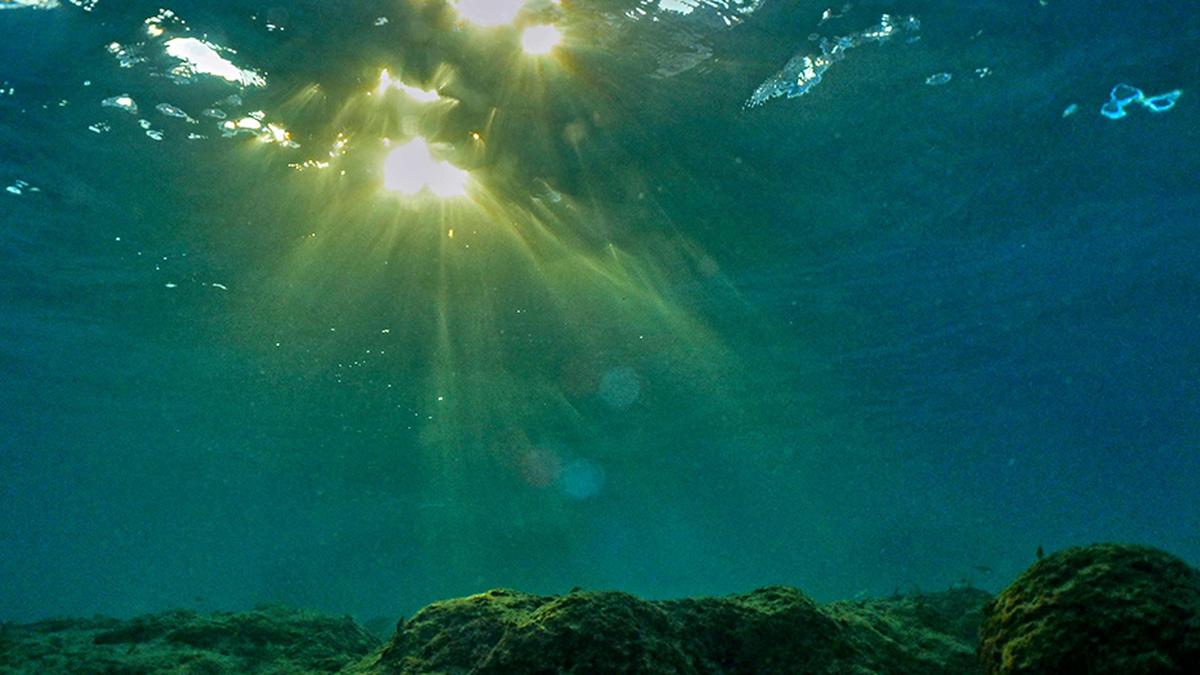
This underwater photograph shows light penetrating the water surface in the Mediterranean Sea off the coast of Batroun city on August 1, 2023.
| Photo Credit: AFP

Underwater avalanches are powerful natural events that happen all the time under the surface of the ocean. They are impossible to see and extremely difficult to measure, which means we know little about how they work.

Yet these phenomena pose a hazard to our global communication networks. The proliferation of the internet has required an ever-expanding network of fibre-optic seabed cables, which carry practically all global internet traffic.

My new study of an ancient underwater avalanche challenges our understanding of how underwater avalanches develop and may change the way geologists assess their risk potential.

It is estimated that there are now over 550 active seafloor cables around the world with a combined length of 1.4 million km – enough to wrap around the circumference of the Earth 35 times.

When a underwater avalanche breaks seafloor cables, the effects can be widespread and expensive. The 2006 Pingtung earthquake in Taiwan triggered underwater avalanches that cut many seafloor cables connecting southeast Asia with the rest of the world. The largest internet operator in China reported 90% loss of traffic to the US at the peak of the event and Taiwan experienced between 74-100% loss in internet traffic to neighbouring islands.

This damaged global markets by slashing the amount of financial transactions that could happen. Repairing the network to full capacity took 39 days and millions of US dollars in ship time. The underwater avalanche that broke these cables was fast-moving with a top speed of 72km per hour. But it was relatively small compared to giant underwater avalanches I have investigated in the Atlantic.

The good news is there are so many seafloor cables it’s extremely unlikely an underwater avalanche could shut down the internet worldwide. The Pingtung earthquake is an example of how even when primary routes are cut, at least some traffic will be able to travel on an alternate route.

In a new research paper, myself and colleagues mapped the devastation of a giant underwater avalanche that happened 60,000 years ago from its source area, offshore of Morocco.

It travelled 400km through the largest submarine canyon in the world, and for another 1,600km across the Atlantic seabed. It is the second largest underwater avalanche ever documented.

We mapped the avalanche using a combination of detailed seafloor topographic mapping and hundreds of sediment cores, which penetrated the deposits of the avalanche over a massive area. In every core we analysed the deposits for fossils, which enabled us to determine the age of the event to be 60,000 years ago. It also meant we could correlate the individual avalanche layer over thousands of kilometres.

The avalanche contained enough sediment to fill 140,000 Wembley Stadiums (162km³). It was the height of a skyscraper (more than 200 metres), travelling at least 54km per hour, ripping out a trench 30 metres deep and 15km wide for 400km (the distance from London to Liverpool) that destroyed everything in its path. It then spread out over an area the size of Germany, burying it in about a metre of sand and mud.

However, we show that the avalanche actually started out as a small landslide, which then grew in size by over 100 times along its pathway. This extreme growth in size is much larger than in land based avalanches, which typically grow between four to eight times in size and are tiny by comparison. This challenges scientists’ view that big avalanches start life as big slope collapses.

Instead, we know now that underwater avalanches can start small and grow along their path into catastrophic events of extraordinary power. So these insights may change how we assess the geohazard potential of these phenomena, and may lead us to focus more on the avalanche pathway rather than the initial landslide zone.

How often these events happen depends on where you are. Seafloor canyons that start relatively close to river mouths with high rainfall catchments can experience several small avalanches per year. Other systems far from river discharges like the Agadir Canyon, off northwest Morocco, only have one giant avalanche every 10,000 years.

There are a variety of potential triggers for underwater avalanches including earthquakes, tides, typhoons, river floods and even volcanic eruptions. Climate change will make some of these triggers more frequent and intense.

However, triggers do not guarantee that an avalanche will happen, nor do they relate to the size of the event. For example, in 1755 a large earthquake hit the coast of Portugal destroying large parts of Lisbon and killing tens of thousands of people. However, it only triggered a tiny underwater avalanche. By comparison, in 1929 a large earthquake off the coast of Newfoundland, Canada triggered the largest underwater avalanche ever documented.

Myself and colleagues used detailed seafloor surveys and sediment cores to reconstruct the properties of this event, which travelled at 68km per hour carrying a concentrated mixture of boulders, sand and mud, and snapping 11 seabed cables on its journey downhill. The avalanche was so large that it produced a tsunami, which killed 28 people along the local coastline. This remains the first and only giant underwater avalanche to have been directly measured by cable breaks.

Our understanding of underwater avalanches is still in its infancy but research continues to provide new insights into where they happen, how they work, and just how powerful and destructive they can be. These fascinating events are a reminder of the many wonders still hidden within the deep sea.

This article is republished from The Conversation under a Creative Commons license. Read the original article.

Published – September 05, 2024 02:33 pm IST



Source link

Science Tags:avalanches, Environment news, science news, Underwater avalanches

Post navigation

Previous Post: Ex- Pakistan Skipper Posts Bizarre ‘T20 World Cup’ Message For India, Deletes It Later
Next Post: SEBI employees hold silent protest amid reports of ‘toxic work culture’

Related Posts

  • Science Snapshots: May 10, 2026
    Science Snapshots: May 10, 2026 Science
  • Assam scientists probe Sun to rethink gravity
    Assam scientists probe Sun to rethink gravity Science
  • New model finds hovering doesn’t need a complex brain
    New model finds hovering doesn’t need a complex brain Science
  • How big fossil-fuel-producing countries export emissions abroad | Explained
    How big fossil-fuel-producing countries export emissions abroad | Explained Science
  • NASA affirms plan with SpaceX to return astronauts after Trump demand
    NASA affirms plan with SpaceX to return astronauts after Trump demand Science
  • Artemis II | Mission moon
    Artemis II | Mission moon Science

More Related Articles

Google claims first ‘verifiable’ quantum advantage for Willow chip Google claims first ‘verifiable’ quantum advantage for Willow chip Science
IIT Bombay researchers use microbes to unlock nature’s hidden rules   IIT Bombay researchers use microbes to unlock nature’s hidden rules   Science
Question Corner | Why does wildfire smoke swirl only one way in the air? Question Corner | Why does wildfire smoke swirl only one way in the air? Science
AI can make drug-testing more precise, relevant to human biology AI can make drug-testing more precise, relevant to human biology Science
Artemis II astronauts pass half-way point on way to Moon Artemis II astronauts pass half-way point on way to Moon Science
Can a common hospital gas help fight drug-resistant pneumonia? Can a common hospital gas help fight drug-resistant pneumonia? Science
SiteLock

Archives

  • May 2026
  • April 2026
  • March 2026
  • February 2026
  • January 2026
  • December 2025
  • November 2025
  • October 2025
  • September 2025
  • August 2025
  • July 2025
  • June 2025
  • May 2025
  • April 2025
  • March 2025
  • February 2025
  • January 2025
  • December 2024
  • November 2024
  • October 2024
  • September 2024
  • August 2024
  • July 2024
  • June 2024
  • May 2024
  • April 2024
  • March 2024
  • February 2024
  • January 2024
  • December 2023
  • November 2023
  • October 2023
  • September 2023
  • August 2023
  • July 2023
  • June 2023
  • May 2023
  • April 2023
  • March 2023
  • February 2023
  • January 2023
  • December 2022
  • November 2022
  • October 2022
  • September 2022
  • August 2022
  • July 2022
  • June 2022
  • May 2022

Categories

  • Business
  • Nation
  • Science
  • Sports
  • World

Recent Posts

  • India bans sugar exports till September 30
  • What is the OpenAI criminal investigation about? | Explained
  • IPL 2026: Not getting runs eats me up, was nervous after successive ducks, says Virat Kohli
  • Xi warns Trump Taiwan issue could lead to ‘conflict’ as U.S.-China summit starts
  • New pop-ups and menus to try in Bengaluru this May

Recent Comments

  1. Robertfloup on UP Teacher Who Asked Students To Slap Muslim Classmate
  2. Davidcag on UP Teacher Who Asked Students To Slap Muslim Classmate
  3. OrvalMaync on UP Teacher Who Asked Students To Slap Muslim Classmate
  4. Jeffreyroure on UP Teacher Who Asked Students To Slap Muslim Classmate
  5. Stevemonge on UP Teacher Who Asked Students To Slap Muslim Classmate
  • Adani Power’s Supply To Bangladesh Rises Despite Tense Bilateral Relations Business
  • Laos arrests nearly 800 people over cyber scam network
    Laos arrests nearly 800 people over cyber scam network World
  • PAK vs WI first Test: Sajid Khan masterminds Pakistan’s emphatic 127-run win against West Indies
    PAK vs WI first Test: Sajid Khan masterminds Pakistan’s emphatic 127-run win against West Indies Sports
  • Access Denied
    Access Denied Nation
  • Congress-BJP Fight In Manipur? No, It’s A Video Of Afghan TV Panel Clash
    Congress-BJP Fight In Manipur? No, It’s A Video Of Afghan TV Panel Clash Nation
  • “I Think He Could…”: Rahul Dravid’s Big Prediction For Virat Kohli In Border-Gavaskar Trophy
    “I Think He Could…”: Rahul Dravid’s Big Prediction For Virat Kohli In Border-Gavaskar Trophy Sports
  • Markets tumble in early trade on weak trends from global equities, fresh foreign fund outflows
    Markets tumble in early trade on weak trends from global equities, fresh foreign fund outflows Business
  • IND vs NZ second Test: Day 2 in pictures
    IND vs NZ second Test: Day 2 in pictures Sports

Editor-in-Chief:
Mohammad Ariff,
MSW, MAJMC, BSW, DTL, CTS, CNM, CCR, CAL, RSL, ASOC.
editor@artifex.news

Associate Editors:
1. Zenellis R. Tuba,
zenelis@artifex.news
2. Haris Daniyel
daniyel@artifex.news

Photograher:
Rohan Das
rohan@artifex.news

Artifex.News offers Online Paid Internships to college students from India and Abroad. Interns will get a PRESS CARD and other online offers.
Send your CV (Subjectline: Paid Internship) to internship@artifex.news

Links:
Associate Journalism
About Us
Privacy Policy

News Links:
Breaking News
World
Nation
Sports
Business
Entertainment
Lifestyle

Registered Office:
72/A, Elliot Road, Kolkata - 700016
Tel: 033-22277777, 033-22172217
Email: office@artifex.news

Editorial Office / News Desk:
No. 13, Mezzanine Floor, Esplanade Metro Rail Station,
12 J. L. Nehru Road, Kolkata - 700069.
(Entry from Gate No. 5)
Tel: 033-46011099, 033-46046046
Email: editor@artifex.news

Copyright © 2023 Artifex.News Newsportal designed by Artifex Infotech.