Skip to content
  • Facebook
  • X
  • Linkedin
  • WhatsApp
  • YouTube
  • Associate Journalism
  • About Us
  • Privacy Policy
  • 033-46046046
  • editor@artifex.news
Artifex.News

Artifex.News

Stay Connected. Stay Informed.

  • Breaking News
  • World
  • Nation
  • Sports
  • Business
  • Science
  • Entertainment
  • Lifestyle
  • Toggle search form
  • Access Denied World
  • Tear Gas, Rocks, And Looting As Kenya Police And Protesters Clash
    Tear Gas, Rocks, And Looting As Kenya Police And Protesters Clash World
  • DMK MP A. Raja, MLAs Sekarbabu and Vasantham Karthikeyan booked for derogatory remarks against Tamil Nadu CM Vijay
    DMK MP A. Raja, MLAs Sekarbabu and Vasantham Karthikeyan booked for derogatory remarks against Tamil Nadu CM Vijay Nation
  • Nirmala Sitharaman says government working on comprehensive package to support exporters hit by U.S. tariffs
    Nirmala Sitharaman says government working on comprehensive package to support exporters hit by U.S. tariffs Business
  • Childhood: sold, silenced, stolen
    Childhood: sold, silenced, stolen Nation
  • Iran will treat any attack as ‘all-out war against us,’ says senior official
    Iran will treat any attack as ‘all-out war against us,’ says senior official World
  • Rupee declines five paise to 83.33 against U.S. dollar in early trade
    Rupee declines five paise to 83.33 against U.S. dollar in early trade Business
  • “Gautam Gambhir Not Important”: India Head Coach’s Epic One-Liner Storms Press Conference
    “Gautam Gambhir Not Important”: India Head Coach’s Epic One-Liner Storms Press Conference Sports
Analysis: Why NASA wants to build nuclear reactor on the moon

Analysis: Why NASA wants to build nuclear reactor on the moon

Posted on October 6, 2026 By admin


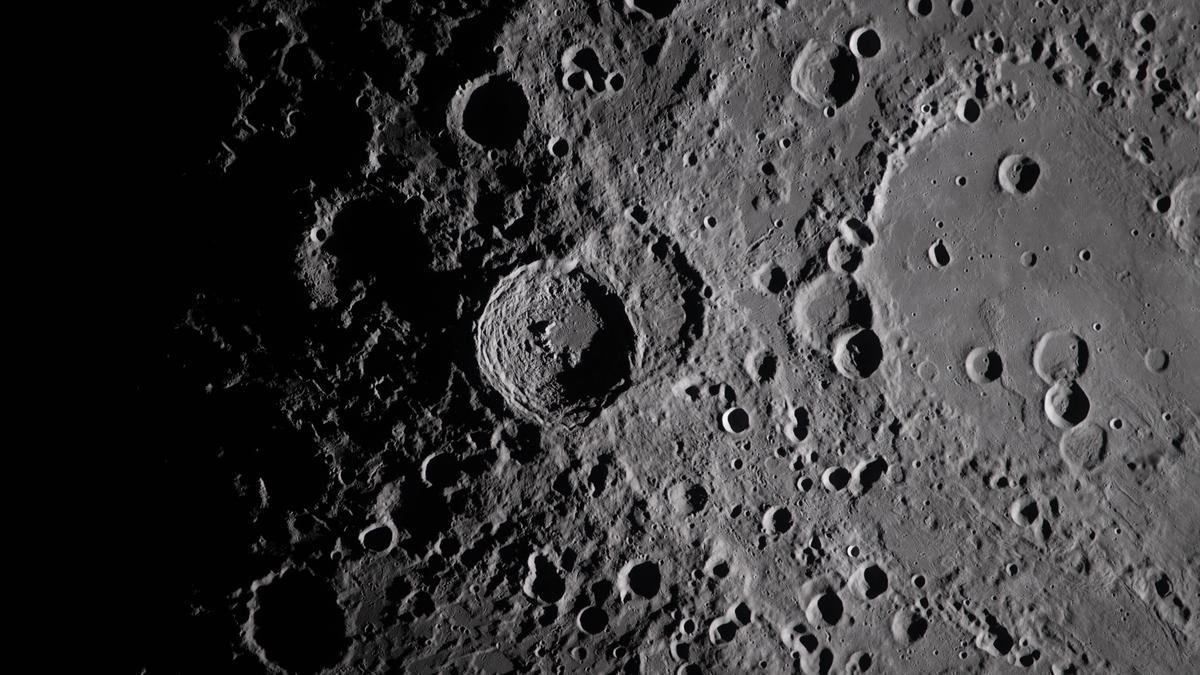
NASA wants to install a nuclear reactor near the moon’s south pole by 2030. Its planned output, 20 kilowatt (kW), could power a few households on earth. Russia’s planned reactor for the International Lunar Research Station (ILRS), led by China, will produce around 10 kW. But the fact that they are nuclear makes them significant.

The U.S. and China are pursuing parallel efforts today — in partnership with other countries — to be the first to set up a semi-permanent, and in future permanent, moon base. Such a facility will need electricity for everything from heating and life-support to recharging rover batteries.

At most locations on the moon, a fortnight of daylight follows a fortnight of darkness. Near the south pole, where both factions are concentrating their activities, promontories and craters create a pastiche of lit and shadowed patches, with temperatures inside some of the latter dipping under a frigid –200 C. But unlike solar panels, a nuclear reactor can produce power irrespective of whether it receives sunlight.

Also Read | NASA plans to build a nuclear reactor on the moon

The reason the moon’s south pole has drawn this attention also changes the equation for nuclear power, however. The exceptionally colder craters preserve water ice, which can quench astronauts’ thirst and could also be electrolysed to produce hydrogen and oxygen, to be used as propellants for rockets launched from the moon itself.

In one 2020 assessment, NASA scientists Julie Kleinhenz and Aaron Paz figured producing 10 tonnes of oxygen this way would require around 68 kW of power. So a 20 kW reactor could well be a stepping stone in the U.S.’s, and China’s and Russia’s, plans to set up an array of small reactors on the moon, with an eye on industrial-scale operations in future.

Nuclear reactors also warrant some geopolitical urgency. Both the U.S. Artemis and the Chinese ILRS programmes envisage long-term activity near the moon’s south pole. European scientists are also exploring lunar microreactors and the U.K. has financed studies on nuclear power in space. The urgency arises from a scarce resource: land.

Also Read | The science, technology, and pitfalls of using nuclear power in space

While the moon as a whole is barren, the more ideal locations, with longer periods of sunlight, terrain more suitable to land on, access to craters with water ice, and so on, are highly limited. Research commissioned by NASA has recommended situating nuclear reactors at least a kilometre away from humans, further constraining the suitability of ideal patches.

Now, the Outer Space Treaty 1967 says no country may appropriate any part of the moon through occupation or other means. But the Artemis Accords, to which the U.S. and its allies vis-a-vis the moon are signatories, envisage temporary ‘safety zones’ to prevent harmful interference. Put differently, a state does not have to stake territory on the moon to limit access to others: it can simply plonk a nuclear reactor there and appeal to the need for subsequently legitimate safety requirements.

The Accords say these zones must remain temporary and respect free access but a country, or a bloc, operating a cluster of reactors, landing pads, mines, and habitats could nevertheless confer a controlling advantage.

Also Read | U.S. in race with China to claim ‘best’ part of Moon: NASA Chief

For the appeal of this idea, however, there are significant technical hurdles. Shielding a nuclear reactor on the moon demands either launching, at great cost, the components to ensure its safe operation, including shielding, or producing them on the moon with lunar resources. Distancing a reactor from a base still warrants deployment machines and power cables.

The reactor core(s) will also have to be launched unirradiated and, once online, space agencies will have to install large surfaces to radiate the copious amounts of waste heat away, and keep them free of moondust. If a reactor fails on the moon, it will risk contaminating the same few places astronauts would like to be at on the moon.

In the end, while nuclear power could prove indispensable to a mature economy centred on the moon, no country possesses that economy today even as governments are being tempted to install reactors first, before their ‘opponents’ — a danger in and of itself.

Published – October 06, 2026 10:25 pm IST


Source link

Science Tags:Artemis accords, nasa nuclear reactor on moon, Nuclear Reactor On Moon

Post navigation

Previous Post: MCC worker attacked while clearing flex banners
Next Post: Delhi CM, L-G launch initiatives to strengthen health care

Related Posts

  • Science for all newsletter how do lidocaine ointments work? 
    Science for all newsletter how do lidocaine ointments work?  Science
  • The power of choice: a case for life-saving modern contraception
    The power of choice: a case for life-saving modern contraception Science
  • X chromosome revival in older women ups autoimmune disease risk
    X chromosome revival in older women ups autoimmune disease risk Science
  • Pauling, the (near) perfect man for science
    Pauling, the (near) perfect man for science Science
  • Major climate change-GDP study under review after facing challenge
    Major climate change-GDP study under review after facing challenge Science
  • Spare live animals, move to biological models
    Spare live animals, move to biological models Science

More Related Articles

What ails Indian research papers? Poor quality or just bad grammar? What ails Indian research papers? Poor quality or just bad grammar? Science
Prototype fast breeder reactor | Nuclear paradox Prototype fast breeder reactor | Nuclear paradox Science
Fact-check: IIT Madras director V. Kamakoti’s comments on cow urine Fact-check: IIT Madras director V. Kamakoti’s comments on cow urine Science
Hydrogel developed for targeted breast cancer therapy Hydrogel developed for targeted breast cancer therapy Science
For elephants, like people, greetings are a complicated affair For elephants, like people, greetings are a complicated affair Science
How Sri Lanka protects Tamil Nadu, Andhra Pradesh from ocean fury How Sri Lanka protects Tamil Nadu, Andhra Pradesh from ocean fury Science
SiteLock

Archives

  • October 2026
  • September 2026
  • August 2026
  • July 2026
  • June 2026
  • May 2026
  • April 2026
  • March 2026
  • February 2026
  • January 2026
  • December 2025
  • November 2025
  • October 2025
  • September 2025
  • August 2025
  • July 2025
  • June 2025
  • May 2025
  • April 2025
  • March 2025
  • February 2025
  • January 2025
  • December 2024
  • November 2024
  • October 2024
  • September 2024
  • August 2024
  • July 2024
  • June 2024
  • May 2024
  • April 2024
  • March 2024
  • February 2024
  • January 2024
  • December 2023
  • November 2023
  • October 2023
  • September 2023
  • August 2023
  • July 2023
  • June 2023
  • May 2023
  • April 2023
  • March 2023
  • February 2023
  • January 2023
  • December 2022
  • November 2022
  • October 2022
  • September 2022
  • August 2022
  • July 2022
  • June 2022
  • May 2022

Categories

  • Business
  • Nation
  • Science
  • Sports
  • World

Recent Posts

  • AIADMK, BJP leaders slam TVK-led Tamil Nadu government over electricity purchase at high rate
  • Two arrested for attacking security guard with knife in Besant Nagar
  • Women stage silent demonstration at Kathipara against police action on anti-CEC protesters in Delhi
  • DGCA bans specific power banks on flights
  • Saudi Supreme Court sets aside Sri Lankan migrant worker’s death penalty

Recent Comments

  1. RobertTes on UP Teacher Who Asked Students To Slap Muslim Classmate
  2. Manuelret on UP Teacher Who Asked Students To Slap Muslim Classmate
  3. RobertTes on UP Teacher Who Asked Students To Slap Muslim Classmate
  4. RobertTes on UP Teacher Who Asked Students To Slap Muslim Classmate
  5. BrentWes on UP Teacher Who Asked Students To Slap Muslim Classmate
  • “I Was Feeling Terrible” In Debate, Says Joe Biden In First TV Interview
    “I Was Feeling Terrible” In Debate, Says Joe Biden In First TV Interview World
  • Israel has destroyed Gaza, made it unliveable, says Mahmoud Abbas
    Israel has destroyed Gaza, made it unliveable, says Mahmoud Abbas World
  • Delhi Records Minimum Temperature Of 16.1 Degrees Celsius
    Delhi Records Minimum Temperature Of 16.1 Degrees Celsius Nation
  • Access Denied Sports
  • India, Canada agree to work towards ‘new chapter’ in ties
    India, Canada agree to work towards ‘new chapter’ in ties World
  • “My Dad Isn’t…”: Ravichandran Ashwin Breaks Silence On Father’s ‘Humiliation Was Going On’ Remark
    “My Dad Isn’t…”: Ravichandran Ashwin Breaks Silence On Father’s ‘Humiliation Was Going On’ Remark Sports
  • Day After Outcome In Border Talks, PM Modi, Xi Jinping Arrive In Russia
    Day After Outcome In Border Talks, PM Modi, Xi Jinping Arrive In Russia Nation
  • Thousands protest in Philippines against flood control fraud
    Thousands protest in Philippines against flood control fraud World

Editor-in-Chief:
Mohammad Ariff,
MSW, MAJMC, BSW, DTL, CTS, CNM, CCR, CAL, RSL, ASOC.
editor@artifex.news

Associate Editors:
1. Zenellis R. Tuba,
zenelis@artifex.news
2. Haris Daniyel
daniyel@artifex.news

Photograher:
Rohan Das
rohan@artifex.news

Associate Journalists
1. Subrata Paul - AN/2020/01
2. Quamruz Zaman - AN/2021/22
3. Ahmed Sha - AN/2021/035
4. Ajay Kumar Shaw - AN/2021/39
5. Tahqiqul Hoda - AN/2021/21

Artifex.News offers Online Paid Internships to college students from India and Abroad. Interns will get a PRESS CARD and other online offers.
Send your CV (Subjectline: Paid Internship) to internship@artifex.news

Links:
Associate Journalism
About Us
Privacy Policy

News Links:
Breaking News
World
Nation
Sports
Business
Entertainment
Lifestyle

Registered Office:
72/A, Elliot Road, Kolkata - 700016
Tel: 033-22277777, 033-22172217
Email: office@artifex.news

Editorial Office / News Desk:
No. 13, Mezzanine Floor, Esplanade Metro Rail Station,
12 J. L. Nehru Road, Kolkata - 700069.
(Entry from Gate No. 5)
Tel: 033-46011099, 033-46046046
Email: editor@artifex.news

Copyright © 2023 Artifex.News Newsportal designed by Artifex Infotech.