



Skip to content
  • Facebook
  • X
  • Linkedin
  • WhatsApp
  • YouTube
  • Associate Journalism
  • About Us
  • Privacy Policy
  • 033-46046046
  • editor@artifex.news
Artifex.News

Artifex.News

Stay Connected. Stay Informed.

  • Breaking News
  • World
  • Nation
  • Sports
  • Business
  • Science
  • Entertainment
  • Lifestyle
  • Toggle search form
  • Access Denied Sports
  • Access Denied Sports
  • India Break Multiple Records En Route To 4-1 T20I Series Win Over England
    India Break Multiple Records En Route To 4-1 T20I Series Win Over England Sports
  • Papua New Guinea orders thousands to evacuate from path of ‘active’ landslide
    Papua New Guinea orders thousands to evacuate from path of ‘active’ landslide World
  • Online Passport Portal Shut For 5 Days, All Appointments To Be Rescheduled
    Online Passport Portal Shut For 5 Days, All Appointments To Be Rescheduled Nation
  • Access Denied World
  • Access Denied Business
  • Access Denied
    Access Denied Nation
Spare live animals, move to biological models

Spare live animals, move to biological models

Posted on July 23, 2025 By admin


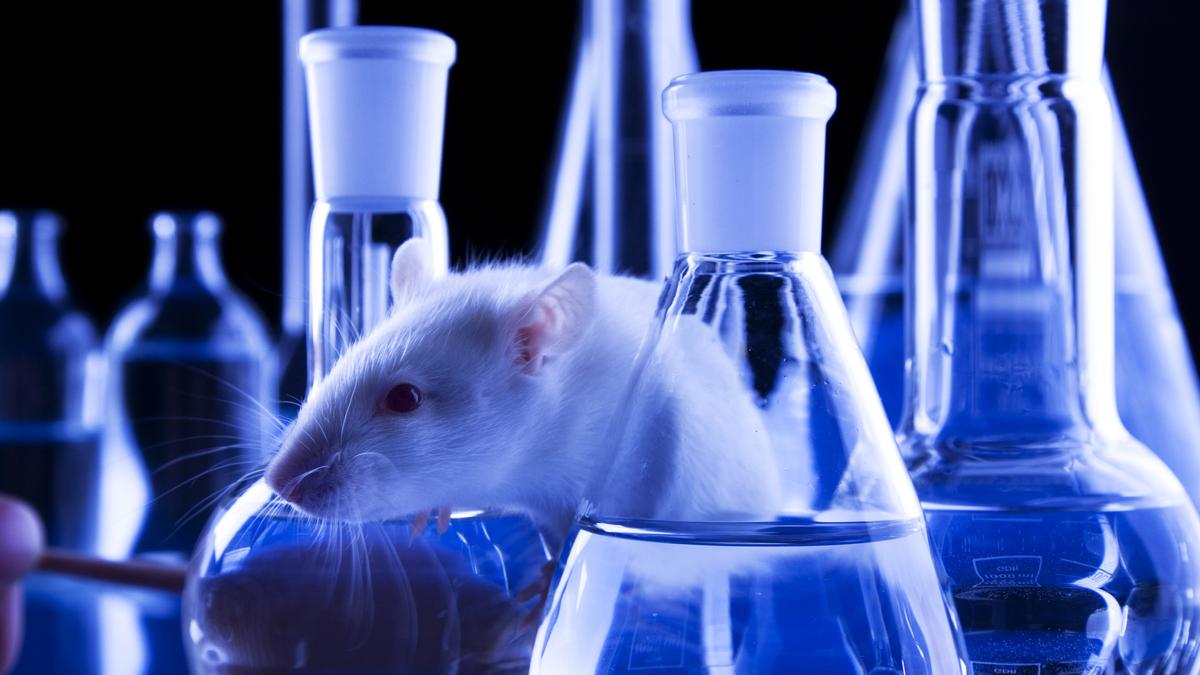
‘Conducting experiments on laboratory-grown anatomical parts would also help the development of the nascent field of tissue-engineering or regenerative medicine’
| Photo Credit: Getty Images/iStockphoto

As human beings are superior to animals, and as animals instinctively rely on the benevolence, goodwill, and protective nature of man, we must fulfil our obligation to treat our fellow non-human beings with love, kindness, and respect.

The issue of the suffering animals undergo in animal testing laboratories is known and so it is rational that humans must respond by finding solutions which can end the suffering of animals and bring peace to human hearts.

A dimension to an ethical problem

Before animals came to be used in toxicity tests, humans were used in feeding experiments to assess the risk of toxicity in American food supply. The first systematic test of this kind was conducted between 1902 to 1904 on behalf of the United States government to test the toxicity of preservatives such as benzoate, borax, and formaldehyde in food products.

A.L. Tatum, a toxicology researcher of the time, cites the following reason for the shift from human studies to animal studies: “People are rather unpredictable and don’t always die when they are supposed to and don’t always recover when they should. All in all, we must depend heavily on laboratory experimentation for sound and controllable basic principles.” So, while discussing the ethical problem of the use of animals in research, it is wrong to presume that human subjects were always exempt from experimentation and testing. The rationalisation of the culture of moral indifferentism and inhumanity is the problem; once rationalised it can as easily be directed at humans as it is at animals.

There is consensus today that animal testing is not effective in predicting harm to humans. The findings derived from experiments on animals are not always applicable to humans.

The case for a shift

Developments in the field of tissue engineering or regenerative medicine have enabled us to cultivate at least the following anatomical parts: artificial animal muscle, artificial pancreas, artificial bladders, cartilage, bioartificial heart, blood vessels, artificial skin, artificial bone marrow, bioartificial bone and trachea. It would be ethical and kind to conduct experiments wherever possible using these rather than using animals. It is the request of this writer — to scientists, laboratories and research organisations — to consider doing medical, pharmaceutical and other experimentation and testing, wherever possible, on cells, tissues, and organs developed in laboratories. Spare live animals. Conducting experiments on laboratory-grown anatomical parts would also help the development of the nascent field of tissue-engineering or regenerative medicine.

To make the replacement of animals with lab-grown organs a directive principle and an enforceable one, ‘Chapter IV: Experimentation on Animals’ of The Prevention of Cruelty to Animals Act, 1960 may be amended to include an article which says: ‘Scientists, laboratories and research organisations should consider doing experimentation and testing, wherever possible, on lab-grown anatomical parts and bioartificial models of biological systems of humans and animals rather than on animals’.

Animals cannot be protected merely by changing laws. If the laws which can protect them are inadequate it is because we have not accorded them their real status by recognising them as fellow beings who suffer just like us.

We also need to bring about a change in our values, the scientific procedure in laboratories which makes the use of animals inevitable, and create an awareness about animal suffering. The use of visual models on computers to understand the anatomical parts of animals has helped us do away with the practice of dissecting animals in biology classes and laboratories. We can definitely do away with all kinds of animal dissection for educational purposes and teach our students better anatomy by using 2D radiographic imagery and 3D visual models of the different organs and biological systems.

But, for the purposes of experimentation and safety testing, it would be useful if we make a paradigm shift from animal models to ex-corpus models or artificial biological models. This we can do by coordinating the shift with tissue-engineering organisations which can produce and provide these artificial biological models. The field of regenerative medicine can help with this shift by modelling and replicating the required biochemistry and biological systems of the body outside the body and by producing bioartificial functional models of the organs.

A pledge

Let us make our civilisation more hospitable to life by changing our procedures, practices and laws wherever possible. Let us pledge to conduct experimentation and testing as far as possible on biological substances and learn to recognise the inherent sacredness and dignity of animals.

Ankur Betageri is Assistant Professor at Bharati College, University of Delhi

Published – July 24, 2025 12:08 am IST



Source link

Science Tags:2D radiographic imagery and 3D visual models, animals and toxicity tests, Chapter IV Experimentation on Animals, Developments in field of tissue engineering or regenerative medicine, human beings and superiority to animals, human studies to animal studies, humans and feeding experiments, suffering of animals in animal testing laboratories, The Prevention of Cruelty to Animals Act, toxicity of preservatives, toxicology researcher, United States government

Post navigation

Previous Post: Natco Pharma to acquire stake in South African firm Adcock Ingram for ₹2,000 crore 
Next Post: Smart Irrigation Plan can save 10-30% of irrigation water in drought-prone regions: IIT Bombay research

Related Posts

  • UN report finds countries’ emission reductions short of goal set in Paris
    UN report finds countries’ emission reductions short of goal set in Paris Science
  • Putting the gene editing tool to use
    Putting the gene editing tool to use Science
  • UN report finds countries’ emission reductions short of Paris goal
    UN report finds countries’ emission reductions short of Paris goal Science
  • Scientists confirm HIV capsid is a good drug target despite resistance
    Scientists confirm HIV capsid is a good drug target despite resistance Science
  • Where did dinosaurs first evolve? Scientists have an answer
    Where did dinosaurs first evolve? Scientists have an answer Science
  • How IIIT-B’s algorithms are teaching the grid to think green
    How IIIT-B’s algorithms are teaching the grid to think green Science

More Related Articles

Medicinal foods: A missing category on the regulator’s plate Medicinal foods: A missing category on the regulator’s plate Science
Is peeing contagious in chimpanzees? Is peeing contagious in chimpanzees? Science
Prototype fast breeder reactor | Nuclear paradox Prototype fast breeder reactor | Nuclear paradox Science
The Science Quiz | Reading the weather The Science Quiz | Reading the weather Science
Toying with toys and making it big Toying with toys and making it big Science
NASA’s Artemis II moonship returns home to its launch site after historic voyage NASA’s Artemis II moonship returns home to its launch site after historic voyage Science
SiteLock

Archives

  • May 2026
  • April 2026
  • March 2026
  • February 2026
  • January 2026
  • December 2025
  • November 2025
  • October 2025
  • September 2025
  • August 2025
  • July 2025
  • June 2025
  • May 2025
  • April 2025
  • March 2025
  • February 2025
  • January 2025
  • December 2024
  • November 2024
  • October 2024
  • September 2024
  • August 2024
  • July 2024
  • June 2024
  • May 2024
  • April 2024
  • March 2024
  • February 2024
  • January 2024
  • December 2023
  • November 2023
  • October 2023
  • September 2023
  • August 2023
  • July 2023
  • June 2023
  • May 2023
  • April 2023
  • March 2023
  • February 2023
  • January 2023
  • December 2022
  • November 2022
  • October 2022
  • September 2022
  • August 2022
  • July 2022
  • June 2022
  • May 2022

Categories

  • Business
  • Nation
  • Science
  • Sports
  • World

Recent Posts

  • Assam ships first legal agarwood chips to West Asia
  • How the anti-defection law is going to operate in the AIADMK case?
  • ATS questions 57 in Maharashtra over alleged gangster network links
  • Nicobarese oppose proposal for three wildlife sanctuaries
  • Visakhapatnam Collector calls for inter-departmental synergy to boost investments

Recent Comments

  1. Stevemonge on UP Teacher Who Asked Students To Slap Muslim Classmate
  2. RichardClage on UP Teacher Who Asked Students To Slap Muslim Classmate
  3. StevenLek on UP Teacher Who Asked Students To Slap Muslim Classmate
  4. Leonardren on UP Teacher Who Asked Students To Slap Muslim Classmate
  5. NathanQuins on UP Teacher Who Asked Students To Slap Muslim Classmate
  • India vs Australia Boxing day test: Border-Gavaskar Trophy fourth Test in Melbourne: Australian debutant Sam Konstas press conference
    India vs Australia Boxing day test: Border-Gavaskar Trophy fourth Test in Melbourne: Australian debutant Sam Konstas press conference Sports
  • Syed Mushtaq Ali T20 Tournament | Saurashtra rides on Harvik’s ton to beat Manipur
    Syed Mushtaq Ali T20 Tournament | Saurashtra rides on Harvik’s ton to beat Manipur Sports
  • Access Denied Business
  • Access Denied World
  • Access Denied Business
  • “I Felt Bad That My First Throw…”: Neeraj Chopra Opens Up On Asian Games 2023 Controversy
    “I Felt Bad That My First Throw…”: Neeraj Chopra Opens Up On Asian Games 2023 Controversy Sports
  • Access Denied Sports
  • For An India-Canada Reset, Trudeau Really Had To Go
    For An India-Canada Reset, Trudeau Really Had To Go World

Editor-in-Chief:
Mohammad Ariff,
MSW, MAJMC, BSW, DTL, CTS, CNM, CCR, CAL, RSL, ASOC.
editor@artifex.news

Associate Editors:
1. Zenellis R. Tuba,
zenelis@artifex.news
2. Haris Daniyel
daniyel@artifex.news

Photograher:
Rohan Das
rohan@artifex.news

Artifex.News offers Online Paid Internships to college students from India and Abroad. Interns will get a PRESS CARD and other online offers.
Send your CV (Subjectline: Paid Internship) to internship@artifex.news

Links:
Associate Journalism
About Us
Privacy Policy

News Links:
Breaking News
World
Nation
Sports
Business
Entertainment
Lifestyle

Registered Office:
72/A, Elliot Road, Kolkata - 700016
Tel: 033-22277777, 033-22172217
Email: office@artifex.news

Editorial Office / News Desk:
No. 13, Mezzanine Floor, Esplanade Metro Rail Station,
12 J. L. Nehru Road, Kolkata - 700069.
(Entry from Gate No. 5)
Tel: 033-46011099, 033-46046046
Email: editor@artifex.news

Copyright © 2023 Artifex.News Newsportal designed by Artifex Infotech.