




Skip to content
  • Facebook
  • X
  • Linkedin
  • WhatsApp
  • YouTube
  • Associate Journalism
  • About Us
  • Privacy Policy
  • 033-46046046
  • editor@artifex.news
Artifex.News

Artifex.News

Stay Connected. Stay Informed.

  • Breaking News
  • World
  • Nation
  • Sports
  • Business
  • Science
  • Entertainment
  • Lifestyle
  • Toggle search form
  • EU unblocks €90 billion Ukraine loan after Hungary row
    EU unblocks €90 billion Ukraine loan after Hungary row World
  • Voting For Pakistan By-Polls Ends Amid Cellular Network Suspension: Report
    Voting For Pakistan By-Polls Ends Amid Cellular Network Suspension: Report World
  • Watch: What caused Tibetan China’s earthquake
    Watch: What caused Tibetan China’s earthquake World
  • Uddhav Sena Leader Charged For Derogatory Remark Against Shaina NC
    Uddhav Sena Leader Charged For Derogatory Remark Against Shaina NC Nation
  • Access Denied Sports
  • “Very Heartening”: Sunil Gavaskar’s Massive Praise For Rohit Sharma After 68-Run Knock vs LSG
    “Very Heartening”: Sunil Gavaskar’s Massive Praise For Rohit Sharma After 68-Run Knock vs LSG Sports
  • Access Denied Business
  • Banks’ loan growth drops for fifth month in November as tighter lending rules weigh
    Banks’ loan growth drops for fifth month in November as tighter lending rules weigh Nation
Where did dinosaurs first evolve? Scientists have an answer

Where did dinosaurs first evolve? Scientists have an answer

Posted on January 26, 2025 By admin


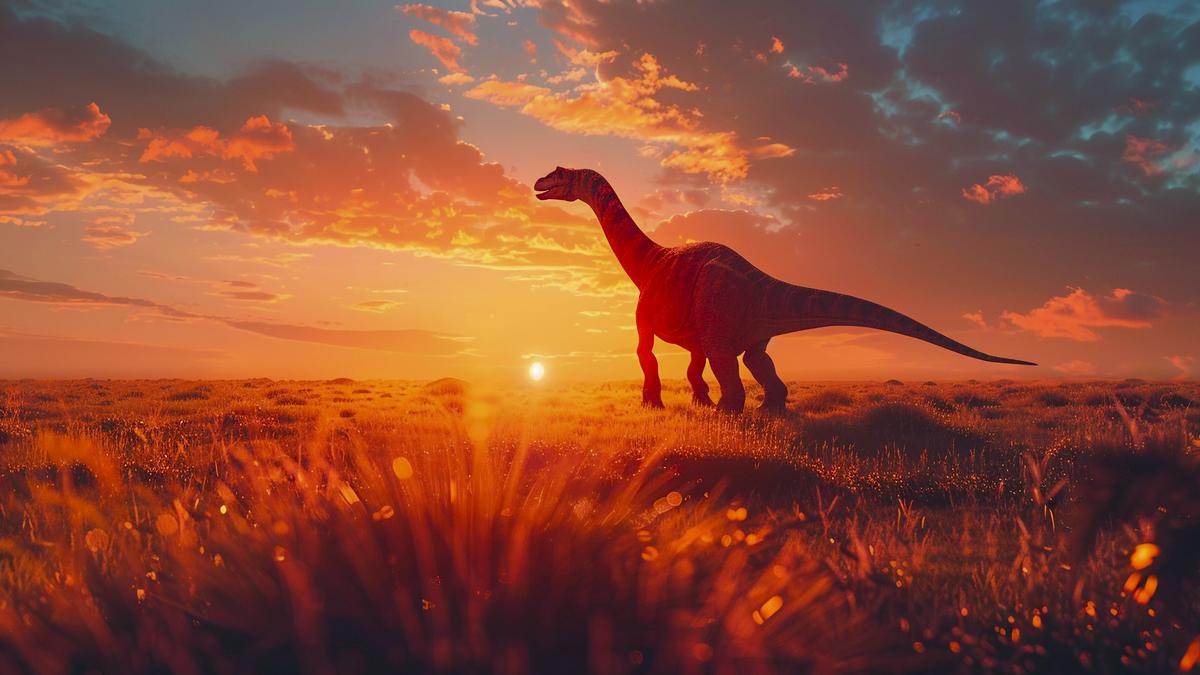
Dinosaurs long dominated the earth’s land ecosystems with multiple forms, including plant-eating giants like Argentinosaurus, meat-eating brutes like Tyrannosaurus, and weirdos like Therizinosaurus, with its Wolverine-like claws.

But the origin of dinosaurs — precisely when and where they first appeared — remains a bit of a puzzle.

Researchers are now proposing a surprising location for the birthplace of dinosaurs, based on the locations of the currently oldest-known dinosaur fossils, the evolutionary relationships among these early forms, and the earth’s geography during the Triassic Period.

This locale spans the modern-day Sahara desert and Amazon rainforest regions, now separated by thousands of kilometres and an ocean thanks to a geological process called plate tectonics.

“When dinosaurs first appear in the fossil record, all the earth’s continents were part of the giant supercontinent Pangaea. Dinosaurs emerged in the southern portion of this landmass, known as Gondwana,” said Joel Heath, a paleontology doctoral student at University College London and the Natural History Museum in London and lead author of the study, published on Thursday in the journal Current Biology.

“Our research suggests they likely originated in the low-latitude regions of Gondwana near the equator, an area that today includes northern South America and northern Africa,” Heath added.

The earliest-known dinosaur fossils date to roughly 230 million years ago, including Eoraptor and Herrerasaurus from Argentina, Saturnalia from southern Brazil, and Mbiresaurus from Zimbabwe. While sharing certain traits defining them as dinosaurs, they had sufficient differences that suggest millions of years of dinosaur evolution had already occurred.

“While earlier research has focused on southern South America and southern Africa as the area of origin of the dinosaurs, based on where their fossils first appear, we suggest that significant gaps in the fossil record — particularly in regions that today include the Sahara desert and the Amazon rainforest — may hold the potential to reveal where the earliest dinosaurs were living,” Heath said.

The researchers said dinosaurs probably emerged approximately 245-230 million years ago, when these equatorial regions were extremely hot and dry.

“It likely included deserts, savannah-like habitats and possibly forested areas prone to seasonal wildfires. Previously, it was believed that dinosaurs were absent from these harsh environments,” Heath said.

Fossils from this time and region are rare. This might be because the conditions were not ideal for preserving the remains of land animals or because the rocks containing these fossils have not been discovered yet, Heath said. Regions like the Amazon and Sahara also are difficult for paleontologists to explore due to dense forests, vast deserts and logistical challenges.

Dinosaurs evolved from more primitive reptiles in the aftermath of the earth’s biggest mass-extinction event caused by extreme volcanism at the end of the Permian Period about 252 million years ago.

“Dinosaurs are unique because of certain traits in their skeletons. They stood upright, with their legs straight underneath their bodies, like pillars, which helped them walk and run efficiently. They also had special hips that made them different from other reptiles,” Heath said, noting that other reptiles possessed sprawling legs.

“Their bodies were shaped for speed and agility, and their teeth were adapted for specific diets,” Heath said of the early dinosaurs.

For example, Herrerasaurus was a 6-m long predator, while Eoraptor was a dog-sized omnivore.

“These specialised traits didn’t appear overnight. They evolved gradually over millions of years from older, more primitive reptiles. However, we haven’t yet found the transitional fossils that show how these changes happened, leaving parts of their evolutionary history a mystery,” Heath said.

An enigmatic bipedal creature called Nyasasaurus from Tanzania, known from fragmentary fossils perhaps dating to 240–245 million years ago, represents what the earliest dinosaurs may have looked like, Heath said.

Dinosaurs initially were overshadowed by other animals, including large crocodile relatives — both terrestrial and semi-aquatic — and various plant-eaters including elephant-sized ones related to mammals and four-legged armored reptiles.

“Dinosaurs started small, playing a minor role in their ecosystems during the Triassic,” Heath said. “They lived in the shadows of bigger, more dominant animals. However, dinosaurs had some advantages, like being fast, agile and adaptable to different environments. Then, about 201 million years ago, a huge extinction event wiped out many of their competitors, allowing dinosaurs to take over as the dominant land vertebrates.”

Published – January 26, 2025 09:37 am IST



Source link

Science

Post navigation

Previous Post: Who Is Chandrakant Sompura, Ayodhya Temple Architect Among Padma Awardees
Next Post: Pakistan vs West Indies, 2nd Test Day 2, Live Score Updates

Related Posts

  • Is it okay for an Indian scientist to have taken Jeffrey Epstein’s money?
    Is it okay for an Indian scientist to have taken Jeffrey Epstein’s money? Science
  • Action-packed September – The Hindu
    Action-packed September – The Hindu Science
  • New study finds how calcium and pH regulate ovarian cancer spheroids
    New study finds how calcium and pH regulate ovarian cancer spheroids Science
  • Chandrayaan-4 mission expansion gets Centre’s approval
    Chandrayaan-4 mission expansion gets Centre’s approval Science
  • Retinal diseases: RNA therapeutics show promise but is India ready?
    Retinal diseases: RNA therapeutics show promise but is India ready? Science
  • Cotransplanting kidney, heart prevents heart transplant rejection
    Cotransplanting kidney, heart prevents heart transplant rejection Science

More Related Articles

Experts underscore the importance of extracting only relevant data Experts underscore the importance of extracting only relevant data Science
New mRNA vaccine fights brain cancer in children by triggering attack from within New mRNA vaccine fights brain cancer in children by triggering attack from within Science
‘Green-beard’ genes could explain how altruism arose in nature ‘Green-beard’ genes could explain how altruism arose in nature Science
Shorebird from Australia spotted over 7,400 km away on island in Andamans: Expert Shorebird from Australia spotted over 7,400 km away on island in Andamans: Expert Science
As trees fall in the thousands, innovative protests erupt across India As trees fall in the thousands, innovative protests erupt across India Science
Unlocking the potential India’s research in medicine Unlocking the potential India’s research in medicine Science
SiteLock

Archives

  • May 2026
  • April 2026
  • March 2026
  • February 2026
  • January 2026
  • December 2025
  • November 2025
  • October 2025
  • September 2025
  • August 2025
  • July 2025
  • June 2025
  • May 2025
  • April 2025
  • March 2025
  • February 2025
  • January 2025
  • December 2024
  • November 2024
  • October 2024
  • September 2024
  • August 2024
  • July 2024
  • June 2024
  • May 2024
  • April 2024
  • March 2024
  • February 2024
  • January 2024
  • December 2023
  • November 2023
  • October 2023
  • September 2023
  • August 2023
  • July 2023
  • June 2023
  • May 2023
  • April 2023
  • March 2023
  • February 2023
  • January 2023
  • December 2022
  • November 2022
  • October 2022
  • September 2022
  • August 2022
  • July 2022
  • June 2022
  • May 2022

Categories

  • Business
  • Nation
  • Science
  • Sports
  • World

Recent Posts

  • NEET UG paper leak 2026: CBI produces five accused before Delhi court
  • With encroachments gone, civic body takes up restoration of Rockfort Teppakulam
  • Sooryavanshi named in India A squad for Sri Lanka tri-series, Tilak to lead side
  • Gold rises ₹650 to ₹1.66 lakh/10g in Delhi
  • France allows asymptomatic passengers off new cruise ship struck by stomach bug outbreak

Recent Comments

  1. JasonDag on UP Teacher Who Asked Students To Slap Muslim Classmate
  2. JamesHeR on UP Teacher Who Asked Students To Slap Muslim Classmate
  3. RafaelNar on UP Teacher Who Asked Students To Slap Muslim Classmate
  4. CarlosExorb on UP Teacher Who Asked Students To Slap Muslim Classmate
  5. Robertfloup on UP Teacher Who Asked Students To Slap Muslim Classmate
  • Train hits railway workers killing 11 in China
    Train hits railway workers killing 11 in China World
  • Access Denied Business
  • Explained | Mapping India’s chip design ecosystem
    Explained | Mapping India’s chip design ecosystem Business
  • London’s Office Market Plunged Into ‘Rental Recession’, Meta Pays 1 Million To End Its Lease
    London’s Office Market Plunged Into ‘Rental Recession’, Meta Pays $181 Million To End Its Lease World
  • Days After Blast Outside Rapper Badshah’s Club In Chandigarh, 2 Arrested In Encounter
    Days After Blast Outside Rapper Badshah’s Club In Chandigarh, 2 Arrested In Encounter Nation
  • Manipur Government To Open Bus Service With Police Escort Between Key Districts, Warns Against Violence
    Manipur Government To Open Bus Service With Police Escort Between Key Districts, Warns Against Violence Nation
  • After Haryana Win, Caste Equations And BJP MLAs Who May Get Cabinet Berth
    After Haryana Win, Caste Equations And BJP MLAs Who May Get Cabinet Berth Nation
  • Access Denied
    Access Denied Nation

Editor-in-Chief:
Mohammad Ariff,
MSW, MAJMC, BSW, DTL, CTS, CNM, CCR, CAL, RSL, ASOC.
editor@artifex.news

Associate Editors:
1. Zenellis R. Tuba,
zenelis@artifex.news
2. Haris Daniyel
daniyel@artifex.news

Photograher:
Rohan Das
rohan@artifex.news

Artifex.News offers Online Paid Internships to college students from India and Abroad. Interns will get a PRESS CARD and other online offers.
Send your CV (Subjectline: Paid Internship) to internship@artifex.news

Links:
Associate Journalism
About Us
Privacy Policy

News Links:
Breaking News
World
Nation
Sports
Business
Entertainment
Lifestyle

Registered Office:
72/A, Elliot Road, Kolkata - 700016
Tel: 033-22277777, 033-22172217
Email: office@artifex.news

Editorial Office / News Desk:
No. 13, Mezzanine Floor, Esplanade Metro Rail Station,
12 J. L. Nehru Road, Kolkata - 700069.
(Entry from Gate No. 5)
Tel: 033-46011099, 033-46046046
Email: editor@artifex.news

Copyright © 2023 Artifex.News Newsportal designed by Artifex Infotech.